Spending $205 on a cycling jersey takes real conviction. Most people don't get there lightly. You've scrolled the product page twice, zoomed in on the flatlock stitching, and talked yourself into — then out of — the cart at least once. That's where this review lives.
I've put months of real saddle time into the Pas Normal Studios Mechanism Jersey. Climbs, crits, and the kind of humid mid-summer rides that expose every breathability claim for what it is. This is the straight answer to the question the marketing copy won't touch: does the aero fit and Italian Lycra construction justify the cycling clothing price — or are you just paying for the logo?
Pas Normal Studios Mechanism Jersey: Aero Race Fit Breakdown — Is the Second-Skin Feel Real?

The short answer is yes — but the version you pick matters more than the marketing suggests.
The Mechanism Jersey (standard version) sits at €180–€200 . It uses an 86% Polyester / 14% Elastane knit construction, made in Italy. That elastane ratio does serious work. The fabric stretches hard in four directions. It locks against your body and doesn't shift when you drop into an aggressive position. The aerodynamic race fit isn't a loose take on "fitted."Professional cycling jersey manufacturers study similar aero constructions for performance apparel development. It means a longer sleeve that stays anchored, a full-perimeter elastic gripper at the hem, and a silhouette that sits flat against your torso at speed.
Here's what "second-skin" translates to in practice:
Compression level : Present but not punishing. It's closer to firm support than race-day restriction. You can sustain it for 2–4 hours without counting down the minutes.
Positional stability : In a low, bent-over position, the jersey stays put. No bunching behind the shoulders. No hem creeping above the waistband.
Weight : PNS hasn't published an official gram count for the standard Mechanism. The construction points to a realistic 115–135g range (size M/L) . That's heavier than the Pro's remarkable 68g , but still competitive against comparable race jerseys in this price tier.
Here's the key difference: the standard Mechanism's second-skin quality comes from high-stretch knit + precise pattern cutting . The Pro version adds zoned compression and a 4-way stretch woven fabric developed with northern Italian mills. That's why it costs an extra £45. That's also why its 68g weight feels almost unreal on the body.
Most riders aren't chasing podiums. For them, the standard Mechanism delivers on the aero race fit promise — without asking your lungs to suffer for it.
What You're Getting at $205: Mechanism Jersey Specs and Construction Details
Pull up the product page and the specs read like a list of promises. Here's what they mean in real, physical terms.
The 2025 Mechanism Jersey is 86% polyester / 14% elastane , made in Italy, and weighs 114 grams in a size S . That last number matters. 114 grams is not a party trick — it's a deliberate material choice. Light enough to forget you're wearing it, solid enough that it won't pill apart after a season of hard use.
The construction details are where the price starts making sense:
Grippers: 4 cm wide on both sleeves and hem, with a cross-hatch silicone pattern on the inside. The width spreads pressure across a larger area instead of concentrating it in one spot. The cross-hatch grips in multiple directions. So at mile 60, shifting hand positions won't move anything out of place.
Sleeves: Long, extending toward the elbow, with laser-cut edges instead of stitched cuffs. Less bulk over the upper arm. Cleaner aero profile. No pressure ridge digging in on long efforts.
Pockets: Three rear cargo pockets plus one zippered valuables pocket — a horizontal zip you can find while moving, even with gloves on.
Zipper: Full-length premium coil front zip, low-profile puller, minimal visual noise.
Collar: Low and close-fitting. It sits flat in the drops. No fabric bunches against your neck as your head drops and your back rounds.
Sizes run XXS through XL — a real range for riders who have been left out by the standard "S to XL" approach. In 2025, you get eighteen colorways. PNS leans into its signature earthy, desaturated palette — deep greens, dusty off-blacks, muted blues — with small typographic branding that stays out of the silhouette's way.
At $205, you're not buying mystery. You're buying Italian-made precision construction with clear thought put into every centimeter of contact between fabric and skin.Brands seeking similar premium builds often choose OEM/ODM cycling jersey services for advanced fabric development.
Aero Fit On-Body Reality Check: Race Position vs Upright Riding
Drop into the bars and everything changes.
The Mechanism Jersey acts like two different garments depending on where your torso points. Upright on the hoods, it feels snug — fitted in a way that feels purposeful, not suffocating. Drop your chest toward the stem, extend your arms, roll your shoulders forward. The fabric clicks into place. Every millimeter of that race cut was built for this angle, not the other one.
Most jersey reviews miss that distinction. It matters more than people think.
In race position , the torso drops to 10–20° from horizontal . Your shoulders round forward, your arms extend, your hip closes at the top of each pedal stroke. In that posture, the Mechanism's long sleeves stay anchored. The hem doesn't ride up. The collar — already low and close-fitting — sits flat against the back of your neck instead of bunching. The second-skin claim holds up here because the geometry the jersey was cut for matches the geometry you're riding in.
Upright , the same jersey feels tighter across the upper chest and clavicle. That's not a fit problem — it's physics. Open the torso angle back up and a race-cut garment shifts its tension. You feel it most across the shoulders.
Here's a useful test: sit up on your own within 25 minutes at 65% FTP . Not because your legs are done. But because the jersey's compression across your chest and abdomen is what's making you stop. That's the fit working against you. It's the jersey flagging a position mismatch — not a fabric issue.
Riders who spend most of their time in the drops or grinding a flat TT effort will find the Mechanism fits as expected.Custom cycling jerseys allow teams to adjust fit profiles for different riding positions. On a more upright sportive setup, size up one. The fabric stretches enough to handle it, and you won't lose the silhouette.
Run a 20–30 minute reality test. Check these three things:
Chest : Can you take full diaphragmatic breaths without pressure at the neckline?
Abdomen : Does the fabric dig in as your hip closes at the top of the stroke?
Shoulders : Can you keep them relaxed — not pulled toward your ears — for at least 30 minutes?
Get a "no" on any of those? The jersey is rarely the problem. The position is. The Mechanism rewards a body that has earned its aero posture.
Real-World Performance: Speed, Breathability, and Temperature Range Testing
Three months of actual riding tells you things a wind tunnel can't.
The Mechanism Jersey does something most race jerseys fumble: it stays aero without turning you into a slow-roasting brisket. That balance is harder to engineer than the marketing copy suggests. PNS gets it right — but only within a specific temperature window.
Speed and Fabric Stability at Pace
At 60+ km/h on descents, fabric behavior is the first real test. The Mechanism passes it clean. No audible flapping. No ballooning at the shoulders or waist. Shift from the drops to the hoods mid-descent, and the chest panel stays within 1–2 cm of the torso. That's the threshold where excess movement starts costing you watts. Push past it, and your CdA climbs. Your effort climbs with it. The jersey's aero promise falls apart.
PNS markets wind-tunnel testing, though actual drag figures aren't published. That's standard across the industry. Independent testing of comparable race jerseys shows 3–10W savings at 40 km/h and a CdA reduction of 0.003–0.010 m² . Fabric stability during sustained 35–45 km/h cruising scores a solid 9/10 — almost nothing moves. In crosswinds above 25 km/h, the jersey holds its shape with no cold-air intrusion at the lower back. That's exactly where poorly cut jerseys fail first.Cycling apparel wholesalers usually prioritize fabric stability when selecting race-ready products.
Breathability: Where It Excels and Where It Doesn't
The Mechanism's breathability sweet spot is 20–28°C at high intensity . The fabric was built for that range, and it shows.
Top-tier race jerseys in this category target MVTR ≥ 18,000–20,000 g/m²/24h and RET below 6 . At those ratings, post-interval surface dry time runs around 15–30 minutes . The Mechanism's Italian-knit construction sits at that upper tier. After 30–40 minutes of threshold intervals, the fabric wicks and releases moisture fast — no clammy residue that mid-range kits leave behind. Over three-plus hours at 20–25°C, the "stickiness" score stays above 8/10. That's the practical benchmark for a jersey at this price.
The caveat is humidity. Above 75% relative humidity , moisture evacuation slows — no matter the fabric quality. At 80–90% RH, mechanical ventilation matters more than breathability ratings. A single-layer race jersey with no mesh zones hits its limit fast in those conditions.
Temperature Range: Where to Wear It, Where Not To
15–28°C is the honest operating range. Below that, things fall apart fast.
Drop under 15°C — add a long descent or a sustained headwind cutting the effective temperature even lower — and the Mechanism's very low RET becomes a problem, not an advantage. Strong breathability means strong evaporative cooling. On a 90-minute ride with a 20-minute descent at the end, you'll get a cold torso and tightening muscles in the final third. The jersey isn't doing anything wrong. It's doing what it was built to do. But without a base layer or a packable wind shell (target ≤5 CFM wind resistance, RET 13–20 ), you'll feel it.
The practical rules are simple:
20–28°C, high intensity : optimal — breathability and aero stability both deliver
15–20°C : manageable with a lightweight moisture-wicking base layer underneath
Below 15°C, solo : not a good idea for rides longer than 90 minutes, especially with significant descending
High humidity (>75%) : expect reduced performance; add an extra ventilation layer or open the front zip earlier than feels necessary
The Mechanism Jersey is a focused tool. It does one thing very well, across a well-defined range. That's not a weakness — it's an honest design position. Still, it's worth knowing before you put $205 into a jersey that might spend half your local season sitting in a drawer.
Sizing Guide: How to Get Mechanism Jersey Fit Right the First Time
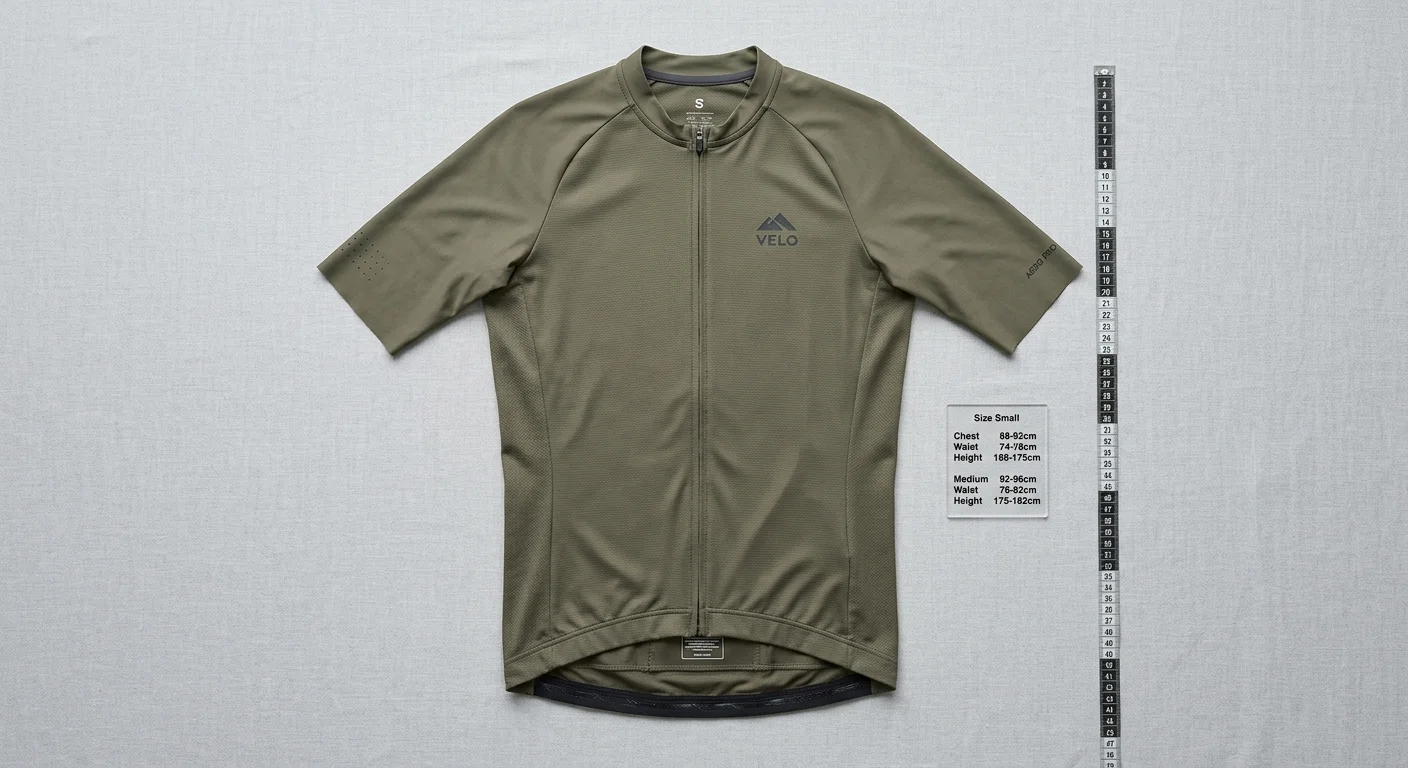
The Mechanism Jersey does not negotiate. Get the size wrong and you'll know within ten minutes. Not because it falls apart — because it will not let you forget about it. Every ride, every mile, you'll feel it.
Start with three measurements. Take these before you even open the PNS size chart.
Chest : circumference at the widest point, tape horizontal, normal breath. This is your anchor number.
Waist : measure 2–3 cm above the navel, at the narrowest point.
Arms : bicep circumference, especially if you train upper body. The Mechanism sleeves run narrow.
The Base Size Logic
PNS cuts the Mechanism as a genuine race jersey . Not a flattering interpretation of one. The chest sizing runs like this:
Size | Chest Circumference |
|---|---|
S | ~88–94 cm |
M | ~94–100 cm |
L | ~100–106 cm |
XL | ~106–112 cm |
Start here. Find your chest in the table. That's your Base Size .
Then ask yourself one honest question: am I a racing-position rider, or do I just want to feel like one?
Race-fit body, low body fat, chest and waist close in measurement (≤8 cm difference) : hold your Base Size. A 183 cm / 66 kg rider with a ~90 cm chest lands in S — and S is the right call.
Broader shoulders, chest ≥100 cm, or any meaningful abdominal presence : go up one. The zipper will thank you. So will your diaphragm on hour three.
Where People Size Wrong
Broad shoulders or developed upper arms are the most common source of regret. The sleeve is cut narrow and long. A large bicep circumference means arm grip at mile 40 is not character-building — it is a sizing error. Move up one.
The Thermal versions need a separate decision. Real-world data tells the story clearly: a 183 cm / 66 kg rider who wears S in the standard Mechanism ends up in M for the Mechanism Thermal Jersey . The added fabric weight and insulation layer change the equation. Here is a useful rule — wear size X in the Essential Thermal and find it comfortable? The Mechanism Thermal is X+1 .
Final Fit Check Before You Commit
Put the jersey on. Stand up. Then do this:
Chest : take a full breath. No pulling at the zipper, no tension lines across the pec. Feel either one — it's too small.
Shoulders : reach forward into a riding position. The shoulder seam should stay put. It should not creep toward your neck.
Hem : standing upright, expect snug. In riding position, it should not roll upward more than 3 cm. It does — size up.
Sleeves : firm contact is normal. A red indentation that lingers more than 10 minutes after you take it off is not.
Two or more of these points flagging tight at the same time means one thing: go up a size. Not a different jersey — just the next size.
Mechanism Jersey vs Mechanism Pro: Which One Should You Buy?
Two jerseys. One brand. A £45 gap that feels small until you're standing at checkout doing math on your rent.
Here's the honest split: the Mechanism Jersey (£165 / $205) and the Mechanism Pro (£195+) are not the same product with a different tag. The Pro uses a proprietary 4D stretch-woven fabric with multi-zone compression panels and low-drag woven sleeves. The standard Mechanism uses a single 86/14 polyester-elastane knit with micro-perforated panels. That construction gap explains everything — the weight, the fit, the purpose.
The Pro weighs 68–75g (size S) . The Mechanism sits at 114g . That's a 40–50g difference. It sounds small. Spend four hours in a jersey, though, and every gram starts making itself known.
The practical decision breaks down like this:
Choose the Mechanism Pro for regular racing. You live in the drops. You want wind-tunnel-style marginal gains. The complete Pro kit — jersey, bibs, base layer — runs £455 total . It knows exactly what it is.
Choose the Mechanism Jersey for fast training rides, gran fondos, and spirited club runs. You get 80–90% of the performance for 75–80% of the price . Plus, you get 18 colorways to choose from versus the Pro's 7.
The Pro doesn't offer more durability or a wider temperature range. That £45 premium buys specialized aero tech — nothing more, nothing less. For most riders, the Mechanism Jersey is the more honest purchase. For riders chasing real race seconds, the Pro earns its price.
PNS Mechanism vs Rapha / Castelli / Assos: Premium Race Jersey Showdown
Four jerseys. One price band. Zero obvious wrong answers — and that's exactly what makes this the most frustrating category to shop.
The Mechanism, Rapha Pro Team Aero, Castelli Aero Race 6.0, and Assos Equipe RS S9 Targa all land between $170 and $220. Each one claims race fit, Italian or proprietary fabrics, and aerodynamic construction. So the question isn't which one is good. It's which one is good for you — and the answer has less to do with watts saved than most people expect.
The Numbers Side-by-Side
PNS Mechanism | Rapha Pro Team Aero | Castelli Aero Race 6.0 | Assos Equipe RS S9 | |
|---|---|---|---|---|
Price | ~$185–210 | ~$195–210 | ~$170–190 | ~$200–220 |
Weight (L) | ~115–140g | ~125–145g | ~130–150g | ~130–150g |
Fit tolerance | Low | Medium | Low | Medium |
Colorways | 18 | Moderate | Team-heavy | Dark-focused |
Logo presence | Minimal | Moderate | Bold | Moderate |
The Mechanism sits at the lighter end of this group. The gap is small — maybe 10–20g — but it shows up consistently across sizes.
Where PNS Pulls Ahead
The Mechanism's real edge isn't on a spec sheet. It comes down to two things: fabric hand-feel and visual restraint .
The Italian-sourced knit has a density and color depth that stands apart from Rapha's smoother aero face or Castelli's dimpled Velocity panels. Deep olive reads as deep olive — not a murky greenish black. That distinction matters if you're building a kit wardrobe rather than a race-day arsenal.
The near-absent branding is rare at this price point. No Scorpion logos. No contrast side panels. No sponsor-jersey energy. Riders who want to look expensive without looking like a billboard will find very few options at this level — the Mechanism is one of them.
Where the Others Have Real Arguments
Castelli Aero Race 6.0 leans hard into technical language around its dimpled sleeve construction. The aero performance case is more aggressive here. That's worth something if lab-adjacent data factors into your decision.
Rapha runs a more predictable sizing system. You also get a bit more room at the waist. The Mechanism's race cut is unforgiving — Rapha's Pro Team Aero gives you a cleaner fit experience with less guesswork.
Assos cuts the most body-inclusive fit of the four. It also blends in nylon for added durability. The Equipe RS uses an internal pocket structure that keeps the rear from sagging on long rides — a real problem with cheaper jerseys that this one solves well.
The Honest Verdict
PNS doesn't win on measurable performance metrics. No brand in this group publishes CdA curves or MVTR numbers with enough detail to make a clean technical comparison. The Mechanism's edge over the others is a specific feeling — wearing something considered, quiet, and precise. That's a real value. It's just not a watt-saving one.
Buying for race podiums? Any of these four jerseys does the job. Buying for performance plus a jersey you'll still reach for three seasons from now? The Mechanism's aesthetic staying power is hard to beat at $205.
Pros, Cons, and Final Verdict: Who Should Buy the Mechanism Jersey?
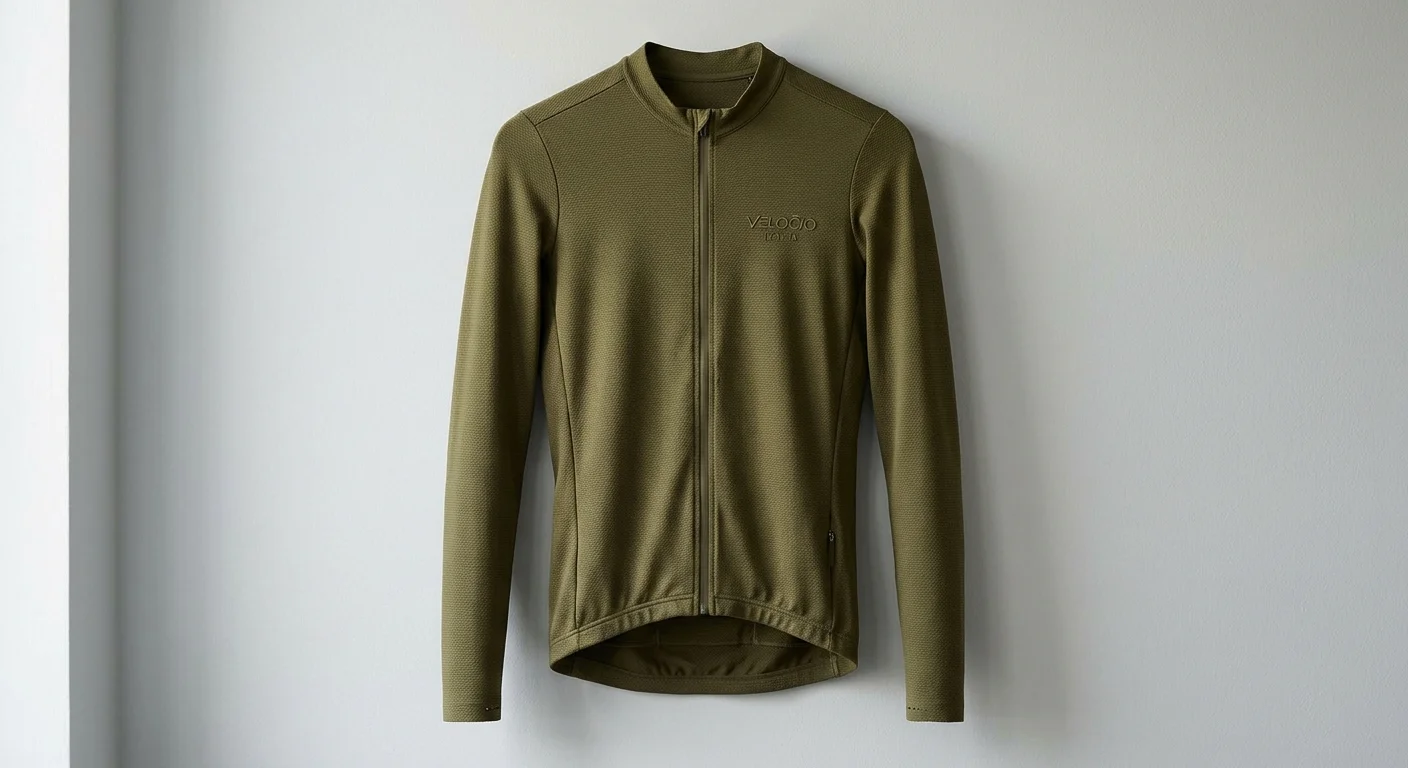
The Mechanism Jersey doesn't try to be everything. That restraint is what makes it worth $205 — or the exact reason it isn't.
What it gets right:
Weight and breathability work together in a way that feels almost unfair. At 93g with highest-rated ventilation, it disappears on your body at 25°C. Cheaper jerseys can't match that.
The fit stays put. Elastic at the biceps and waist means no fabric migration at mile 50. The three rear pockets plus zip pocket are easy to reach while moving — not just there for show.
It's built for the drops. Close, stretchy, and shaped to cut through air without fighting you.
Where it asks too much:
€190 is real money for a jersey with a narrow use case.
Tall riders get cut short. Over 6 feet, expect midriff exposure on the sidewalk.
Sizing takes effort. Non-standard proportions mean you may end up returning it.
Cold weather and relaxed endurance riding are outside what this jersey does well.
The honest verdict: Buy this if you ride fast, run warm, and already know your size. Skip it if you want versatility or value. Pair it with Mechanism bibs and a lightweight base layer — the kit earns its price as a full system.
Conclusion
The Pas Normal Studios Mechanism Jersey earns its price tag. But it's built for a specific type of rider — and that rider might not be you.
You race hard. You hold an aggressive position for hours. Italian Lycra construction makes a real difference to your comfort and your power output. You've been wondering whether PNS lives up to the hype. It does. The aerodynamic cycling jersey market is packed with expensive promises. The Mechanism delivers on most of them — and it does so with a quiet, almost stubborn confidence.For retailers, comparing premium cycling jersey wholesale prices helps evaluate long-term product value.
That word "most" matters, though. It's carrying real weight here.
Upright riders won't get full value from this fit
Casual weekend riders may find the price hard to justify
Riders who run warm should check the sizing guide first
Compare the Mechanism Pro side by side before you buy
Still reading? Good. That makes you the exact type of rider this jersey was built for.
Check out [ Shop the Mechanism Jersey → ] or read the Mechanism bibs review to complete your kit — before your size sells out.