Choosing between a gravel bike and a road bike sounds simple. But once you're standing in a bike shop, the second-guessing starts fast.
Both bikes look similar at first glance. Yet they ride like two completely different machines built for two completely different purposes. That gap matters more than most people expect.
The real question isn't which bike is better . It's which one fits you — your terrain, your goals, and the rides you take week after week.
Maybe you chase weekend miles on smooth tarmac. Maybe you prefer fire roads and unpaved trails. Or maybe you're just trying to make a smart first purchase without wasting money on the wrong bike. Either way, the answer comes down to a few key details:
Gravel bike geometry
Tire width
Frame weight
How each bike handles the roads you ride
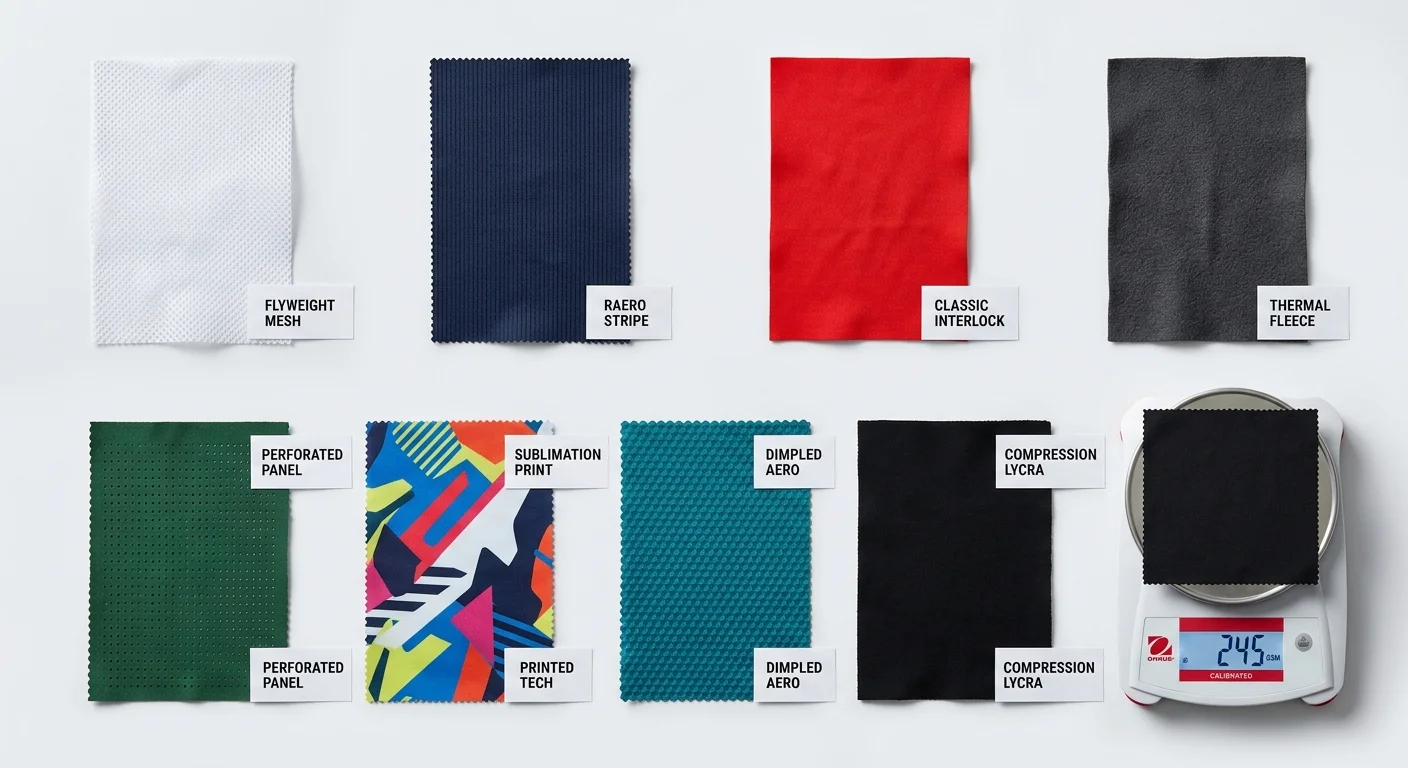
That's what we're breaking down here.Leading cycling apparel manufacturers often design different jersey collections for road and gravel riders because their riding demands differ.
Gravel Bike vs. Road Bike: 6 Key Technical Differences That Matter
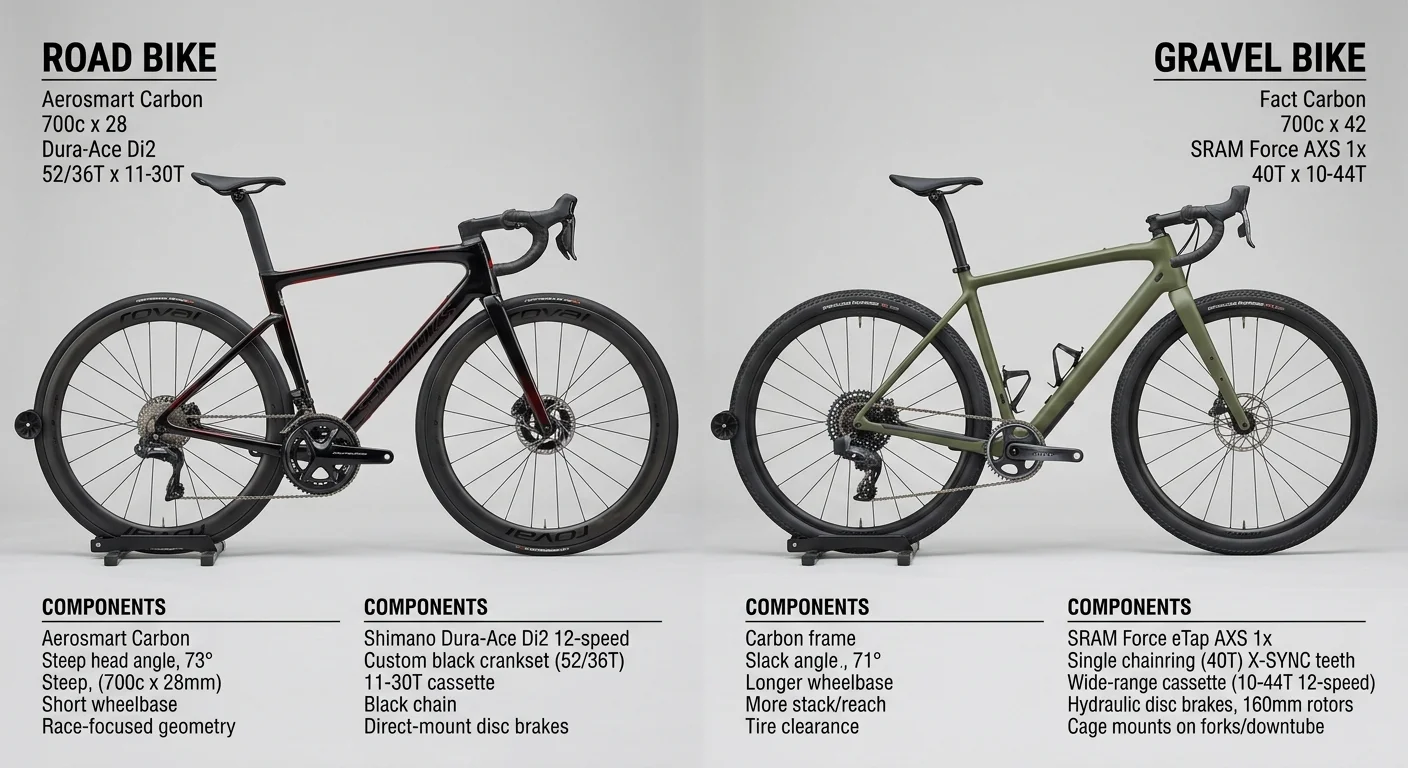
Six differences. That's all it takes to turn two bikes that look almost identical into machines with wildly different personalities.
These aren't marketing distinctions. They're engineering decisions — measurable, specific, and ones you'll feel on every ride. Here's what truly separates them.
1. Frame Geometry: The Numbers Behind the Riding Position
The most fundamental difference between these bikes isn't visible at a glance. It lives in the geometry chart.
Take a mid-size frame comparison. A typical gravel bike runs a stack of 586 mm and a reach of 387 mm . A race road bike of the same size measures 593.6 mm stack and 399.6 mm reach . An endurance road bike sits even lower — about 551 mm stack , a full 35 mm shorter than the gravel equivalent.
Here's what that means in real riding. One experienced cyclist measured his effective reach at 79.5 cm on his road bike versus 74 cm on his gravel bike . That's a 5.5 cm difference in how far forward he leaned. His stack height shifted by 7.5 cm. Same rider. Two completely different body positions.
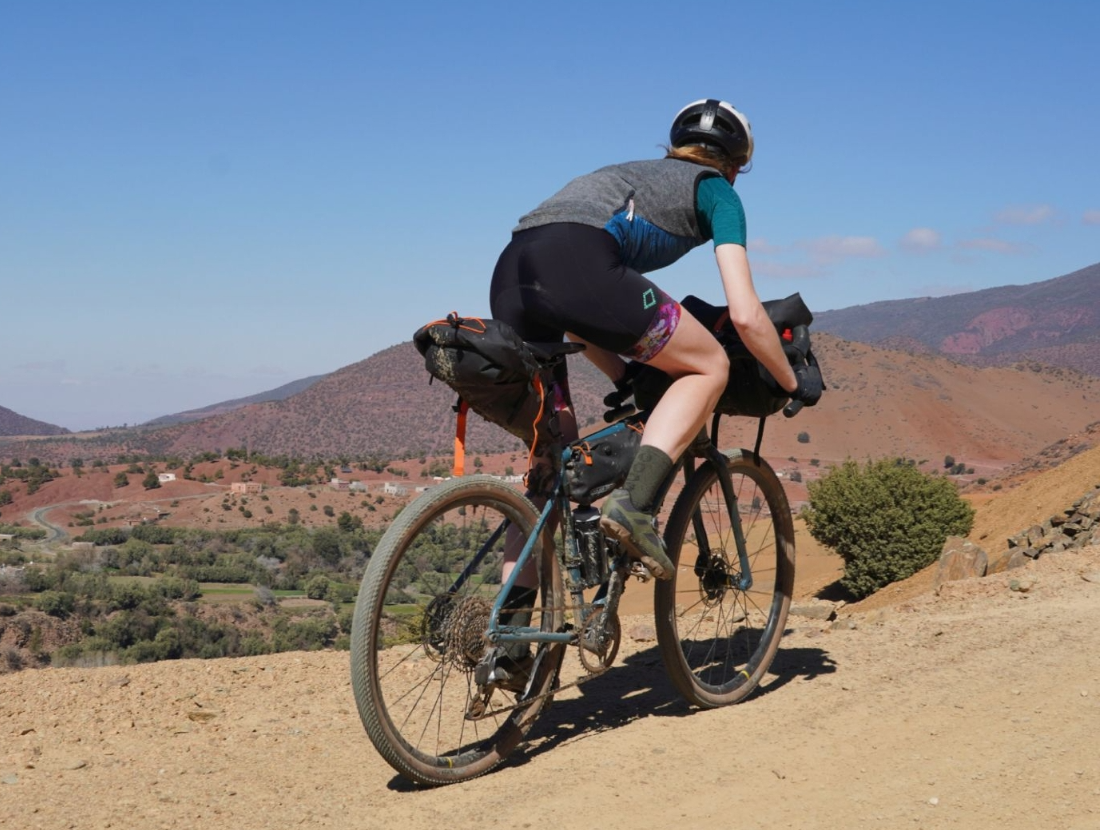
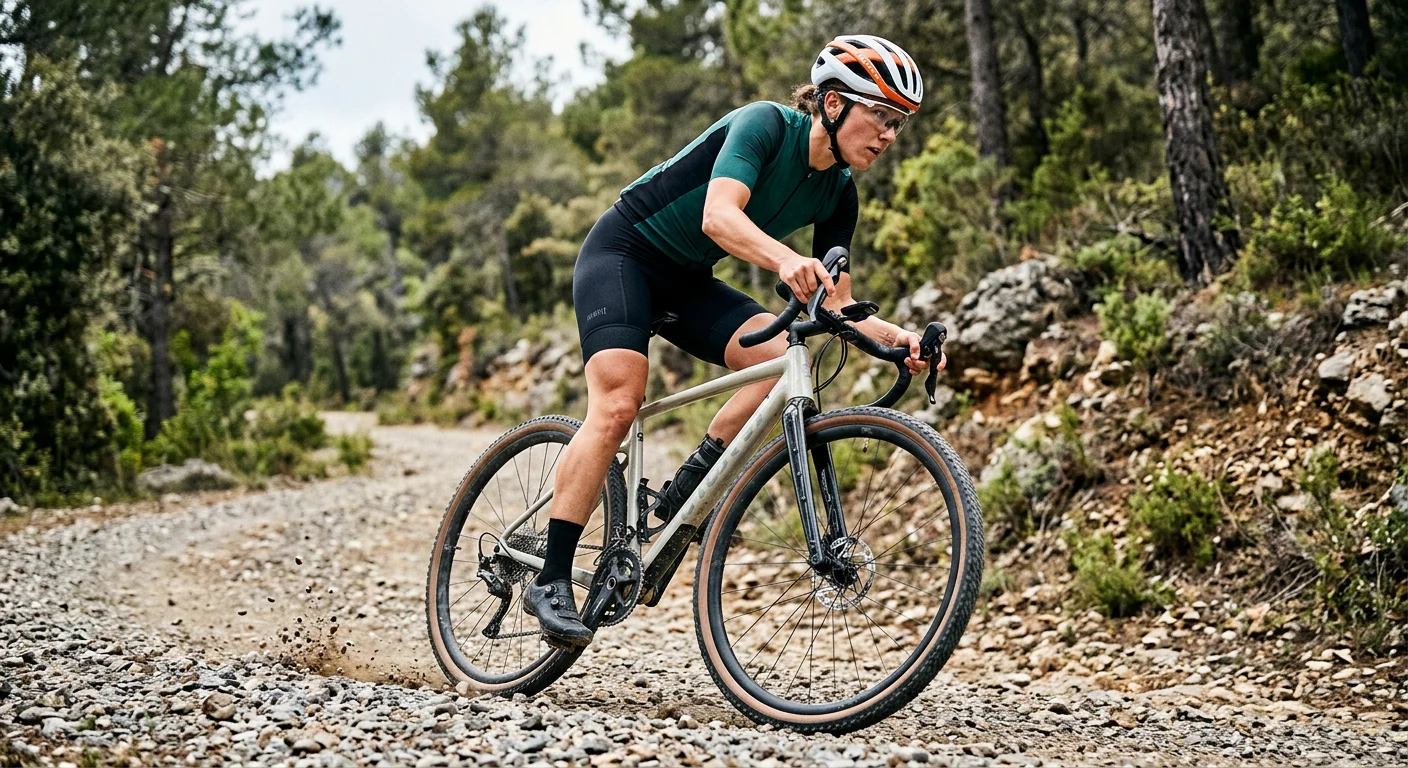
Gravel bikes also carry a slacker head tube angle — around 71.5° versus 74° on endurance road bikes. Add a longer wheelbase and a lower bottom bracket, and you get a bike that feels noticeably calmer at 30–60 km/h on rough descents. Road bikes use tighter geometry and steeper angles. They respond faster in corners, but demand more focus on broken surfaces.
Bottom line on geometry: Every 20–30 mm of extra stack cuts upper-body lean by about 3–5°. A professional cycling clothing factory also adjusts jersey patterns to match these different riding positions.On a four-hour ride, your neck and lower back will notice that more than any other spec on the sheet.
2. Tire Width and Clearance: Where Comfort and Capability Are Built
Road bikes run 23–32 mm tires at 6–7 bar (87–102 psi). Gravel bikes run 35–50 mm tires at 2.2–3.0 bar (32–44 psi). That pressure gap alone tells most of the story.
At 75 kg, a 40–45 mm gravel tire at low pressure deforms against the ground. It absorbs vibration before it ever reaches your hands and spine. A 25 mm road tire at 7 bar sends every surface bump straight up through the fork. On smooth asphalt, the road tire wins — rolling resistance drops by about 3–5 watts at 30 km/h. On gravel or broken pavement, the picture flips. The road tire slows you down and beats you up. The gravel tire rolls straight through.
Frame clearance plays a role too. Gravel frames fit 40–53 mm tires with at least 6 mm of clearance on each side , following ISO-4210 safety standards. Most road frames cap out at 4 mm of clearance , which limits practical tire width to 28–32 mm.
Practical implication: Your routes include any unpaved stretches — even occasional chip-seal or hard-packed dirt? The road bike's tire limit becomes a real problem, not just a theoretical one.
3. Drivetrain Gearing: Tight Ratios vs. Wide-Range Survival Gears
Road bikes run a 52/36T or 50/34T chainring with an 11–28T or 11–30T cassette. The steps between gears are often just 1 tooth — 11, 12, 13, 14, 15, 17. That precision lets you dial in cadence within 3–5 rpm at race pace. It's a finely tuned instrument.
Gravel bikes go the opposite direction. A 40T single chainring paired with a 10–42T cassette gives you the low gears you need for 15% climbs on loose dirt. On that same climb, a road bike's lightest 34×30 combo leaves you grinding at 60 rpm or below — standing, struggling, losing traction. The tradeoff is coarser shifting. Each gear change moves cadence by 5–10 rpm rather than 3–5, so the rhythm feels less smooth at speed.
Group rides and criteriums: Road gearing wins.
Loaded bikepacking or technical climbs: Gravel gearing is the practical choice.
4. Brakes, Weight, and Wet-Weather Control
Modern gravel bikes run hydraulic disc brakes as standard — 160 mm rotors front and rear , sometimes 160/140 mm. Wide tires combined with hydraulic discs give you consistent, controlled stopping power in mud, rain, and on long alpine descents where rim brakes fade fast.
Today's road race bikes have moved largely to disc brakes too. But the setup is built for different conditions — clean tarmac, predictable surfaces, and speeds where aerodynamic drag matters more than mud clearance.
On weight, road bikes hold a clear edge. A competitive road build comes in 1–1.5 kg lighter than a comparable gravel setup. That gap matters on sustained climbs and any time you're pushing hard on smooth ground.
The honest summary: No single bike wins across the board. The road bike is faster, lighter, and more aerodynamic on pavement. The gravel bike is more stable, more comfortable, and more capable off it. These six differences aren't features to admire on paper — they're the decisions that shape how every ride feels beneath you.
Riding Position and Long-Distance Comfort: Why Geometry Changes Everything
Three hours in, your lower back starts talking. Then your neck. Then your wrists. That's not a fitness problem — that's a geometry problem.
The difference between a gravel bike and a road bike isn't just what they're built for. It's how they position your body across those hours. That positioning gets measured in millimeters on a geometry chart. Those millimeters decide whether you roll home feeling strong or roll home feeling broken.
Here's what the numbers mean for your body.
Stack and reach are the two levers that control everything. A gravel bike sits 10–30 mm taller in stack than a race road bike. It also pulls the reach 5–15 mm shorter. That combination lifts your upper body out of the aggressive forward lean — from a typical road race angle of 30–45° to a more upright 45–55°. On paper, that sounds minor. On hour four, it's the difference between a ride you want to repeat and one you're glad is over.
What that shift changes:
Wrist load drops — a more upright torso moves weight back, off your hands
Neck extension decreases — less reaching forward means less craning upward to see the road
Lower back tension falls — shorter reach cuts lumbar flexion and reduces the muscle effort needed to hold the position
The gravel bike's slacker head tube angle (around 70–72° versus 72–74° on a road race bike) adds another layer. Many clubs order custom cycling jerseys with different fits for endurance and gravel events.Paired with a longer wheelbase, it makes the front end calmer and more predictable. Your shoulders stop making small corrections. Your core stops picking up the slack. That energy stays in your legs, where it belongs.
Over a 5–8 hour ride, that geometry advantage shows up clearly: upper-body fatigue arrives an estimated 1–2 hours later , and upper-limb load drops by 10–20% compared to a race road position.
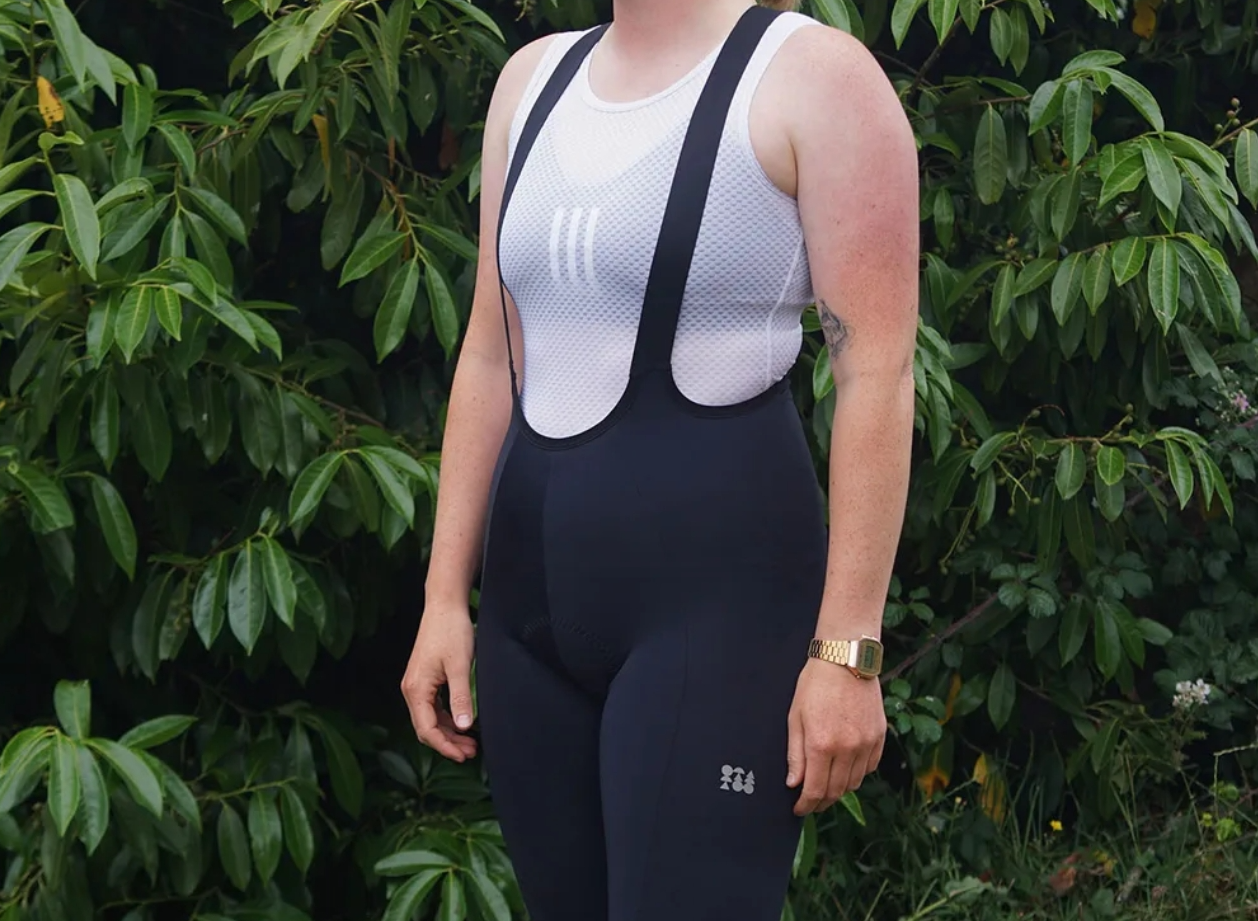
One thing most riders miss: gravel geometry shifts more of your weight onto the saddle rather than spreading it across the bars. More hours in the saddle means more sustained pressure on sit bones and soft tissue. Plan long rides on a gravel bike? Quality padded bib shorts aren't optional comfort — they're part of the system. A high-density chamois can cut localized saddle pressure by an estimated 20–40%. That matters a lot on rough terrain when the hours stack up. Runcyclingapparel .com carries bib shorts built for long-distance, mixed-terrain riding — worth pairing with the geometry before you ever clip in.
The bottom line: Road race geometry makes you fast at the cost of comfort over time. Gravel geometry keeps you comfortable without sacrificing the whole ride. Neither is wrong. But one of them fits your body to the hours you plan to spend in the saddle — and that fit matters more than almost any other spec on the sheet.
How to Choose: Match Your Bike to Your Riding Terrain and Goals
Here's what most bike guides skip: the "best" bike is the one that fits the roads under your wheels — not the one with the most impressive spec sheet.
Geometry data, tire comparisons, drivetrain breakdowns — all of it comes down to one practical question: Where do you ride, and what do you need from those rides?Brands expanding into cycling apparel often use OEM/ODM cycling apparel services to build separate road and gravel product lines. Answer that straight, and the choice becomes clear.
Use this three-step filter. It takes less than two minutes.
Step 1: What Does Your Terrain Look Like?
Not the terrain you dream about riding. The terrain you ride every week.
80%+ smooth tarmac — city roads, major cycling routes, well-paved highways → Road Bike
Mixed surfaces — paved plus 30% or more of gravel, broken road, or dirt → Gravel Bike
Mostly unpaved — gravel tracks, forest roads, dirt paths make up 70%+ → Gravel Bike, no question
The number that matters here is 30%. Cross that threshold — more than 30% of your regular mileage on unpaved or rough surface — and a road bike's 25–28 mm tires start working against you. They slow you down and punish your body. A gravel bike's 40–45 mm tires add 60–80% more ground contact. That means more grip, less vibration, and far fewer moments where you have to choose between slowing down and pushing through.
Step 2: What Are You Trying to Do?
Speed and competition pull in one direction. Comfort, exploration, and versatility pull in the other. Be specific.
Racing, group rides, chasing pace, improving times on tarmac → Road Bike . At 25–35 km/h group ride pace, gravel geometry and wider tires put you 1–2 km/h behind. Plus, they cost you more energy just to stay there.
Commuting on rough roads, weekend exploration, bikepacking, mixed-use → Gravel Bike . The upright geometry, extra mounts for racks and bags, and wider tire clearance make it useful in ways a road bike was never built to be.
One bike for everything → Gravel Bike . Every time. Budget or storage limits you to one purchase? Gravel bikes handle more scenarios without breaking down on any single one of them.
Step 3: How Often Do You Ride, and On What?
Ride frequency shifts the math.
Riding Pattern | Best Choice |
|---|---|
3+ times/week, 80%+ smooth pavement | Road Bike — optimize for efficiency |
3+ times/week, 30%+ rough or unpaved | Gravel Bike — stability pays off every ride |
1–2 times/week, casual or exploratory | Gravel Bike — versatility wins at this volume |
Ride three or more times a week on clean roads and you feel the road bike's efficiency build up over time — lower rolling resistance, sharper cadence control, faster average speeds. Ride rough surfaces that often on a road bike and you pay a toll on every single outing: more physical fatigue, more caution on descents, more routes you end up skipping.
The Quick Decision Framework
Two questions cut straight to the answer:
1. What's my primary goal — speed and competition, or comfort and exploration?
2. What surface covers 70% or more of my rides — smooth tarmac, or mixed/rough terrain?
Your Answers | Your Bike |
|---|---|
Speed + 80%+ tarmac + racing weight = priority | Road Bike |
Exploration + 30%+ mixed terrain + one-bike flexibility | Gravel Bike |
Somewhere in the middle, budget limits to one bike | Gravel Bike |
The middle case deserves a closer look. Pavement percentage sits between 70–80% and you're torn? The gravel bike handles the uncertainty better. It manages smooth road fine. It handles rough road well. A road bike on rough road is a different story — slower speeds, more physical strain, and that small voice in the back of your head saying maybe I'll skip that section today.
A Final Note on Gear
Whichever bike you go with, the right kit makes it better. Road riders get real benefit from aerodynamic jerseys and lightweight gloves — they keep you comfortable through sustained high-effort miles. Gravel riders putting in long mixed-terrain days need padded bib shorts with a high-density chamois. That upright, saddle-weighted position pushes more sustained pressure through your sit bones than a road position does. Quality padding makes a clear difference over four to six hours. Runcyclingapparel.com carries both road and gravel-specific apparel built for these exact scenarios. Match your kit to your bike before your first long ride — not after.
The bike sets the direction. The right gear makes sure you enjoy the ride.
Which Is Better for Beginners: Gravel Bike or Road Bike?
Most beginners get this wrong before they even walk into a bike shop. They assume a road bike is the serious choice — the professional one. Picking anything else feels like settling. The data says otherwise.
For most new riders, a gravel bike is the smarter first purchase. Not because it's more exciting. Because it forgives more mistakes.
Here's what that looks like in practice. Gravel bikes sit you more upright — higher stack, shorter reach, longer wheelbase. That geometry quietly widens your margin for error. Misjudge a corner? Hit a pothole? Brake a half-second late? A relaxed geometry absorbs the hit. A road bike's snappy, aggressive setup makes it worse.
Tire width works the same way. Gravel bikes run 35–50 mm tires at around 40 PSI . Road bikes run 23–32 mm tires at 90–100 PSI . That pressure difference tells the whole story. Wide, low-pressure tires cushion impacts. They grip broken pavement and keep the bike stable through cracks and debris. Narrow, high-pressure tires transmit everything — fast on clean asphalt, punishing on anything less.
Yes, road bikes are faster. GCN's testing found a gravel bike averaged 2 km/h slower . On a 100 km ride, that adds up to about 20–30 extra minutes . That gap is real. For a beginner, it rarely matters.
What matters first is confidence.For retailers, entry-level cycling jerseys usually offer the best cycling clothing wholesale price-to-performance balance. You need a bike that stays calm on rough surfaces and unfamiliar roads. One that handles mixed terrain without punishing you for small mistakes. That's what builds a rider.
The simple rule:
Broken pavement, potholes, bike paths, gravel, mixed surfaces, or uncertain routes → Gravel bike
Certain you'll ride smooth pavement only and speed is the priority → Road bike
Not sure? → Gravel bike
Budget Breakdown: What to Expect at Each Price Tier
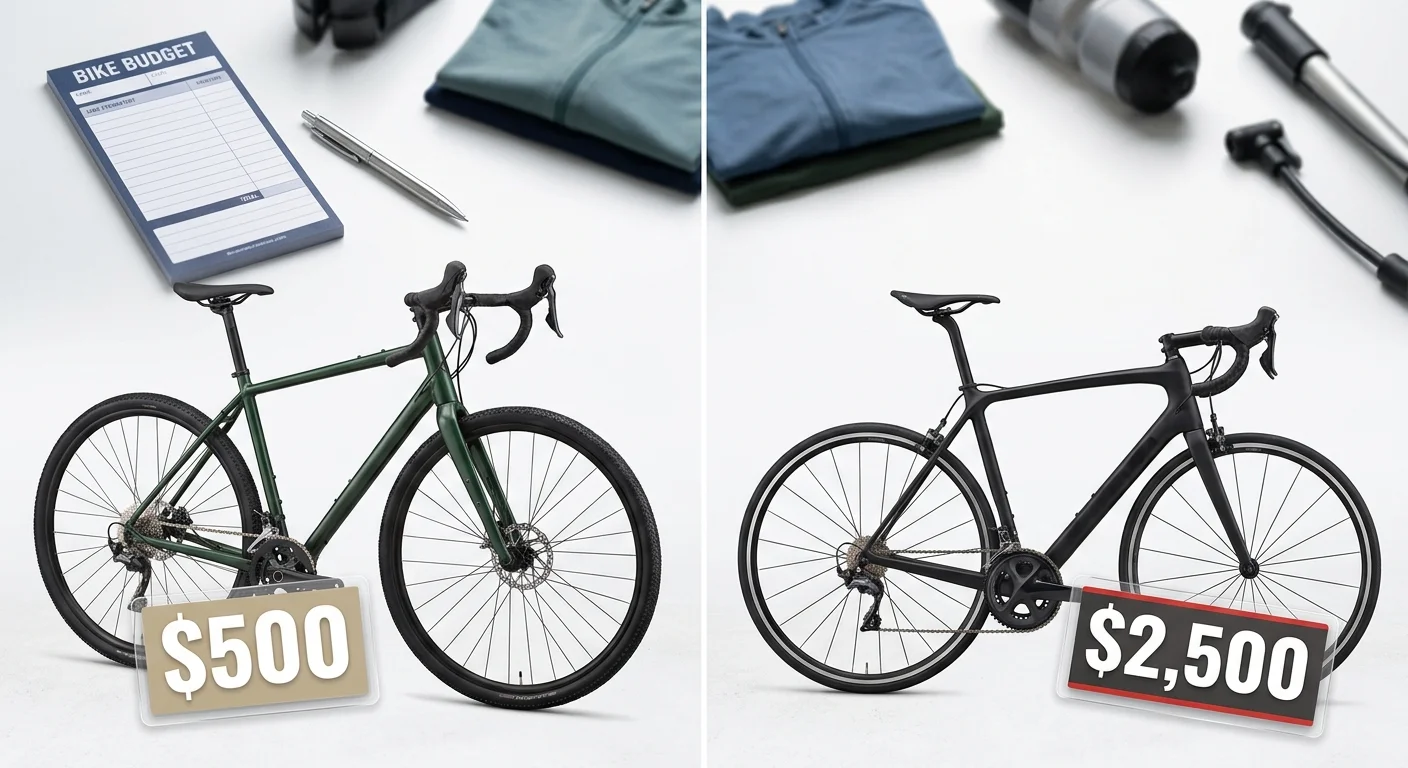
Price shapes everything. Your budget draws the first line — before geometry charts or drivetrain specs. Where you land on that line decides which differences between these two bikes matter to you.
Here's how the tiers break down.
Entry Level: $500–$1,000
Both bikes deliver capable aluminum frames and mechanical disc brakes at this price. The differences show up in the details.
A gravel bike like the Poseidon X Gen 3 ($999) or Salsa Journeyer ($999) gives you:
- 700×40–45c tire clearance
- 10+ mounting points for racks and bags
- A 1×10 or 1×11 drivetrain with a wide 11–42T cassette
Minimum gear ratio lands around 0.90–0.95 . That works on loaded climbs and loose terrain.
A comparable entry road bike runs narrower 25–28c tires. You get 2×8 Claris gearing with an 11–28T cassette, and a minimum gear ratio closer to 1.06 . It weighs 0.5–1.5 kg less .
Expect to pay 5–15% more for entry gravel over equivalent road specs. Experienced cycling apparel wholesalers typically stock both road and gravel collections to meet different customer needs.Wider tire clearance, a reinforced fork, and all those extra mounting points add real engineering and build cost.
Mid-Range: $1,000–$2,500
Both bikes get a clear performance boost here. The spec gap between them also widens.
Mid-range road bikes step into Shimano 105 territory. You get aluminum frames with carbon forks and full hydraulic disc brakes around the $1,500 mark. Weight sits at 8.5–9.5 kg .
Mid-range gravel bikes hit full hydraulic discs at $1,500+ too. But the real shift comes between $1,800–$2,500 :
- Full carbon frames
- GRX 600/800 or SRAM Rival XPLR groupsets
- Tire clearance up to 700×50c or 650b×2.2"
Weight runs 9.0–10.5 kg — about 0.5–1.0 kg heavier than road equivalents. The wider frame tolerances and mounting hardware account for that extra weight.
Industry consensus puts $2,000–$3,000 as the gravel sweet spot . That's the range where performance gains per dollar peak.
High End: $2,500+
Past $3,000, both bikes come with full carbon frames, carbon wheels, and top-tier electronic groupsets. The performance is real. So is the law of diminishing returns.
The honest verdict: most riders feel the biggest jump between $800 and $2,000 — not between $3,000 and $6,000. Unless you're racing or putting in serious miles each week, the mid-range tier covers everything you'll use.
Also, factor kit into your budget from the start. Gravel riders especially — that upright geometry loads the saddle hard over long hours. Quality padded bib shorts from runcyclingapparel.com close that comfort gap before it becomes a problem at mile forty.
Essential Cycling Gear for Gravel and Road Riders (Apparel & Equipment Guide)

The bike gets you there. The gear determines whether you want to go back.
That's not a sales pitch — it's physics. Wrong kit on a four-hour gravel ride and you're counting miles. Right kit and you're planning the next one before you're home.
Here's what matters most, split by bike type.
The Non-Negotiables (Both Bikes)
Helmet. Start with CPSC or EN1078 certification as a baseline. Road helmets weigh 200–260g — light, ventilated, aerodynamic. Gravel helmets run heavier at 250–320g. You get more rear coverage and often MIPS protection. Those extra grams earn you better protection on loose dirt versus clean tarmac.
Bib shorts with a quality chamois. Worth covering twice because the context is different here. Gravel geometry pushes more weight onto your saddle than a road position does. On rough terrain, a high-density chamois with multi-zone foam construction cuts that sustained pressure down hard. Road bibs focus on aerodynamics — thinner fabric, no pockets, 150–190g per pair. Gravel bibs go the opposite direction: reinforced fabric, side cargo pockets for gels and a phone, plus DWR water-repellent coating for mud and rain. runcyclingapparel.com carries both — match your chamois to your riding style before your first long day out.
Jersey. Road jerseys fit tight — race or aero cut, 90–130 g/m² fabric, three rear pockets. Gravel jerseys run looser with 4–7 total storage pockets across the rear and sides. That storage is real. Four hours from anywhere, you need food, tools, and a rain layer within reach. No stopping required.
Gloves. Road riders need at least half-finger gloves with 3–5mm gel or foam padding at the palm. For gravel riders, full-finger gloves are not optional — treat them as required gear. Gravel kicks up debris. Crashes on loose surfaces hit differently than tarmac ones. Your palms take the brunt of both.
Basic repair kit. Pack two spare tubes, tire levers, a multi-tool with chain breaker, a mini pump, and a CO₂ cartridge. Gravel riders: add a tubeless plug kit. Tubeless tires at lower pressure seal most trail punctures on the go — but you need that backup kit for the ones they don't seal.
Road vs. Gravel: Where the Gear Diverges
Item | Road Priority | Gravel Priority |
|---|---|---|
Bib Shorts | Lightweight, aero, minimal bulk | Cargo pockets, durability, DWR coating |
Jersey | Race fit, low drag | Relaxed fit, max storage, layering-friendly |
Helmet | Ventilation, aerodynamics | Coverage, impact protection, MIPS |
Gloves | Half-finger, palm cushion | Full-finger, abrasion resistance |
Shoes | SPD-SL/Look, stiff sole | SPD (walkable), mid-stiff sole |
The Practical Scenario
Weekend gravel ride, 50–100 km, mixed surfaces: Gravel cargo bib shorts with 3–5 combined pockets let you ditch the backpack. Your back stays cooler. Fatigue drops. A multi-pocket jersey handles food and a compact rain shell. Full-finger gloves and wraparound glasses cover the rest.
Road group ride or Gran Fondo, 70–120 km: Go with a lightweight aero bib, race-cut jersey, and half-finger gloves. In a paceline, every gram counts. So does every square centimeter of drag.
The right apparel doesn't just add comfort — it removes friction from the ride itself. That's true in the physical sense and in every other sense too.
Conclusion
The right bike isn't the "better" bike. It's the one that fits the riding you do — not the riding you imagine on your best days.
Clean tarmac and speed? A road bike's aerodynamics and lightweight frame will pay off on every pedal stroke. More of a gravel tracks, mixed terrain, wherever-the-road-ends kind of rider? Gravel bike versatility isn't a compromise. It's the whole point.
Three things to take with you:
Know your terrain
Be honest about your goals
Don't let spec sheets make the decision for you
Once you've picked your bike, make sure your gear keeps up. The right cycling kit — performance apparel, gloves, helmets — makes every mile feel sharper and more focused. Head over to runcyclingapparel.com to find gear that matches your ride before you hit the road.
The best bike decision you'll ever make? Getting out and riding it.