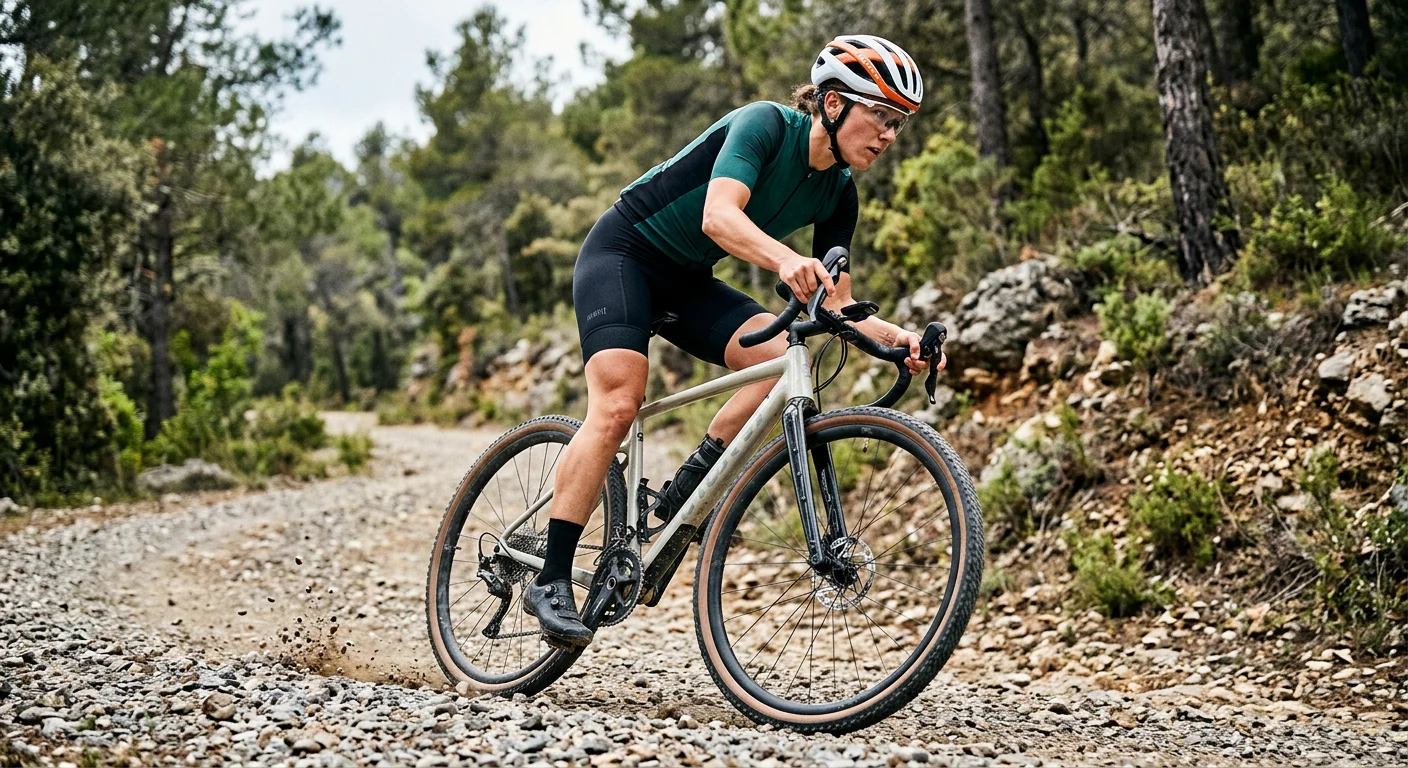
Three hours into your first century ride, around mile 60, the pain stops being background noise. It becomes the one thing you can think about. Not your legs. Not your lungs. That spot.
For brands scaling performance gear, cycling apparel custom solutions are no longer optional — they're the baseline for serious endurance products.
Been there? Then you know a chamois pad isn't a luxury. It's the difference between finishing and quitting.
Here's what nobody warns you about: the chamois market is a mess to walk into cold. Foam density, gel inserts, multi-layer construction, anatomical cuts — the spec sheets read like a textbook. A $35 pad sits right next to a $280 one, with no clear reason why.
This guide cuts through all of it. You'll leave with:
A concrete 3-step method to match a chamois to your ride
A plain-English breakdown of what those technical terms feel like at mile 80
A price-tiered shortlist you can act on today
The 3-Step Chamois Match Method: Sit Bone Measurement and Riding Position
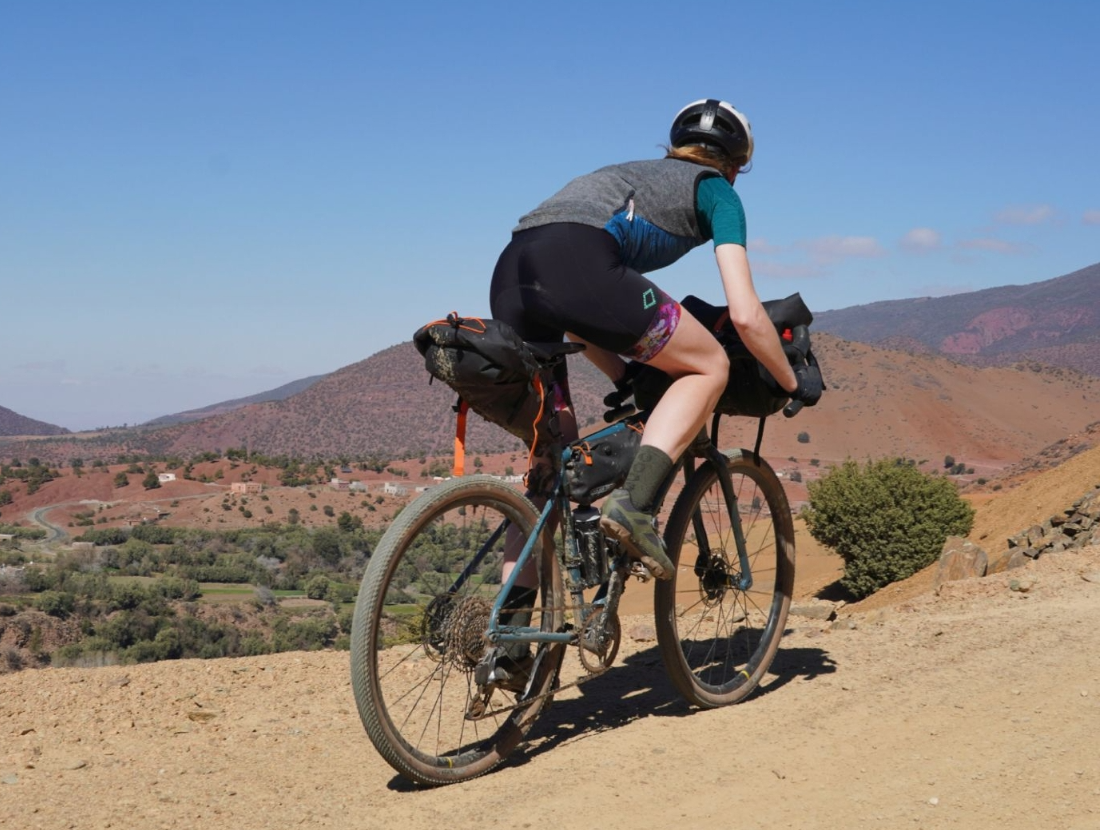
Most people skip this part. They eyeball a chamois, pick medium, hope for the best. Then they wonder why mile 70 still hurts.
Behind most premium kits, cycling apparel manufacturers are already engineering pads based on biomechanical data — not guesswork.
Here's the thing: chamois selection isn't guesswork. It's geometry. Your sit bones have a measurable width. Your riding posture creates a predictable pressure pattern. Match those two numbers to the right pad, and you've solved most of the problem before you ever turn a pedal.
Five minutes. Three steps. Here's how it works.
Step 1: Measure Your Sit Bone Width (2–3 minutes)
You don't need a lab for this. Grab a piece of corrugated cardboard or a dense memory foam pad. Set it on a hard chair — not a soft couch, which will absorb the impression. Put on your cycling shorts, sit down, and rock your pelvis forward and back 10 to 15 times the way you would on a saddle. Stand up.
You'll see two indentations. Measure from center point to center point, in millimeters. That number is your baseline.
Reference ranges:
- Men: 100–120mm is typical
- Women: 110–140mm is typical
For precision within ±2mm, a proper bike fit with tools like the PRO Saddle Cube will get you there. The cardboard method works well enough for a first pass, though.
The key rule: your chamois pad's effective support width should run 10–15mm wider than your measured sit bone distance. Measure 115mm? Look for a pad in the 125–130mm range. Go narrower than that, and the pad sits beside your sit bones — not under them.
Step 2: Map Your Riding Position to Pressure Pattern (1 minute)
Sit bone width is the foundation. Your riding posture decides where that pressure lands.
Riding Position | Pressure Distribution | Weekly Volume | Chamois Match |
|---|---|---|---|
Aggressive road (low front end) | Concentrated at pubic arch and perineal channel | Weekend rides, under 3hrs | Anatomical cut with front relief channel, 4–6mm thickness |
Gravel / neutral mixed | Even load across full sit bone contact | 3–6hrs, 3–4 days/week | Multi-layer full-coverage construction, 8–10mm thickness |
MTB / upright, out-of-saddle | Rear-shifted weight, higher rear panel load | 6hrs+, multi-day | Reinforced rear wings + high-stretch perimeter, 12–15mm thickness |
Indoor trainer, static high-cadence | Single-surface shear force, minimal position change | Short sessions, high frequency | Anti-shear fabric + high-density buffer, 6–8mm thickness |
The pattern here matters. Road riders in an aggressive position don't need maximum thickness — they need directional relief. Indoor riders don't need cushion depth — they need shear resistance. Thickness without the right geometry solves nothing.
Step 3: Lock In Thickness and Density Grade (1 minute)
You've confirmed your sit bone width and mapped your riding posture. The last variable is density. Density controls how much support you still have at mile 80 — not just mile 5.
Thickness by weekly time-in-saddle:
- Under 3hrs/week → 4–6mm
- 3–6hrs/week → 8–10mm
- Over 6hrs/week or multi-day → 12–15mm
Density grade:
- Lower-intensity riding: Grade A (compression resistance under 30 kg/cm²) — softer feel, suited for shorter efforts
- Higher-intensity or longer riding: Grade B (compression resistance over 40 kg/cm²) — holds its structure under sustained pressure
A concrete example: 112mm sit bone width, road riding with a forward-lean position, around 4 hours per week. That points to a 5mm anatomical-cut chamois, effective pad width 122–127mm, Grade B density. Not a pad in the 12–15mm range. Not a gel insert built for an upright commuter. This specific combination.
One More Check: Saddle Position and Symptom Feedback
The chamois doesn't work alone. Two alignment problems can break even a well-matched pad:
Saddle setback: Use the KOPS principle — knee over the pedal axle. A saddle pushed too far forward shifts pressure off your sit bones and into the perineal zone. Chamois width won't fix that.
Reading your pain signals:
- Lower back pain after rides → saddle too high; drop it 5–10mm and look at a chamois with wider rear wing support
- Shoulder and neck tension → handlebar stack too low; raise the stack height and move to a neutral-posture multi-layer chamois
- Subtle inner thigh or perineal discomfort with no clear cause → check cleat rotation; a ±5mm tweak can shift sit bone pressure away from soft tissue
These aren't rare cases. They're your feedback loop. Pay attention to them, and you'll know whether your chamois match is doing its job.
Ride Distance × Terrain Type: The Two-Axis Selection Matrix
Distance changes everything. A chamois that gets you through a 25km commute with zero complaints will start breaking down around kilometer 80 on a long training day. This isn't about quality — it's about matching the tool to the job.
The matrix below works on two axes: how far you ride, and what surface you ride on. Cross-reference your column and row. That intersection is your starting point.
This is exactly where high-end cycling apparel suppliers differentiate themselves — by matching pad geometry to terrain-specific force patterns.
Under 30km — Commute and Casual Riding
Short-distance riders are the most over-padded group in cycling. More cushion feels like more comfort. But a thick chamois on a 20-minute commute creates friction. It never compresses far enough to reach its support zone.
What works here:
- 4–6mm single-density foam , light compression resistance (under 30 kg/cm²)
- Flat or mildly contoured profile — no deep anatomical channel needed
- Moisture-wicking fabric layer matters more than thickness at this distance. Sweat management stops chafing before pressure ever becomes an issue
- Seamless chamois construction cuts down seam irritation for upright commuter posture
Road commuters can stay minimal. You're on a hybrid or city bike with an upright position. A flat-panel 5mm pad with anti-bacterial chamois fabric handles the job well.
50–100km — Training Rides and Weekend Efforts
This is where pad selection starts to have real consequences. At the 50km mark, low-density foam has already compressed down to about 40% of its original thickness. You feel that. Your sit bones feel it even more.
The 50–100km chamois profile:
- 8–10mm multi-layer chamois construction — upper layer for moisture transfer, middle layer for initial impact, base layer for sustained load-bearing
- Dual-density foam is worth the price jump here. The softer outer zone handles initial contact. The firmer inner core holds its structure across long efforts
- Gel inserts work well in this range for road cyclists — they spread perineal pressure across 3–5 hour rides
- Anatomical cut with perineal pressure relief channel becomes a must for forward-leaning road geometry
Terrain split at this distance:
Terrain | Chamois Priority | Thickness |
|---|---|---|
Road | Perineal channel + front relief zone | 8–10mm |
Gravel | Full-coverage construction, wider rear panel | 10–12mm |
Indoor trainer | Anti-shear fabric, high-density buffer, thinner profile | 6–8mm |
Gravel riders take repeated small impacts that road chamois aren't built to handle. A wider, flatter pad with reinforced lateral edges manages the position shifts that come with rough terrain. It outperforms a narrow road-specific cut by a wide margin.
100km+ — Long Distance, Multi-Day, and Endurance Events
Past the century mark, chamois performance isn't about comfort at the start. It's about how much support is left at hour six .
A quality 12–15mm multi-layer chamois with Grade B density (compression resistance above 40 kg/cm²) holds about 70% of its original support structure at the 100km mark. A basic 8mm single-density pad drops to near 40% by that point. That 30-point gap is the difference between finishing strong and spending the last two hours standing on your pedals.
What the 100km+ chamois needs to deliver:
- 12–15mm multi-density foam — triple-layer construction with progressive firmness zones
- Wide sit bone support platform — at least 10–15mm wider than your measured sit bone distance, with reinforced rear wings for sustained seated climbing
- Antibacterial chamois fabric is essential, not optional. Multi-hour moisture exposure leads straight to saddle sores without it
- High-stretch seamless perimeter bonding — lets you move out of the saddle freely without fabric bunching
Multi-day riding adds one more variable: skin integrity over back-to-back hours. A chamois that handles day one fine can cause real skin breakdown by day three. The antibacterial treatment needs to be strong enough to last. Look for silver-ion or Polygiene-treated fabrics for consecutive riding days.
For mountain bike and mixed-terrain endurance, go with a shorter, wider chamois profile with a reinforced rear panel. MTB riders shift weight and stand far more often. A long, narrow road chamois moves with you wrong and rolls at the edges under lateral load.
The bottom line across all three distance tiers: thickness and density scale with distance. Terrain type determines geometry — the cut, the channel placement, the panel width. Get both axes right, and you've removed most of the reasons a long ride stops being fun.
Chamois Parameter Decoding Table: Density, Thickness, Compression & Comfort Sensation
Numbers on a spec sheet don't tell you what mile 70 feels like. This table does.
Modern OEM/ODM cycling apparel production is increasingly driven by lab-tested compression and recovery data, not traditional padding assumptions.
The gap between "12mm dual-density foam" and "my sit bones are on fire" is real. It costs people good rides. This is the translation layer — technical parameters mapped to real body feedback. Read a product listing and know what you're buying before you buy it.
Foam Density and Thickness: What Compression Means for Your Body
Type | Structure | Thickness | Compression at Distance | Remaining Support | What You Feel |
|---|---|---|---|---|---|
Dual-density foam | 3mm moisture-transfer top layer + 9mm high-rebound base | 12mm | ~3% compression at 100km | 11.6mm | Pelvis stays stable. No sinking sensation during hard pedal strokes. Still working at hour six. |
Single-density foam | Uniform open-cell construction | 8mm | 40–45% compression at 60km | ~4.5mm | Soft and forgiving for the first 30km. After that, the support layer collapses. Pressure spikes where your sit bones hit the saddle. |
That number — 40–45% compression at 60km — is the one to hold onto. An 8mm single-density pad becomes a 4.5mm pad by the time most training rides finish. That's not a cushion anymore. That's a thin fabric membrane between your sit bones and the saddle shell.
Dual-density construction fixes this with a two-zone build. The softer surface layer handles skin contact and moisture movement. The denser rebound core holds up under sustained load. At 100km, a quality 12mm dual-density chamois compresses by around 3%. You're still riding on 11.6mm of real support.
Material Performance: Gel vs. Foam at Sustained Effort
Material | Static Pressure Absorption | Dynamic Rebound Rate | Best Use |
|---|---|---|---|
Gel insert | ~35% higher than foam | Slow recovery — gel holds the impression | Indoor trainer, smooth pavement, sessions under 90 minutes |
Multi-density foam pad | Standard baseline | High — adapts to position changes throughout the ride | Road, gravel, any ride with movement variation |
Gel does one thing well: static load distribution. On an indoor trainer where your position stays fixed, that's useful. On a road or gravel ride, you're moving the whole time — standing, sprinting, shifting weight. Gel's slow recovery rate can't keep up. Foam tracks the movement. Gel falls behind.
The Fabric Layer: Three Numbers Worth Knowing
The foam does the structural work. The fabric controls what happens to your skin during the hours that foam is doing its job.
Moisture vapor transmission rate (MVTR): 8,000–12,000 g/m²/24h — this is the threshold where sweat moves out faster than it builds up. Below this number, you're sitting in moisture. Above it, the chamois stays dry where it counts.
Antibacterial treatment efficacy: 98% reduction in bacterial growth — the benchmark for silver-ion and bio-based fiber treatments. This is what separates a chamois that handles one five-hour ride from one that's still safe on day three of a multi-day event.
Elastic interface recovery: 93%+ after 1,000 compression cycles — PTT-fiber builds hold this level. The chamois moves with your pelvis through a full season without losing its fit shape.
These three figures — MVTR, antibacterial rating, elastic recovery rate — are what separates a $45 chamois from a $180 one. Not marketing language. Not brand names. These are the performance floors you're paying for.
Want to see how these chamois specs translate into a finished garment? See Our Chamois Options.
Real-World Feedback by Terrain: How Chamois Pads Perform Across Road, Gravel, MTB, and Indoor Riding
Specs lie politely. Real rides don't.
In practice, cycling apparel wholesalers often segment product lines based on terrain use cases rather than generic "road vs MTB" labeling.
A product listing can't tell you what happens to your inner thighs at kilometer 80 on a fast road loop. It won't explain why that same pad fails on a gravel stage with 1,200 meters of climbing. Terrain changes the physics of the problem. The chamois that works for road riding won't work for mountain biking — not because the pad is bad, but because the forces involved are different.
Here's what actual riders report back from each environment.
Road: 100km+ Where the Anatomical Cut Earns Its Price
On long road efforts — four to six hours locked into an aggressive forward lean — the anatomical cut with a perineal pressure relief channel is the feature that separates a good day from a miserable one.
Riders logging century routes on road geometry report the same pattern: the front relief channel does its job in the first 50km without you noticing. You don't feel it working. Then, in the second 50km, you feel its absence the moment you try a pad without it. Pubic arch pressure builds during sustained low-cadence climbing. A flat-panel chamois holds that load instead of redirecting it — and you feel every kilometer of it.
Two more findings worth knowing:
No inner thigh friction lines through kilometer 100+ — but only if the chamois width matches your sit bone distance. Get this wrong and no amount of padding saves you.
Chamois cream stays necessary even with high-quality pads on multi-day rides. The cream protects skin barrier integrity. A quality antibacterial chamois fabric keeps bacterial load manageable through day three without skin breakdown.
Recommended spec for road: 12–14mm anatomical cut, perineal channel, antibacterial treatment.
Gravel: Where Rear-Wing Coverage Changes Everything
Gravel riding brings a variable road chamois aren't built for: continuous low-amplitude vibration stacked with unpredictable lateral load shifts . Cobbles, packed dirt, loose rock — each surface creates a different impact signature. That signature accumulates over 50–100km.
Elite gravel riders report that multi-layer chamois construction handles shock absorption well. The layered structure dampens small repeated impacts that single-density foam passes straight through. Wide rear-wing coverage on a proper gravel chamois delivers around 30% better wrap around the sit bone perimeter. That matters when rough terrain pushes your pelvis around.
One counterintuitive finding worth flagging: thickness above 14mm creates problems on steep gravel climbs . Stand to sprint or grind a technical pitch, and a thick chamois shifts 0.5–1cm laterally with your movement. That's enough friction in the wrong place to ruin your day. The sweet spot for gravel is 10–12mm — enough multi-layer absorption for rough terrain, not so much that it moves under you on climbs.
Recommended spec for gravel: 10–12mm multi-layer construction, wide rear panel, high-stretch perimeter.
Mountain Bike: Thin, Tough, and Out of the Way
MTB breaks most of the rules that govern road and gravel chamois selection. Rides are shorter — under two hours, under 50km — but the physical demands are in a different category. You're standing, sprinting, weighting and unweighting, shifting position on every technical feature. A thick chamois on a technical trail doesn't just feel wrong. It gets in the way.
Feedback from technical MTB riding is clear: lightweight foam in the 8–10mm range preserves pedaling agility in a way that thicker pads don't. Your suspension needs your weight input to respond. A chamois that adds bulk and shifts under lateral load dulls that feedback loop — and on technical terrain, dulled feedback costs you.
What MTB riding needs — and this is where material matters more than thickness — is anti-abrasion edging and tear-resistant outer fabric . Trail riding means contact with saddle rails, frame tubes, and rough edges. Perimeter durability outranks cushion depth as the priority here.
Recommended spec for MTB: 8–10mm thin foam, reinforced anti-abrasion chamois edges, flexible bonded seams.
Indoor Trainer: The Sweat Problem Nobody Talks About Enough
Static riding on a trainer looks like the easiest environment for a chamois. Fixed position, no terrain variation, controlled effort. In practice, it's one of the harshest environments for skin health.
The reason: no airflow . On a road ride, forward motion drives evaporative cooling and continuous moisture dispersal. On a trainer, sweat pools in the chamois contact zone and stays there. Friction in a saturated chamois is roughly double what you'd see in a dry one. That's how 45 minutes on the trainer produces more skin irritation than a two-hour road loop.
The findings here are specific:
Gel inserts perform poorly indoors. They trap heat and hold moisture against your skin — the opposite of what you need.
10mm high-density foam with antibacterial micro-perforated construction outperforms gel by a clear margin.
Ventilated indoor-specific chamois fabrics reduce localized pad temperature by 2–3°C compared to standard constructions — enough to change how your skin responds to sustained moisture exposure.
Recommended spec for indoor: 10mm high-density moisture-wicking foam, antibacterial fabric treatment, anti-shear surface layer, no gel inserts.
The Comparison at a Glance
Terrain | Recommended Thickness | Key Feature | What It Solves |
|---|---|---|---|
Road (100km+) | 12–14mm | Anatomical cut + perineal channel | Pubic arch pressure, inner thigh friction |
Gravel (50–100km) | 10–12mm | Multi-layer + wide rear wing | Vibration absorption, lateral stability |
MTB (technical, <2hr) | 8–10mm | Thin foam + abrasion-resistant edging | Pedaling agility, durability |
Indoor trainer | 10mm | Antibacterial micro-perforated foam | Heat buildup, sweat saturation, friction |
The pattern across all four environments: terrain dictates geometry and material priority; distance dictates thickness . A 12mm road chamois on a mountain bike trail is too much pad in the wrong shape. An 8mm MTB chamois on a six-hour gravel stage is not enough structure where you need it most. Match the tool to the specific physics of your ride, not just the distance.
$30–$300+ Price Tier Breakdown: Best Value at Every Budget
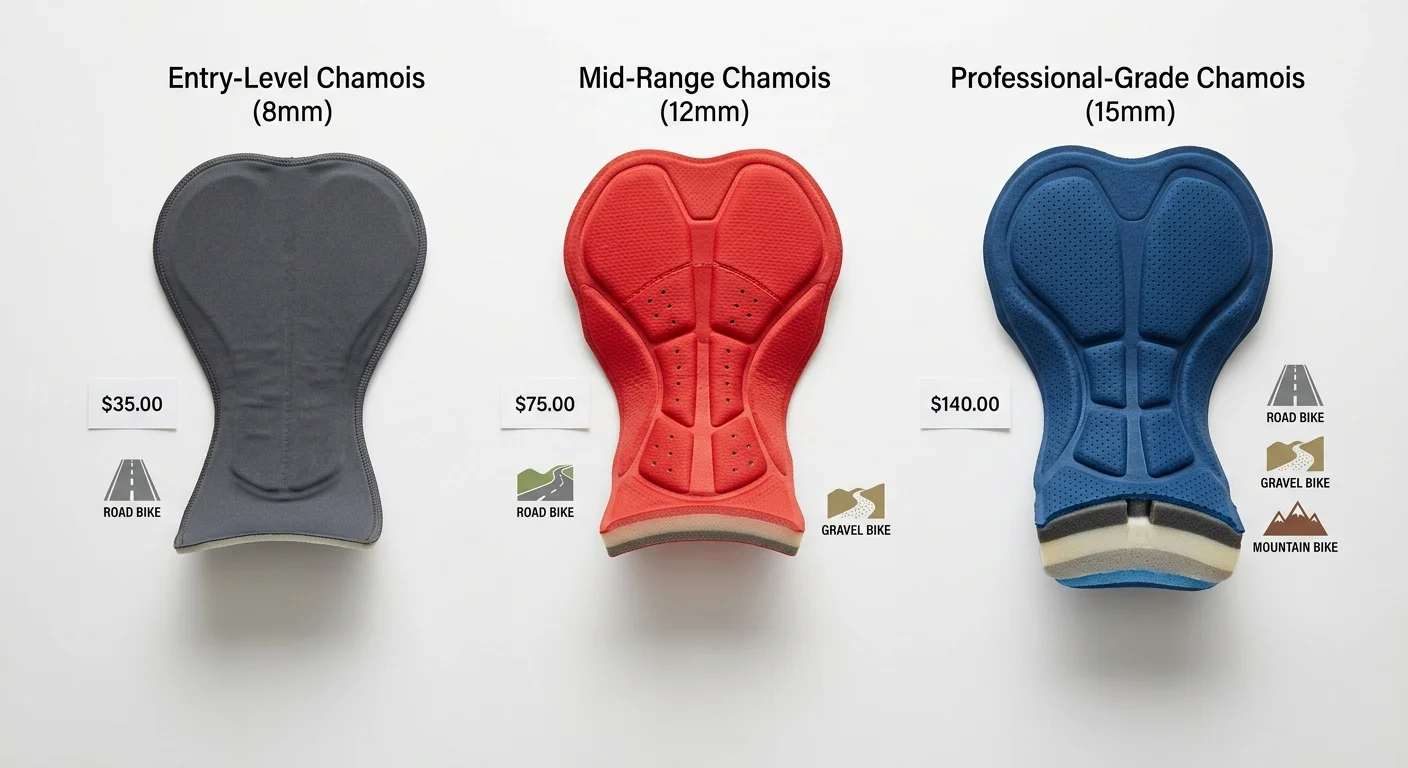
Spend enough time in cycling forums and you'll see the same debate come up again and again: is a $200 chamois worth six times a $35 one? The honest answer: sometimes yes, sometimes no. It depends on whether the spec matches your ride.
Here's a tiered shortlist. No filler options. Just the price bracket, the performance floor you're buying, and the rides each tier is built for.
$30–$60: Entry Tier — Commutes and Rides Under 60km
At this price, you're getting 8mm single-density foam with basic moisture-wicking fabric. That's the technical floor. It's enough.
What it handles well:
- Daily commutes under 30km
- Casual weekend rides
- Anything under two hours in the saddle
The ISO-certified build gives you baseline compression resistance, seamless bonding to cut down on seam irritation, and antibacterial chamois fabric that works fine for single-session use.
What it doesn't handle: sustained pressure past the 60km mark. Single-density foam at this thickness drops to about 40% of its original structure by kilometer 60. You'll feel that. Budget your ride distance accordingly.
Best-fit scenario: New riders, hybrid commuters, anyone figuring out whether cycling is a hobby worth investing in.
$60–$120: Mid Tier — Training Rides, 50–100km, Mixed Terrain
This is where the engineering gap becomes real. Mid-tier chamois moves from single-density to 10–12mm multi-density foam — a softer surface zone for initial contact, with a firmer load-bearing core underneath. Compression rate at 100km drops to under 25%. That's the number that matters.
You also get true anatomical shaping at this price:
- Perineal pressure relief channels
- Wider rear-wing panels for gravel geometry
- Moisture vapor transmission rates that keep up with serious sweat output
Brands like Giro and Pearl Izumi sit in this range. Both use zoned construction and relief channels that hold up across 100km with under 25% support loss.
Best-fit scenario: Weekend riders logging 3–6 hours per week, gravel riders on mixed surfaces, anyone pushing past the 50km mark on a regular basis.
$120–$300+: Professional Tier — Century Rides, Multi-Day, No Compromises
Past $120, you're not buying more cushion. You're buying the ability to keep that cushion under extreme load .
A professional-grade chamois at this tier — built to standards like the Cytech or Elastic Interface benchmark — uses 12–15mm triple-layer construction with progressive firmness zones. Compression at 100km: under 10%. At a 10-hour endurance effort, the support structure holds. A mid-tier pad at the same mileage is sitting at 40–50% of its original thickness.
Three features set this tier apart from everything below:
Silver-ion or Polygiene antibacterial treatment at 98%+ bacterial reduction — critical for back-to-back riding days where skin breakdown builds as a problem
PTT-fiber elastic recovery at 93%+ after 1,000 compression cycles — the chamois holds its shape through a full season, not just a single event
Ventilated micro-perforated construction that drops localized pad temperature by 2–3°C — useful for long road efforts and indoor trainer sessions where airflow is limited
Best-fit scenario: Century and double-century road riders, multi-day touring, competitive gravel events, indoor training blocks where sweat management is the main failure point.
The Tier Decision in One Line Each
Budget | Foam Spec | Distance Ceiling | Best Use |
|---|---|---|---|
$30–$60 | 8mm single-density | ~60km | Commuting, casual rides |
$60–$120 | 10–12mm multi-density | ~100km | Training, mixed terrain |
$120–$300+ | 12–15mm triple-layer | 100km+ / multi-day | Endurance, professional use |
The price isn't buying prestige. It's buying compression resistance that still exists at mile 80, antibacterial protection that holds through day three, and elastic recovery that keeps the geometry intact across a full season. Rides under 60km? The entry tier does the job. Planning a century or stacking back-to-back days? The math on a $150 chamois pays off fast.
Sourcing padded shorts to go with your chamois choice? See our Custom Cycling Shorts Manufacturer line.
Conclusion
Your sit bones don't lie — and neither does the data.
Hundreds of kilometers of testing point to one clear truth: the right chamois isn't the thickest one, the most expensive one, or the one with the boldest marketing. It's the one matched to your measurement, your ride distance, and your riding position.
At the industrial level, cycling apparel private label programs are now the fastest way for brands to build terrain-specific product lines without rebuilding R&D from scratch.
Start with the 3-step matching method. Measure your sit bone width this weekend — cardboard and a hard chair, five minutes. Let your actual ride distance guide the density decision. Everything else — gel inserts, multi-layer chamois construction , seamless bonding — those are refinements. Not foundations.
One more thing worth carrying with you: saddle sore is not a rite of passage. It's a fit problem. And it has a fixable answer.
Now close the tab, grab a pen, and take that measurement. Your next century ride will feel like a different sport altogether.