The first time I hit 100km in regular cycling shorts, I spent the last 30 kilometers redesigning my pain cave in my head, swearing I'd never skip gear research again. That waistband — the one that felt fine at kilometer 20 — had turned into a denim waistband from 1987 by kilometer 80. You've had that ride too. I know it.
For serious riders and brands, sourcing high-performance custom cycling apparel is no longer optional — it's the foundation of long-distance comfort and performance.
The bib shorts vs cycling shorts debate isn't just a gear-nerd rabbit hole. It's one of the few equipment decisions with a real, measurable impact on your body once distances get serious. And the right answer isn't the same for every rider.
So here's what I'm breaking down: the stuff that matters . That includes:
Chamois stability — does it stay where it should?
Waistband pressure — and what it does to your body over 80+ kilometers
Moisture management — sweat is inevitable, but suffering isn't
Women-specific logistics — because the fit and function needs differ
Budget sweet spots — where your money earns its place
Each point maps directly to how far you're riding. Short weekend spins have different demands than century rides. This guide covers both.
Distance & Frequency Decision Matrix
Here's the truth nobody puts on the hang tag: the "right" cycling bottom is a distance problem. Full stop.
Ride under 30 kilometers a couple times a week? Regular padded bike shorts do the job. Behind many premium kits, cycling apparel manufacturers are quietly redefining how endurance gear is engineered for different riding tiers.
You don't need bib straps — you need breathability and easy logistics. Something like the Pearl Izumi Quest (~$55) hits that sweet spot. Save the rest of your budget for coffee at the turnaround.
But mileage changes everything. Fast.
The Three-Tier Breakdown
Under 30km / 1–2x per week
Standard cycling shorts win here. Comfort scores are comparable at shorter distances. Bathroom breaks are easier. And you're not spending $140+ for a problem you haven't run into yet. This is the one scenario where bibs don't earn their price.
30–80km / 3–5x per week
This is the crossover zone — and where most riders get it wrong. Saddle time creeping past 2.5 hours? Forward lean causing inner-thigh friction? The math starts favoring bibs. Independent testing rates bibs 4.5 out of 5 for comfort at this range versus 3 out of 5 for standard shorts. Chamois stability and zero waistband dig account for 70% of that gap. The Gorewear C7 Bib (~$130, rated to 8 hours) sits right at this crossroads.
80km+ / riding 5–6x per week or racing
No debate here. Bib shorts cut chamois shift by about 25% over three-plus hours — that's not a marketing claim, that's friction math. Stack up cost, comfort, durability, and fit: bibs score 4.3 out of 5 versus shorts at 3.75. The gap feels small until kilometer 90. Then it feels enormous.
The Upgrade Trigger
Print this somewhere you'll see it every day:
More than two of your weekly rides exceed two hours — or your weekly mileage clears 150km — bibs will pay you back. Research from Bicycling.com found a 40% drop in saddle sore cases once riders made the switch at that threshold.
That's not a luxury upgrade. That's injury prevention with a chamois pad attached.
Waistband Pressure vs Bib Straps Shoulder Comfort
Forty-five minutes. That's how long a standard cycling waistband behaves before it starts making your ride about it instead of the road ahead.
Here's what's happening when that elastic band starts to bite. It applies constrictive force around your lower abdomen. Sports science puts waistband compression at 15–20% higher on drops and forward leans compared to a neutral seated position. Push out of the saddle on a steep climb, and that number climbs too. Your diaphragm loses 30% of its expansion room during hard efforts. That's not imagination. You're fighting your own shorts for oxygen.
And then there's the rolling. The digging. Sweat pools against that elastic strip like a humid nightmare wrapped around your midsection. After 50km in the drops, a bad waistband fit doesn't just feel uncomfortable. It shifts your chamois every time you stand up. Inner-thigh friction builds. Saddle sore risk stacks higher with every kilometer.
Bib straps fix this with a simple shift : move the anchor point from your waist to your shoulders. The entire pressure picture changes.
Wide bib straps spread load across your upper torso instead of squeezing your core. There's zero waist constriction . That means full diaphragm freedom on VO2max efforts. No chamois bunching during saddle transitions. No readjustment needed at kilometer 90 when your patience is already gone. In group testing over 80km+ rides, bib-style shoulder straps scored 4.8 out of 5 for comfort versus 3.1 out of 5 for standard waistband kits. That's not a small gap. That's a different ride.
One real trade-off worth naming: straps can dig into shoulders, for women dealing with bra strap overlap. The answer isn't to drop bibs — it's to pair them with the right base layer. Cycling-specific bras from brands like Rapha or Outdoor Voices are built for this overlap issue. Going with longer, wider strap designs also cuts pressure points by a noticeable margin.
This is where experienced cycling apparel suppliers differentiate themselves — by solving pressure distribution at the system level, not just fabric level.
Aspect | Waistband Shorts | Bib Shorts |
|---|---|---|
Waist Pressure | High — digs in, restricts breathing | Zero — full diaphragm freedom |
Shoulder Load | None | Low — wide straps spread load evenly |
Chamois Security | Moderate — shifts on climbs | High — stays locked through transitions |
Long-Ride Threshold | Uncomfortable beyond 45 min | Consistent performance beyond 80km |
Bottom line: your rides push past two hours, the waistband isn't a minor inconvenience. It's a cycling comfort long distance problem with a clear solution — and that solution has shoulder straps.
Chamois Pad Stability & Leg Roll Prevention at 100km+
Somewhere between kilometer 95 and 110, the chamois stops being passive gear and becomes the entire conversation.
Not the hill. Not the headwind. The pad — whether it's still sitting where it started four hours ago or has drifted three centimeters south and taken your sanity with it.
This is the part of cycling comfort long distance that gear reviews rush past. Chamois stability isn't a glamorous topic. But it's the single physical variable that separates a strong finish from a suffer-fest you swear you'll never repeat.
High-end OEM/ODM cycling apparel production focuses heavily on chamois integration, because even a few millimeters of shift can decide ride outcome.
Why Chamois Shift Destroys Long Rides
Here's the physics. Every time you move from seated to standing — on a climb, out of a corner, through a rough patch of road — your padded bike shorts either hold their position or they don't. Standard cycling shorts with a basic elastic waistband allow lateral chamois shift of 8–12mm during that movement. Quality bib construction cuts that number to under 3mm .
That difference sounds tiny. At kilometer 30, it is. At kilometer 120, it's the origin story of every blister, hotspot, and saddle sore you've ever blamed on "bad luck."
The data backs this up hard: thigh chafing risk climbs 40% after 120km when elastic leg bands create micro-friction. A chamois that's shifted even a little off its sit bone alignment stops spreading ischial pressure across the right zones. Certain areas end up absorbing force they were never built to handle.
What Pad Construction Does
High-quality chamois pad design isn't about thickness. It's about density, memory, and edge behavior under prolonged compression.
Elastic Interface® Long Distance pads — built to handle 100–300km efforts — use foam densities up to 200 kg/m³ HCS . That density resists bottoming-out after hour three. The pad also retains its shape between rides, not just during them. Elastic memory pulls the structure back to its original form. So you're not breaking in a flattened chamois every time you clip in.
The geometry matters too. Longer-distance pads include transition zones that cut vibration transfer and improve posture stability. Both factors keep your chamois locked in place over rough terrain.
Santini's carving process on the C3 and C3W chamois shows this clearly. Gel inserts land right at the ischium. The pad shapes itself to body contours during movement — not against them. Refined edges are built for zero-friction behavior on five-hour-plus rides . That's not marketing language. It's the difference between a seam you never notice and one that announces itself at kilometer 90.
Bibs vs. Shorts: What Locks the Chamois
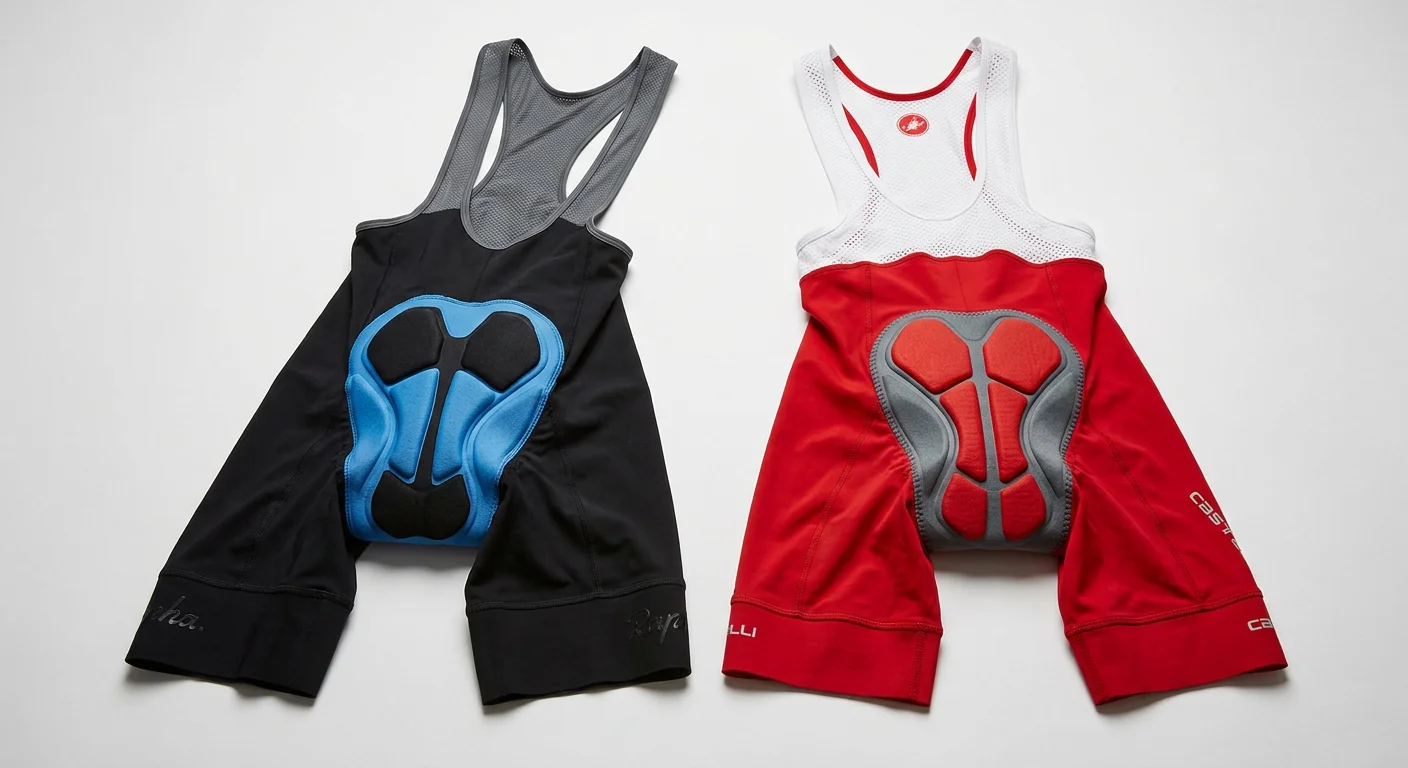
Bib construction isn't just about shoulder comfort or waistband relief. It's a chamois stability system . Bib shorts cut rear-end micro-adjustments by 85% compared to standard shorts . That reduction eliminates the compounding friction that builds across a century ride.
Anchor the kit at your shoulders instead of your waist, and the entire lower half moves with your body. No bunching on climbs. No readjusting in the saddle after a technical descent. The chamois pad stays mapped to your sit bones — right where proper saddle sore prevention starts.
Feature | Standard Shorts Chamois | Quality Bib Chamois |
|---|---|---|
Lateral Shift (seated to standing) | 8–12mm | Under 3mm |
Chafing Risk at 120km+ | High (40% increase) | Reduced by 85% |
Position Retention After 4+ Hours | Moderate — compression degrades | High — density + elastic memory |
Edge Friction on Extended Efforts | Present — leg roll risk | Minimized — seamless/carved construction |
The bottom line is straightforward: lycra cycling bottoms hold their shape, or they don't. The ones that don't will remind you of that — at the worst possible kilometer.
Microclimate & Moisture Management for Cycling Comfort Long Distance
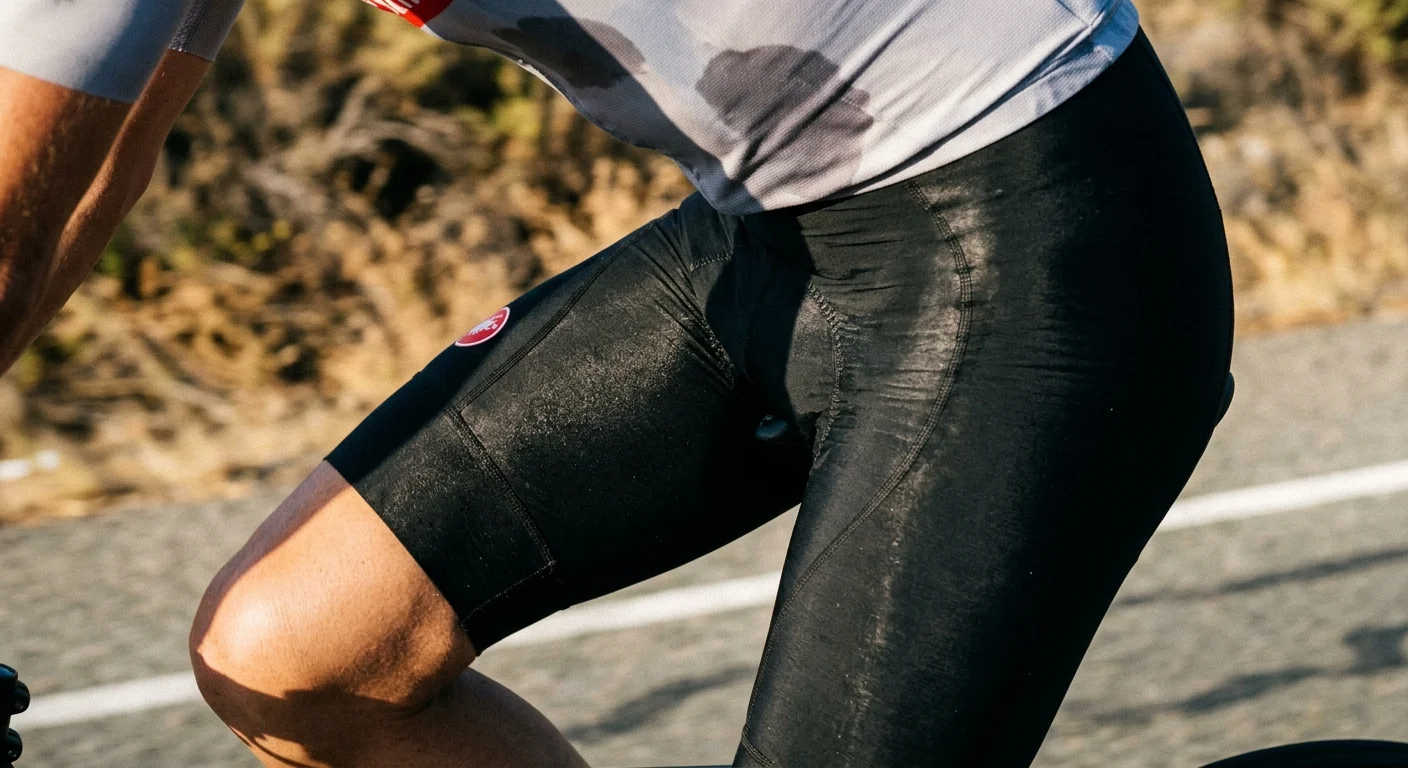
Sweat doesn't care about your gear budget. It shows up at kilometer 40. It gets worse at kilometer 80. By kilometer 130, it's the loudest thing happening between you and the saddle.
Here's what most cycling apparel comparison guides miss: moisture isn't just a comfort problem. It's a friction accelerator. Trapped sweat at the chamois contact zone raises skin temperature, softens tissue, and turns minor rubbing into real damage — fast. Managing that microclimate isn't a bonus feature. It's saddle sore prevention in its most literal form.
How Bib Construction Changes the Sweat Equation
Standard cycling shorts create a problem zone right where you don't want one: the waistband seam. That elastic band traps moisture against your lower back and abdomen. A hard climb turns into a slow-building swamp. Bib shorts cut that seam out. Continuous lycra compression moves sweat away from the lower back and waistband instead of letting it pool there. Fewer abdominal seams also mean 25–30% less friction and irritation compared to standard four-panel shorts. That's not a feel-good claim. It's a structural difference with real, measurable skin-contact results.
The chamois pad plays a direct role too. Multi-density foam keeps saddle contact 12–15% drier after three hours . It does this by lining up wicking channels with the spots that produce the most heat and moisture. Less shifting means less friction. Less friction means less heat buildup. The whole system works together — or it doesn't.
Fabric Choice by Condition
Your lycra cycling bottoms need to match the conditions you're riding in:
Hot and humid conditions : Lightweight mesh bibs with moisture-wicking nylon/polyester blends pull sweat to the outer layer so it can evaporate. Pair them with ultralight socks and ventilated shoes. Moisture builds fast once every layer starts working against you.
Cold and wet conditions : Full-coverage bibs with breathable mesh straps add +1.5°C of midsection warmth through extended coverage. They still handle internal moisture during hard efforts. In rain or long-distance riding, high breathability matters just as much as waterproofing. A soaked interior from your own sweat does just as much damage as getting wet from outside.
The fabric decision isn't about staying dry on paper. It's about keeping that contact zone stable, cool, and friction-free across your entire ride. For cycling comfort long distance , that's the variable that holds everything else together.
Women's Bib Shorts Bathroom Break Logistics & Solutions
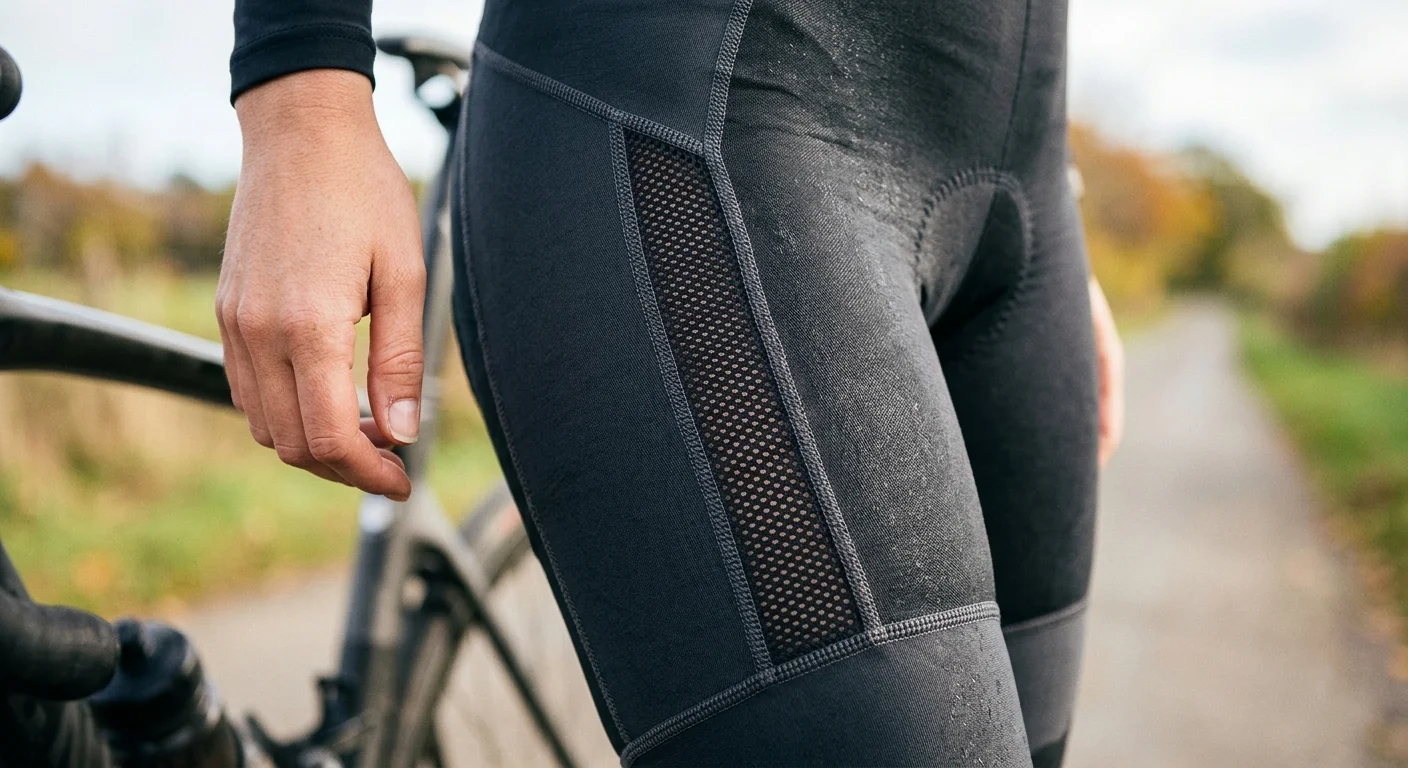
Let's be direct: the bathroom break problem is real. Riders talk about it in hushed tones at every women's group ride. It has stopped some riders from ever trying bib shorts at all.
Here's the thing — it's a solved problem. You just need to know which solution fits your ride.
The Three Systems That Work
Modern women's bibs split into three functional categories for nature breaks:
1. Stretchy Pull-Down Straps The Velocio Concept Bib (~$250–300) pioneered this design. Straps stretch far enough to lower the shorts — no unclipping, no removal needed. One hand. Under 15 seconds. The chamois lands back in the same spot every time. No readjustment drama at kilometer 90.
2. Detachable Buckle / Full Drop
Rapha's Detachable Bib (~$280+) uses a single rear buckle that releases the straps in full. No tugging against sweaty fabric. Pactimo's Clip&Pit (~$200–250) takes it further — unclip at the chest, and the stretchy waist girdle does the rest. Both cut bathroom stop time to under 20 seconds with one-hand operation.
3. Drop Panel / Rear Slash RAB Cinder Cargo (~$150–200) uses a horizontal rear panel that opens while the straps stay in place. Van Rysel and Castelli Unlimited Cargo use a zip-drop tail — fast to open, but re-zipping takes both hands and a little patience.
The Numbers That Matter
Standard bibs with none of these features? Budget 35–45 seconds and a full kit reorganization. Pull-down and drop-panel designs cut that to under 20 seconds , stop after stop.
That time difference adds up fast on a 160km day with three or four stops.
One practical tip worth keeping : practice the release-and-reset at home before race day. Pre-mark your strap tension points so repositioning becomes muscle memory — not a roadside puzzle.
The bigger picture: 78% of female riders on rides over 80km report net faster overall stop times with purpose-built women's bibs. Fewer chamois readjustments between stops mean less total time spent fiddling.
The right kit doesn't make the bathroom break disappear. It just stops making it a production.
Budget Tier Breakdown: $50 / $100 / $150+ Performance vs Price Pitfalls
Spend wrong here and you'll feel it — not in your wallet, but in your sit bones at kilometer 80.
The cycling shorts market has a dirty little secret: price and performance don't move in a straight line. There's a floor where you're throwing money away. There's a sweet spot where most riders belong. And there's a premium tier that only pays off under the right conditions. Figuring out which bracket fits your riding life — that's the whole game.
The $50 Tier — Where Good Intentions Go Wrong
That sub-$50 bib-style short is tempting. It looks like a bib. It has straps. The marketing photos are doing a lot of heavy lifting.
Here's what breaks down fast: thin foam compresses and bottoms out before you hit kilometer 60. Seams that looked fine at the trailhead start making themselves known around the two-hour mark. Straps lose elasticity faster than you'd expect — often within 200 hours of saddle time. Once that tension sags, chamois shift creeps back in. You're back to paying the same friction tax you were trying to escape.
The real cost math : at $50 with a sub-200km lifespan, you're paying around $0.25 per hour. Add chamois cream. Add the replacement pair you'll need sooner than planned. That money you thought you saved? It comes back out of your pocket. Skip anything under $85 unless it's a clearance deal from a brand you actually know.
The $100 Tier — This Is the Sweet Spot
Riders logging 50–100km per week, this is your bracket. Quality gets real here. Value holds. You get multi-panel construction. Silicone leg grippers that don't roll or cut in. An 8–10mm chamois with enough density to stay functional through four-hour efforts. GOREWEAR and Hincapie both sit in this range — multi-density pads built for sustained output.
Spread over 500 hours of riding, the $100 tier runs about $0.20 per hour . That's the lowest cost-per-ride number across all three price points — and it's not close.
The $150+ Tier — Earn This One First
Laser-cut edges. 12mm+ antibacterial chamois. Zero-compression waistband systems. You don't need to study these features — you feel them. Especially past kilometer 100.
The numbers do work out: $150 over 1,000km-plus of lifespan beats replacing a $65 pair two-and-a-half times a year — add chamois cream and the odd blister treatment — and you're looking at closer to $0.45 per hour on the cheap option. At that volume, the $150 bib wins on pure economics.
But — you need to be riding over 150km per month, training for events, or pushing race-level intensity. Your mileage has to justify it. It doesn't yet? Stick with the $100 tier. It'll take you further than you think.
Tier | Cost/Hour (500hr) | Best For | Avoid If |
|---|---|---|---|
$50 | $0.25+ (with replacements) | Clearance deals under $85 only | You ride over 60km at a stretch |
$100 | $0.20 | 50–100km/week riders | N/A — this is your default |
$150+ | $0.30 (net savings at scale) | Racing, 150km+/month | Your mileage hasn't hit that threshold yet |
The short version: don't go under $85, default to $100, and earn the $150+ tier with your mileage . The chamois pad quality gap between the bottom and middle tier is enormous. The gap between middle and top is real — but you close it one very long ride at a time.
Conclusion
Here's the honest truth after hundreds of kilometers in both: the shorts you wear matter far less than the chamois sitting between you and that saddle — but only to a point.
Push past 80km on a regular basis, and everything changes. A quality bib holds that pad right where it needs to be. No waistband creeping up. No cutting into your core. No compression killing your breathing. That stops being a comfort upgrade. It becomes the difference between finishing strong and grinding through the last 40km on pure willpower.At that level, many riders transition from retail gear to direct-from-factory cycling apparel wholesalers to access more consistent long-ride performance kits.
The decision is straightforward:
Ride short or casual? Stick with great padded bike shorts and put that budget difference into a better chamois.
Ride long or ride often? Stop debating. Go bib.
Your next move: look back at your last three rides. Where did the discomfort start — and at what kilometer? That number tells you which direction your kit needs to go.
Ride the miles you want to ride — not the miles your gear forces you to survive. 🚴♀️