Twenty minutes into a 30-kilometer ride, that cotton t-shirt you grabbed on your way out starts telling you a story you didn't ask for—damp, heavy, clinging to your back like it's trying to slow you down. Meanwhile, the hem's flapping in the wind, and you're wondering if you're the only one who didn't get the memo about cycling jerseys. The difference isn't marketing hype. For brands, sourcing a custom cycling jersey from a manufacturer starts with understanding these performance differences.It's grams of fabric weight, flatlock seams versus regular stitching, and moisture wicking fabric that actually does what the tag promises instead of just soaking through. I'll walk you through when a t-shirt holds up fine and when it starts working against you—plus three quick tests you can run on any shirt in your closet right now to see if it's cutting it.
What Happens When You Choose a T-Shirt for a 30km Ride
Fabric choice decides everything here, more than brand, print, or price tag. Cotton fails predictably. It absorbs sweat instead of moving it, so by kilometer 15 or so the shirt's soaked through and holding onto that moisture. The fabric gets heavier, sticks to skin, and friction builds at every point of contact: underarms, lower back, shoulder seams. Multiple cycling apparel guides flag cotton specifically as the fabric to avoid for this reason.
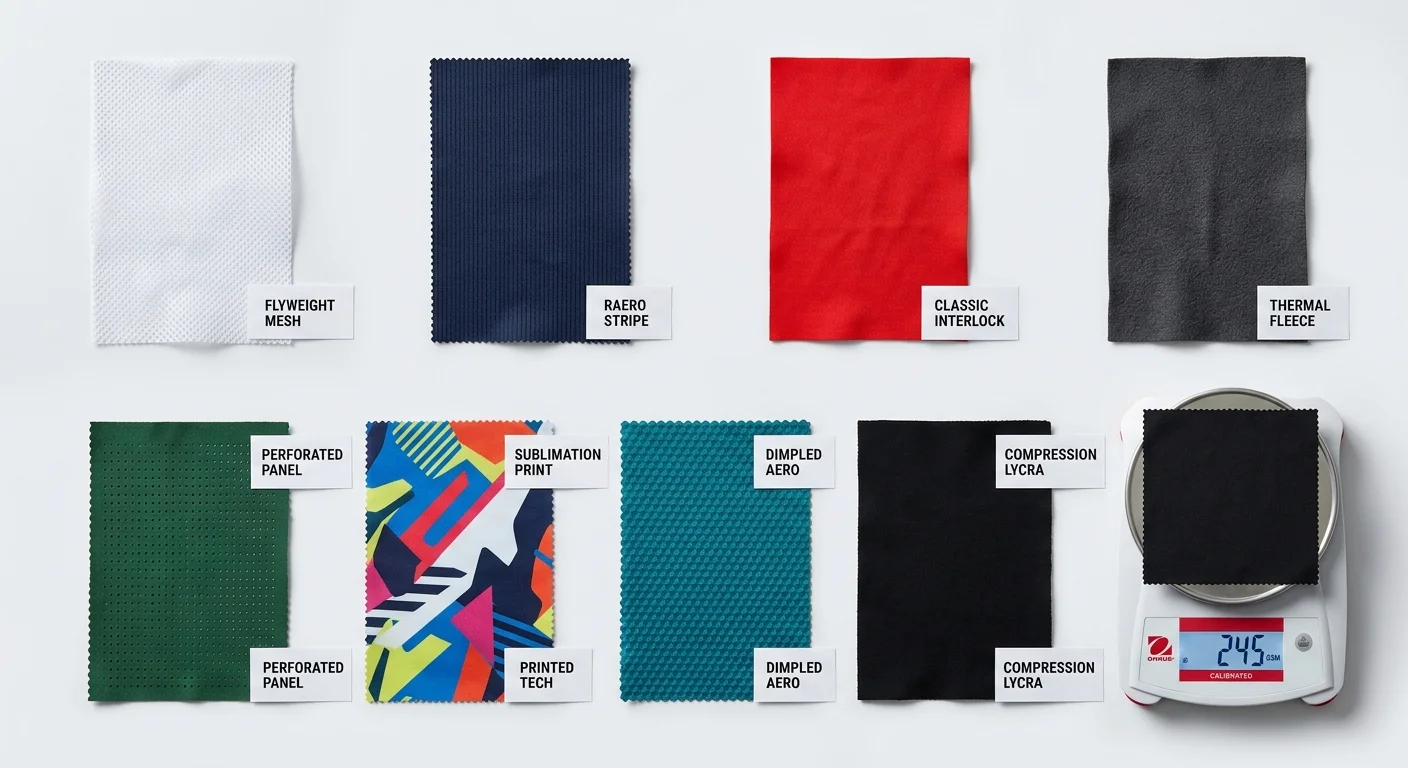
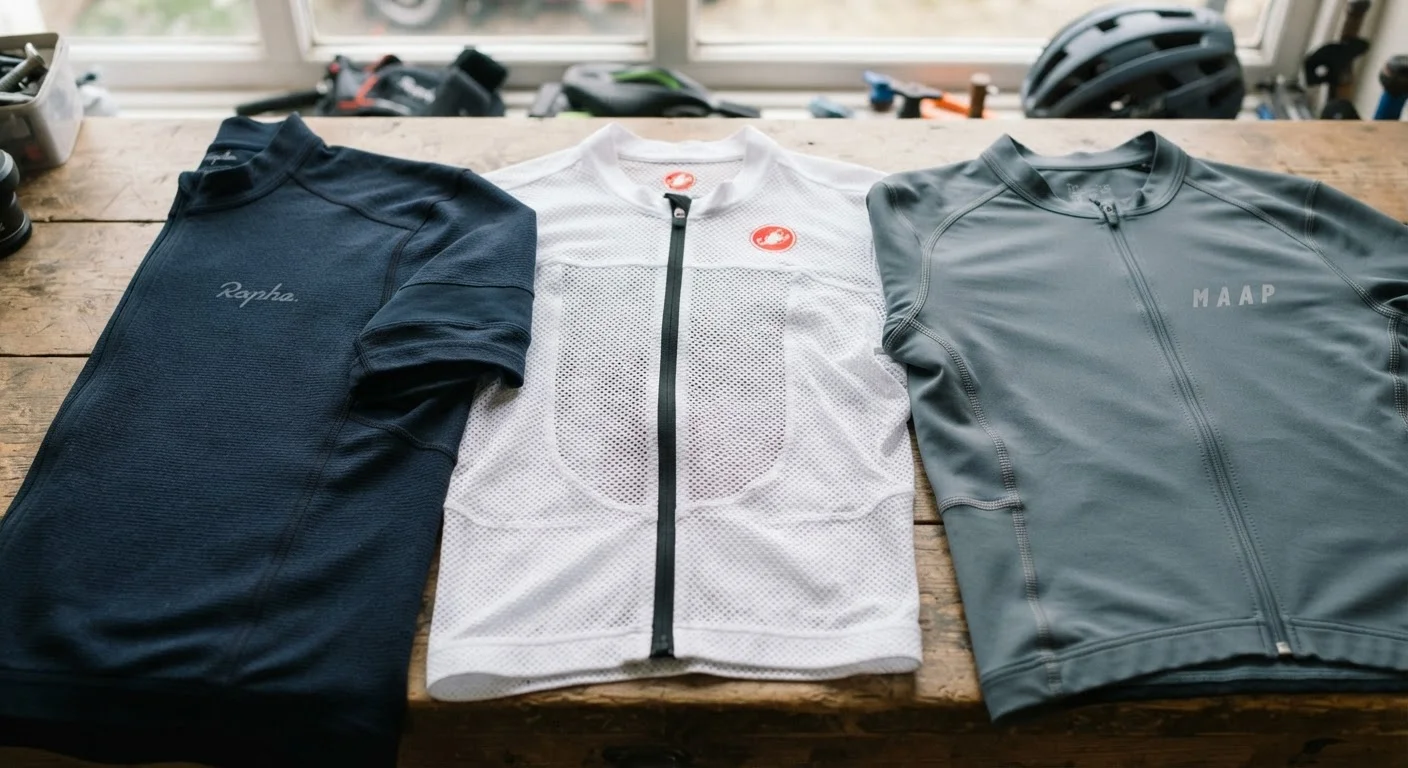
Swap in a wicking synthetic and the story changes. Polyester, nylon, or a blend pulls sweat off skin toward the fabric surface where it evaporates faster. That's the actual mechanism behind "moisture wicking fabric," and it's plain physics. Many buyers compare custom wholesale price options for cycling jerseys based on fabric performance, not just appearance.It's why polyester dominates real cycling jersey material, showing up in roughly 80% of jerseys on the market, typically at 90–120 gsm for a lightweight, quick-dry feel.
Seams matter as much as the fabric itself. Flatlock stitching and low-profile seam placement cut down chafing at friction zones like the armpits, collarbone, and waistband, regardless of what's printed on the shirt.
For 30 kilometers in 20–30°C conditions, the realistic breakdown looks like this:
Cotton t-shirt : damp and clingy by the back half, discomfort compounds from there
Wicking t-shirt : finishes fine, but comfort still trails a real jersey, especially uphill or in heat
Cycling-specific top : best airflow, least fabric movement, least friction
If you're riding this distance regularly, prioritize non-cotton fabric, a close-but-not-tight fit, minimal seams, and lighter colors once temps climb past 30°C.
Fabric Isn't Just "Breathable": The Numbers Behind Moisture-Wicking Performance
"Breathable" on a tag tells you almost nothing. There's an actual lab test behind real moisture wicking fabric claims, and you should know the numbers before trusting the marketing copy.
The industry standard is AATCC TM195 , also called the Moisture Management Test (MMT). It runs for 120 seconds . A technician drops about 0.2 mL of liquid onto the fabric and tracks how it spreads across both the top and bottom surfaces. From that single test, you get 10 separate metrics —wetting time, absorption rate, max wetted radius, spread speed, a one-way transport index, and one composite score called OMMC (Overall Moisture Management Capacity).
Everything gets graded 1 to 5 , with 5 being best. Here's what separates a high-performance jersey fabric from something coasting on the word "wicking":
Bottom wetting time : Grade 5 fabric wets in under 3 seconds. Grade 1 can take 120 seconds or longer—meaning sweat just sits on your skin.
One-way transport index (R) : Grade 5 typically exceeds 400. One tested sample hit 817.47% , pushing liquid from skin-side to outer-side aggressively.
OMMC : Grade 5 sits at 0.80 or higher. That same sample scored 0.881 .
Breathability is measured separately by MVTR (moisture vapor transmission rate), in g/m²/24h. Mid-range fabric hits around 5,000 ; cycling apparel that actually works pushes toward 20,000 .
The real sweat management fabric isn't one number. It's wetting speed, transport direction, and vapor escape working together—not just a word on a hangtag.
How Fit Affects Your Ride: From Hem Drag to Skin Friction
Fit is math. Too loose and you're fighting drag. Too tight and you're fighting friction. The aerodynamic fit on a real cycling jersey keeps the fabric close enough to stop flapping but loose enough that you can still breathe hard on a climb.
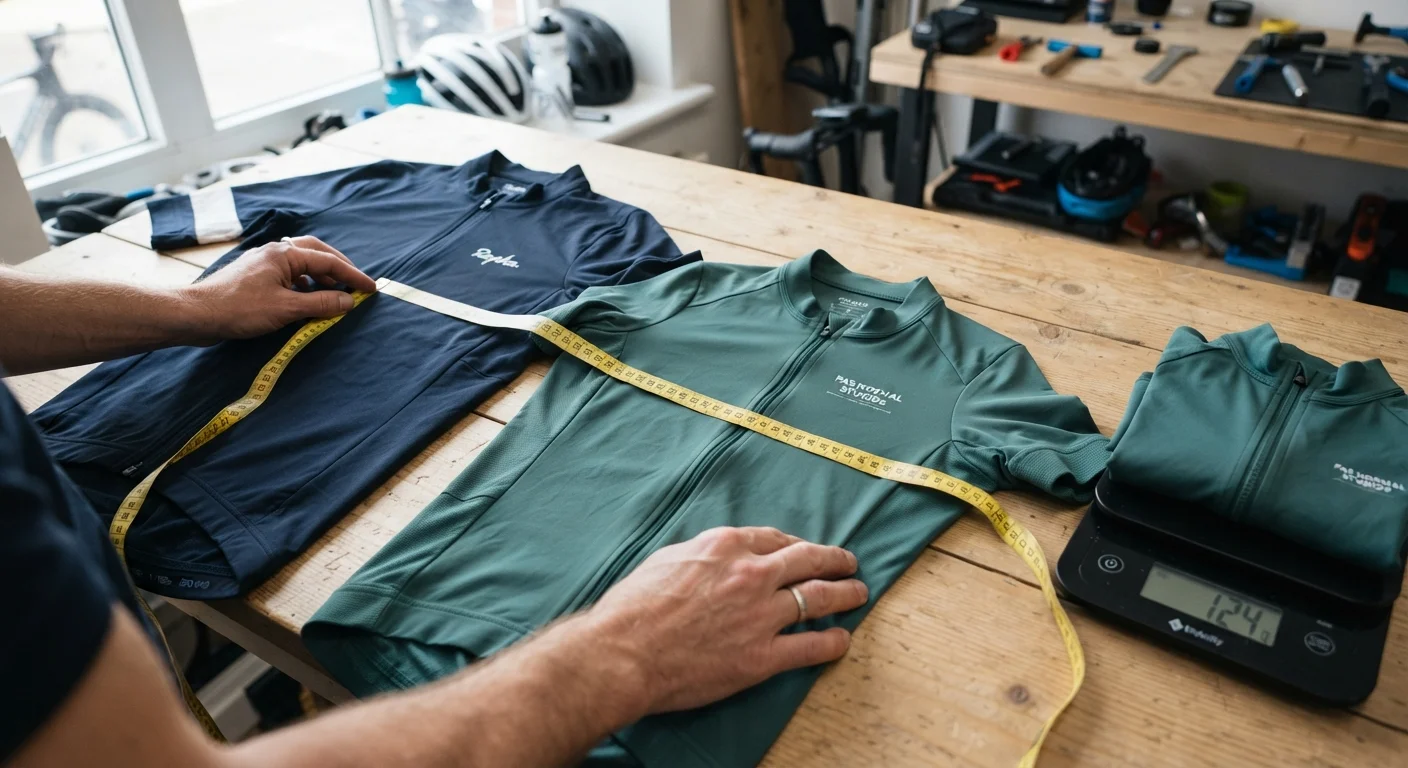
Watch the hem first. A rear hem that rides up, rolls, or flutters mid-pedal-stroke creates turbulence you can actually feel as drag. That's why most cycling jersey material guides call out a stable, low-riding hem as a fit requirement. Brands build the back panel 2–4 inches (5–10 cm) longer than the front so it stays put and covers your lower back when you're bent over the bars.
Wrinkles across the belly do bad double duty. Bunched fabric adds drag and rubs against skin, and it's worse in an aggressive low riding position.
Two forces drive the physics: pressure drag from loose flapping fabric and skin friction drag from fabric stretched too tight or too rough. Public cycling data puts the gap between a snug race jersey-and-shorts combo and a baggy club kit at roughly 5–12 watts saved —small on paper, noticeable at hour two.
Before buying, run through a quick self-check: reach for the handlebars—no stress lines across shoulders or chest. In riding position, the waistband stays below the hip bone and doesn't roll. The back panel lies flat with no independent fabric movement. A pinch test at the torso sides should give about 1 inch of slack, no more.
Flatlock seams, soft silicone grippers, and stretch side panels are the usual answer to friction points at the armpits, shoulders, and waist.
Storage: Why Rear Pockets Matter More Than a Backpack
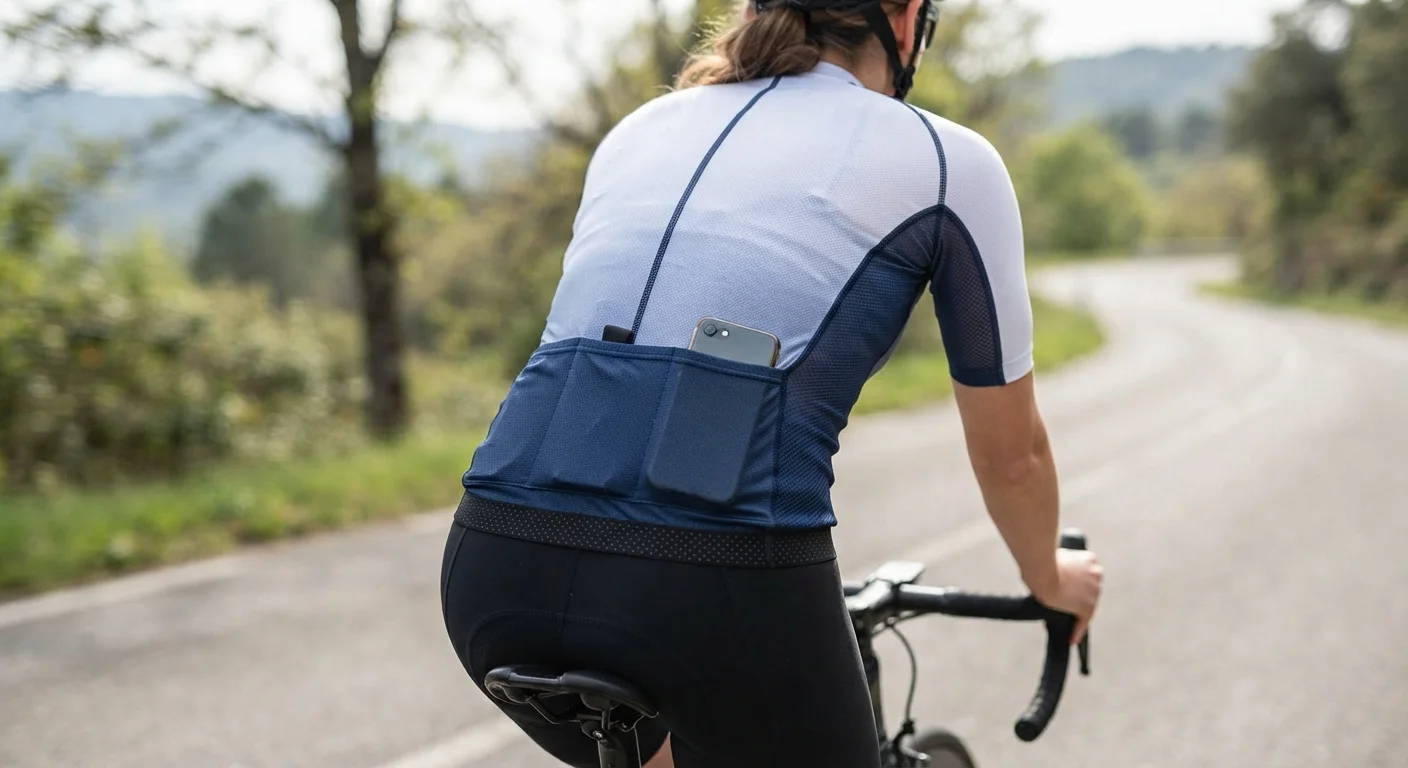
Storage is where a t-shirt just gives up. No pockets, no options. Your phone goes in your jeans or nowhere. A real jersey answers that with three rear pockets sitting at the small of your back, and the placement isn't random.
Speed of access wins over capacity here. Grab a gel, your phone, or a key without unclipping, unzipping, or pulling over. Your hands stay near the bars, your eyes stay on the road. A backpack can't do that. You're stopping, shrugging it off a shoulder, digging through a main compartment. 72% of people have stashed a phone in a low, waist-level pocket at some point, and 57% have done it within the past week. Low, close-to-body storage gets used constantly because it's fast.
Backpacks still win on volume. Rear pockets in cycling apparel hold a phone, a spare tube, a gel or two. They won't fit a jacket or lunch. The choice comes down to what you need. Quick, in-motion access favors rear pockets; hauling more gear favors a backpack.
Is the Price Worth It: Quantifying the Return on Your Cycling Jersey Investment
Look at the numbers. A £15–30 (US$20–50) cycling jersey covers basics. £30–70 (US$50–100) is the mid-tier. £70–150+ (US$120–200+) buys race-level compression fit and aero cuts—real retail examples land at US$149, US$152, US$210, US$290. The premium pays for fabric, pattern, and construction.
The £30–60 band delivers roughly 90% of the high-end experience for about 40% of the cost.
Durability changes the math. A £15 cycling jersey lasts 6–12 months. A £50 one runs 3–5 years. A £120 jersey, cared for properly, can clear 5+ years. A £50 cycling jersey worn 4 years averages £12.50 per year. A £15 jersey replaced yearly often costs more annually and delivers worse comfort the whole time.
Practical breakdown: For commuting or casual use, look for £15–30 basic polyester with pockets, zip, and reflective strip. For regular weekly rides, spend £30–60 on mid-tier jerseys with better sweat management and fit retention. For racing or high intensity, go for £70–150+ compression fit and aero fabric.
One more budgeting tip: spend more on cycling pants than jerseys. Shorts benefit more from premium spend than jerseys do.
3 Simple Self-Tests to Check If Your Cycling Jersey Fabric Really Works
Skip the marketing copy. Run these three tests on any jersey before you trust the label.
Test 1: Drip and spread. Put 0.2 mL of water on the inside of the fabric. Real moisture-wicking fabric absorbs it within 5–10 seconds. The water then spreads outward into a larger wet patch within 1–2 minutes. If the water just sits in a bead, keep looking.
Test 2: Vertical wick. Cut a strip, hang it upright, dip the bottom edge in water. Check the climb at 1, 5, and 10 minutes. Anything under 5 cm in 30 minutes means weak capillary action, so your sweat won't move.
Test 3: Flip and check. Drip water on the inside, wait 10–30 seconds, flip it over. If the outside shows a bigger wet mark, sweat's actually transferring through. When it doesn't, the fabric is absorbing the water and holding it.
Ask sellers for AATCC 195 or ISO 11092 data. Numbers beat adjectives every time.
What Type of Cyclist Am I? A Simple Decision Checklist
Skip the guesswork. Your riding pattern already answers the jersey-or-t-shirt question. Just figure out which category fits your ride.
Commuter/errand rider (short trips, flat roads, under 30 min): a wicking t-shirt handles this fine. Save the cash.
Weekend social rider (relaxed pace, occasional 1–2 hour rides): once you're out past an hour, a mid-tier £30–60 jersey starts to make sense.
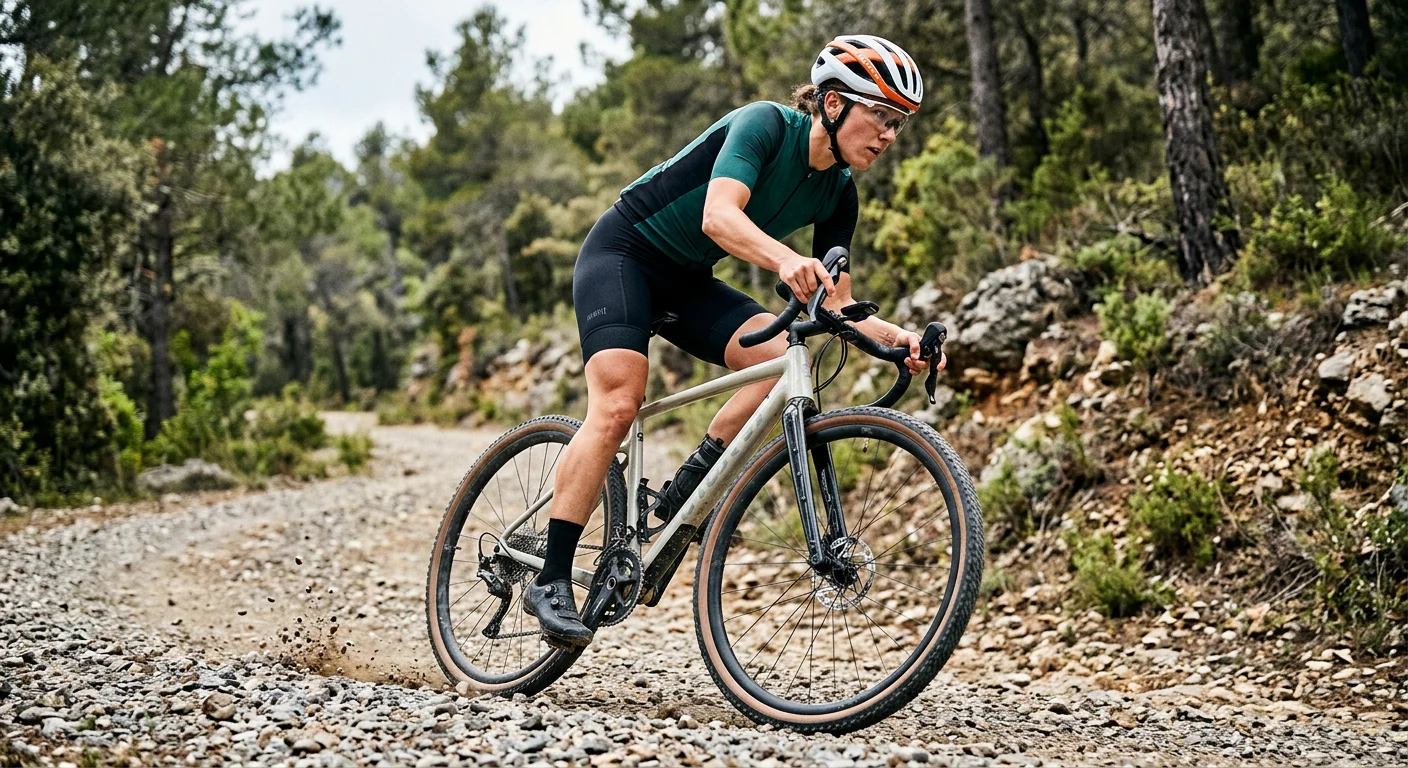
Endurance/gravel rider (regular 2+ hour rides, mixed terrain): compression-fit gear shines for those long hours in the saddle. The seams and pocket layout matter more here.
Climber/racer (frequent hill repeats, competitive pace): a full-zip jersey with an aero cut and breathable fabric is non-negotiable.
Match your weekly mileage and terrain to this list, and the buying decision writes itself.
Cycling Jersey Construction from an OEM Perspective: Fit, Fabric, and Durability
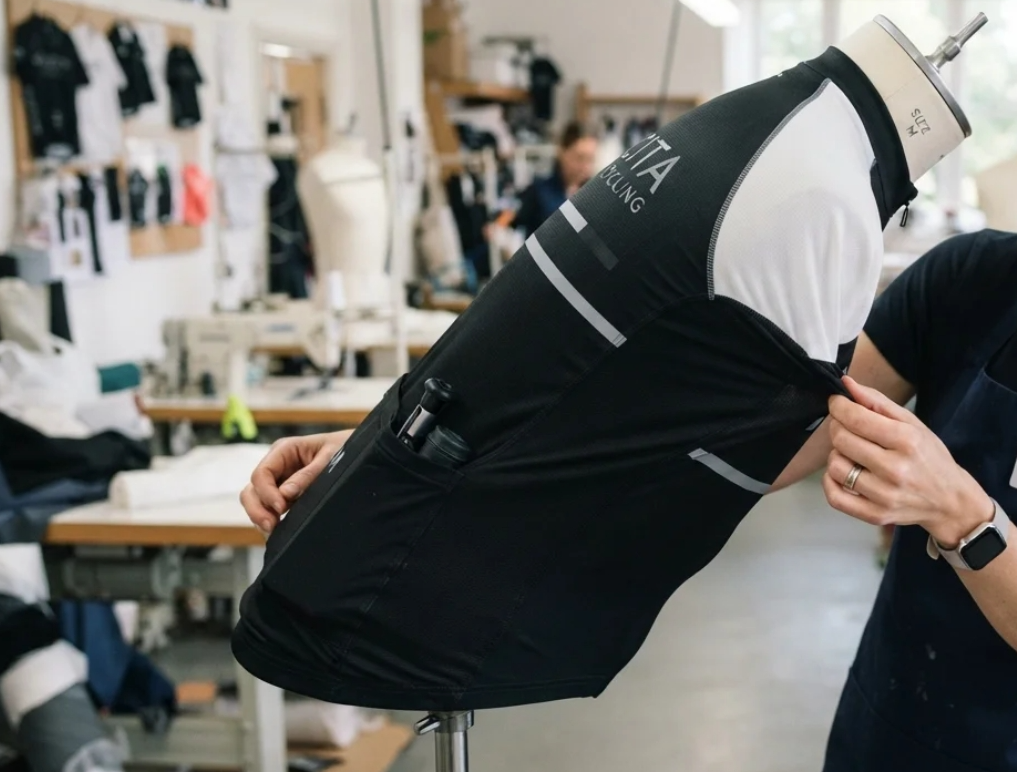
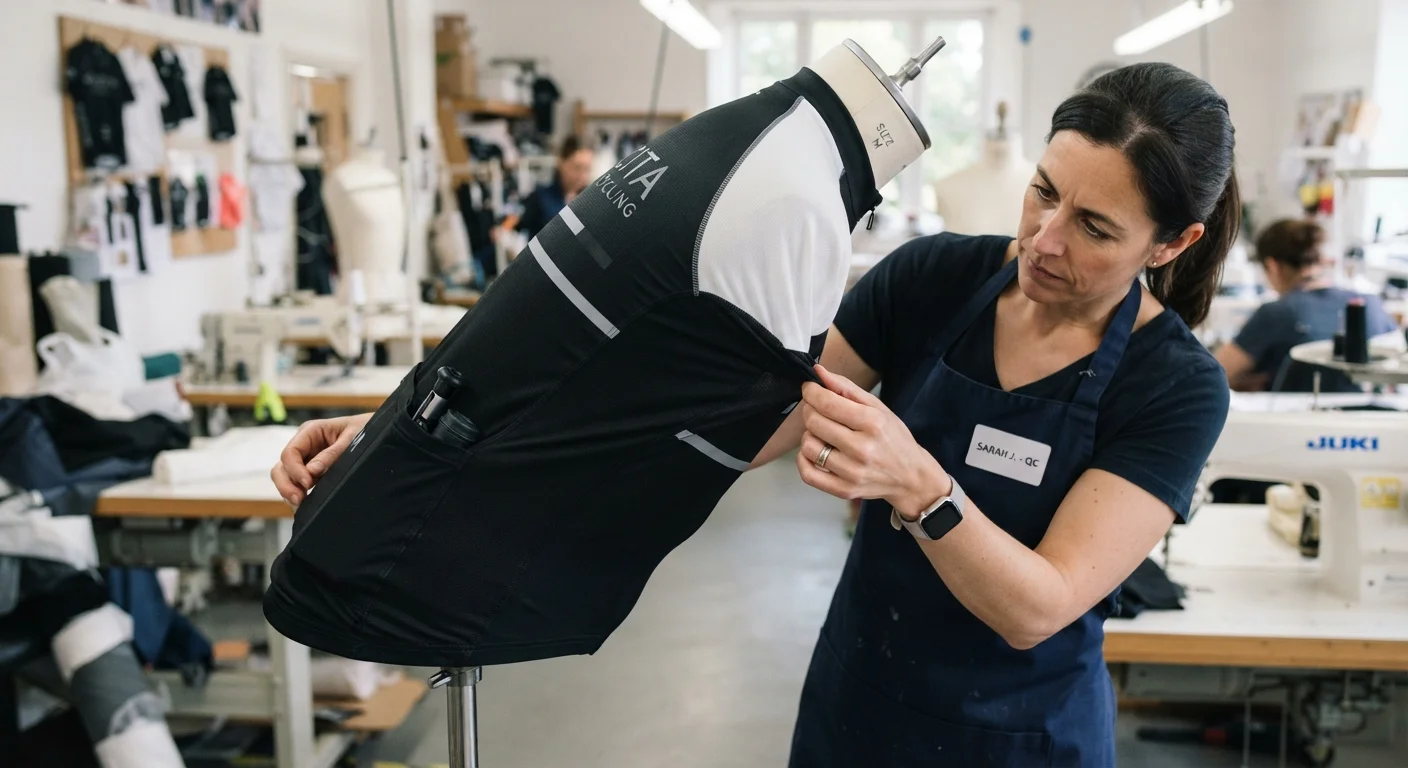
Before a jersey ever hits a production run, cycling jerseys manufacturers check samples in riding posture , not standing still. Shoulders shouldn't pull, the chest panel shouldn't bunch forward, loaded rear pockets shouldn't sag, and hems shouldn't roll when you're bent over the bars. Aerodynamic fit means tight enough to eliminate flutter, loose enough to breathe hard on a climb , with stretch built into the armpits, shoulder blades, and side seams.
Most cycling jersey material runs on polyester-spandex or polyester-elastane blends. Typical builds:
86% polyester / 14% elastane, 130 GSM – UV-protective, mid-support
94% polyester / 6% elastane, 110 GSM – lightweight, hot-weather
75% polyester / 25% elastane, 165 GSM – higher compression fit cycling
100% recycled polyester, 95 GSM – breathable cycling clothing, eco-focused
Durability gets checked with numbers: Martindale abrasion above 20,000 cycles, shrinkage under 3%, pilling rated 4–5, and 95% color retention after 50 washes. Flatlock stitching and reinforced seams hold it together long-term.
Conclusion
A cotton tee will survive a 20-minute coffee-shop cruise, but it starts working against you the moment sweat soaks in and stays there. A real cycling jersey earns its price through moisture wicking fabric that actually moves sweat off your skin, an aerodynamic fit that stops fabric from flapping and dragging you back, and rear pockets that keep your phone and keys out of a sweaty backpack.
If you're riding three or more times a week, for 40+ minutes a session, the math favors upgrading. You'll spend less time fighting your clothes and more time training. Your gym tee is still fine on casual, short, low-intensity rides.
Don't take fabric labels at face value.A reliable regular cycling T-Shirt manufacturer can help verify fabric quality before large-scale orders. Do the pinch test, the water-drop test, and check the seams before you buy. Then decide based on your mileage, not marketing copy.