You're about to drop $300 on a Q36.5 jersey, and one nagging question won't quit. Is it made in Italy, or only branded there? Fair question. At this price point, a "Made in Italy" label needs to hold up to scrutiny.
We looked into the supply chain. Q36.5 builds its cycling clothing through a specific regional network, and the distinction matters. Below is a breakdown of which production steps happen where, how that compares to what Castelli, Rapha, and Assos do, and what longtime riders notice in the stitching that marketing copy never mentions. By the end, you'll have a verifiable answer and a framework for checking any premium brand's claims yourself.
Q36.5 Cycling Clothing Is Made in Italy—Within a Regional Supply Network Around Bolzano
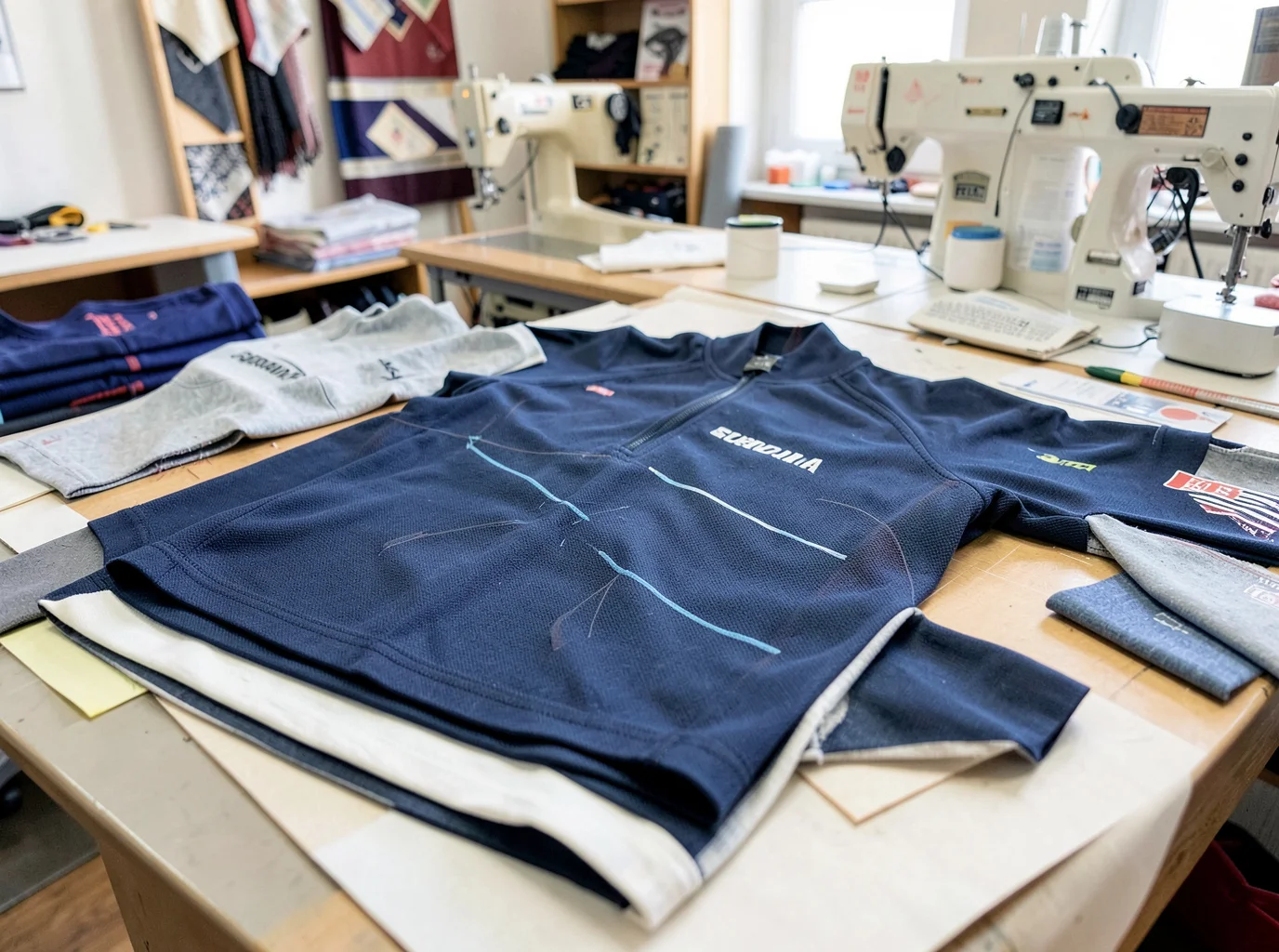
Q36.5 makes its cycling apparel in Italy from start to finish, rather than designing locally and outsourcing assembly abroad.
Headquartered at Via Innsbruck 33 in Bolzano, South Tyrol, the company was founded in 2013 and employs between 11 and 50 people according to LinkedIn. That is a lean team for a brand selling $300 jerseys, but its location shapes the entire operation.
The brand designs, sources, develops, and hand-crafts every RaceWear piece within a 350 km radius of Bolzano. That perimeter reaches into Italy's northern textile corridor, keeping every step from raw yarn to finished garment inside the same regional boundary.
Why This Matters More Than "Made in Italy" Alone
Plenty of brands stitch a "Made in Italy" label onto garments that only underwent final assembly there. Q36.5 runs the full cycle in the region, keeping textile development, pattern-cutting, sewing, and packaging close to home.
Gloves are the only documented exception. Q36.5 produces them at a specialized facility in Taiwan, where the manufacturing matches the technical demands of glove construction. Everything else stays within the Italian network, including jerseys, bib shorts, and the Dottore Light Rain Jacket, produced by an OEM/ODM cycling apparel manufacturer , built from 55 gsm ripstop nylon with a 10,000mm waterproof membrane.
Acknowledging that single overseas product gives far more credibility to their Italian sourcing than a generic tag ever could.
Q36.5's Italian Production Process Covers Fabric Development, Pattern Making, and Final Assembly
Most "Made in Italy" claims skip the fabric itself.
Q36.5's in-house studio partners with Italian cycling clothing manufacturers to develop proprietary fabrics for its collections. For example, their recycled polyester is spun from PET bottles collected in Florence, then processed and woven into jerseys locally rather than sourced from overseas recycling plants.
The specifications reflect that build quality. Q36.5's woven bib shorts use about 1,700 thread twists, compared to an industry standard of 330–400. Thread density exceeds 220 threads per cm², versus roughly 44 for standard knitted fabrics, creating a measurably tighter, more durable weave.
Pattern making follows the same practical focus. Instead of cutting flat panels, Q36.5 shapes pre-formed patterns around the rider's body before assembly starts. Each zone handles a specific job, providing ventilation, moisture transfer, or targeted saddle support.
The Unique bib shorts show this approach clearly. The main body comes off the weaving machine as a single tubular piece with seven built-in density zones, eliminating seams from stitched flat panels. The shoulder straps attach afterward, leaving the core structure as one continuous piece.
About 90% of the bib-short components—fabric, finishes, chamois, and construction techniques—are proprietary to Q36.5, a figure competitors rarely disclose.
Q36.5 Made in Italy Versus Italian Fabric or Italian Design: How to Read the Claim
Three different phrases get thrown around in premium cycling apparel marketing, and they don't mean the same thing. Know the difference before you check out.
"Designed in Italy" tells you where the sketch happened. Nothing more. The fabric could come from a mill in Vietnam, the sewing could happen in a facility three continents away, and the claim still holds.
"Made with Italian fabric" is a textile-origin claim. The yarn and weave started in Italy, but the cutting, sewing, and finishing often happen elsewhere.
"Made in Italy" is the strongest claim because it covers the finished garment. This is the standard worth looking for.
Q36.5 avoids vague phrasing. The company specifies that its kit is "developed, sourced, and hand-crafted within 350 km of Bolzano" and produced "from start to finish in Italy." That footprint covers research, textile development, manufacturing, packaging, and design.
Most competitors keep their sourcing numbers private, but Q36.5 self-produces roughly 50% of its threads and fabrics through its own textile R&D program.
Use This Checklist on Any Premium Brand
Check the country-of-origin label instead of the marketing page
Check whether the claim covers the finished garment or just the fabric
Confirm stated exceptions, like the gloves Q36.5 notes separately
Separate "textile partner" language from where cutting and sewing happened
Why Q36.5 Uses Italian Production Instead of a Fully Offshore Apparel Model
A cheaper option exists. Shifting cutting and sewing to Southeast Asia would slash unit labor costs overnight. Q36.5 refuses that trade.
Proximity shortens the feedback loop. Designers, textile partners, pattern makers, and factories all sit within the same 350 km radius. When a prototype needs a fix, someone walks it over instead of shipping it across an ocean and waiting six weeks for a revised sample. That speed lets Q36.5 iterate on fit and performance details faster than brands coordinating factories across continents.
Hand-crafted construction needs hands nearby. Q36.5 relies on Italian pattern makers and artisans rather than assembly-line operators following generic spec sheets. The precise body-mapped construction that separates a $300 jersey from a $90 one depends on craftspeople who understand pattern geometry, not just stitch counts.
The model extends beyond apparel. Q36.5's Unique Pro shoe uses a carbon-fiber sole made in Montebelluna, Italy's footwear-manufacturing hub, built with a patent-pending layup process. The company applies the same logic here, keeping production where local expertise shapes performance.
Offshoring would cost Q36.5 its moat. Proprietary fabric development, rapid sampling, direct quality control, and traceable sourcing, including PET-bottle recycled yarns from Florence, are difficult to replicate through standard contract manufacturing. Lower costs would sacrifice everything that makes the brand defensible, even when compared to top Italian cycling apparel manufacturers .
Q36.5 Versus Castelli, Rapha, and Assos: Manufacturing-Origin Comparison
Brand heritage and manufacturing location are two different facts. Confusing them is how shoppers overpay for a story instead of a supply chain.
Here is the side-by-side, drawn from each brand's public statements:
Brand | Headquarters / Heritage | Manufacturing Evidence | What You Can Verify |
|---|---|---|---|
Q36.5 | Bolzano, Italy | Sourced, developed, and hand-crafted within a 350 km radius of Bolzano; "start to finish" in Italy | Specific, disclosed exceptions (gloves) |
Castelli | Fonzaso, Veneto, Italy | No public evidence confirming the full product range is Italy-made | Check label per SKU |
Rapha | United Kingdom | Generally treated as internationally sourced, not UK-only | Check label per SKU |
Assos | Switzerland | Swiss engineering heritage; manufacturing origin unconfirmed by brand statements | Check label per SKU |
Castelli, Rapha, and Assos build their reputations on national identities—Italian racing pedigree, British precision, and Swiss engineering. None of that tells you where the stitching happens. For buyers evaluating a Castelli cycling apparel supplier , heritage does not equal domestic production, so with these three brands, you have to check the label on each individual SKU to see where it was made.
Q36.5 stands apart by defining an exact radius. Making gear within 350 km of Bolzano is a falsifiable claim you can check against a product tag. A heritage logo gives you no such guarantee.
A direct lineage connects two of these companies. Luigi Bergamo, former development director at Q36.5, worked at Assos before helping build Q36.5. That connection explains their shared technical DNA, but it does not make Assos gear Italian-made.
If geographic transparency matters for your buying decision, Q36.5 publishes the most specific, checkable manufacturing claim of the four.
What Q36.5’s Production Claims Suggest About Jersey and Bib Short Quality
Italian manufacturing does not guarantee the chamois will stay flat or seams will avoid fraying after six months. Proximity to suppliers helps with quality control and fabric coordination during assembly, but long-term durability depends on inspection standards and rigorous wear testing.
The Dottore Pro bib uses a blend of 63% polyamide, 35% elastane, 1% polyester, and 1% silver thread for antibacterial and antistatic performance. That 35% elastane delivers strong compression, though the real test is whether the bib maintains its shape after 50 washes and 100 rides.
The Q LAB Air chamois pairs layered foam with a microfiber top sheet to minimize saddle friction. On the Dottore Pro, that support extends past the legs and into the glutes and lower back as a unified system.
The higher-tier Gregarius Pro bibs use recycled yarns across a blend of 60% polyamide, 34% elastane, 4% Dyneema, and 2% polyester. Dyneema is an abrasion-resistant fiber borrowed from climbing gear to reinforce high-friction contact points against wear.
The jerseys follow a similar build philosophy. The custom G1 pairs 110 g/m² micro-perforated polyester on the sleeves and shoulders with a double-faced micro-polyester front and back for push-pull moisture transfer. The main body uses 70% recycled polyester, and select proprietary blends reach 100% recycled content. These fabrics must hold their stretch recovery, colorfastness, and resistance to pilling across repeated wash cycles.
Laser-cut sleeve hems and an invisible pocket layout show that Q36.5 builds specifically for fit and moisture management. These details point to thoughtful construction, though road miles will determine whether the materials outlast Castelli or Assos.
How Experienced Riders Can Verify Q36.5’s Claimed Italian Craftsmanship
Trust, but verify. Serious cyclists follow that rule before any $300 purchase, and it applies double here.
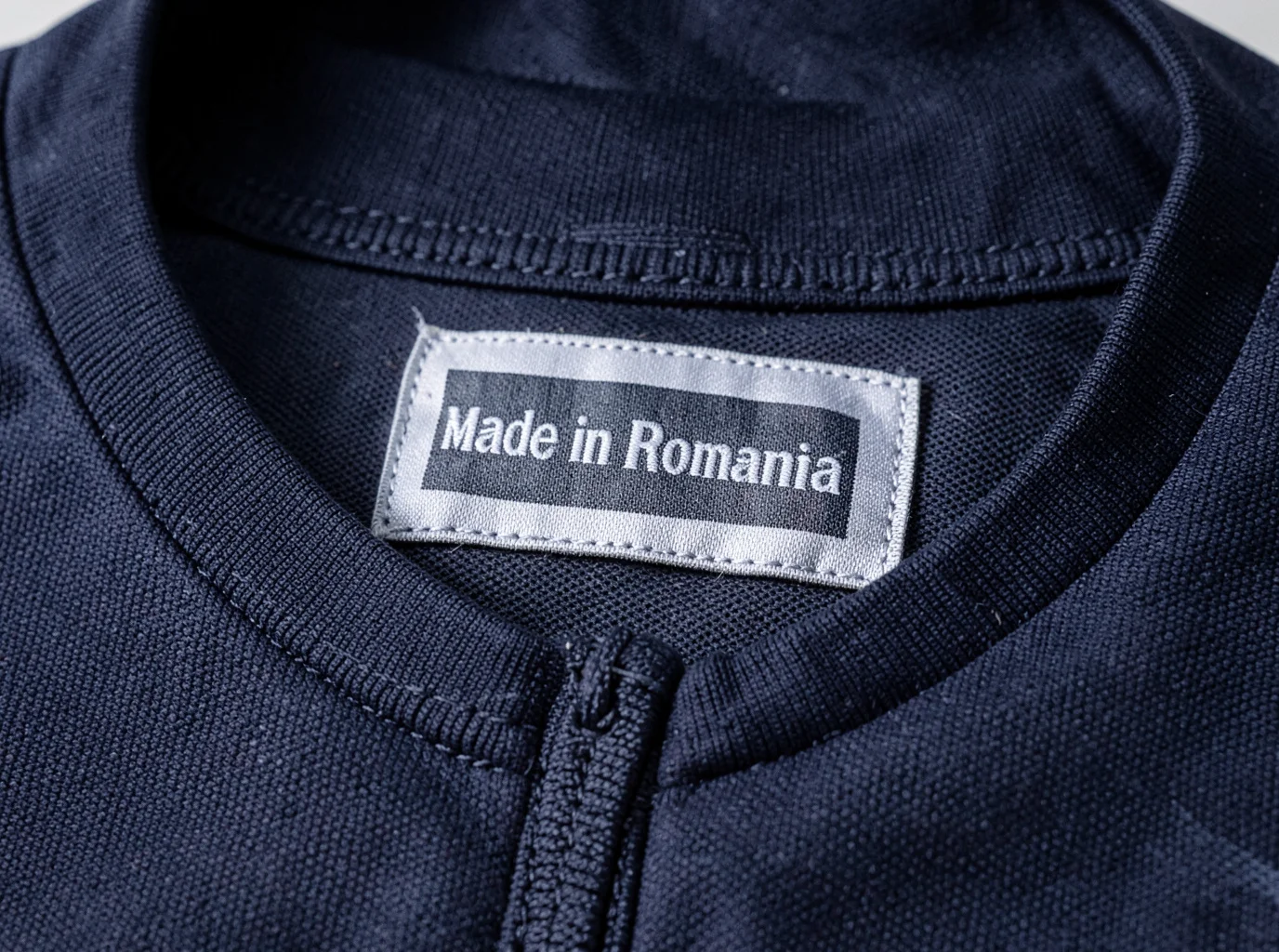
Start with the physical label. Photograph the inside tag showing "Made in Italy," the fiber composition, and the model code, then match that code against Q36.5's official product listing. Keep your invoice. A hangtag that only says "Italian design" carries far less weight than a sewn-in label stating the actual manufacturing stage.
Inspect the construction directly. Check seam alignment along stress points, symmetry in pad and panel placement, and reinforcement at the pockets, bib straps, and leg grippers. Clean internal finishing with minimal loose threads points to genuine hand assembly. Sloppy stitching contradicts any claim of gear developed within 350 km of Bolzano.
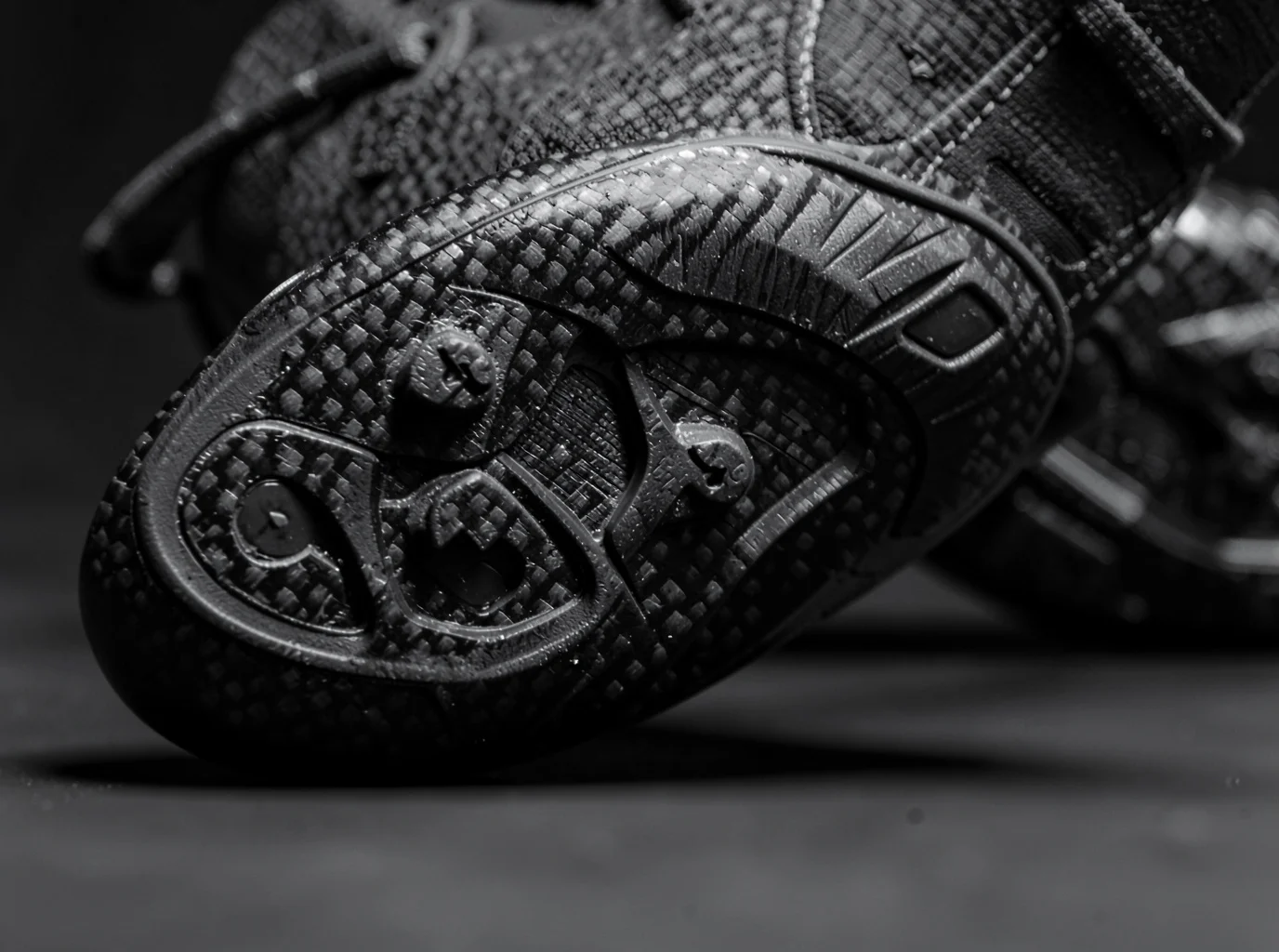
Use the shoes as your test case. Q36.5 states its Unique Pro carbon-fiber sole comes from Montebelluna. You can verify that claim on your own by checking the sole-origin markings, carbon layup consistency, left-to-right symmetry, and bonding quality.
Watch for red flags. Look out for missing origin labels, conflicting country statements between the hangtag and care label, or any retailer who cannot tell you whether "Italian" refers to design, fabric, or final assembly.
Q36.5 Product Exceptions: Gloves, Shoes, and Non-Apparel Components
Four glove models carry the Taiwan factory tag, each with a distinct build and price point. Rain Winter Gloves ($85) use a double-layer knit with a waterproof membrane, combining 78% nylon, 11% polyester, 9% spandex, and 2% conductive fiber outside with 77% acrylic, 20% polyester, and 3% spandex inside. Hybrid Gloves ($100, 69g) weave in coffee-bean residue fiber for their UF Hybrid Shell. Super Termico Winter Gloves (£110) laminate fleece with UF Air Insulation Plus for −2 to 7°C rides. Adventure Summer Gloves (~€55) use a suede-like microfiber palm made of 92% polyester and 8% elastane.
Shoes stay Italian. The Dottore Clima ($560) and Unique Pro 4.0 (£550) both use carbon soles handmade in Montebelluna, Italy's footwear-manufacturing hub, home to several Italian cycling apparel manufacturers . The Gregarius (~€300) rounds out the line with a BOA closure and carbon-synthetic sole. Audit each product category on its own, as soles, membranes, and conductive fibers do not share one sourcing story.
A Three-Minute Origin Check for Any Premium Cycling Apparel Brand
You can separate a genuine origin claim from marketing fog in three minutes, whether you are checking Castelli, Rapha, Assos, or any other brand in your cart.
0:00–0:30 — Read the label. EU textile rules mandate fibre composition by percentage, listed by weight, but they do not require a country of origin. Read the printed text on the tag carefully. "Designed in Italy" and "European brand" describe branding rather than manufacturing, and basic overseas assembly or ironing does not establish origin either.
0:30–1:00 — Split the claim across three locations. Check where the company is headquartered, where the fabric is milled, and where the garment is cut and sewn. Austrian brand Löffler sets a clear standard. Roughly 70% of its fabric comes from its knitting facility in Ried im Innkreis, and 99% of its production stays in Europe. Demand that level of specificity.
1:00–1:30 — Test the website. A named factory city carries far more weight than vague talk of "European quality." Generic sustainability pages without named suppliers are an immediate red flag. Compare against premium road cycling apparel manufacturers as benchmarks.
1:30–2:30 — Verify certifications and legal wording. OEKO-TEX Standard 100 tests the finished product, while STeP certifies the factory itself. Neither certificate confirms the country of manufacture on its own. For example, Löffler holds STeP certification across both its Austrian and Bulgarian facilities.
2:30–3:00 — Email customer service. Ask for the factory address and the date of their last audit, then score the reply green, amber, or red.
Conclusion
Q36.5 cycling clothing is made in Italy through a regional network around Bolzano. While many brands design in Italy and manufacture in Southeast Asia, Q36.5 produces its gear locally.
The premium tracks with that production setup. You pay for Italian pattern-making, fabric development, and assembly under one roof, give or take a few trusted regional partners. See this cycling apparel manufacturer profile for context.
To verify it yourself, check the tag, read the supply chain page, and cross-reference rider forums. That same three-step verification works whether you're eyeing Q36.5, Castelli, or anyone claiming European craftsmanship.