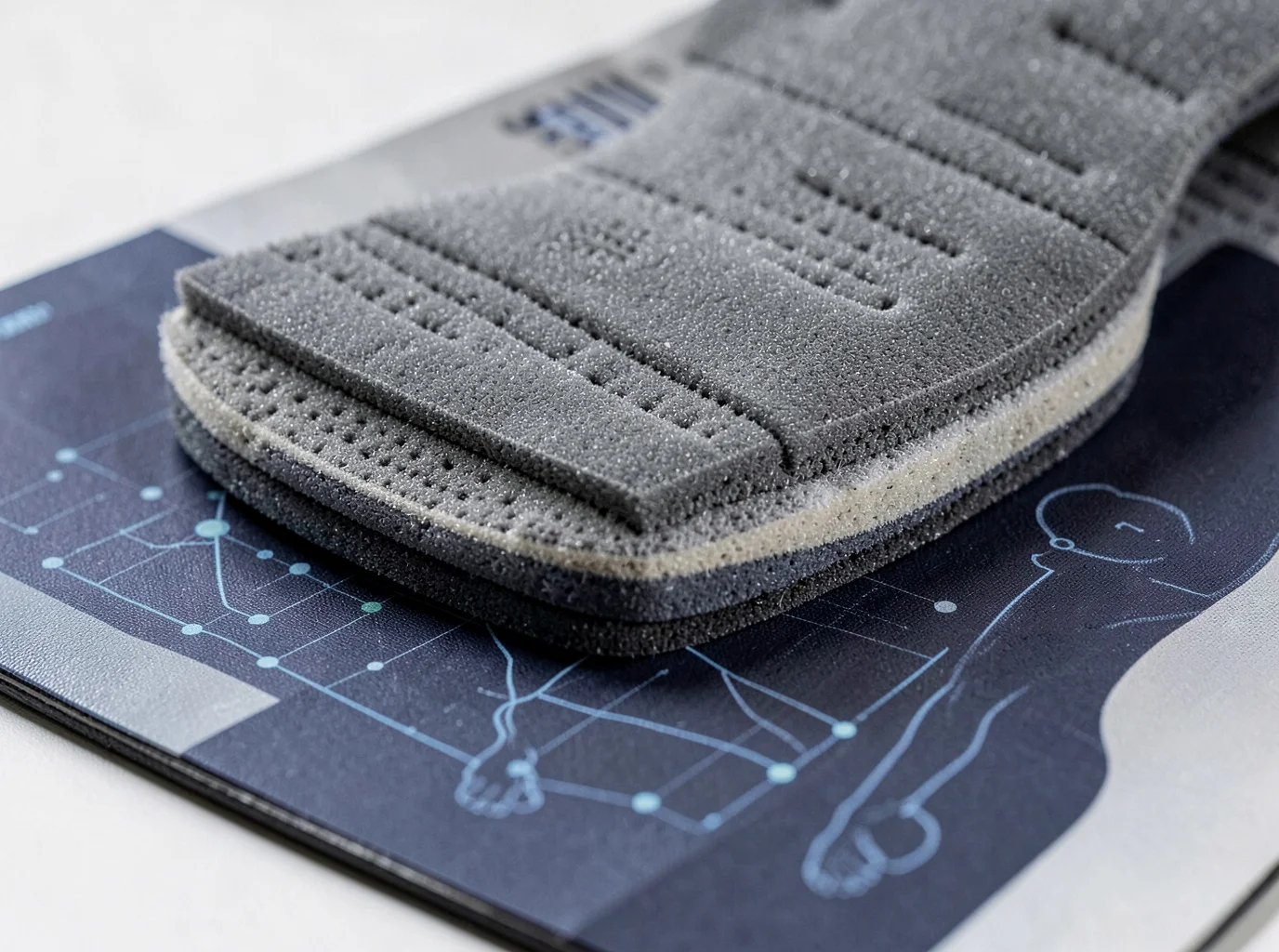
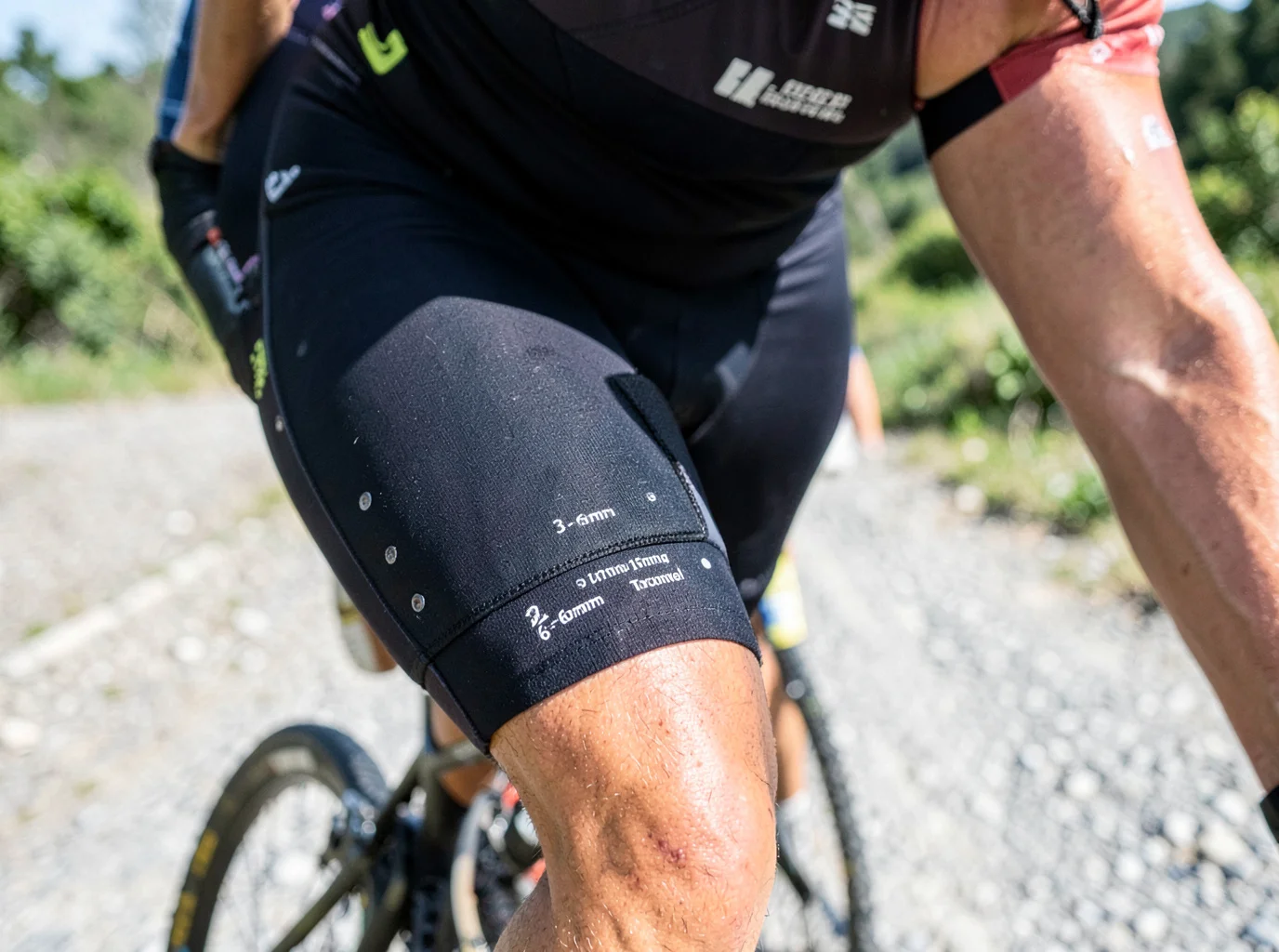
If you've already swapped in "better" cycling shorts and you're still shifting in your saddle at mile 20, the padding itself is the problem. I've spent months testing chamois pads across commuter rides, weekend century attempts, and everything in between, and most guides get this wrong by ranking products instead of matching them to your actual ride time and body structure. How long you're in the saddle, your sacral pressure points, and whether the foam density fits your anatomy determine the best chamois for cycling, not just a star rating on Amazon. This piece breaks down the real differences in cycling shorts padding by scenario, walks through how men's and women's pressure mapping differs, and gives you a simple self-test to find your match before you spend another dollar guessing.Brands can specify a custom cycling chamois for different rider profiles.
How Foam Density and Chamois Thickness Change Cycling Comfort
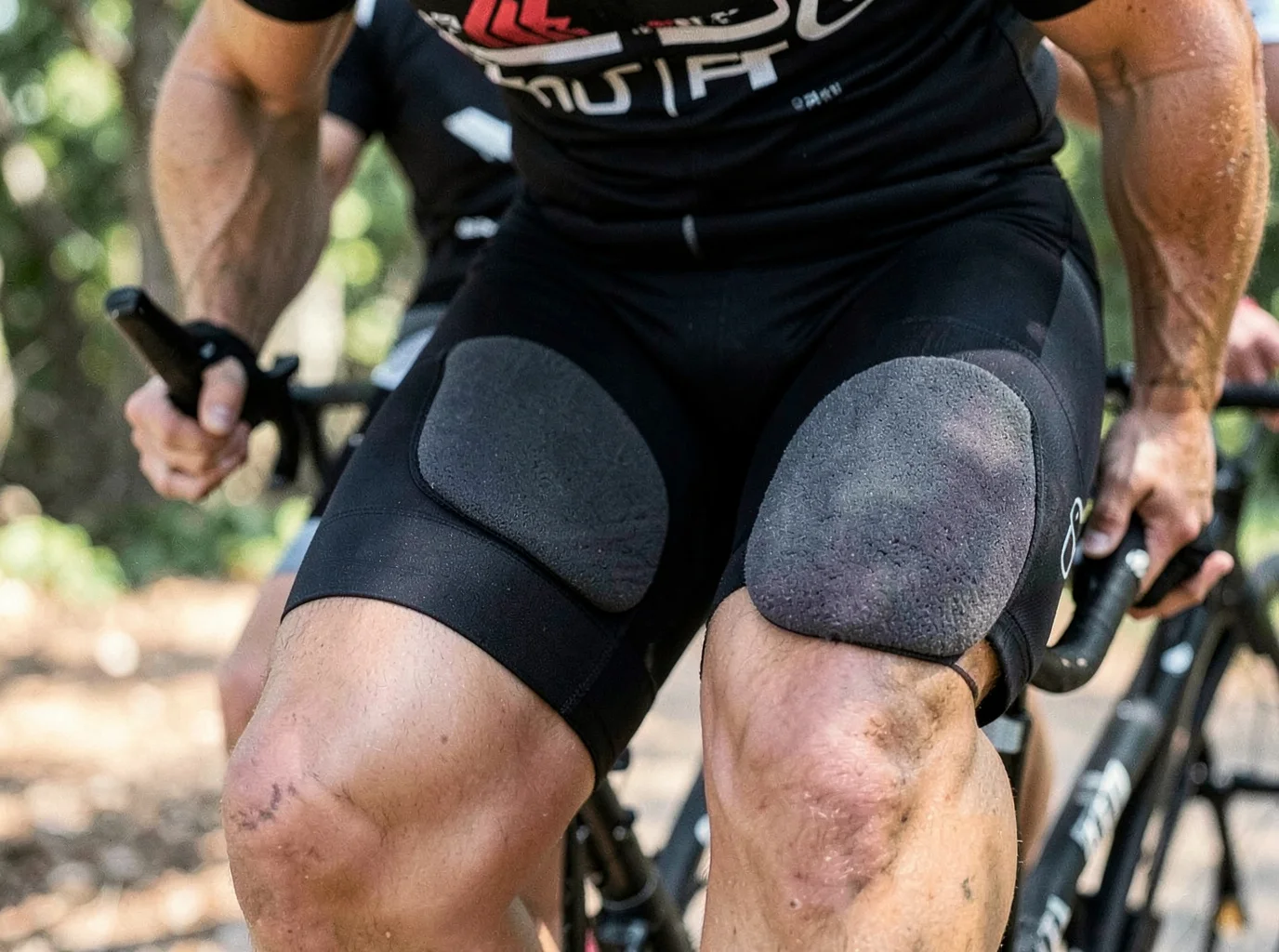
A thicker pad isn't automatically a better pad. I learned this the hard way after buying a 14mm "endurance" chamois that felt like sitting on a marshmallow for the first mile, then bottomed out by mile 15. Density and fit matter more than thickness. A thin, high-density chamois can feel more supportive than a thick, soft one that collapses under sustained pressure.A custom cycling shorts chamois can use different foam densities by zone.
Chamois thickness benchmarks that actually matter:
3–5mm : Race-focused, low-bulk pads for direct saddle connection
6–9mm : Thin, high-density pads built for race-intensity efforts
8–12mm : The standard endurance/road range
9–14mm : Longer endurance rides where you need more buffer
12–15mm+ : Touring, gravel, or max-comfort scenarios
Foam density (measured in kg/m³) tells the real story:
40–50 kg/m³ : Budget, very soft foam—compresses fast
70–120 kg/m³ : Mid-range, decent support
120+ kg/m³ : Firmer, high-end foam that holds its shape
Premium brands push density up to 200 kg/m³ in critical zones
Higher density means more resistance to compression and better stability on rough terrain. Greater thickness just adds cushioning—it doesn't guarantee comfort if the foam lacks proper density.
The best chamois pads I've tested use multi-density foam construction. One standout 16mm pad layers 65 kg/m³ foam at 4mm near your body for softness, then 120 kg/m³ foam at 12mm underneath for sit-bone support. That combination is what separates a genuinely comfortable pad from a marketing gimmick.
Seamless Construction, Antibacterial Fabric, and Pressure Relief Channels
Density and thickness only tell half the story. Surface geometry and fabric tech decide whether that dense foam actually does its job over a 3-hour ride.
The MAAP Team Bib Evo is a good reference point here. It uses seamless bib/brace construction, which eliminates the stitched pressure points that dig into your skin during long efforts. The 3D thermo-moulded chamois uses a pressure-relieving central channel to provide anatomical support, so the foam doesn't just press against soft tissue.
Why the channel design matters:
-Grooved fiber structures act as fluid ducts—textile research shows they can offer up to 300% more surface area than round fibers, which speeds up moisture wicking
-That translates to fewer hot spots and less friction-driven chafing
-Compression-textile studies confirm that textured surfaces with ridges or channels create alternating pressure profiles that redistribute load
Research on antimicrobial textiles shows coatings like chitosan-silver nanoparticles effectively suppress E. coli, S. aureus, and Candida albicans—the exact bacteria linked to saddle sores and folliculitis. MAAP's moisture-wicking antibacterial top layer, built on OEKO-TEX® certified textiles, keeps the surface dry so bacteria can't set up shop.
If your current chamois lacks seamless construction or a defined channel, that's often the real issue. Wholesale custom cycling chamois programs can also vary channel and foam layouts.The foam itself is usually not the problem.
The Best Chamois for Commuting Under One Hour
Your commute isn't a century ride, so stop shopping like it is. Under one hour, upright posture and stop-and-go traffic matter more than max cushioning. A 3–8mm mid-density chamois is thick enough to prevent soreness and thin enough to wear under jeans or a skirt without looking absurd.
What actually works for commuting:
Single-density foam or a basic 3D pad—Club Ride's 1-Hour Chamois is built for rides under 60 minutes
Perforated foam layers for breathability during stop-and-go traffic
Elastic Interface® technology so the pad moves with your body, not against your shorts
Seamless inner legs to skip the chafing you don't have time to deal with mid-commute
Terry's Fleet Air Chamois uses this formula—Elastic Interface® and waffle-layer 3D construction. Pair it with a padded liner or waist short instead of a full bib. Easier on and off, cheaper, and honestly, nobody needs bib straps for a 25-minute ride to the office.
The Best Chamois for Two- to Four-Hour Road and Gravel Rides
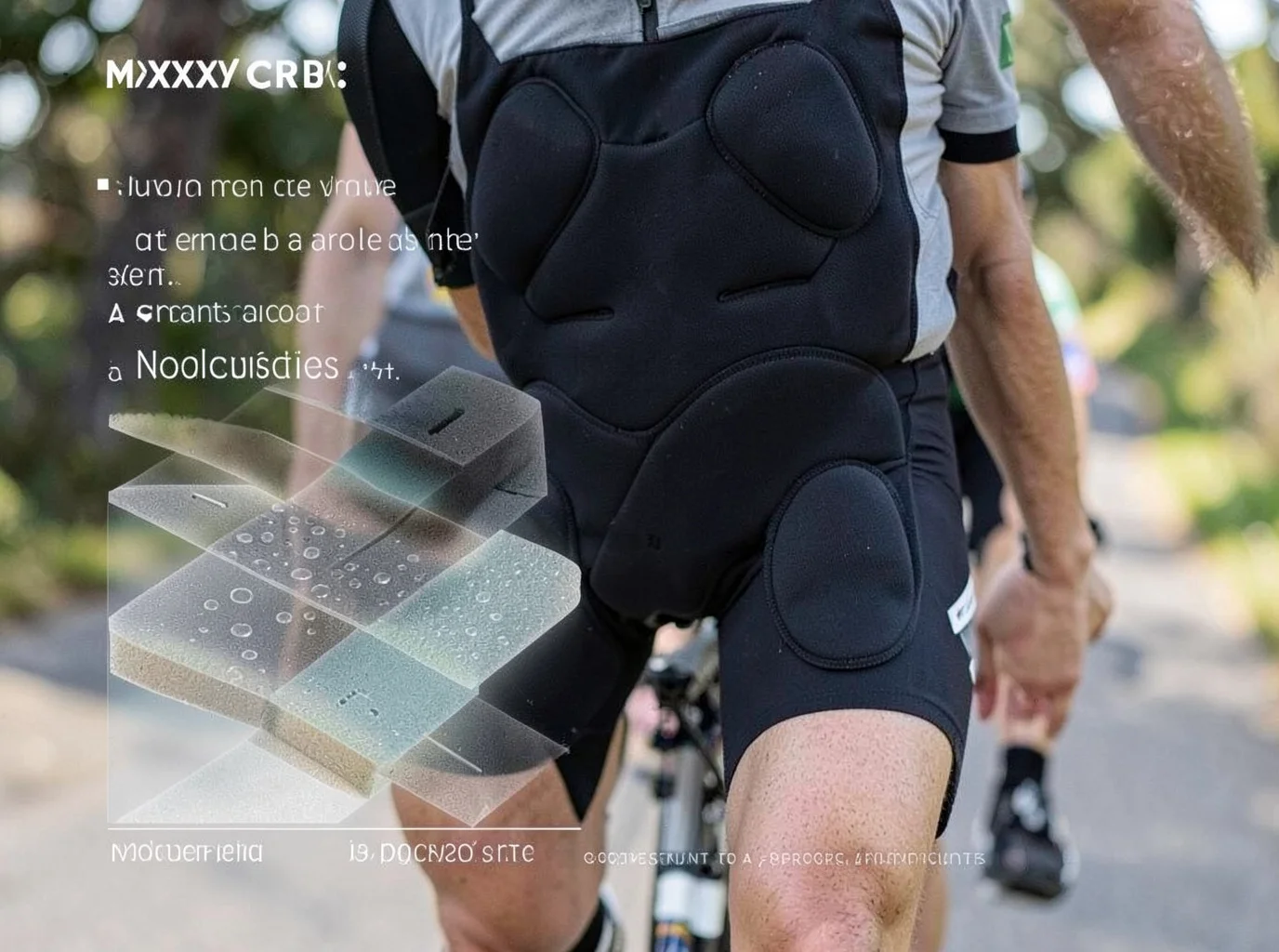
Two hours in, your body stops caring about your bike's specs and starts caring about the chamois. Most riders overcorrect in the 2-to-4-hour window by jumping straight to the thickest pad. A medium-density chamois with multi-density foam, pressure-relief channels, and roughly 9–12mm of thickness is the sweet spot. Competitive Cyclist's own testing recommends it for anyone spending 2–6 hours in the saddle, and it lines up with what I've felt on my own gravel routes.
Medium-density gives enough support to handle sit-bone load without collapsing on washboard gravel, but it isn't so firm that it fights a steady seated road effort. The embossed multi-density foam distributes pressure rather than just cushioning it.
Road.cc tested one bib short pad that scored well for around two hours (about 50km). Past that mark, riders wanted more structure. That tracks with a simple duration rule I've seen hold up: lightweight foam for 1–2 hours, medium-density for 2–4 hours, and high-density anatomical padding for 4+ hours. The Elastic Interface Icarus HCS, at 200 kg/m³, targets ultra-endurance efforts beyond 100km.
For a quick calibration: on mostly smooth road and under 2.5 hours, a lighter pad still works. On rougher gravel or as you approach the 4-hour mark, step up to denser foam now, not after the ride gets uncomfortable.
The Best Chamois for Long-Distance Cycling Over Four Hours
Past the four-hour mark, guessing gets expensive—your sit bones will remind you for days. The chamois becomes load-bearing gear. You need a multi-density, anatomical endurance chamois built specifically for this duration.
Look for these specs:
-9–14mm thickness as the baseline, with some riders going to 13–21mm for true ultra-endurance efforts
-Higher-density foam under the sit bones , often 200 kg/m³, paired with softer 120 kg/m³ foam everywhere else
-Pressure-relief channels and seam-reduced construction to prevent friction as fatigue sets in
-Firm rear support that keeps you upright instead of sinking into the saddle at hour three
The GOREWEAR Long Distance Bib Shorts nail this zoning approach—dense foam exactly where sit-bone pressure peaks, softer foam elsewhere. The Assos Mille GTO S11 goes further with a twin-layer chamois at roughly 11mm over 10mm, built for efforts "measured in days rather than hours." That's the actual design brief.
For rides beyond that, Pactimo's 12-Hour Bib and Santini 's FoamBio cover the distance. Santini rates the FoamBio for up to seven hours.
More padding isn't automatically better here. Over-padding in the wrong zones creates movement-related friction.
Men’s and Women’s Cycling Chamois Require Different Pressure Mapping
Anatomy is the entire design brief. A unisex chamois is a compromise, and pressure-mapping data from major brands proves it.
POC ran sensor studies across hoods and drops positions. They found men generally put less pressure on the front of the saddle than women, regardless of pad or saddle choice. That finding explains why so many women's cycling chamois still leave riders sore even after buying a "premium" pad—the pad was engineered for the wrong pressure zone.
Women's anatomy drives specific chamois requirements:
-Wider pelvis and greater pubic arch angle (per Elastic Interface) shifts most pressure into the pubic area, especially when leaning forward
-POC responded by sculpting extra frontal support and adding a hollowed-out zone to cut chafing
-Hincapie builds women's chamois with a wide back for female sit bones and a shorter front to remove excess fabric
Men's anatomy needs a different fix:
-A wider support zone under the sit bones, plus a central channel for perineal blood flow
-Hincapie uses an anatomical depression down the middle to prevent numbness from restricted circulation
-POC also found men need extra support toward the front, just in a different pattern than women
One benchmark stands out regardless of gender. POC concluded most riders need wider support than traditional pads offer, since sit-bone pressure zones consistently exceeded standard pad width. SQlab's testing backs this up with hard numbers—its SQ-Pad 11 cut peak average pressure by 49.7%, and the SQ-Pad 12 reduced vertical force by 26.97% compared to a bare saddle shell. That's measured with a 100-plus sensor pressure film.
If you're buying a men's or women's cycling chamois, check whether the brand actually ran pressure mapping across both hood and drops positions. If they can't show that, they're guessing at your anatomy too.
A Three-Step Test to Match the Chamois to Your Body
Skip the guesswork. Here's the exact test I run before recommending any chamois.
Step 1: Measure your sit-bone width. Sit on a hard chair with cardboard underneath, rock forward and back 10-15 times, then stand up and measure the two indentations center-to-center. Your chamois support width should run 10-15mm wider than that number. A 115mm sit-bone width needs a 125-130mm pad range.
Step 2: Check the pressure pattern on the bike. Pedal for 10 minutes in your normal position. The pad should sit flat and centered, with no wrinkles, bunching, or exposed seams. Red lines or hot spots after 10 minutes mean the shape is wrong for your anatomy, not that you need a thicker pad.
Step 3: Match thickness to weekly saddle time , not ride length:
Under 3 hours/week : 4-6mm
3-6 hours/week : 8-10mm
Over 6 hours/week or multi-day rides : 12-15mm
If the pad shifts when you stand up, the size is wrong. No amount of chamois cream fixes bad fit.
Product Matchups: Castelli, Giro, Pearl Izumi, Craft, and Aero Tech
Castelli builds for speed. The Free Aero Race Bibshort is marketed as its “fastest, most comfortable” bib to date. Backing that up, the Giro collection uses CFD-based fabric placement and seam construction, plus Air_O Stretch fabric tuned for 30–55 km/h efforts. Pair it with the Bolero SS base layer for extra aero gain. If you’re racing or doing fast group rides in the 2–4 hour window, this is your lane.
Giro goes for value and access. Road-apparel listings show heavy markdowns, one dropping from $241.93 to $153.99, another from $129.99 down to $84.49–$90.99. Good for riders testing chamois preferences without full-price commitment.
Pearl Izumi wins on fit range. It offers five distinct fits, including a women’s-specific cut, a Euro-style pro cut, and a relaxed fit looser than Voler’s club cut. Sizing runs to 5XL for men (eight sizes) and 4XL for women. Its PRO bib uses PRO Transfer fabric with the Levitate PRO chamois and a 10.5-inch inseam—solid for the 2–4 hour endurance range covered earlier.
What Cycling Communities Reveal Beyond Retail Ratings
Star ratings hide more than they show. Instead of one blended score, cycling forums split feedback into categories Amazon never touches: fit process, staff knowledge, actual pain relief.
Bike-fit threads show how riders judge any chamois-adjacent service. One thread dismisses "static measurements" outright, pushing dynamic tools like Dartfish or Retül instead. Another rider called a sub-$200 fit "a steal" and said they'd pay double, while a separate poster trashed a pricier, higher-rated service that still left them sore. Price isn't the trust signal community members rely on.
What builds trust in these threads:
-Staff who explain why a pad or fit works, not just that it does
-Willingness to watch you ride before making claims
-Consistent outcomes across visits, not one good review
The same shop can get "the fitting is great" and "overpriced training" in the same thread. That granularity is what star ratings erase, so hunt for it before trusting any chamois or fit recommendation.
Chamois Cream, Saddle-Sore Prevention, and Fixes for a Poor Match
Cream is a band-aid. It cuts friction and helps with hygiene, but it can't fix a saddle that's tilted wrong or a chamois that doesn't match your sit bones. Apply it after you've sorted the fit.
How to apply it:
Use a thin layer before you ride. British Cycling recommends applying it to the perineum and the pad itself.
Competitive Cyclist says to apply a thin layer to your chamois and skin contact points before riding.
For longer rides, go quarter-sized on the skin where friction peaks, not packed thick into the shorts.
A 2026 study on female cyclists found 40% used anti-chafing or chamois creams to prevent saddle sores, up from a prior 37% figure.
If soreness keeps coming back, run this sequence before buying another cream:
Check saddle height, fore-aft position, and tilt. Rocking from a bad fit causes uneven pressure no cream can offset.
Confirm saddle width actually matches your sit-bone measurement.
Switch to well-fitting bib shorts with an intact pad. Bibs stay put better than waist shorts.
Keep the chamois pad clean and dry between rides.
Add cream only after the fit checks out.
If irritation persists after step five, the fit is wrong.
Conclusion
There's no single best chamois for cycling. The best chamois depends on your ride time, your body, and your saddle pressure points.
Match your chamois thickness to your ride duration, pick multi-density foam if you mix commutes with weekend century rides, and always factor in pressure-mapping differences between men's and women's cycling chamois before you swipe your card.Custom cycling chamois wholesale options suit brands with specific fit requirements.
Run the three-step test from this guide, cross-check it against the product matchups above, and keep a chamois cream on hand as backup insurance for every mile after 40.