There I was, staring at a $90 price tag on a pair of cycling bib shorts, holding a padded diaper insert, and asking the universe out loud in a bike shop, causing a small scene, why chamois is so expensive. Is this witchcraft? Is someone laughing at me from a yacht funded entirely by chamois cream sales? I needed answers, so I cut open several pairs of shorts (mine and, regrettably, my husband's) and interrogated the foam like it owed me money. Inside those pads I found layers, science, actual engineering that will either justify your next purchase or show which brands are taxing your butt for fun.
The Chamois Is a Multi-Layer Pressure System
Turns out my butt has been sitting on an engineering degree this whole time and nobody told me. A chamois is a stack, like a tiny, sweaty lasagna with a soft contact layer on top (the part that touches you, ideally without judgment), a foam or gel core doing the actual work, and a backing layer that keeps the whole operation from sliding around inside your bib shorts like a confused hockey puck.
That core is where the money hides. Cheap pads use one uniform density. Good ones use a multi-density foam pad system with softer material near the surface, medium foam under your sit bones, and firmer zones wherever the pressure peaks. Craft's Infinity C2 runs a three-layer setup blending medium- and high-density foam to absorb impact. The C4 goes further with a high-density foam core wrapped in softer edge foam, because apparently my perineum deserves architecture.
Thickness matters too, but not in a "more is better" way. Most high density foam padding sits between 8–12mm at its thickest point, tapering at the edges so you can still, you know, pedal. Brands even benchmark it to distance, with 4–6mm for short 30–80km rides, 6–10mm for 80–150km, and 10–15mm if you're doing something unreasonable past 150km.
Some brands, like Pearl Izumi , literally strap pressure-mapping sensors under riders on a dozen-plus saddles to find where it hurts most. POC's Novus pad adds gel layers specifically because foam alone collapses when wet.
High-Density Foam and Multi-Density Zoning Create the Biggest Material Difference
Density and firmness are not the same thing, and the foam industry has been gaslighting all of us. A chamois pad can be dense but soft, or light but firm as a judgmental in-law. Density is measured in pounds per cubic foot (PCF), and firmness has its own scorecard called ILD (Indentation Load Deflection). High-density foam in the 1.8–2.5 PCF range for consumer-grade stuff is a durability metric. Premium high-resilience foams push into 2.5–4.0 PCF , the range luxury mattress makers brag about, and yes, your $90 chamois is a tiny mattress for your undercarriage.
Firmness follows its own bands. 16.5–22.5 ILD is ultra soft, 22.5–26.5 is soft, and 34.5–38.5 is extra firm. For a seat cushion, which is exactly what a chamois is, the sweet spot most engineers target is 32–42 ILD . Below that and you'll bottom out on your saddle by mile twenty. Above that and you're sitting on a stress ball filled with regret.
Multi-density zoning is where things get clever. Cycling shorts Manufacturers layer softer foam over firmer support cores, mimicking the logic used in medical-grade cushioning. One documented multi-zone foam design runs a density of 1.9 with zone-specific ILDs of 11 at the foot, 23 at the seat, and 17 at the head, a different firmness depending on what body part is pressing down.
Durability math backs up the price tag, too. Foam at 2.0+ PCF retains over 90% of its original height after 20,000 compression cycles under ASTM D3574 testing. Translated into cycling shorts manufacturing cost terms, that 1.8-density pad crumping out in 3-5 years versus a 2.3-density pad surviving 7-10 years isn't marketing fluff. It's the actual physics of foam fatigue sitting between you and your saddle.
Open-Cell Foam, Moisture-Wicking Fabric and Antibacterial Treatments Add Real Cost
My husband walked in while I was holding foam samples up to a lamp like I was appraising diamonds, and he asked if I'd lost my mind. Reader, I had not lost my mind. I had lost my patience with pretending fabric is just fabric. The foam and cloth wrapped around your business are doing chemistry homework you never assigned them.
Open-cell foam, the porous stuff most chamois pads use because it breathes better than closed-cell foam, runs $0.35–$0.40 per board foot in raw material and $0.50–$1.50 per square foot installed in general contractor pricing. Closed-cell foam is denser, less porous, and costs 2–3 times more , landing around $1.00–$1.50 per board foot . Open-cell wins for breathability but loses on moisture control, so brands tack on an extra $0.15–$0.75 per square foot just to manage sweat before it turns your pad into a swamp.
Then there's the fabric wrapping your foam lasagna. Basic moisture-wicking fabric with minimal antibacterial treatment runs $18–$25 per garment . The sweet spot tier, where a permanent wicking finish meets real antimicrobial tech like silver-ion or zinc pyrithione, costs $25–$40 . Premium cycling apparel brands push into $35–$45 territory for enhanced nylon blends.
Antibacterial fabric surcharges add 3–8% on top, and sometimes require EPA or European BPR registration, because apparently your undercarriage now falls under compliance law.
Seamless Chamois Technology and Construction Quality Determine Friction Performance
Stitches are the enemy. I learned this the hard way, somewhere around mile 40, when a seam I didn't even know existed decided to introduce itself to my inner thigh like an uninvited houseguest who overstays and then sets fires. Seamless chamois technology removes the stitched ridge lines where the pad meets the liner fabric, which eliminates the cheese-grater effect under your bib shorts every pedal stroke.
High-end pads like the Progetto X2 Air Seamless skip stitching entirely. The pad bonds directly to the liner instead of getting sewn on, which eliminates the ridge that catches skin during thousands of repetitive motions. Some Elastic Interface-based pads take this further with fully bonded, multi-density foam zones running 60/85/45 kg/m³ , no thread in sight. This construction quality is exactly why premium seamless chamois products land in the $160–350 range. You're paying for the absence of something, which feels like a scam until your skin stops filing complaints.
Fabric Friction Is Measured
Friction gets quantified using the coefficient of friction, or COF, calculated from tilt-test tangent angles. Static COF ranges 0.580–0.907 and dynamic COF 0.579–0.830 , shifting with weave structure. Technical polyester against skin sits around 0.25 COF dry , but jumps past 0.60 once humidity and sweat show up uninvited. That's why moisture-wicking fabric paired with a smooth top sheet matters so much for friction performance.
In five minutes, ask for COF data under dry and humid conditions, confirm bonded (not stitched) construction, and look for density mapping across zones instead of one uniform block. If a brand can't answer, they're probably not doing the homework either.
Pressure Mapping and Long-Ride Testing Explain the Research Premium
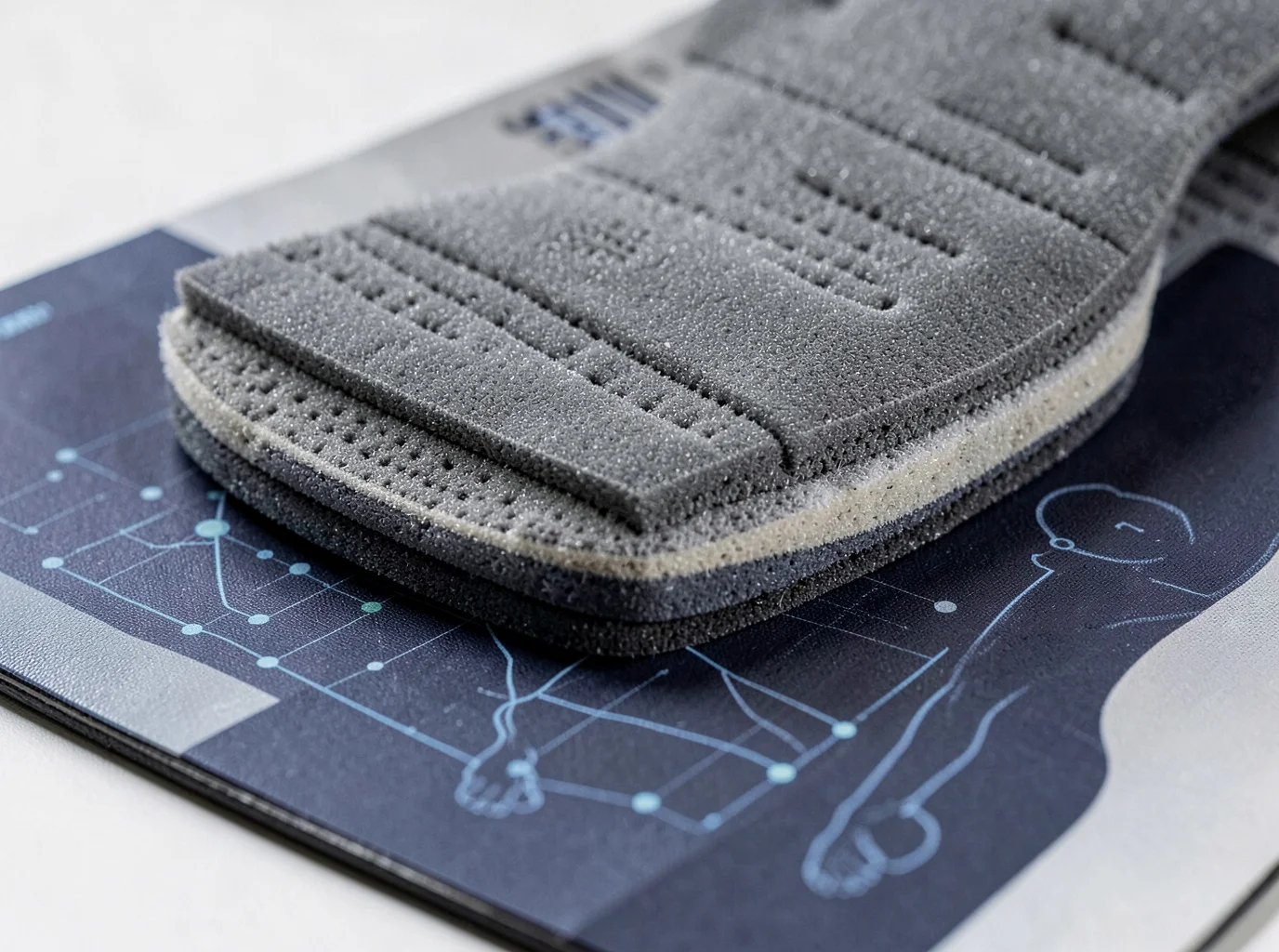
Nobody warned me that "sitting" could become a laboratory science, complete with sensors, spreadsheets, and a level of scrutiny usually reserved for crime scenes. That's what pressure mapping is: a flexible sensor mat, paired with software, that watches your butt in real time and tattles on it.
The mat records peak pressure (Pmax) , average pressure (Pavg) , contact area , and where your center of force wanders when you're not looking. One wheelchair-seating reference I dug up mentioned mats capable of 1,296 separate readings , measured in mmHg , which is more attention than my own doctor has ever given me.
Real Testing Looks Like This
A legitimate cycling field test used a GebioMized high-resolution pressure mapping mat on a 72 kg rider with 130 mm ischial tuberosity spacing , riding at a fixed 200 watts for 30 minutes , with data pulled at the 5th and 30th minute to see how pressure shifts as fatigue sets in. Another protocol went further, proposing a 160 km ride at Zone 2–3 intensity , no extra padding beyond the shorts themselves, with a standing break every 40 km to see how the chamois behaves when nobody's cushioning the truth.
From that kind of data, real adjustments happen. A short-nose saddle, a wider cut-out, moving the saddle forward 5 mm , or dropping height by 2 mm to reduce pelvic rocking. These aren't guesses. They're responses to a pressure map screaming at engineers in real numbers.
The catch: pressure mapping only measures vertical force. It says nothing about shear, friction, heat, or moisture, which is why serious brands pair it with actual long-ride comfort logs instead of trusting sensors alone. That combination, dynamic riding, matched rider builds, repeat measurements, quantified maps, is the research premium baked into your invoice, whether you asked for it or not.
Cheap vs. Expensive Cycling Shorts: What Riders Actually Feel on the Bike
Numbers don't lie, but they do judge. Budget bib shorts hover around $29–$40. The so-called sweet spot lands at $100–$250. Premium bibs in current testing sit at $200–$400, which is either an investment or a cry for help depending on your bank statement.
Cycling Weekly calls $100–$250 the zone where reasonable value meets consistent quality. Below that, some shorts perform great, but pad quality and fit swing wildly, like a slot machine you wear on your legs.
Testers keep pointing at the same culprits — fit, chamois quality, fabric feel, breathability, and durability. A long-distance test across 18 pairs of cycling shorts weighted results as 40% wearing comfort, 30% seat cushion, 20% equipment, proving your rear end outranks your accessories every single time.
Budget shorts still work for casual miles. Outdoor Gear Lab's $29–$33 picks prove that. But expensive pairs bring refined fabric blends like 57% polyamide/43% elastane or 80% recycled polyester/20% spandex, stronger grippers, and a more deliberately shaped chamois. Endura Pro SL bibs beat pricier rivals in a 3-day, 300km test at less than half the cost, so money doesn't always win, but fit always does.
A Realistic Cycling Chamois Price Comparison Separates Pad Value from Brand Tax
Spreadsheets ruined my marriage a little bit this month, because I made one comparing cycling chamois prices across twelve pairs of bib shorts and refused to talk about anything else for a week. The same Elastic Interface chamois shows up in a $90 dhb Aeron Lab and a $170 Le Col Pro Bib . Same custom cycling chamois supplier. Nearly double the price. That gap is brand, not butt-science.
Price Tier | Example | Chamois |
|---|---|---|
$25.20–$39.99 | Darevie, RION, budget test bib | basic foam |
$90 | dhb Aeron Lab | Elastic Interface |
$170–$230 | Le Col Pro, Castelli Free Aero RC, Assos Mille GT C2 | Elastic Interface, Progetto X2 Air, GoldenGate |
$228–$300 | Q36.5 Dottore Pro, MAAP Evo, Rapha Pro Team | premium branding tax |
Under $60 gets you a usable pad for short rides, $80–$150 is the honest upgrade zone where chamois quality jumps, and $200+ starts paying for logos, race-cut fabric, and finishing more than pad performance itself. Compare a $25 import bib to a $90 named-pad option, then to a $260 Rapha . You'll see exactly where your money stops buying comfort and starts buying a jersey with feelings.
The Five-Minute Chamois Value Self-Test
Grab the shorts you're eyeing and run this before your credit card makes any unsupervised decisions. Step 1: Find the foam density number on the tag. No number means no accountability. Step 2: Check for multi-density zoning language, softer edges, firmer center. One block of mystery foam is a red flag. Step 3: Feel for seams where the pad meets fabric. Ridges mean stitched, smooth means bonded seamless chamois technology. Step 4: Read the fabric content for antibacterial or moisture wicking claims. "Breathable" is too vague. Step 5: Compare that price against the tiers above. If nothing survives this audit, you're paying for a logo. The chamois thickness and comfort are missing.
What Each Budget Band Should Deliver in a Cycling Chamois
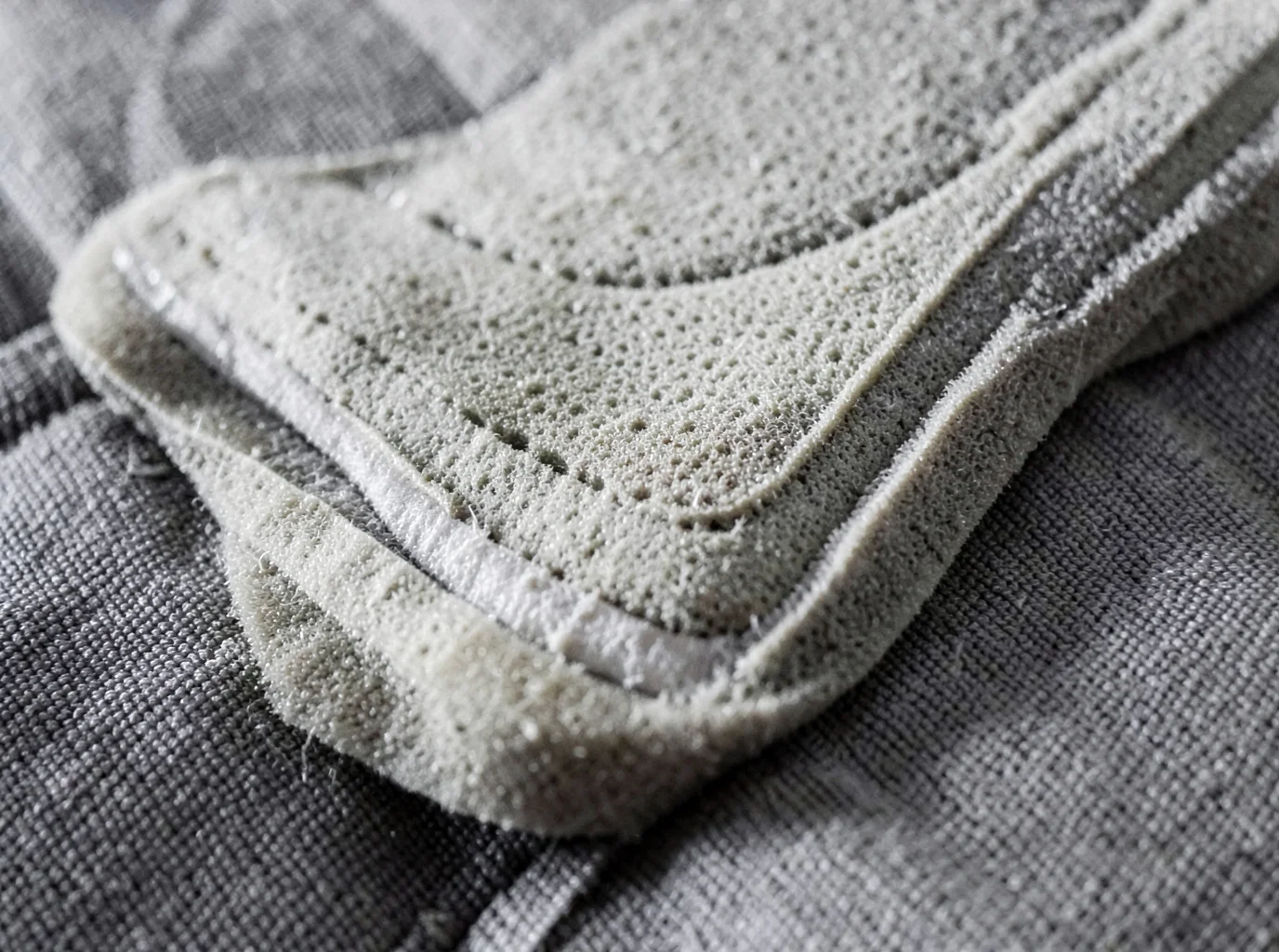
Nobody hands you a spec sheet when you buy bike shorts, which is exactly the problem, and also exactly why I'm about to hand you one instead. Think of this as the receipt your chamois should have come with, itemized by what your money is actually obligated to give you.
$30–$60 entry tier : You get 8mm single-density foam and basic moisture-wicking fabric, wrapped around 280–320 denier material that's more tarp than technical fabric. This is your commute-and-casual-ride zone, good for anything under 60km or about two hours before the foam starts negotiating with your sit bones and losing.
$60–$120 lower-mid tier : Foam jumps to 10–12mm, and it's finally multi-density instead of one sad uniform block. Fit improves, fabric drops to 180–220 denier, and comfort extends to 80–100km, roughly 3–5 hours. The AGU Bibshort Essential starts at €84.95 right in this band, and Pearl iZUMi's Quest at $75 outperforms anything not designed for a bicycle seat.
$80–$150 value sweet spot : This is where testers stop shrugging. Multi-density chamois, better compression, construction that survives regular weekend abuse. The dhb Aeron Lab, around $100, holds up for 3-hour rides without staging a mutiny against your thighs.
$120–$300+ premium tier : 12–15mm triple-layer or progressive-density padding, seam reduction, race-level compression built for 100km+ or multi-day rides where compromise isn't an option your legs will forgive.
Conclusion
That "overpriced sponge" is a tiny, engineered pressure-management system that's been cross-examined by lab equipment more thoroughly than most defendants. The foam density, the seamless construction, the antibacterial fabric doing quiet battle against saddle-related biological warfare—none of that is marketing fluff. It's the difference between finishing your century ride triumphant and finishing it walking funny.
Before you hand over your credit card (or your dignity, alongside a tube of chamois cream, praying it works miracles), run the five-minute value test from this article. Check the foam zoning. Check the stitching. Check whether the brand tested this thing on real riders or just believed in their own marketing copy.
Your future self—the one still able to sit down comfortably tomorrow—will thank you. Choose your cycling bib shorts like someone who's read the fine print, not someone who just liked the color.