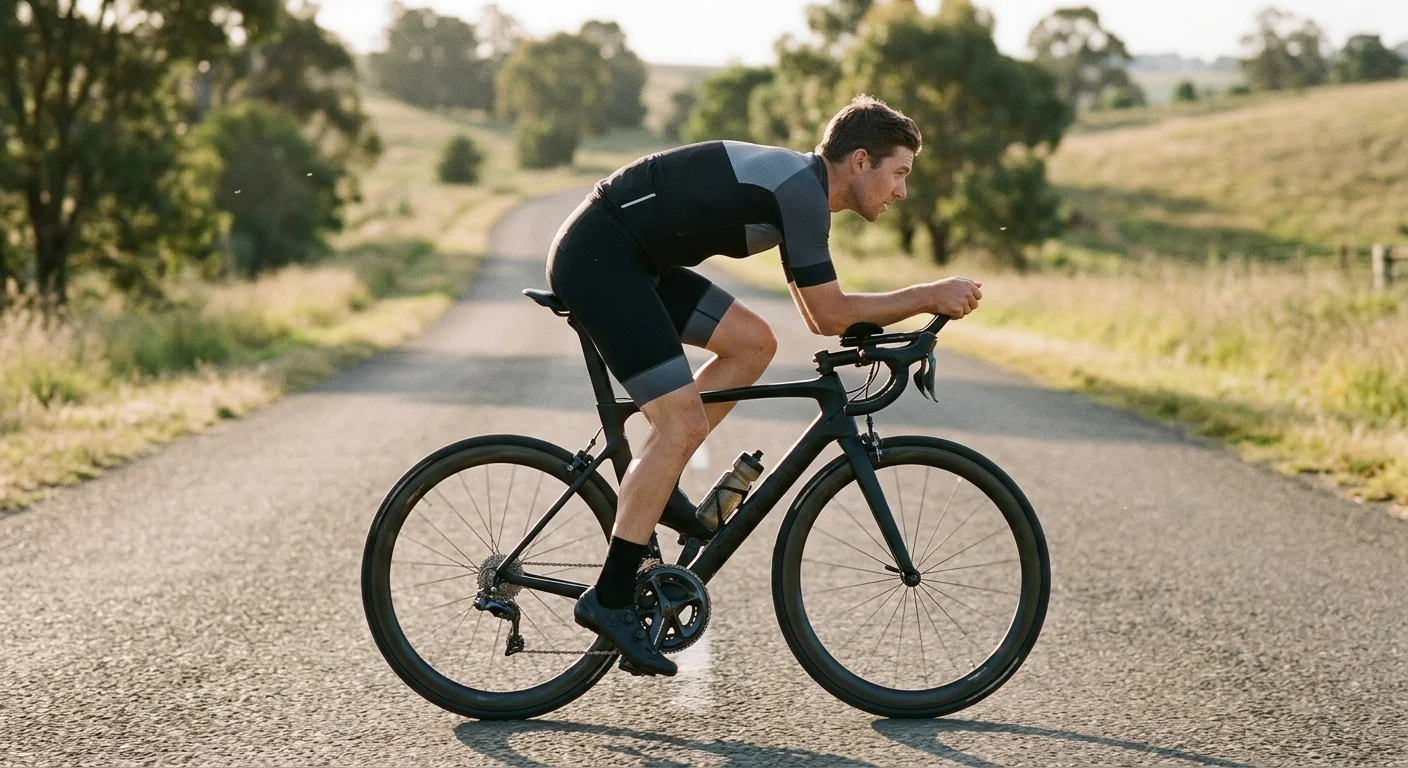
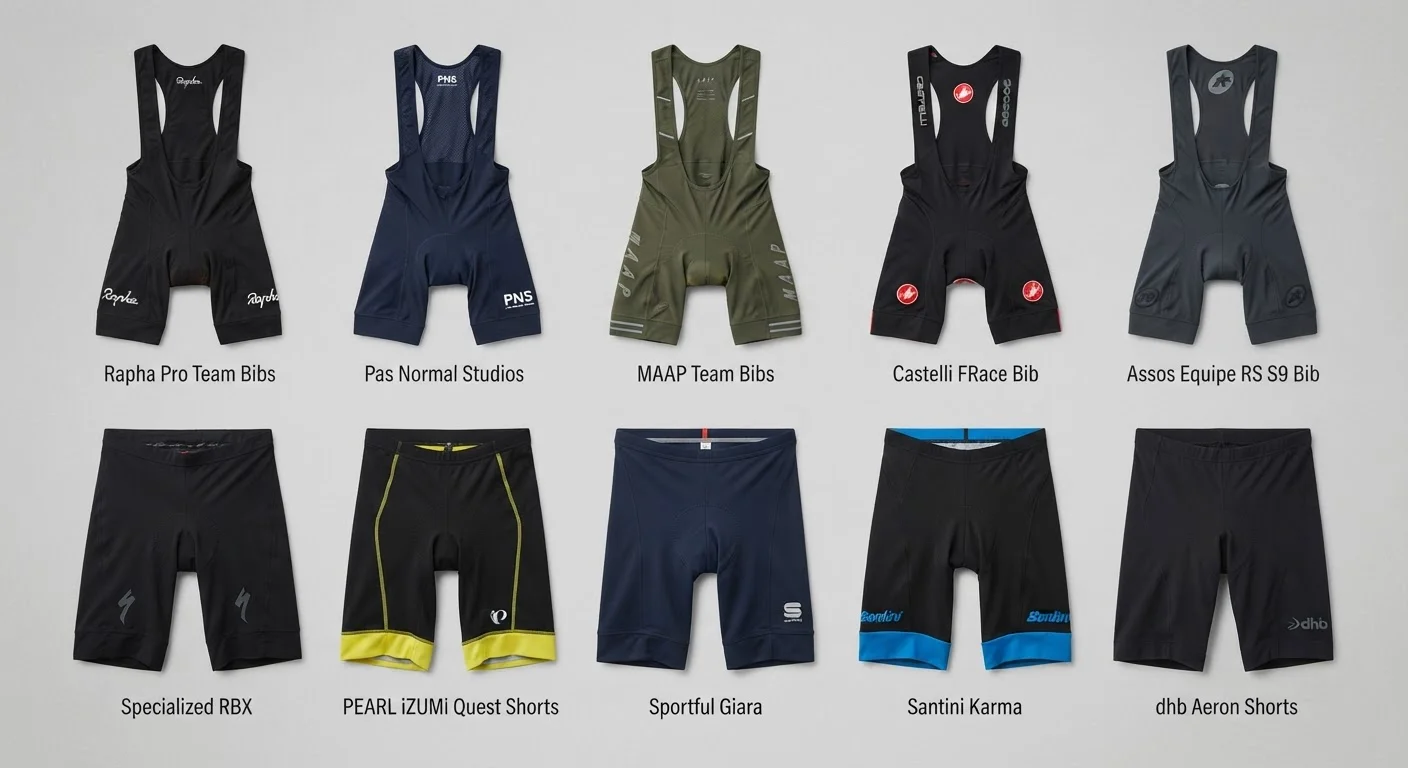
My first 40-mile ride left me with a raw saddle sore so angry I walked like a cowboy for three days—all because I couldn't figure out whether you wear underwear under chamois shorts or if the chamois was the shorts. This mix-up trips up nearly every new rider, and product listings make it worse: some call the whole garment a chamois, others use the word for just the padded liner sewn inside.
Here's the short version: the chamois is the padding, and bike shorts are the outer garment that holds it in place. Brands can develop custom Cycling Chamois for different ride durations.Getting that straight changes how you shop, how you wear them, and how you wash them. Below, you'll find a clear breakdown of cycling shorts padding, thickness guidelines for commuting versus road or mountain rides, and the washing mistakes that quietly wreck a good pad.
How Retail Listings Use “Chamois” and “Bike Shorts” Interchangeably
When you search Amazon for "Bike Chamois," the results show up as "Men's 3D Padded Bike Shorts Cycling Underwear MTB Liner." There is no chamois category, just shorts with the word slapped on. Walmart's "Bike Chamois" category page features "Cycling Chamois Shorts for Men" as the example product, treating both terms as synonyms in the same sentence.
Bigger brands are more precise, but not by much. Trek splits "shorts & bibs" as the garment, then advertises an "exclusive chamois" as the feature inside. Decathlon does the same with its "Bib Shorts – Compression Fabric – Cytech Chamois" listing, where chamois is a spec, not a product you buy alone.
Smaller retailers pile on more confusion. SHREDLY sells a "Chamois" collection titled "Biker Cham 2.0" and "Seamless Hipster Cham," using "cham" as shorthand for padded liner shorts. Etsy mixes eras entirely, listing modern chamois liner shorts next to vintage leather chamois pieces under one search term.
When you see "chamois" in a listing, it flags the padded fabric and construction inside cycling shorts. "Bike shorts" is the umbrella term shoppers start with.
What a Cycling Chamois Pad Does on the Saddle
A chamois pad handles two jobs: managing pressure and stopping your skin from tearing. If it feels like sitting on a pillow, something is off.
Pressure management is the main job. Your sit bones carry your body weight on the saddle. Without padding, that weight concentrates on two small points. The chamois spreads the load across a wider surface, giving you a distributed cushion. This matters more the longer you ride.
Friction reduction is the second job. The pad creates a smooth barrier between your skin, the shorts fabric, and the saddle. This becomes critical once you cross the 90-minute mark, or when heat and sweat turn every pedal stroke into a tiny sanding motion. Short commutes rarely test this. Long rides expose it fast.
The Build: Multi-Layer Foam Stacks
Modern chamois pads are multi-layer stacks with density zoning:
Softer foam sits closest to your skin for immediate comfort.
Firmer foam underneath holds shape under load.
Cutouts or pressure-relief channels reduce contact in sensitive perineal areas.
Density matters more than thickness.A reliable Bike Shorts vendor can source pads by density and thickness. Budget pads run 40–50 kg/m³, mid-range pads sit around 70–120 kg/m³, and premium pads can reach 200 kg/m³, concentrated right under the sit bones where you need it most.
Thickness Is Not One-Size-Fits-All
Race-oriented pads run thin—3 to 6mm—because bulk slows you down and stiffens pedaling. Comfort pads for longer rides run 8 to 15mm, with 10–12mm being the sweet spot for rides where hotspots become a real problem.
A pad that is too soft bottoms out and creates pressure points anyway. A pad that is too stiff rubs. Neither works. A practical fit check: the pad support width should extend 10–15mm wider than your sit-bone distance, not more and not less.
What a Modern Chamois Is Made Of
Despite the name, there is no leather in a modern chamois. It is synthetic foam layered with a moisture-wicking top fabric, often paired with an antimicrobial layer to control bacteria buildup on longer or sweatier rides. The pad prevents skin damage, reduces sit-bone strain, and keeps seams from rubbing you raw.A specialized Cycling Shorts factory can integrate multi-density chamois pads.
How to Tell Whether Bike Shorts Include a Chamois
Not every pair of "bike shorts" comes with a pad. That often surprises new riders, so check before buying.
Turn the shorts inside out. Look at the crotch and seat area. A real chamois is a sewn-in insert with an outer fabric layer, foam underneath, and often small perforations or cutouts for pressure relief. If you see a smooth, uniform lining with nothing extra stitched in, you're holding plain shorts without padding.
Run your fingers over the seat panel. A genuine chamois pad feels thicker than the rest of the fabric, and it won't feel like one flat cushion. You'll notice varying foam densities—firmer support where your sit bones land, softer foam toward the center. That texture shift is the quickest confirmation.
Check the product tags and description before touching the fabric. Words like "seat pad," "padded insert," "liner," or "bib shorts" all point to a chamois.Brands can work with a Cycling Bib Shorts vendor on private-label sizing. Mentions of foam layers, gel inserts, moisture-wicking top fabric, or antimicrobial lining are strong signs too—these are standard features in bike shorts for long rides.
One more test once they're on: bend into your riding position and check the seat area for wrinkles or bunching. A well-made seamless chamois pad lies flat against your body. If it bunches or slides, either the size is wrong or it's just fabric pretending to be a pad.
Baggy MTB shorts are the exception. Most skip the chamois and use separate liner shorts worn underneath.
Why You Should Not Wear Underwear Under Padded Bike Shorts
That first-ride mistake I mentioned? It wasn't the chamois that caused the damage—it was the boxer briefs I wore underneath it. Padded cycling shorts are built to sit directly against skin. No layer, no exceptions. Add underwear and the shorts stop working the way the engineers intended.
Here's the correct way to wear cycling chamois: skip the underwear entirely.
What Goes Wrong When You Layer Underwear Underneath
Underwear creates the exact problems the chamois was designed to solve:
Extra seams create friction. Every seam and fold in a pair of underwear becomes a new point of contact rubbing against your skin, mile after mile. That's how saddle sores start.
Cotton traps moisture. Sweat and rain don't evaporate through cotton the way they do through moisture-wicking cycling shorts. Wet fabric softens skin, and softened skin tears easier.
The pad stops doing its job. A chamois needs direct skin contact to wick sweat and flex naturally with your movement. Underwear blocks that, and the anti-chafing design becomes just another sweaty layer.
Bacteria have a better environment to grow. Trapped heat and moisture create the exact conditions linked to saddle sores, skin irritation, and—for some riders—increased UTI risk.
The Fix Is Simpler Than You Think
Wear the shorts alone, then wash them after every single ride, same as you would underwear. For rides pushing past that 90-minute friction threshold, apply chamois cream for cycling directly to your skin at pressure points before you clip in.
If you genuinely need coverage for pre- or post-ride situations—changing at a coffee shop, walking around town—reach for purpose-built chamois liner shorts instead. They're cut to work with a seamless chamois pad, not against it. Standard underwear, no matter how comfortable it feels off the bike, was never designed for this job.
Chamois Thickness for Commuting, Road Riding, and Mountain Biking
There's no universal "right" thickness—your commute to the office and a six-hour gravel grind call for different pads. Matching thickness to riding style keeps you comfortable instead of squirming.
For commuting , target 8–15mm . Short city rides on an upright bike do fine with 8–10mm —enough cushion without feeling like you're perched on a cloud at every red light. Longer commutes, or riders who value comfort over pedal feel, should bump up to 10–15mm .
For road riding , most endurance chamois pads cluster around 6–12mm , with 8–12mm hitting the sweet spot for daily training rides. Century rides and long-distance days push that up to 12–14mm . If you're racing, though, flip the logic: 3–6mm or 6–9mm is standard, because bulk kills power transfer and race-day comfort takes a back seat to speed.
For mountain biking , thinner is better. Trail liners run 9–12mm —leaner than plush road pads—because MTB demands constant weight shifts, standing, and quick position changes, and thick padding just gets in the way. Technical singletrack favors 8–10mm for maximum mobility; general trail riding can handle 9–12mm without sacrificing agility.
Real Products, Real Numbers
Specs vary more than you'd expect between brands. Pearl Izumi 's Canyon Active Bike Shorts use a minimal 9mm chamois built for speed. Aerotech Designs' men's Swift shorts list 11mm, aimed at longer efforts. Giro spreads its lineup across 9mm, 10mm, 11mm, and 14mm foam options depending on the model.
One touring guide pegs 80 kg/m³ foam density paired with 11mm thickness as a comfortable baseline—and notes that 14–15mm pads can still feel plusher if the foam is lighter and contoured well. Touring and ultra-distance pads sometimes reach 15–20mm in max-plush builds.
Match thickness to how long you'll be in the saddle and how much power transfer matters, not just to what feels softest in the store.
How to Check Chamois Fit Before Riding
Standing in your bedroom mirror tells you almost nothing. Fit only reveals itself once you're on the bike, so skip the standing-up assessment.
Lean into your normal riding crouch. The chamois should sit centered under your sit bones, with the pad's nose covering the saddle nose and the ears extending slightly past the saddle's own ears once you're leaned forward. If the back of the pad sits higher than the front, that's a shape mismatch, not something you can fix by tightening the waistband.
Run your hand along the inner thigh and check for wrinkles, bunching, or fold lines. A properly fitted chamois lies flat through the pressure zones. Any extra fabric flapping at the front nose should sit snugly against your body instead.
Compression matters too. The waistband should stay flat and the leg grippers secure, snug without cutting in. Stand and pedal out of the saddle for a moment; grippers that ride up or pinch your thighs signal the wrong size.
Give it ten minutes of actual riding , sitting, standing, pedaling normally, before trusting the fit. Watch for red lines, seam impressions, or hot spots. Seams crossing a pressure point almost always mean the shape is off for your body, not a break-in issue.
If you know your sit-bone width, start with a chamois support width 10–15mm wider than that measurement. For a first ride, keep test rides to 10–30 minutes to confirm no hot spots before committing to anything longer.
Washing Chamois Shorts Without Damaging the Pad
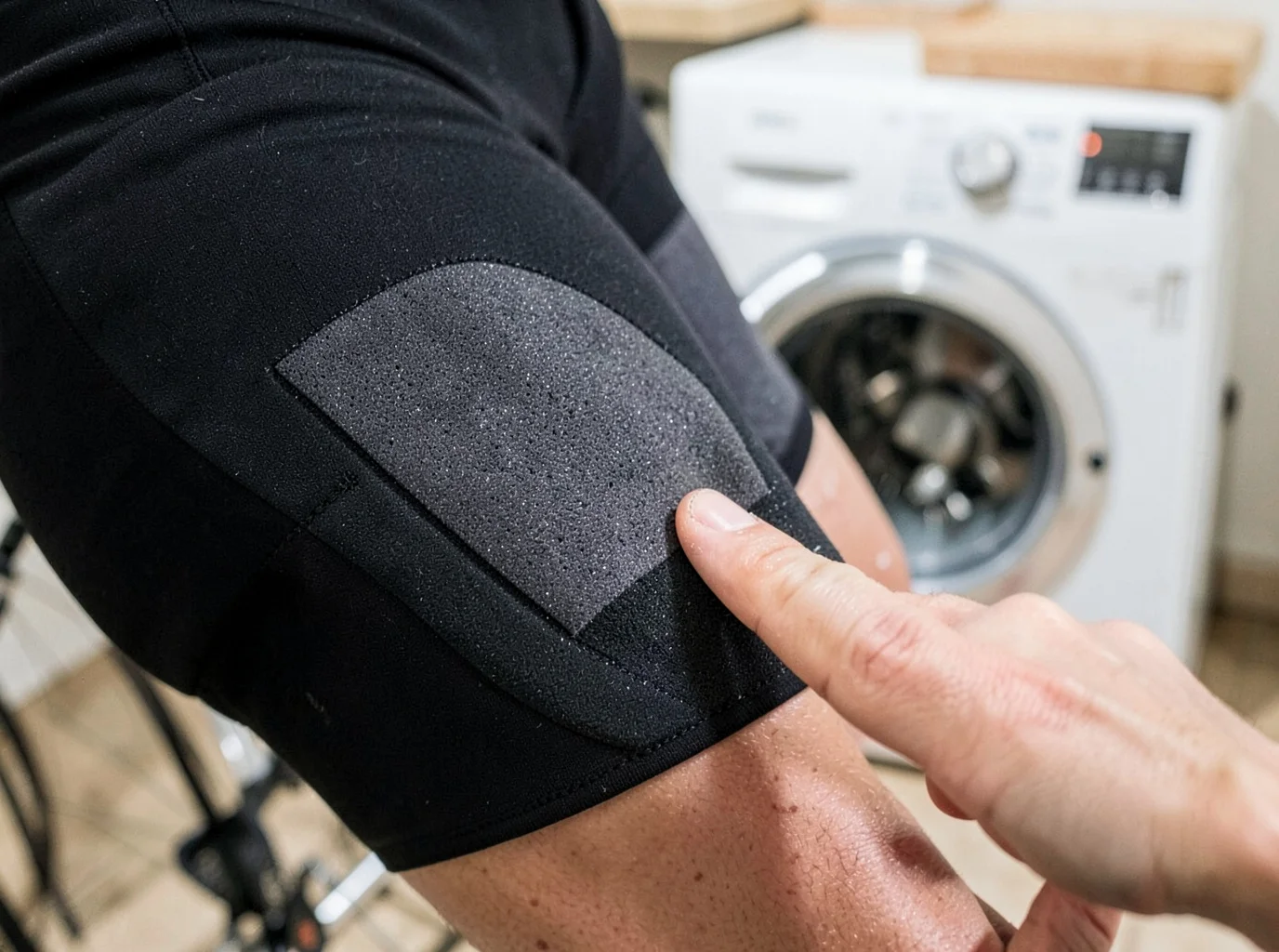
Elastic Interface, one of the biggest cycling chamois pad manufacturers, tests its pads under machine-wash conditions. Their recommendation is a delicate cycle at 30°C (86°F) with neutral detergent, followed by line drying. That's the benchmark to build your laundry routine around.
Turn shorts inside out first. This protects the outer fabric and lets water reach the chamois padding directly instead of fighting through layers. Drop them into a small mesh laundry bag before they go in the machine. That's cheap insurance against snagging on zippers or Velcro from other clothes.
Skip fabric softener and bleach entirely. Both break down the foam density and strip the moisture-wicking coating faster than normal wear would. Stick to mild, neutral detergent only.
If the shorts are caked in mud after a muddy MTB session, rinse or hand-wash before the machine cycle—don't let dried grit grind against the pad during agitation.
Air dry, always. Heat breaks down foam density over time, which is exactly the cushioning you paid for. If you're stuck using a dryer, no-heat or low-heat only, and treat it as a last resort, not a habit.
If the chamois starts feeling waxy or less absorbent, run an extra rinse cycle. That residue buildup from detergent is common, and it's fixable without replacing the shorts.
Conclusion
The chamois is the padded liner sewn inside your shorts; bike shorts are the entire garment built around it. Once that distinction is clear, the rest follows: don't wear underwear underneath (the moisture-wicking cycling shorts fabric is designed to sit against skin), check the product description for "integrated chamois" before you buy, and match chamois pad thickness to your ride—thinner for a 20-minute commute, thicker for a weekend century.
I learned this the hard way on a 60-mile ride in cotton boxers under bib shorts, so don't be me. Read the label, skip the underwear, size the pad to your mileage, and you'll actually want to ride longer instead of counting down the miles until you can stand up. That's the real return on a $50 pair of cycling shorts.Request a custom wholesale price for Cycling Shorts for bulk production.