That damp ring around your forehead after a hard climb, the sudden chill when rain seeps through what you thought was "breathable" fabric, the sweatband that's soaked before you've even hit mile ten — sound familiar? Most riders don't think about their cycling cap's custom fabric until it fails them mid-ride, and by then you're stuck with a soggy, freezing, or overheated head for the rest of the route. The truth is, a moisture wicking cycling cap and a basic cotton cycling cap perform in completely different worlds, and neither is "wrong" — they're just built for different conditions. We tested five common cap fabrics — from lightweight polyester mesh to merino wool to full waterproof laminates — under real sweat, rain, and cold. Here's exactly which one deserves a spot under your helmet.
Polyester / Synthetic Mesh Cycling Cap Fabric
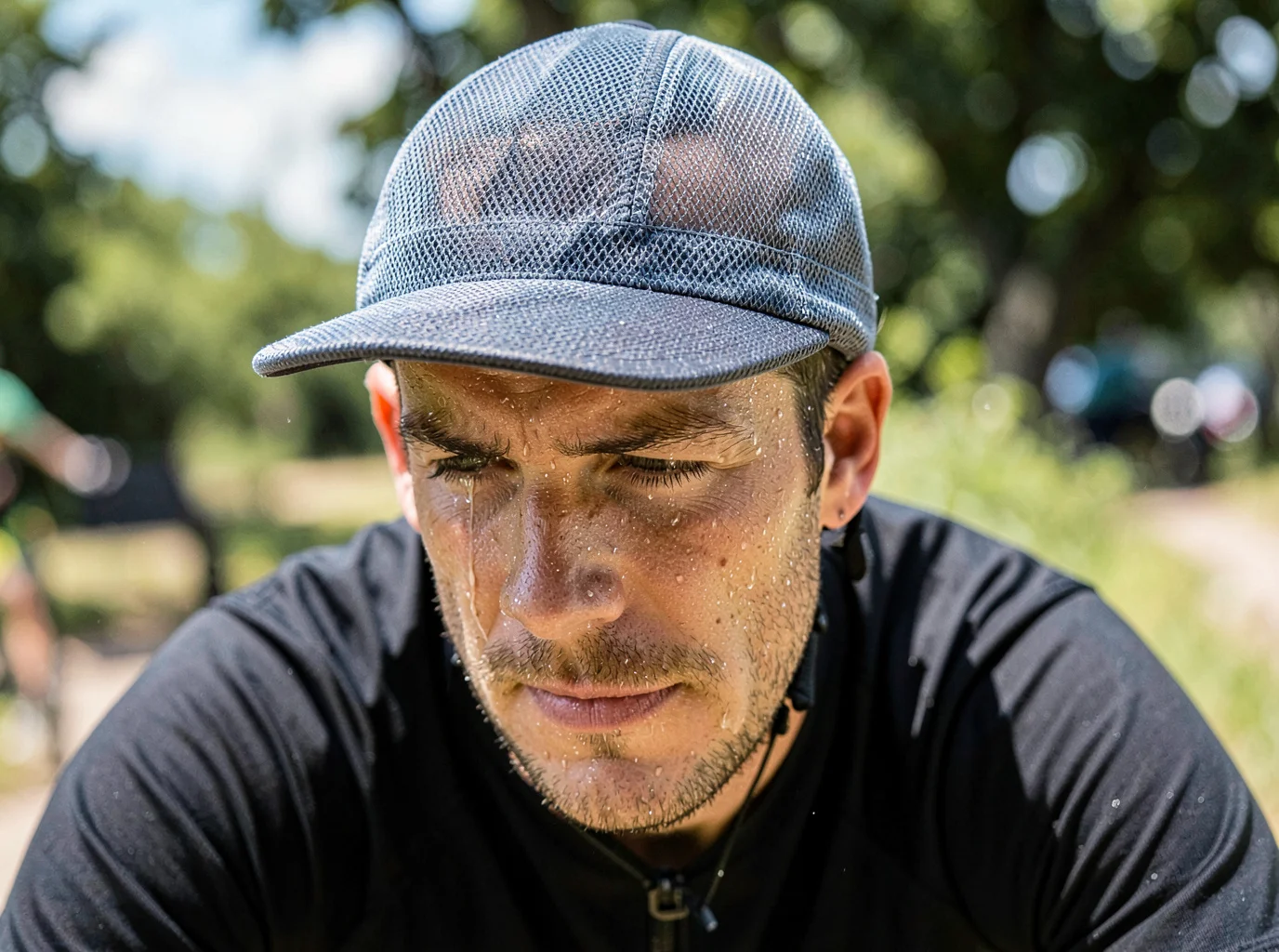
Polyester mesh is the workhorse fabric of the cycling cap world. Most caps built for hot-weather rides use 100% polyester mesh or a polyester blend with elastane or nylon woven in. Airflow comes first, everything else second. This is your go-to moisture wicking cycling cap material, and the science is straightforward: synthetic fibers pull sweat off your skin and push it to the outer surface where it evaporates. Add mesh construction, and you get constant air exchange under your helmet.
Speed matters here. Athletic polyester dries in roughly 15–20 minutes . Cotton needs 90+ minutes for the same job. One fabric test even found microporous performance polyester drying in 8–10 minutes , versus 25 minutes for basic polyester and 45+ minutes for cotton. Real-world cycling cap reviews land somewhere in between — expect 30 minutes to under 2 hours , depending on humidity and how thick the weave is.
Field performance backs this up. One rider testing a cap in 85°F+ heat reported a dry forehead through a full three-hour ride , no sweat dripping into the eyes. Another said their cap stayed cool for the first two hours of a century ride, even in 90°F humidity . A 220 Triathlon review put it simply: this fabric "wicks moisture away very well" and "dries quickly."
Where It Falls Short
As a cycling cap for rain , polyester mesh disappoints. These caps are water-repellent, not waterproof — fine for drizzle, useless in a downpour.
What to Buy
Montbell ZEO-LINE Cool Mesh Cap — 100% polyester, 16g, $9–29
MAAP Lite Cap — 100% polyester, 26g, 1,129 Kč
Arc'teryx Norvan Mesh 5 Panel — recycled polyester, €69.95
Black Diamond 5-Panel Synthetic — €28.65
Mammut Aenergy Mesh — €39.95
Best for: summer training, interval sessions, sweaty commutes.
Cotton Cycling Cap Fabric
Cotton holds 7–8% moisture regain. Polyester holds 0.4%. That gap is the difference between a fabric that moves sweat away and one that drinks it and keeps it. A cotton cycling cap feels soft against your skin, sure. But start sweating, and that softness turns into a damp, heavy layer stuck to your forehead.
Cotton dries at roughly 0.15–0.20 g/h. Polyester clears moisture at 0.30–0.35 g/h. In real numbers: cotton sheeting takes about 5 hours to fully dry, cotton duck closer to 5.5 hours. Your ride will be over long before that cap is dry again.
Where Cotton Works
The brim does its job in light drizzle. It keeps rain out of your eyes and stops water from running straight down your face. That's what it's for, and it does it fine. But this isn't a cycling cap for sustained rain. Cotton absorbs water fast and gets heavier the longer you're out in it.
Best fit: dry, cool, easy-pace rides — commuting, café loops, casual weekend spins where breathability matters more than sweat transport. Skip it for: hard climbs, indoor trainer sessions, or anything with heavy perspiration.
Cost Comparison
Cotton costs more than performance synthetics:
Cotton single jersey (180 gsm): $5.50–$7.00/kg FOB
Polyester knit equivalent: $3.50–$5.00/kg FOB
Market example: basic cotton runs ₹80–150/meter vs. basic polyester at ₹40–120/meter
So cotton isn't even the budget option. It costs more and handles moisture worse. If you want soft, natural handfeel for dry-weather rides, it delivers. If you need a moisture wicking cycling cap or something that survives real rain, go with polyester or technical blends.
Merino Wool Cycling Cap Fabric
Wool gets warmer as it gets wetter. That sounds backwards, but it's the reason merino owns the thermal cycling cap category. One Swrve reviewer rode three hours in steady rain at 6–7°C and didn't even register how soaked the cap was until they pulled it off at the end. The fabric kept insulating the whole time.
Merino fibers have a natural crimp that traps tiny air pockets. Those pockets hold heat even when the outer layer is drenched. Bouré, a USA-made 100% wool cap at $45, builds its whole pitch around this. It's light, flexible, and still warm when the sky opens up.
Moisture management is the other half of the equation. Merino absorbs and releases sweat. Polyester just repels it. Decathlon's merino road cap uses 18.5-micron wool to give high absorbency, a dry head, and softness that sits comfortably under a helmet all day. Rapha 's merino hat review says the same thing: soaks up sweat, stays thin, doesn't bulk out your fit.
What's on the Market
The Giro Seasonal Merino Wool Cap costs $49.95, is winter-focused, has ear flaps and a breathable liner. The Swrve Belgian Merino Cap is 100% New Zealand merino with double-layer double bubble construction, £48. The Bouré Merino Wool Cap is 100% wool, $45, made in USA. The Aero Tech Designs Merino Blend is 48% merino, 48% polyester, 4% nylon, with fold-away ear covers.
Expect to pay $45–$50 for premium single-piece merino cycling caps, or $20–$35 for blended, sale-priced versions.
Best for: cold-weather rides, wet winter commutes, anyone who needs warmth that doesn't quit when the rain starts.
Windproof Thermal Blend Fabric (Thermoflex / SuperRoubaix / Windstopper)
Wind chill is the variable most riders underestimate. A 10°C day with a 20mph headwind feels nothing like a still 10°C day, and this fabric category exists to close that gap. Thermoflex and SuperRoubaix are elastic, brushed, high-warmth fabrics. Think of them as the flexible insulation layer. Windstopper is different. It's a windproof membrane, not a knit, and Castelli 's own data on Windstopper X-Lite backs up the hype: 100% windproof, with breathability up to 10x higher than other windproof fabrics on the market.
Windstopper sits where wind hits hardest: the top of the head and front panel. Thermoflex covers the areas that need stretch and warmth, like earflaps and side panels. Castelli uses this zoned approach in its winter cap line.
Real Products, Real Specs
Castelli Difesa 2 Cap pairs a GORE-TEX INFINIUM Windstopper body with Thermoflex earflaps for full-ear coverage. It's got a traditional brim, reflective side and back panels, and weighs just 50g. Retailers position it for the 0–10°C range.
GripGrab Belgian Style Thermal Windproof Winter Cap uses a windproof front panel, fleece lining, and earflaps, with a brim that blocks wind and water spray. GripGrab labels it Insulating, Windproof, Moderate rain protection, and Breathable. It's built for cold and wet winter rides.
That ear coverage isn't decorative. Brands market earflap caps as delivering "complete coverage and maximum insulation," because wind entering through the ears causes more perceived cold than any other single gap in headwear.
More windproofing usually means less breathability. Non-Windstopper versions in Castelli's lineup get labeled "optimised moisture removal" instead, a direct hint that you're choosing between warmth-retention and sweat-clearing.
These caps fit best on moderate-intensity endurance rides, winter commuting, and long exposure to headwind or descents. Both GripGrab and Castelli sit in the premium winter cycling accessory wholesale price bracket.
Waterproof Laminated Shell Fabric (Gore-Tex / eVent / 3-layer DWR)
A 3-layer shell is three fabrics bonded together: an outer face with DWR treatment, a waterproof-breathable membrane in the middle, and a protective inner liner. The DWR keeps the outer layer from soaking through and getting heavy. The membrane does the actual waterproofing, with taped seams to seal the stitches.
Industry-standard 3L shells test at 20,000–30,000mm on the hydrostatic head scale, with breathability ratings of 10,000–18,000 g/m²/24h MVTR . Premium models go higher — 28,000–30,000mm waterproofing and 25,000–30,000 g/m²/24h breathability.
What These Numbers Mean When You're Buying
Think of these as thresholds:
10,000mm — the minimum for riding through steady rain
20,000mm+ — better for rainy commutes, backpack pressure points, longer exposure
28,000–30,000mm — high-wind, heavy-rain, or wet winter conditions
Breathability works the same way. 3,000 g/m²/24h MVTR is barely tolerable. 10,000+ handles continuous riding. 20,000+ is what you need if you're grinding up hills or doing long climbs.
Compared to mesh, any cycling cap for rain built this way will feel less breathable — that's the tradeoff. More heat under the helmet in exchange for real water and wind protection. Some eVent membranes outperform certain Gore-Tex builds on low-intensity breathability; one test had the eVent DVstorm holding waterproofness through 90 minutes of steady rain while still scoring well on breathability. Membrane quality varies model to model, so don't buy on brand name alone.
Products Worth Checking
SealSkinz Trunch is aimed at daily commuters riding wet, cold conditions. Gorewear's Gore-Tex caps sit at the higher end, built for sustained rain exposure. Castelli Tempesta is the benchmark for high waterproofing that still rides like a normal cap.
Is the Premium Worth Paying?
The extra cost comes from membrane sourcing, taped-seam labor, abrasion-resistant fabric, and cycling-specific cutting — not the waterproof coating. Occasional rain riders do fine with a 10,000–15,000mm cap. Weekly winter commuters and long-distance riders in wind and rain will get their money's worth from 20,000mm+.
Best for rainy commutes, wet winter rides, backpack-heavy commuting, and downpours that a moisture wicking cycling cap or thermal cycling cap can't handle.
Five Fabrics: Core Performance Comparison Table
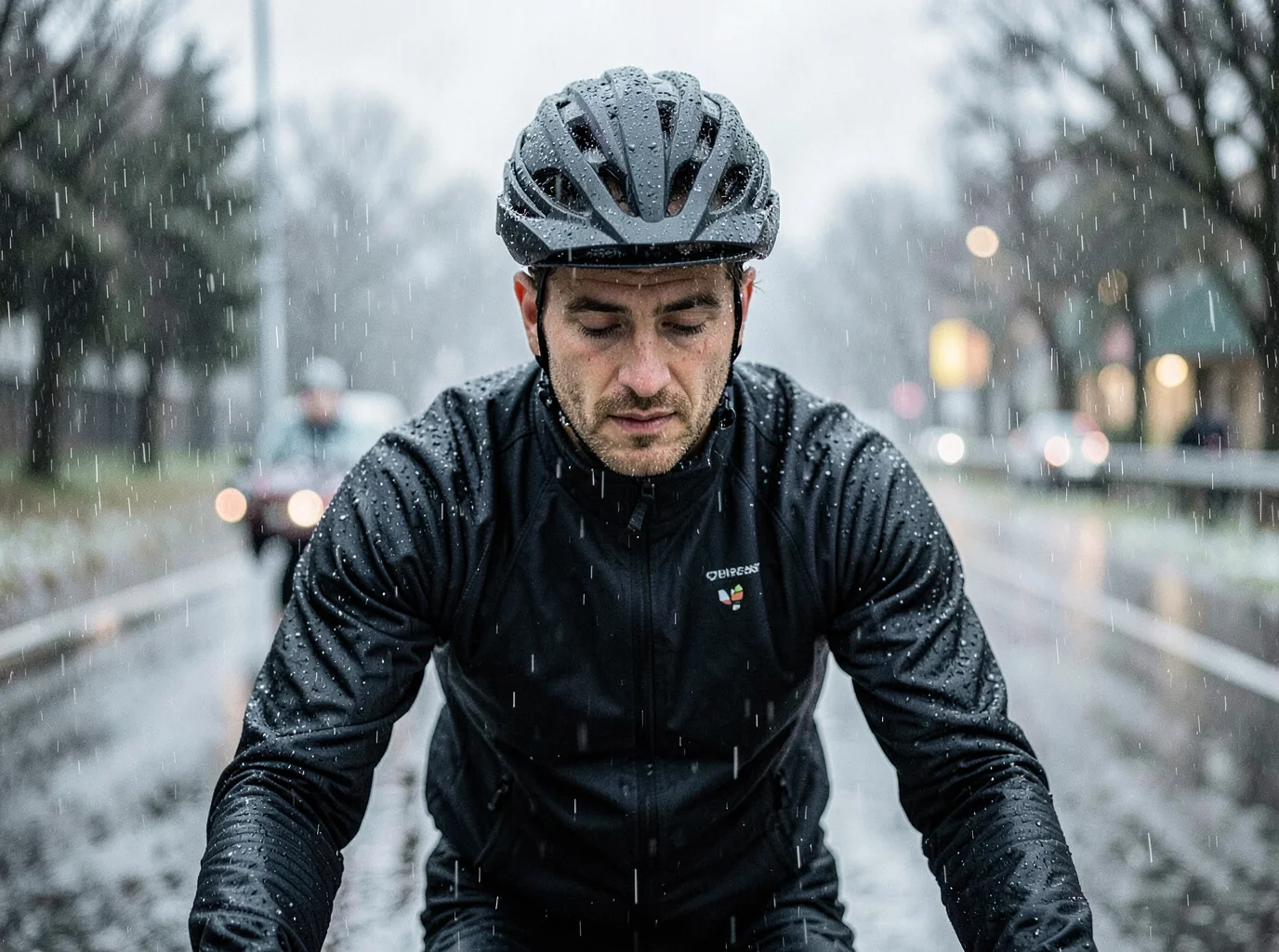
Numbers don't lie, and neither does a soaked cap at mile 40. Here's how the five fabrics stack up side by side, scored on sweat management, rain resistance, warmth, and breathability — the four things that decide whether your ride stays comfortable or turns miserable.
Fabric | Moisture Wicking | Rain/Waterproof | Warmth | Breathability | Typical Price Range | Best Fit |
|---|---|---|---|---|---|---|
Polyester/Synthetic Mesh | ★★★★★ | ★ | ★★ | ★★★★★ | $9–$29 | Hot, sweaty rides |
Cotton | ★ | ★ | ★★ | ★★★ | Under $20 | Dry, casual spins |
Merino Wool | ★★★★ | ★ | ★★★★★ | ★★★★ | $35–$50 | Cold, wet climbs |
Windproof Thermal Blend | ★★★ | ★★★ | ★★★★★ | ★★ | $40–$65 | Windy winter miles |
Waterproof Laminated Shell | ★★ | ★★★★★ | ★★★ | ★★★ | $50–$80+ | Downpours, commutes |
The pattern is clear: the same fabric that wins at wicking (polyester) loses hardest at rain resistance. Nothing scores high across all four columns — that's not a flaw in testing, that's physics. Pick your top priority first, then match the fabric.
Choosing the Best Fabric for Every Riding Scenario
Forget the label on the tag for a second. What's your ride actually going to throw at you today?
Sweating hard in the heat? Go straight for a moisture wicking cycling cap in polyester mesh. Sprints, climbs, indoor trainer sessions — anything where you're producing sweat faster than air can dry it — this is the fabric built for that fight. Lightweight mesh baselayers in the 120–150 g/m² range are the standard reference point for high-output, warm-weather gear, and the same logic applies under your helmet.
Light drizzle, weather that can't make up its mind? Skip the cotton brim if you can. It's fine for a short commute where you just need something to block sun and stop a few raindrops from hitting your eyes, but it holds onto sweat once you start working. A quick-dry polyester or polyamide blend handles unpredictable conditions better without turning damp and heavy.
Cold, dry, and windy? This is where a windproof thermal blend earns its windproof cycling caps wholesale price tag. Merino-polyester or straight polyester thermal weaves pull double duty — wicking sweat off your scalp while cutting wind chill at the same time.
Cold and wet, especially on a winter commute? Waterproof beats warm here. A cycling cap for rain built with a membrane — polyester mesh plus nylon plus a waterproof-breathable layer — keeps your head from losing heat fast, which is the real risk once rain and wind combine.
Cold with wide swings in intensity or temperature? Merino wins. It regulates heat whether you're grinding uphill or coasting downhill, stays warm even soaked, and won't smell after hour three. A 50/50 merino-polyester blend is the practical all-day pick.
html
Buying Checklist
Skip the marketing copy. Run every cap through this checklist before you buy.
Fits under helmet? Look for "under helmet," "low profile seams," or explicit cycling cap under helmet labeling — not every cap clears that bar.
Lightweight? Real specs beat adjectives: 23g and 33g are the reference points for a genuinely lightweight cycling cap .
Wicks or just breathes? Check for moisture-wicking , mesh, or quick-dry fabric, not just "breathable" on the tag.
Waterproof numbers present? You need both: 15,000mm water column and 40,000 g/m²/24h breathability, plus taped seams.
Head size listed? The 56–61cm range should be stated, not guessed.
Two myths to drop: thicker isn't warmer (bulk kills helmet fit), and cotton isn't a rain fabric, it's just slow to dry.
Conclusion
There's no single best custom cycling cap fabric—just the right one for the ride you're actually doing. Sweating buckets on a summer tempo ride? A moisture wicking cycling cap in polyester mesh keeps your eyes dry and your focus sharp. Grinding through winter drizzle? A thermal cycling cap with a windproof blend or laminated shell earns its keep when your ears are on the line. And if you want one cap that does it all without fuss, merino wool remains the smart low-maintenance choice riders keep coming back to.
Pull up the comparison table, match it against your typical Tuesday-morning weather, and build your cap rotation around real conditions. Grab two: one built for heat, one for cold. Your future self, mid-ride and comfortable, will thank you.