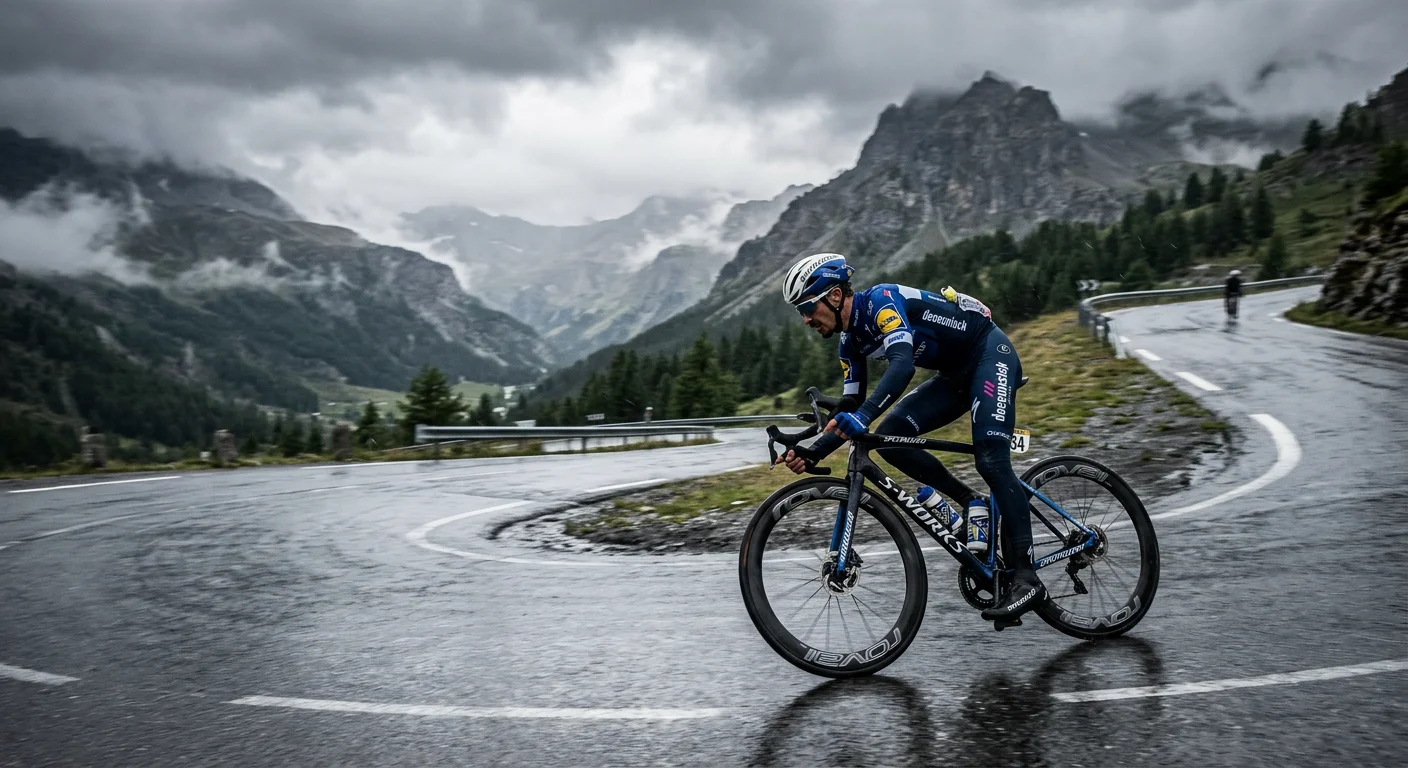
Most cyclists don't lose races — or suffer through miserable long rides — because of their legs. They suffer because of what's sitting against their skin. That nagging clamminess two hours into a summer century. The creeping chill that hits the moment you crest a long descent. Your riding partners have noticed your kit has been through one too many back-to-back training days.
Picking merino wool or polyester for your cycling base layer is not just a fabric choice. For brands developing a custom cycling apparel collection, the decision also affects product positioning, inventory planning, and long-term customer retention.It's a performance decision with real consequences at mile 60 and beyond. This guide gives you a clear, scenario-based framework to make that call. You get a temperature-by-ride-type matrix, performance data across five key metrics, and pairing strategies for year-round coverage. Plus, there's a SKU architecture perspective for brands and buyers building a lineup that sells.
Quantitative Performance Breakdown: Cyclist Base Layer Material Across 5 Core Metrics
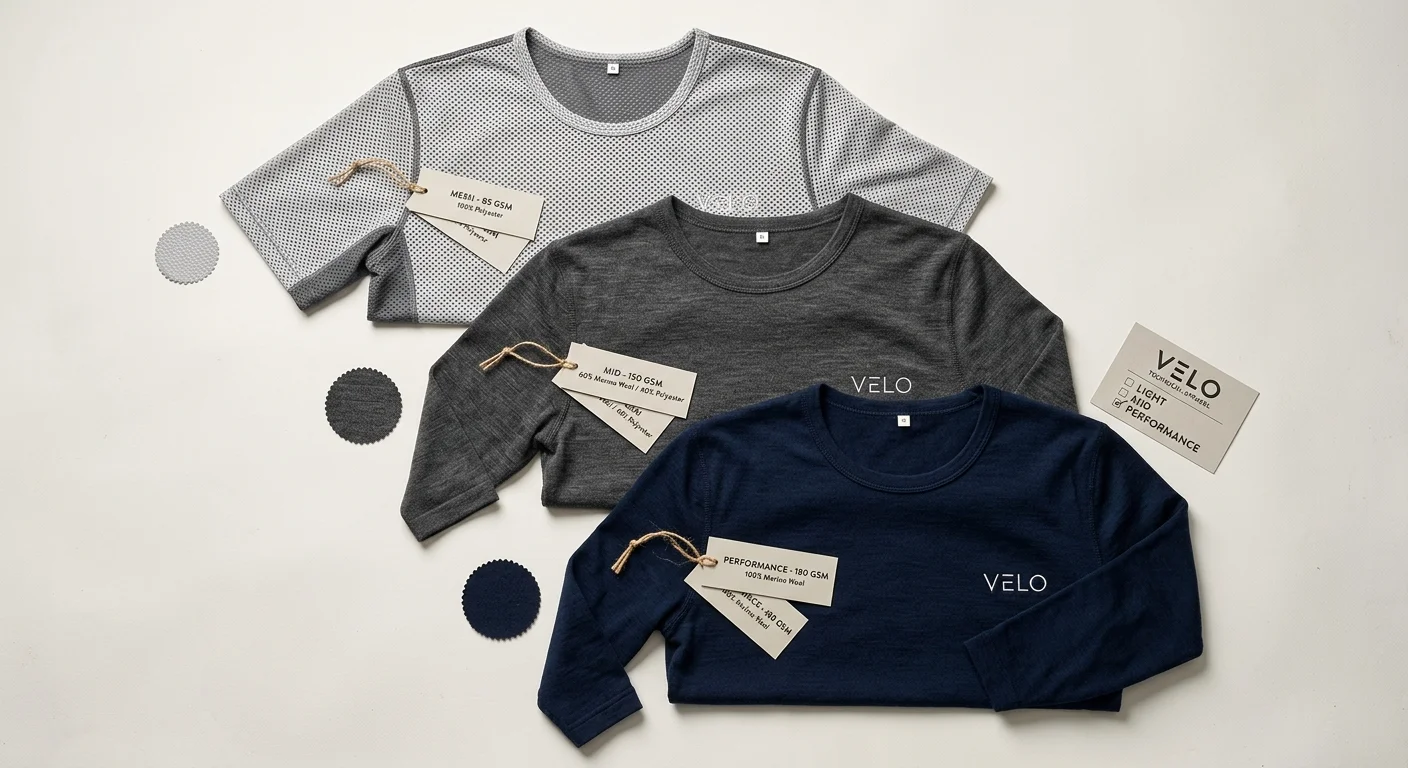
Numbers cut through opinion faster than any ride story.For any cycling apparel supplier, these five performance metrics often determine which fabric receives priority within a seasonal product range. Here's how merino wool and polyester stack up across the five metrics that matter most to cyclists — and to the brands building base layer lineups around them.
1. Moisture-Wicking & Dry Speed
Polyester wins. Synthetic fibers move sweat off skin and push it toward evaporation faster than any natural fiber on the market. You're deep into a hard interval session or grinding through a humid summer century. Polyester pulls moisture away fast and dries in minutes. Merino wicks well enough — but comfort and temperature stability are its main goals, not maximum evaporation. For breathable cycling undershirts built around sweat control, polyester leads the pack.
2. Thermoregulation
Merino wins — and it's not close. Merino wool handles temperature shifts across a wider range of conditions than polyester. The key detail: it keeps insulating even when wet. Most cyclists miss that point. Wet polyester pressed against skin in cold air feels as bad as it sounds. Wet merino keeps doing its job. Cold weather cycling base layers and variable-temperature rides need that damp-insulation property. Nothing else matches it.
3. Odor Resistance
Merino wins by a clear margin. Wool fiber has a natural antimicrobial structure. It suppresses odor-causing bacteria in a way polyester cannot match without chemical treatment. Real-world data backs this up: merino base layers last 4–5 days of back-to-back riding before odor becomes noticeable. Polyester picks up odor fast and holds onto it through wash cycles. For multi-day tours, bikepacking, or any ride where a fresh kit isn't guaranteed, that gap matters.
4. Durability & Wash Resilience
Polyester wins. Merino is more fragile. It needs careful washing and shows wear faster under repeated abrasion. Polyester takes on heavy training schedules, frequent machine washing, and daily abuse without breaking down. For high-volume training SKUs or entry-level cycling apparel, that durability is a real advantage.
5. Unit Cost
Polyester wins by a wide margin. Merino wool cycling base layers retail between £65–£125 at the consumer level. Quality polyester options sit well below that range. For brands, that price gap shapes margin structure and customer targeting — merino fits premium lines, polyester anchors accessible performance tiers.
Metric | Merino Wool | Polyester |
|---|---|---|
Dry Speed | Moderate | ✅ Fast |
Thermoregulation | ✅ Superior | Moderate |
Odor Resistance | ✅ 4–5 days | Builds fast |
Wash Durability | Moderate | ✅ High |
Cost (retail) | £65–£125 | ✅ Much lower |
The pattern holds: polyester performs, polyester endures, polyester costs less . Merino regulates, merino resists odor, merino costs more . Neither fabric is better across the board — each one is built for different demands. The real question is which demands your rides — or your product line — face.
Scenario Decision Matrix: Matching Fabric to Temperature, Ride Type, and Sweat Levels
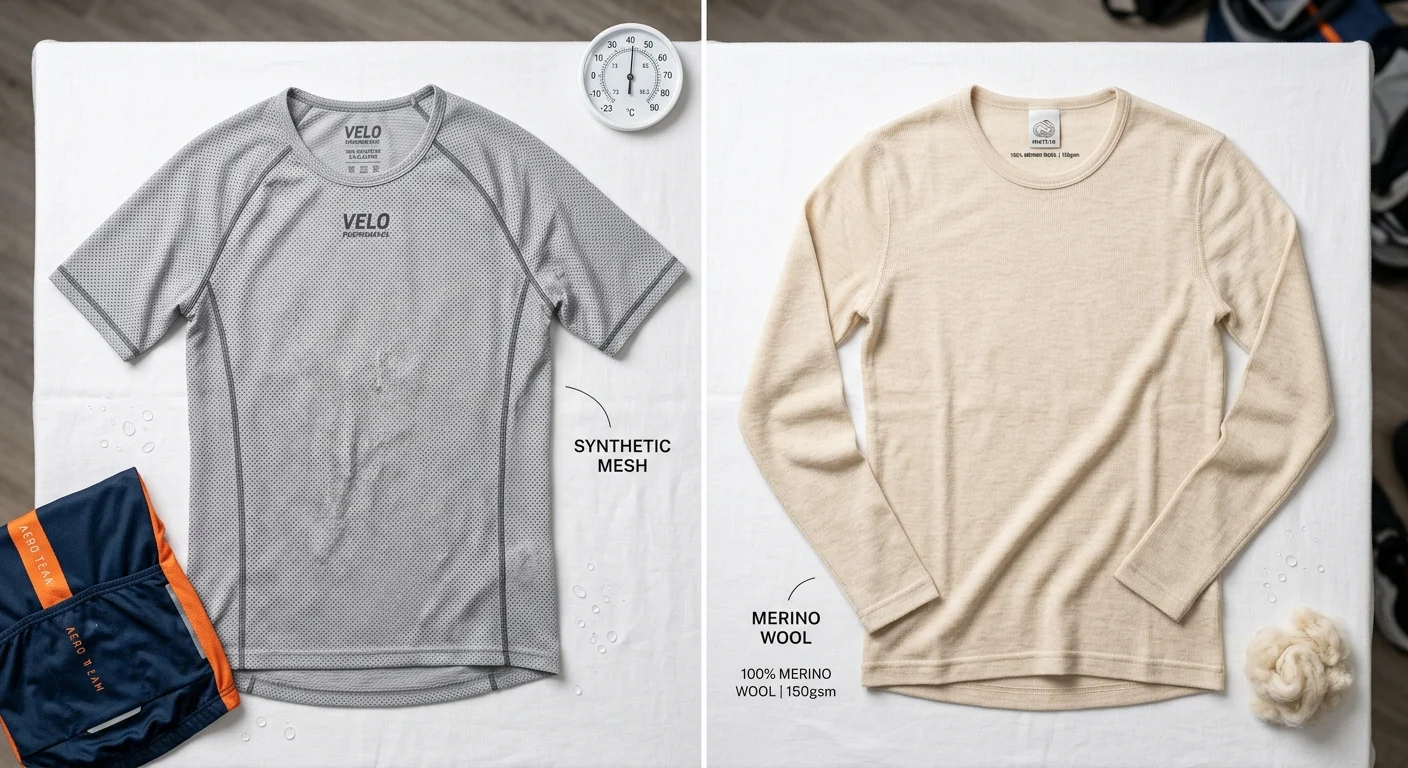
Temperature is one variable.Many performance-focused OEM cycling base layer programs now build fabric selection guides around these same environmental and rider-specific variables. Ride type matters. Your personal sweat rate matters more than most cyclists admit. Get all three wrong and even the right fabric choice will let you down at mile 50.
The matrix below cuts through the noise. Each recommendation ties back to real fabric weights, real sweat-rate data, and actual conditions. These are the situations where each material earns its place against your skin.
Below 5°C: Cold Weather Cycling Base Layer Decisions
Low sweat output (commuting, moderate pace): Merino 200–250 gsm. Full stop. At low sweat rates, merino absorbs up to 30% of its weight in moisture before feeling wet. You stay comfortable through long, slow cold efforts. Add a wind shell. Done.
High sweat output (racing, hard intervals): Flip the logic. Go polyester 130–160 gsm base layer plus an insulated jacket rated for 0–5°C. That combo keeps you drier during hard efforts. Dry matters more than warm here — you're generating enough heat to fight off the cold yourself. Wet polyester in still air is miserable. Wet polyester at 250 watts is manageable.
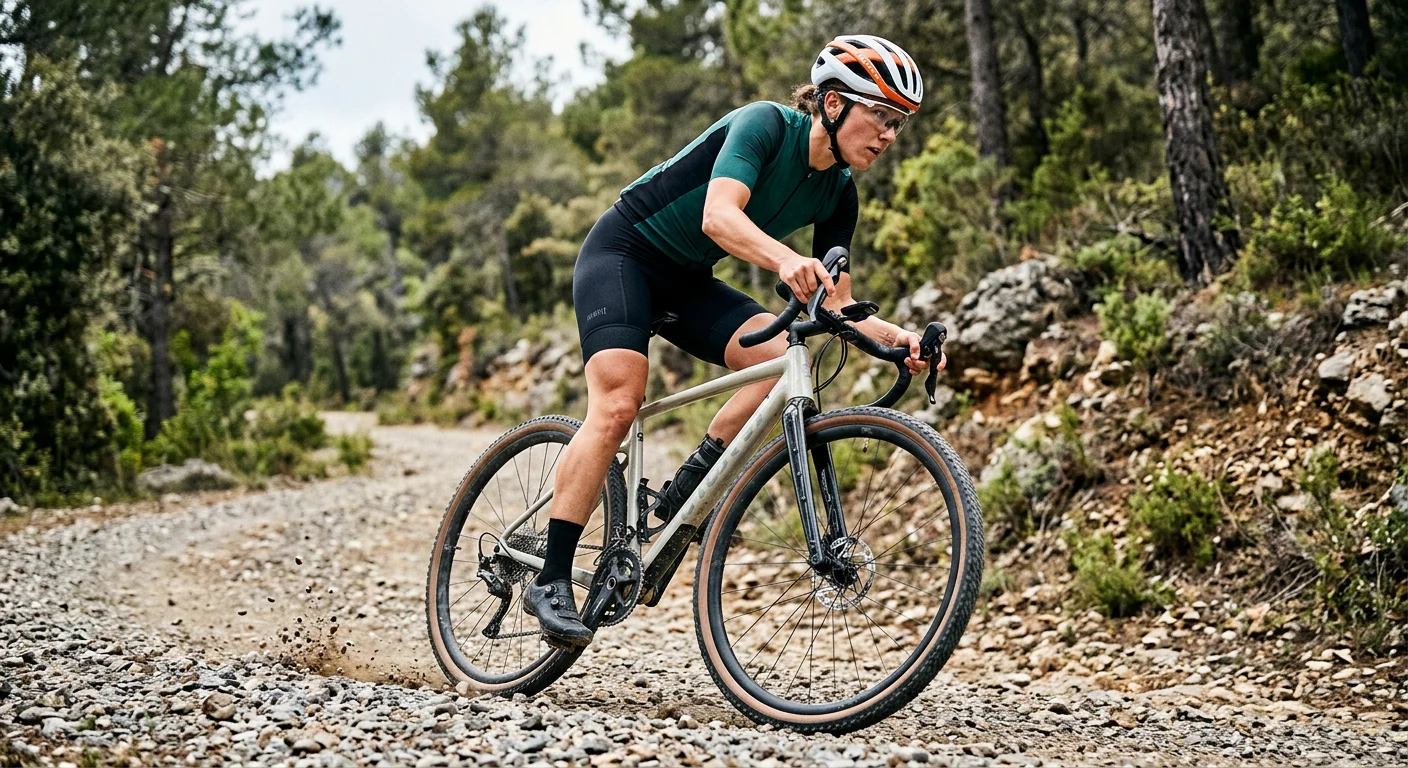
Gravel and MTB: A merino–polyester blend at 180–220 gsm. The blend ratio — 40–60% merino, 40–60% polyester — gives you abrasion resistance for brush and technical terrain. Plus, you get enough odor control for multi-hour dirt rides.
5–15°C: The Thermoregulation Base Layer Sweet Spot
This range suits merino better than any other temperature band.
Endurance and touring rides: Merino 175–185 gsm. This is the fabric weight most "3-season" cycling base layers are built around, and for good reason. It handles wide temperature swings across a single ride. It manages odor across multi-day trips. You stay comfortable grinding a long climb or descending into cold morning air.
Indoor trainer sessions: Opposite end of the spectrum. Go polyester open-mesh under 120 gsm. No wind chill exists on a trainer. Sweat rates during high-intensity intervals exceed 1.5 L/h indoors. Fast-drying mesh — 80 to 120 gsm with an open knit structure — is the clear answer here. Merino at this intensity turns into a soggy, slow-drying problem.
15–25°C: Where Ride Type Splits the Decision
Same temperature. Completely different fabric calls based on what you're doing.
Road and group rides at tempo effort: Polyester 120–140 gsm. This is the sweet spot for race jerseys. Enough coverage for UV protection. Light enough for evaporative cooling as sweat rates push past 1 L/h in sustained drafting efforts. Synthetic fibers move moisture to the surface faster than merino at these intensities. Your breathable cycling undershirt actually does its job.
Commuting and city riding: Merino 150–160 gsm. The reason has nothing to do with fabric science. It's about what happens after you arrive. You walk straight into a meeting. Lightweight merino stays odor-neutral through 30–60 minutes of stop-and-go riding. No polyester base layer can match that without chemical treatment — and those treatments fade with washing.
Above 25°C: Hot Weather Cycling Base Layer Calls
Century and long-distance road events: Ultra-light polyester under 120 gsm, with mesh or vented panels. Most hot-weather jerseys land at 90–110 gsm with UPF 30–50+ ratings for multi-hour sun exposure. You're drinking 600–1000 ml per hour to stay ahead of dehydration. Your moisture-wicking cycling underwear needs to move fluid off skin at that same pace. Merino cannot keep up.
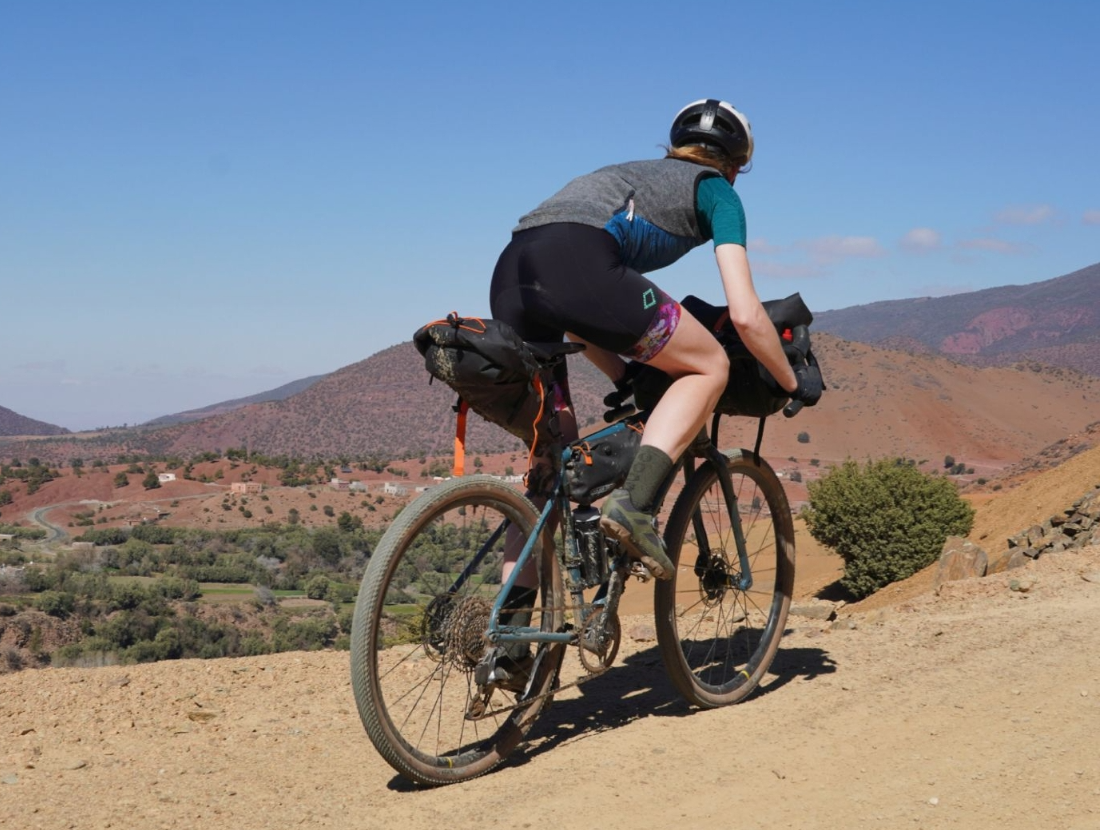
Bikepacking in heat with limited washing: This is the one scenario above 25°C where merino earns back its place — but in hybrid form only. Core-spun merino–polyester fabrics (polyester core, merino sheath) at 150–180 gsm give you the odor resistance and UV protection you need across 3–10 day rides. The polyester core handles the structural wicking load.
The Sweat Rate Override Rule
Forget temperature for a moment. Heavy sweaters — studies on endurance athletes put the threshold at 1.5 L/h — should use polyester or a polyester-dominant blend as their primary next-to-skin fabric across almost every temperature band. That includes ranges most people pair with merino.
Light-to-moderate sweaters (0.5–1.0 L/h) have real flexibility. Merino stays comfortable and functional up to around 22°C for sub-threshold rides with steady airflow.
The Full Matrix
Temperature | Ride Type | Fabric Recommendation |
|---|---|---|
<5°C | Commute / low sweat | Merino 200–250 gsm |
<5°C | Racing / high sweat | Polyester 130–160 gsm + insulated jacket |
<5°C | Gravel / MTB | Merino–poly blend 180–220 gsm |
5–15°C | Endurance / touring | Merino 175–185 gsm |
5–15°C | Indoor trainer | Polyester mesh 80–120 gsm |
15–25°C | Road / group rides | Polyester 120–140 gsm |
15–25°C | Commute / city | Merino 150–160 gsm |
>25°C | Century / long distance | Polyester <120 gsm, vented |
>25°C | Bikepacking, limited washing | Merino–poly hybrid 150–180 gsm |
One table. Clear calls. No scenario left as "it depends."
Proven Base Layer Pairing Strategies for Year-Round Cycling Coverage
Two pieces. That's all most cyclists need to cover 90% of their riding year.This simplified approach is increasingly adopted by brands working with an experienced cycling apparel ODM partner to reduce SKU complexity.
Most riders overcomplicate this — a different base layer for every scenario, a drawer full of fabric options rotated by feel. A well-chosen pairing beats a crowded kit bag every time. Here's how to build yours.
The Minimal System: 1 Merino + 1 Mesh Synthetic
Start here. One 150–170 gsm merino long-sleeve and one 80–120 gsm open-knit polyester mesh . These two pieces cover everything from freezing commutes to summer centuries.
How the coverage breaks down:
−2 to 5°C: Merino base + thermal mid-layer + insulated shell
5–15°C: Merino alone under a standard jersey, add a packable vest for descents
15–25°C: Mesh under a jersey — swap to merino if intensity drops or wind picks up
Above 25°C / indoor trainer: Mesh alone
Merino earns its place through odor resistance. One 150 gsm piece covers four back-to-back riding days — Monday through Thursday — with a hang-dry overnight and one end-of-week wash. For commuters, that's a real reduction in laundry load.
The mesh piece weighs around 60–90 g in a size M. It folds smaller than a pair of socks. Pair it with one merino layer and your entire base layer system fits in a jersey pocket.
The Performance Build: Separate by Intensity
Riders logging serious training volume need a smarter approach. Not more pieces — just better allocation by effort level.
Race and interval days: Go ultralight. Pick a 70–120 gsm sleeveless or short-sleeve synthetic with mapped moisture channels. Wear it under a compressive race jersey. Open-mesh panels under the arms and along the spine are essential at VO2 intensities. Sweat rates push past 1.5 L/h. The base layer's job is moving fluid off your skin fast enough to keep pace — nothing more.
Moderate training days (10–20°C): Step up to a 120–180 gsm midweight synthetic . Closed knit, fast-wicking. It handles cool morning starts and warm mid-ride finishes without the thermal buildup you get from merino at race-level output.
Recovery and easy base miles: A 150–200 gsm merino-blend — 80–89% merino with nylon or elastane — fits this slot well. Comfort and odor control matter more than wicking speed on a two-hour Z2 spin. It also pulls weight on multi-day race weekends. Wear the merino-blend on travel days and keep your synthetics clean for race morning.
The rotation logic in practice: Two synthetic pieces alternate on hard training days. One merino-blend handles lighter days. Laundry frequency drops. Odor stays manageable.
The Bikepacking Build: Maximize Re-Wear, Minimize Pack Weight
Multi-day riding needs a different kind of discipline. Pack three merino pieces — one short-sleeve, two long-sleeve — built around 18.5 µm, 150–200 gsm fabric. That setup carries you through an 8–12 day trip with minimal washing.
The rotation is straightforward. Long-sleeve A rides days one and two, then airs overnight. Long-sleeve B takes over for days three and four. The short-sleeve steps in for hot climbs or warmer afternoons above 20°C. Merino's four-day odor window makes the math work.
Add one compression synthetic layer for the roughest days under a loaded pack. Look for higher-denier panels mapped to the shoulders, lower back, and hips. Wear the merino next to skin and put compression on top. This keeps pack straps off the merino fabric and stretches its usable life across the full trip.
The Only Base Layer You Need for Indoor Training
The trainer is its own environment. Zero wind. Warm room. Sweat rates that regularly beat outdoor efforts. Merino doesn't belong here.
Wool insulates with no convective airflow to balance it out. It also traps moisture inside the fiber itself — meaning longer dry times between back-to-back sessions. For indoor riding, the spec is clear: hydrophilic inner surface, hydrophobic outer face, engineered moisture channels, flatlock seams . That's a purpose-built polyester trainer base — nothing else.
Room temperature shifts the weight choice. Below 18°C, a sleeveless light mesh does the job. Between 18–24°C, go with short-sleeve mapped-channel polyester and point a fan straight at your torso. Above 24°C, many riders drop to mesh base plus bibs alone — and that's a solid call.
Product Lineup Architecture: Optimizing Merino and Polyester SKU Ratios by Price Tier
No fabric allocation strategy means you end up with six SKUs that all tell the same story — and a merino piece sitting at full price, unsold. The math isn't complicated. Most brands get it wrong because they treat merino and polyester as competing options. They're not. They're complementary tiers that serve different buyers at different points in their cycling life.
Here's the architecture that works.A specialized cycling apparel factory can use this framework to balance inventory risk while covering multiple rider segments.
Entry Tier (Under $40): Polyester Does the Heavy Lifting
At this price point, the market is straightforward. Target 80% polyester-led SKUs and keep 20% for low-percentage wool-blend tests . That 80% core runs on a reliable spec: 95% recycled polyester with 5% elastane , knitted at 130–160 gsm , with a silver-ion antimicrobial finish and flatlock seams. This is the moisture-wicking cycling underwear that anchors team kit orders, bulk club buys, and indoor training programs.
The 20% wool-blend slot carries more weight than its share implies. Keep merino content at 30% or under in this tier. That's enough to soften the next-to-skin feel and improve odor resistance without hurting your margin structure. Place these in specific channels:
Gravel-focused shops
Touring retailers
Direct-to-consumer online
Watch your sell-through numbers closely. The data from these SKUs shows you how much demand exists in your customer base — before you put real money into a deeper merino investment.
Mid Tier ($40–$85): Where the Real Volume Lives
This band is the most important in any cycling apparel lineup. A solid mid tier carries 50% polyester-led SKUs, 40% merino blends, and 10% pure merino . The blend specs that hold up here land at 30–40% merino paired with 60–70% polyester or nylon , knitted at 150–200 gsm . That range works as a genuine year-round base layer for road and gravel riders, commuters, and anyone doing "one-shirt trips."
One detail separates durable mid-tier blends from forgettable ones: use nylon as the synthetic component, not polyester , anywhere abrasion is a factor — pack contact zones, jersey pockets, saddle interface. Nylon holds up where polyester pills. That construction decision won't show up on a hangtag. It will show up in repeat purchase rates.
The 10% pure merino slot in this tier works as a bridging SKU. Price it just under your premium threshold. It gives buyers a taste of the full merino experience before they commit to an expedition-weight piece.
Premium Tier ($85–$150+): Halo SKUs That Earn Their Margin
Flip the ratios entirely. At this tier, target 70% merino-dominant SKUs, 20% technical blends, and 10% seasonal synthetic specials . Merino content runs 80–100% , built on 17.5–18.5 micron fiber . That's the sweet spot — soft enough to clear the sensitivity threshold for most riders, with nylon core-spun reinforcement in high-wear zones to keep durability acceptable.
GSM targets here:
180–220 gsm for cold-weather and multi-day riding
220–250 gsm or dual-layer construction for very cold or low-activity use cases
Volume is not the job of the premium tier. Brand perception, gross margin, and credibility across the full line — that's what it delivers.
That story needs substance: micron count, farm traceability, animal welfare certification, knitting gauge . A thermoregulation base layer at this price earns its margin through documented provenance, not just fabric weight. Buyers here evaluate a specific claim — this piece will last me a five-day bikepacking trip without needing a wash — and every product detail either supports that claim or kills it.
The Line-Wide Allocation That Drives Cash Flow and Brand Equity
Across all three tiers, the production split that makes financial sense is 60% polyester-focused and 40% merino or merino blends . Polyester SKUs generate cash flow and absorb the volume from team and club orders. Merino SKUs carry higher gross margin and build the brand perception that supports premium positioning across the whole line.
Picture it as a funnel with a built-in upgrade path. An entry-level synthetic buyer who moves to a mid-tier merino blend on their second purchase is worth far more to a cycling apparel brand than a one-time premium buyer who showed up without any context. That upgrade ladder looks like this:
Poly → short, hot, hard sessions
Merino blend → long days and unpredictable conditions
High-merino expedition pieces → multi-day rides
This ladder is the right technical recommendation for cyclists. It's also the right commercial structure for any brand building a lineup that grows over time.
Technical Specs: GSM Selection, Blend Ratios, and Moisture Management Engineering
Fabric weight is your first decision. Many high-volume cycling gear wholesaler programs organize their base-layer offerings primarily around GSM categories rather than fabric names alone.Everything else — blend ratio, seam placement, moisture management — builds on that foundation.
GSM: Match the Number to the Climate
GSM isn't a marketing figure. It's a functional spec. It determines whether your base layer works with your body or fights it.
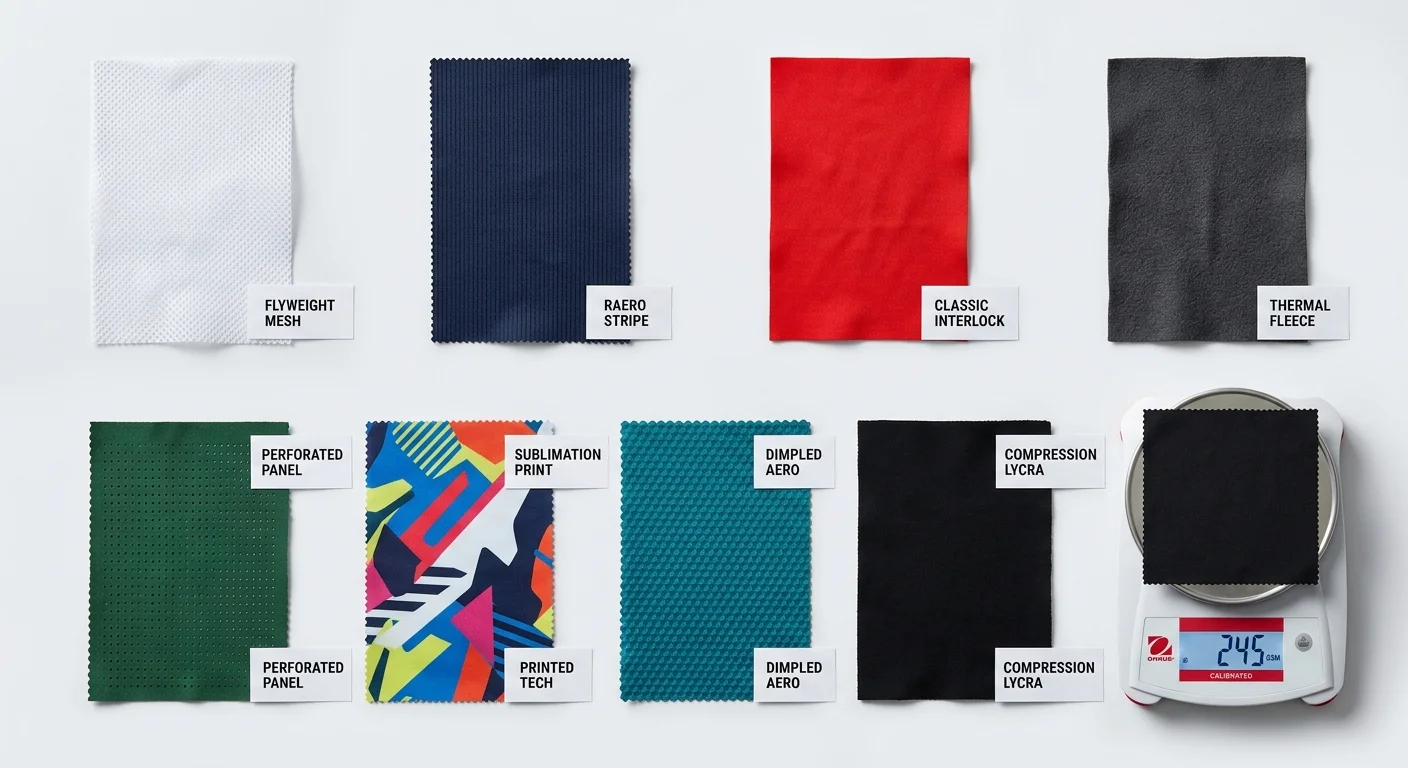
80–120 gsm: Hot-weather and high-intensity range. Top breathability, low insulation. This is the spec behind every effective hot weather cycling base layer built for sweat management at pace.
130–170 gsm: The all-season band. Handles variable conditions, layering systems, and long days with shifting temperatures. Most serious 3-season builds land here.
180–250 gsm: Cold-weather territory. Passive warmth, brushed or fleece-backed constructions, shell-layer compatibility.
Pick your GSM by climate and intensity first. Adjust everything else after.
Blend Ratios: Engineering the Right Trade-Off
Pure polyester handles high-sweat, fast-dry demands better than any blend. Speed of moisture wicking is the main goal? A 100% polyester build with a hydrophilic finish is the clearest answer.
Odor control and thermal buffering change the equation. Blends take over. The practical targets:
Merino/nylon or merino/poly at 70/30 to 80/20 — this gives you enough merino for real odor resistance and temperature buffering. The synthetic component protects against mechanical wear. Choose nylon — not polyester — as the synthetic partner where abrasion is a real factor.
5–8% elastane — this is the useful range for stretch recovery and fit retention during cycling movement. It keeps a close-body fit without pushing into heavy compression.
Moisture Management: Two Different Mechanisms
Polyester moves sweat through fiber cross-section engineering . Trilobal or hexagonal fiber shapes create capillary channels. A hydrophilic surface finish pushes liquid outward. The whole system works mechanically.
Merino works on a different principle. It absorbs and releases water vapor through hygroscopic fiber behavior — not surface chemistry. So open-knit mesh underarms and zoned weight distribution matter more for merino than any finish treatment.
For the strongest sweat-management build across either fabric: use lighter GSM panels at the torso and underarms. Go a bit denser where pack straps or bib shorts create localized friction.
Anti-Chafe Construction: The Details That Determine Longevity
Flatlock seams or seamless knit construction are non-negotiable for next-to-skin cycling layers. Seam ridges that feel fine in a shop turn into real problems at hour three.
Reinforcement zones belong at the shoulders, underarms, and saddle-back contact areas . Use abrasion-resistant polyester microfiber panels or bonded/laser-cut construction. For merino pieces, these zones decide whether a premium base layer survives a full season — or starts pilling by month two.
One practical rule: map your seam layout against actual contact points — backpack straps, bib short waistbands, saddle posture. Keep seams clear of those zones.
Conclusion
The merino-vs-polyester debate was never about which fabric wins. It's about which fabric wins for you, on that specific ride .
Data and saddle time confirm the same thing: no single base layer covers every scenario. A 150gsm merino handles cold-weather endurance days and multi-day tours with ease. A lightweight polyester mesh earns its place on threshold sessions indoors or sweat-soaked summer centuries.
Build your kit like a quiver, not a uniform.
Start with two layers — one for each end of your temperature and intensity range. Let real-world ride experience fill the gaps from there. Curating a product lineup? The same logic also helps brands build profitable assortments without relying solely on low Merino Wool or Polyester cycling base layer wholesale price competition.The same logic applies. Don't chase a single "best" SKU. Chase the right moisture wicking cycling underwear options for the right rider profiles.
The perfect base layer isn't the one that does everything. It's the one you never think about mid-ride.