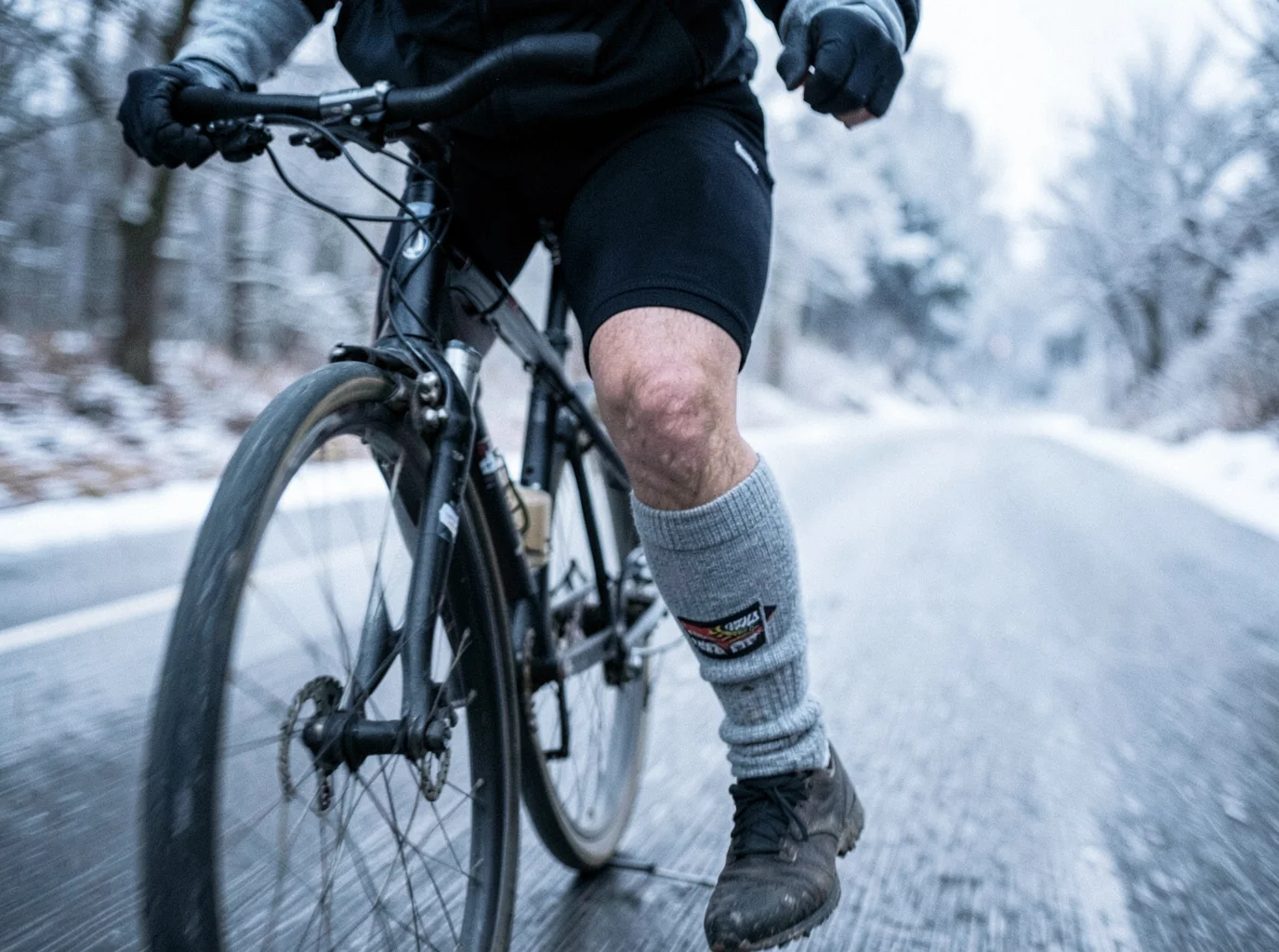
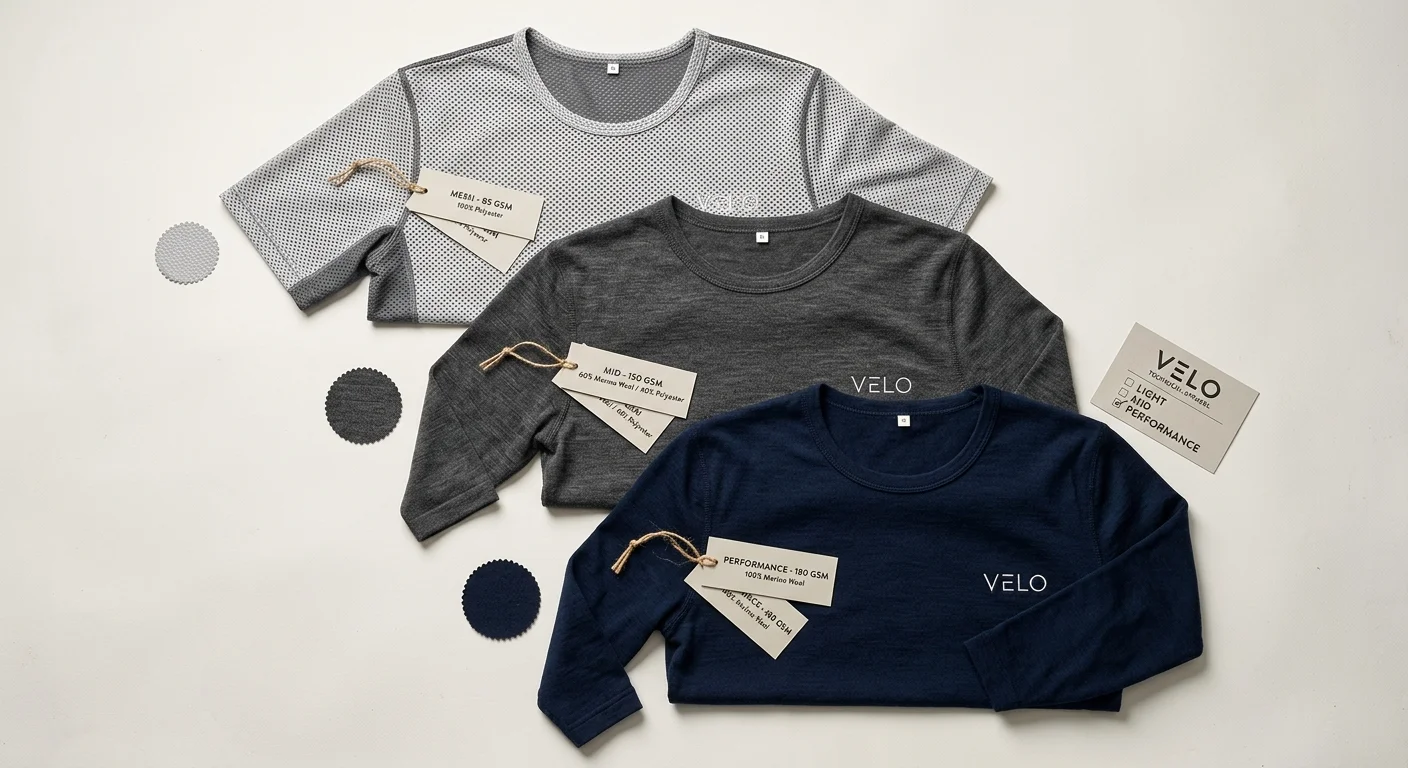
There's a specific kind of cold that only cyclists know—the one that creeps through a cheap custom synthetic base layer at mile 15, turning your morning ride into a shivering slog home. If you've already tried the budget polyester options and found yourself clammy, chilled, or smelling like a gym bag by lunchtime, you're exactly who this guide is for.
We tested and ranked the seven best merino cycling base layers built for cold-weather riding in 2026, comparing wool content, fabric weight, temperature ratings, and real-world breathability across commuting, road, and mountain scenarios. You'll also get a straight answer to the merino wool vs synthetic base layer debate, plus practical guidance on choosing the right g/m² weight, fit, and care routine so your investment lasts through winter—not just one season.
Smartwool Classic Thermal Merino 1/4 Zip (Top Overall Pick)
Multiple gear labs independently crowned this one the top overall pick, and the numbers back it up. At 250 g/m², this is Smartwool’s heaviest base layer offering, noticeably thicker than the 180–200 g/m² mid-weight range some riders expect. That’s by design.
OutdoorGearLab tested it as 100% merino wool at 250 g/m² and called it one of the warmest layers they’ve reviewed. The Great Outdoors echoed that verdict, praising its performance on “cold winter hill days” as excellent. If you’re chasing serious insulation for genuinely brutal mornings, this thermal cycling gear delivers.
The 1/4 zip is a functional heat valve. When climbing hard and building a sweat, unzip to the chest to vent instantly. When descending or holding a slow pace in the wind, zip up to lock warmth in. That flexibility makes this merino wool jersey-style layer ideal for interval-heavy cold rides (think stop-start commutes or hill repeats), though it’s overkill for pure summer speed work.
Pricing and Sizing
Price: $130 merino cycling base layer retail, though REI often discounts to $89.97 (~30% off)
UK pricing: £115 merino cycling base layer official, with street prices around £109.99
Men’s sizing: XS–XXL depending on retailer
Women’s sizing: XS–XL, multiple colorways
REI’s listing shows 91 reviews, a healthy sample size for a niche cold-weather insulation layer. If you want the single warmest, most versatile merino wool thermal underwear on this list, skip the search for a lighter mid-layer and buy this one.
MERIWOOL 100% Merino Wool Base Layer (Best Overall Value)
$59.99 cycling basee layer gets you 100% merino wool, about the same price as a mid-tier synthetic base layer at a big-box outdoor store. MERIWOOL built its reputation on that gap.
This is a 250 g/m² midweight construction, the same weight class as premium competitors, priced at what Greenbelly's comparison chart flagged as the cheapest merino wool thermal underwear on their list. One independent review called it "entry price" territory where "the cost is just a fraction of other tested options" — a direct comparison against pricier alternatives.
What you're getting:
Temperature range : Comfortable from 20°F to 55°F, depending on your effort level
Fabric behavior : Breathable in summer, warm in winter. Reviewers noted it "stays warm even when damp."
Odor resistance : Built into the fiber itself, useful for multi-day riding without laundry access
Care : Machine washable and dryer safe, though high heat drying risks shrinkage
This isn't cycling-specific. It's a general-purpose outdoor base layer without an extended rear hem, cycling-cut sleeves, silicone grippers, or a chamois-friendly cut. Some testers noted slight initial itchiness that fades after a wash or two.
Smartwool Men's Classic Thermal Merino Crew (Editor's Pick / Cycling-Specific Design)
Seam placement wins or loses a base layer, and Smartwool knew that when engineering this crew. This 100% merino wool piece uses interlock knit at the same 250g/m² weight as our top picks. The difference is in the shoulder and side seam placement.
Flatlock seams plus offset shoulder and side construction move the stitching away from pressure points. Shoulder panels eliminate the top shoulder seam. For riders, that means fewer raised seams pressing into your traps while you're hunched over the bars for three hours, and less friction where a backpack or hydration pack strap crosses your shoulder. The side seams get pulled toward the front of the torso too, cutting down on the twisting friction you feel mid-pedal-stroke.
Crew neck versus the more common 1/4 zip cut matters for cycling posture. No zipper hardware means nothing digging into your sternum or throat when you're dropped low in an aero tuck. If you run hot and need mid-ride venting, this isn't your layer—grab a zip instead. But for steady, dial-it-in-and-forget-it warmth on long cold rides, the crew's clean front wins.
Pricing sits at $120–$125 depending on retailer. Rating data splits: one aggregator shows 4.7/5 from 72 ratings and 30 reviews, while an independent long-form review landed closer to 4.5/5.
Rapha Merino Cycling Baselayer (All-Season Custom Fit)
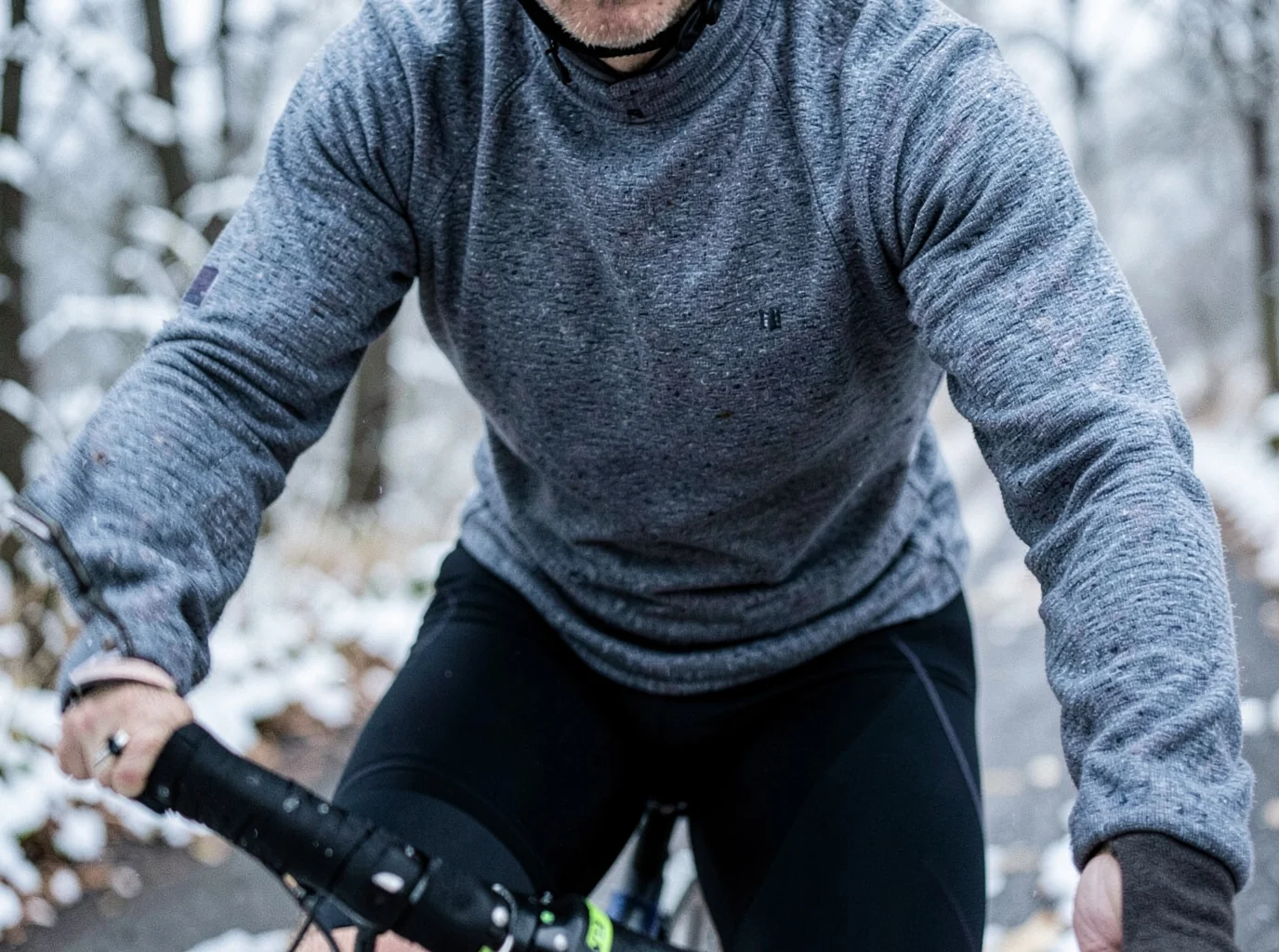
Twenty years on the market says something. Rapha 's Merino Base Layer debuted in 2005 and still gets called their "universal favourite"—a track record built one cold morning at a time. This is the brand's flagship entry in their Rapha Performance Merino (RPM) system, engineered for durability and fast-drying performance.
The fiber blend tells the real story: 74% merino wool, 16% nylon, 10% elastane. Rapha uses this exact formula across their merino long and short-sleeve lineup. The wool handles temperature regulation and odor control. The nylon adds abrasion resistance, so the fabric survives repeated pack-strap friction. The elastane keeps the cut athletic instead of baggy.
Rapha builds this using 17.5 micron merino yarn at 160 g/m²—a mid-weight fabric they describe as "the perfect balance of ventilation, warmth and comfort." It's lighter than the 250 g/m² thermal options built for the coldest days, making it a true four-season base layer.
Why it works across seasons :
Winter: Merino traps a static air layer for baseline warmth.
Spring/fall: Wicking reduces the post-sweat chill that ruins shoulder-season rides.
Summer/high intensity: The knit structure promotes airflow, cutting drying time and clamminess.
If you want one base layer instead of a seasonal rotation, this is the pick.
Giro Chrono Base Layer (Best Overall for Winter 2026)
BikePerfect didn't hedge. In their "Best cycling base layers for winter 2026" roundup, updated August 2026, the Giro Chrono Base Layer took the top spot, labeled "Best winter base layer overall." They also backed it with a standalone review, "Giro Chrono Base Layer review – winter luxury, at a price," so two separate pieces of testing point to the same conclusion.
What sets the Giro apart from the merino-heavy picks above is that it's a flat-woven, functional fabric layer, closer to a synthetic/performance-textile approach than a pure merino wool jersey. Exact fiber percentages and g/m² weight weren't disclosed in available testing, but the review language consistently describes mid-weight construction, autumn-through-spring versatility, and balanced warmth and breathability.
Against Smartwool's 250 g/m² 100% merino thermal layer, Smartwool wins on raw insulation for extreme cold. Giro wins on all-around ride comfort across a wider temperature band. If you need one base layer that handles most of winter without overheating on milder days, this is your pick. If you need maximum warmth for genuinely brutal mornings, Smartwool remains the better bet.
Castelli Pro Mesh Sleeveless (Synthetic Comparison Option, Not Merino But Worth Mentioning)
Not everything here is merino, and that's the point. Castelli calls the Pro Mesh Sleeveless a "WorldTour winning base layer." It's built from synthetic fibers—93% polyester and 7% elastane, though some listings cite 100% polyester 3D mesh. It's a moisture-wicking base layer for a different job.
The 3D mesh fabric focuses on air exchange, not insulation. Depending on size, it weighs between 50g and 108g (most listings cluster around 94–108g), making it lighter than any merino option on this list. Castelli recommends it for 59°F–82°F conditions—warm-to-hot riding, not cold weather.
Why include it? It draws a clear line between merino and synthetic base layers. Merino wins on temperature range, odor control, and all-day comfort. This mesh design wins on sweat management during high-output summer training or race-day heat. Different tool, different job. Sizing runs XS–XXL, so fit isn't the issue—climate is.
Pedal Mafia Pro Short Sleeve Baselayer - Merino (Cycling-Cut Pro Edition)
This baselayer is part of a temperature-scaling system, not a standalone winter solution. Pedal Mafia’s Men’s Pro Short Sleeve Baselayer Merino costs $90, below the brand’s own Long Sleeve Merino Baselayer at $100. The short sleeve trades a bit of coverage for better heat management during hard efforts.
You can wear it alone in 5–15°C. Below that, Pedal Mafia expects you to add layers, not swap the base layer out.
Real-World Layering for Sub-Zero Rides
At 0–5°C, you wear the short sleeve merino base with a thermal jersey mid-layer and a windproof or waterproof shell. That works well for high-intensity rides or commutes with big temperature swings. Near or below 0°C, pair it with the PRO Sub 0 Thermal Jacket and add the PRO Sympatex Heavy Rain Jacket as outer protection when needed. For high-intensity efforts, short sleeves beat long sleeves because they vent better and trap less sweat during climbs or interval work.
The merino wool regulates temperature, wicks moisture, and resists odor without adding bulk under a jersey. Pedal Mafia’s full winter lineup—thermal jerseys, winter jackets, bib tights, rain shells—is built around layering.
How To Choose The Right Merino Base Layer By Weight (g/m²)
Fabric weight decides everything about how a base layer performs on the bike. Get this number wrong, and even the best merino wool jersey on this list will either cook you or leave you shivering.
120–150 g/m² works for 10–18°C rides. This is your lightweight merino layer for climbing repeats, spring/fall commutes, or any session where output stays high. You trade warmth for airflow, with fast moisture transfer and minimal overheating risk.
180–200 g/m² covers 0–15°C, the widest and most practical range for daily riders. It balances enough insulation for steady-state riding with enough breathability to avoid swamping your kit on climbs. Most cyclists should default here.
250–300 g/m² is built for sub -5°C mornings, slow commutes, stop-start traffic, or extended low-intensity rides in genuine cold. Warmth peaks here, but so does moisture retention. Push hard in this weight class and you'll trap sweat instead of shedding it.
Weight Range | Temp Range | Best For | Trade-Off |
|---|---|---|---|
120–150 g/m² | 10–18°C | Climbs, tempo rides | Limited warmth |
180–200 g/m² | 0–15°C | Commuting, endurance | Slight heat risk at max effort |
250–300 g/m² | Below -5°C | Winter commutes, low-speed rides | Slow moisture transfer |
Match weight to intensity, not just the thermometer.
Merino Base Layer Buying Guide for Different Cycling Scenarios

Temperature alone won't tell you which base layer to buy. Your ride type does. A commuter stuck in stop-start traffic needs something completely different from a rider grinding out hill repeats at the same outdoor temperature.
Match The Layer To The Ride
Commuting (15–35°F): Go with a light-to-mid weight merino base layer around 150–200gsm, paired with a thin thermal jersey or light fleece mid-layer, then a windproof/water-resistant softshell on top. Commutes involve constant stopping and lower sweat output, so merino's temperature regulation and odor resistance carry more weight here than raw wicking speed.
Hardcore road riding (15–30°F): Switch to a lightweight merino or merino-synthetic blend against the skin, add a breathable compression or light thermal mid-layer, and finish with a wind-resistant, back-vented winter cycling jacket . High-output riding rewards "dry-first" fabrics. Pure merino simply can't shed sweat as fast as synthetic fibers when you're pushing hard.
Extreme cold (0–15°F): Move up to a mid-to-heavy merino layer, roughly 200–250gsm, backed by a fleece or light synthetic-down mid-layer, with a genuinely windproof outer shell as non-negotiable. Longer, windier rides are exactly where merino's warmth-plus-odor-control combo pays off most.
Extreme frigid (below 0°F): This is layering territory. Run a moisture-wicking inner layer, a thicker merino or merino-blend mid-layer, then a heavy-insulation outer shell. At this temperature range, locking in warmth and blocking wind matters more than finding "the warmest single piece."
Scenario | Temp Range | Base Layer | Mid-Layer | Outer Shell |
|---|---|---|---|---|
Commuting | 15–35°F | 150–200gsm merino | Thin thermal/fleece | Windproof softshell |
Hardcore road | 15–30°F | Merino-synthetic blend | Breathable compression | Vented winter jacket |
Extreme cold | 0–15°F | 200–250gsm merino | Fleece/light down | High-windproof shell |
Extreme frigid | Below 0°F | Wicking inner + merino blend | Heavy insulation | Max windblock |
Intensity Overrides Temperature
High-intensity climbing, intervals, and hard efforts call for synthetic or merino-synthetic blends. 2026's winter base layer buying trend leans hard toward "warm and dry" rather than just warm. Low-intensity, long-duration cold rides favor pure merino, and the 250g/m² range consistently tests as the sweet spot across a broad 40–65°F comfort band.
In genuinely extreme cold, fabric weight and outer windproofing matter more than stretch or fit. As a reverse reference point, hot-weather base layers trend toward sleeveless, open-mesh synthetic builds. The whole category still boils down to heat dissipation versus heat retention.
Getting the Right Size and Fit for Your Merino Base Layer
Fit ruins more base layers than fabric weight ever does. A perfect 250 g/m² merino wool jersey feels like garbage if it's bunched at your elbows or choking your neck on the climb.
The One-Finger Rule
Every brand guide says the same thing: snug, not constricting. Slide one finger under the cuff, collar, or waistband. If it fits, you're in the right zone. Too tight and it restricts blood flow or breathing. Too loose and it bunches, ballooning air pockets that kill moisture-wicking.
Move through your actual riding motions before buying. Raise your arms overhead. Reach forward like you're gripping drop bars. Squat, twist, bend at the waist. No pinching. No fabric riding up. No visible folds ballooning at your gut or lower back.
Sleeve, Collar, and Hem Details That Matter
Sleeves shouldn't ride up past your wrist when you raise your arm. If you're layering under gloves, thumbhole cuffs or slightly longer sleeves solve this. The collar sits against your neck without pressing your throat. Turning your head or dropping your chin shouldn't cause chafing. The hem shouldn't flip up or expose skin when you reach overhead. For bottoms, check both waist and hip proportions—looking at total circumference alone hides fit problems.
Brand Sizing Cheat Sheet
Sizing varies enough between brands that you can't guess. Real numbers:
Brand | Size | Chest/Waist Range |
|---|---|---|
Smartwool Men's | XS–XL | 32–46 in chest |
Cloudline Women's | XS–L | 16 5/8–19 5/8 in (flat) |
Merino.tech Women's Tops | XS–2XL | 32–54 in chest |
Merino.tech Women's Bottoms | XS–2XL | 13.4–19.3 in waist (flat) |
Smart Merino (NZ/AU/UK) | 8–16 | 30–40 in chest |
Smartwool measures chest at the fullest point under the arms, waist at the natural waistline, and hips 3 inches below that.
Why Fit Affects Warmth
Skin contact drives moisture transfer. A snug lightweight merino layer keeps fabric touching skin continuously, pulling sweat outward without gaps slowing the process. Loose fits create air gaps that stall wicking—exactly what turns thermal cycling gear clammy on cold descents.
For most riders, 200 gsm hits the sweet spot: warm without feeling like a compression suit. Drop to 150 gsm for summer sizing flexibility, or size up toward 250 gsm layers for winter, where a slightly roomier fit still traps warmth without sacrificing that skin-contact wicking effect.
Caring for and Maintaining Your Merino Base Layer
Wash your merino base layer wrong twice and you'll shrink a $130 investment into a crop top. That's the reality most riders learn the hard way.
Turn the garment inside out, wash cold (under 30°C) with a wool-specific detergent, skip the dryer, press out water, and lay flat to dry away from direct sun.
For hand-washing, soak in cool water and gently agitate for 2–10 minutes. Don't scrub or wring. Rinse, press with a towel, and reshape flat.
For machine washing, choose the Wool/Delicate/Hand-wash cycle with low spin, and keep them separate from zippers and denim. Zip up and turn inside out to reduce friction.
Don't use bleach, softeners, or enzyme-based detergents. They degrade merino fibers quickly. Heat causes shrinkage and felting, and hanging wet stretches the fabric. Proper care keeps your thermal cycling gear fitting and insulating for multiple winters, not one.
Frequently Asked Questions (FAQ)
Cold-weather riders ask the same few questions. Here are the answers.
Is merino wool better than synthetic base layers? Not always. Merino handles odor better, works for multi-day wear, and handles temperature swings—you sweat, stop, and it still performs. Polyester dries faster and costs less. Wet merino keeps roughly 60–70% of its insulation; wet polyester drops below 25%. But a 160gsm merino layer takes about 90 minutes to dry versus 45 for polyester.
How many base layers do I need? Three minimum: one on your back, one in the wash, one drying or in reserve. Frequent winter riders usually end up with 2–4.
Does the merino-polyester blend ratio matter? Yes. A common blend like 53% merino / 45% polyester / 2% elastane balances warmth with faster drying. More merino means more comfort and odor resistance. More polyester means more durability and quicker drying.
What's the price difference? Merino base layers cost $80–130 depending on weight and brand. Comparable polyester options run about $25–40.
Conclusion
Cold weather shouldn't dictate whether you ride or sit indoors staring at a trainer app. The right merino cycling base layer changes that equation, and now you know exactly which ones deliver.
Fit and fabric weight trump brand hype every time. A 200g merino wool jersey that fits like a second skin will outperform a bulky, oversized merino cycling base layer regardless of custom price tag. Second, your riding scenario dictates your pick. Commuters need different insulation than someone tackling four-hour gran fondos in freezing temps. Third, merino's natural odor resistance and temperature regulation genuinely outclass synthetic alternatives for anything beyond quick, sweaty efforts.
You've got the rankings, the specs, and the buying logic. Stop overthinking it. Pick the option matching your budget and riding style from this list, order it before the next cold front hits, and get back to logging miles instead of excuses.