You pulled on a new pair of chamois shorts, looked in the mirror, felt tight, weird, maybe a little too snug in places you didn't expect — and now you're wondering if you wasted your money on the wrong size. Most riders can't tell compression fit cycling shorts from a genuine sizing mistake, and that confusion is exactly what leads to saddle sores, chafing, and mid-ride misery. This guide breaks down how cycling chamois shorts should fit, piece by piece: waistband, leg openings, and chamois pad placement, so you can check your own shorts right now, in your own room, and know within minutes whether they're actually working for you or against you.Brands can develop custom Cycling Chamois Shorts around specific fit requirements.
Put Cycling Chamois Shorts on Correctly Before Judging the Fit
Half the sizing problems riders complain about are putting-on problems. Before you decide the shorts are wrong, make sure you wore them right.
Skip the underwear. Always. The chamois is designed to sit directly against skin. That's non-negotiable for saddle sore prevention and reducing cycling shorts chafing. Pull the fabric all the way up until it's smooth, taut, evenly snug . No bunching, no sagging, no wrinkles anywhere.
If you're testing bib shorts strap fit, the straps go under your jersey , and if you're layering, the base layer sits under the straps, jersey on top.
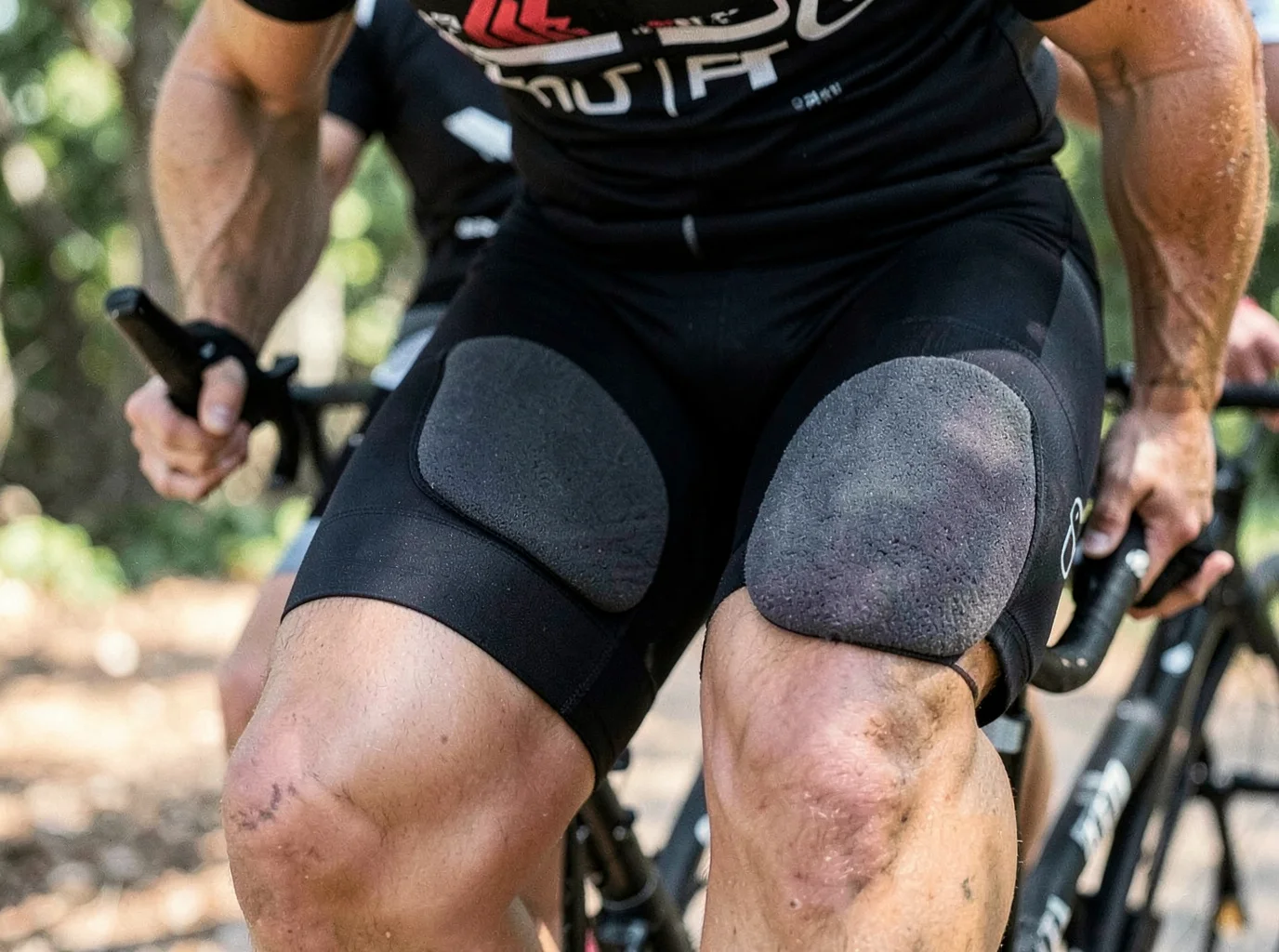
To center the chamois, place one hand over the pad, bend one knee up and slightly out , guide the pad into place, then repeat on the other leg. It should sit flush against your body when standing. But standing isn't the real test.
The real test happens on the saddle. Lean into riding position and check the fit. The pad's ears should extend just past the saddle's ears, and the nose should fully cover the saddle nose, with no annoying flap sticking out.
The fit should be snug like compression fit cycling wear, A Cycling Chamois Shorts manufacturer can fine-tune pad placement and compression zones.never restrictive. Leg grippers should hold firm without pinching or riding up while pedaling. For a real verdict, ride 60–90 minutes at intensity. Anything over 10 miles is where fit issues actually surface.
Check the Waistband for Sliding, Rolling, or Abdominal Pressure
A waistband that folds, rolls, or slides while you move is a design flaw, not something to break in. It should sit flat against your skin whether you're standing, sitting, or hunched over the bars.
Run the movement test. Stand, sit, then bend forward like you're reaching for your bottle cage. If the band shifts or curls in any of those three positions, the waistband isn't stable.
Two-finger check: slide two fingers under the band while standing. You want resistance, not looseness, but the band itself should stay flat, never bunching around your fingers.
Width matters more than most riders assume. Buyers can request a custom wholesale price for Cycling Chamois Shorts by volume.Narrow elastic concentrates pressure into one thin line, which is why it digs and rolls. Go with at least 1 inch of width , or 3.5–5 inches for stronger anti-roll support on curvier builds. A higher rise also helps by anchoring the band near your natural waist rather than your hips, where fabric tends to slip.
If the pressure feels like "digging" instead of "supportive," the load isn't spread wide enough. One study measured peak abdominal pressure at 17 ± 6 cmH₂O with high-waistband garments vs 15 ± 6 cmH₂O with low-waistband ones . For reference, compression garments run light (8–15 mmHg), moderate (15–20 mmHg), or firm (20–30 mmHg). If sitting still already feels "firm," it's too tight.
Fixes that work:
- Silicone grip strips or bonded edges for added friction
- A reinforced, structured top edge rather than thin elastic
- Sizing up if rolling comes from over-compression, not poor design
Confirm the Chamois Pad Is Centered Under the Sit Bones
Your sit bones don't lie. Land on a seam, an edge, or a thin transition zone, missing the thick cushioned center, and you'll know within one short ride. It won't feel chic.
Find your baseline first. Sit on a hard chair, rock your pelvis forward and back 10–15 times, then stand up and measure the two impressions left behind, center to center. That number is your sit-bone width. Men land around 100–120mm, women 110–140mm. Your chamois pad placement should exceed that measurement by 10–15mm. That extra margin keeps you supported so you're not balancing on a hard edge.
Judge fit seated. Get into actual riding position, either on the bike or a firm surface. The widest part of the chamois should align with the widest part of the saddle. The back edge should extend 10–15mm behind where your sit bones make contact. That's your buffer zone.
What Correct Centering Feels Like
Pad lies flat, no wrinkles, no bunching
Zero exposed seams under pressure points
No overhang past the sit-bone contact area
No red mark or hard line after a quick test ride
If the pad feels narrow, your sit bones hit foam edges, missing center support.Team orders can use bulk Cycling Chamois Shorts Fit specifications across sizes. Size up or try a different shape. If it feels uniformly spongy with no saddle sensation at all, the chamois might be too thick for your saddle profile.
Ride 10 minutes. Check for hot spots or red lines. That's your verdict.
Use the Stand-and-Sit Test to Detect Chamois Movement
Ten minutes on the bike tells you more than ten minutes staring in the mirror. It's the fastest way to catch chamois pad placement problems before they turn into saddle sores.
Here's the protocol:
Ride at a normal effort for 10 minutes — enough time for the pad to settle into its real position.
Stand up on the pedals for 10 seconds , then sit back down without adjusting anything.
Notice whether you need to wiggle or shift to re-center yourself on the saddle.
If you land right back where you started, the chamois is doing its job. If you have to hunt for the sweet spot, the pad shifted during the stand, which means it wasn't anchored correctly in the first place.
After the 10-minute ride, check for:
Red lines across the sit-bone area
Hot spots that feel sore to the touch
Visible seam impressions pressed into skin
A seam mark points to shape mismatch — the chamois pad doesn't match your anatomy, not just a sizing issue. That's where compression fit cycling shorts either prove themselves or reveal they need a different cut.A specialist Cycling Chamois Shorts vendor can offer multiple pad constructions.
Your thighs will tell you the truth faster than any size chart. Leg grippers get blamed for discomfort constantly, but the real culprit is usually width.
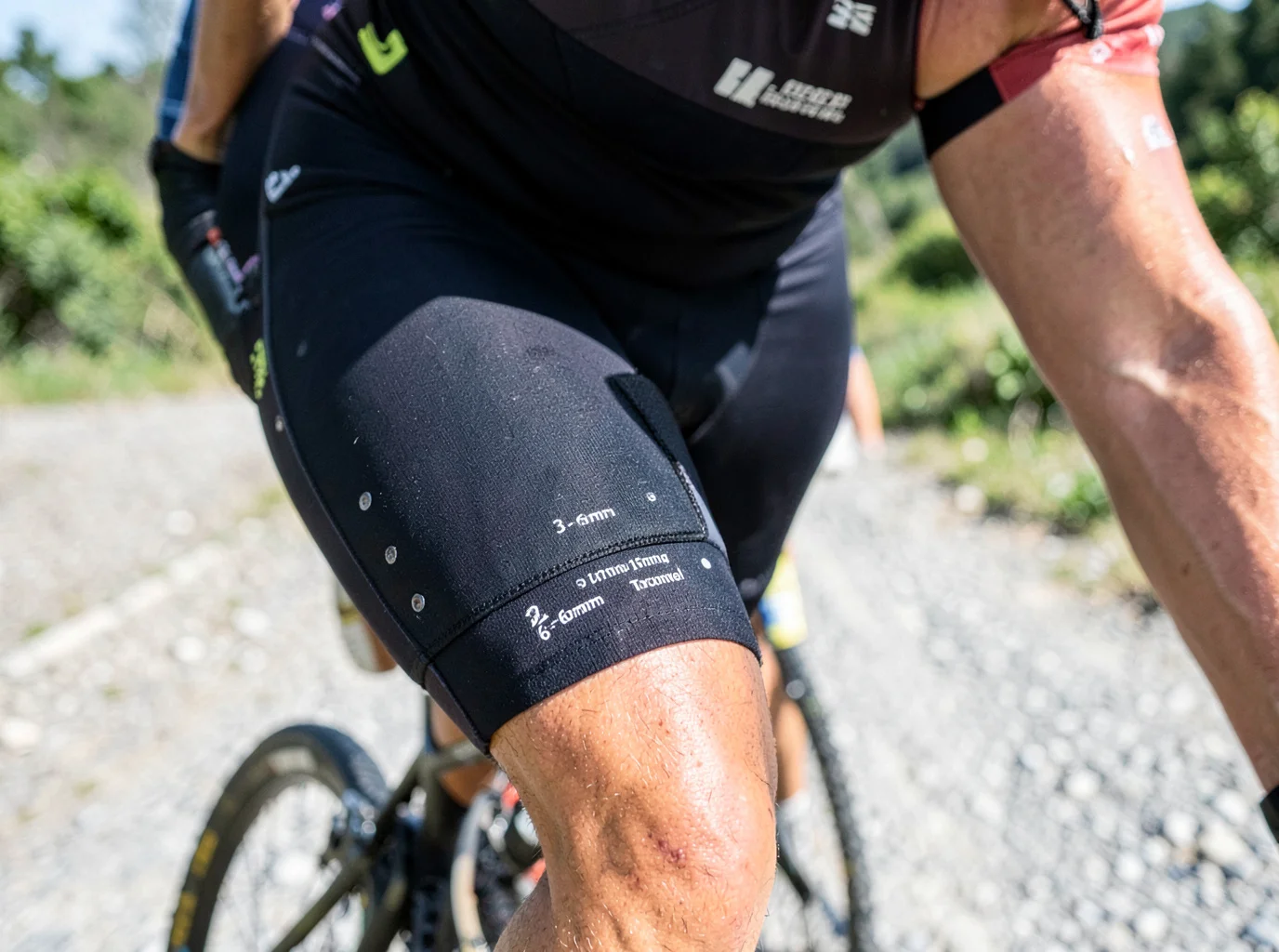
Aim for a width of at least 1.5 in / 3.8 cm, with some premium silicone grips running 1.8 in. Anything narrower creates a "tourniquet effect" where a thin band digs in and leaves angry red marks instead of holding you securely.
Good grippers feel like wide, flat, evenly distributed pressure, sitting mid-thigh, lying flush against skin, not low or cutting into the quad.
Run the same test: ride 30 minutes to 2 hours, then check. No deep indentations, no lasting red lines, no digging in.
Checking Cycling Shorts Length
Measure from the chamois seam down to the leg opening. Most cycling shorts run 7–9 in inseam; road-specific guidance splits it further, 9–11 in for men, 7–9 in for women. Length categories break down as short (5–7 in), medium (8–9 in), long (9–11 in+). Brands like Giordana offer 9.9–12.0 in depending on size, with shortened variants at minus 3 cm or minus 5 cm.
The fit should feel firm, never restrictive, with zero bunching along the inner thigh. If you're stuck between two sizes, go longer. Shorter inseams ride up mid-pedal stroke, and once they start climbing, they don't stop.
Red flags to watch for:
- Shorts riding up after 20–30 minutes
- Deep thigh marks that don't fade quickly
- Hem bunching near the knee
- A tight band sitting above the gripper instead of blending into it
If two or more of these show up, you're not imagining it — the length or gripper width is working against you.
Test the Fit in a Riding Position

Mirrors lie. Standing straight, shoulders back, everything looks fine, but that's not how you ride. The real fit check happens the moment you lean forward, hands on the bars, hips rotating with every pedal stroke.
Get into your actual riding posture before judging anything. Sit on the bike, or mimic the position on a stool with your torso forward, elbows slightly bent, and weight shifted onto the saddle. This is the only posture that matters for cycling shorts chafing and saddle sore prevention.
While leaned forward, check the waistband stays flat instead of gapping at the lower back, and that the chamois pad stays centered rather than shifting to one hip. Also check that you can reach the bars and turn your head fully without the fabric pulling, and that compression material stretches smoothly through the hip crease without bunching.
If something feels perfect standing but pinches, gaps, or exposes skin the second you lean into riding position, that's your answer.
Adjust Bib Shorts Straps and Compare Bibs With Waist Shorts
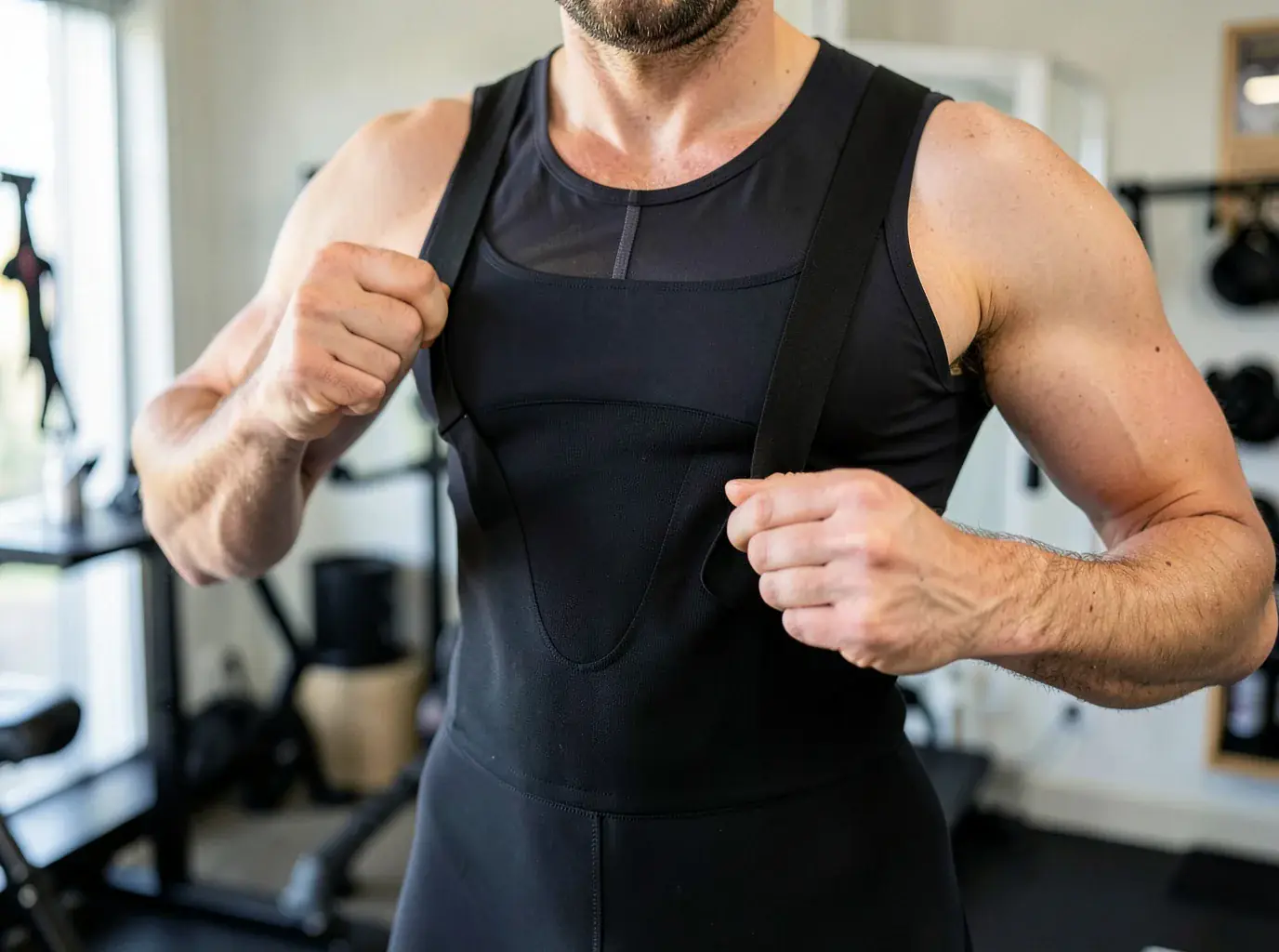
Straps twisted on one shoulder, digging into your neck, or slipping outward every time you reach for the bars? That's not a fit you should live with. Move the straps closer to your neck, not toward your shoulder edge. This one adjustment keeps them flat and stops that slide.
Stand upright first, then lean into riding position. Straps should stay taut but never restrictive — no digging, no pulling the chamois upward when you bend forward. If your bib uses non-adjustable straps, torso length becomes the real variable. Too-short straps yank the pad up mid-ride, which throws off everything you just centered.
There's no hardware to fiddle with. You fit bibs by settling the fabric first, then letting the straps fall evenly across your shoulders before you clip in.
Bib Shorts vs Waist Shorts: What Actually Changes
The chamois pad itself doesn't change. What changes is what holds it in place. Bibs use straps, waist shorts use elastic and leg grippers. That single difference decides everything else.
Bibs win on long, intense, or hilly rides. No waistband pressure, better pad stability, less bunching at the waist. Trade-off: slower to put on, less convenient for bathroom stops.
Waist shorts win on rides under 60 minutes, or when you're commuting and need quick changes. Retailers can source wholesale Cycling Chamois Shorts for different ride categories.Trade-off: waistband can dig in, pad shifts more on longer efforts.
Quick checklist:
- Straps flat, not twisted
- Secure tension, zero tightness
- No seated waistband compression
- Pad stays centered when you shift
Decide Between Size S and Size M Using Symptoms
Sizing charts get you in the ballpark. Your body gets you the exact number. If you're stuck between S and M, stop staring at brand size guides and start reading your own symptoms instead.
Choose S when discomfort is barely there. A tiny fold at the waistband, a faint pressure line that fades in seconds, symptoms that only show up when you're out of the saddle sprinting or grinding a climb — that's mild. Minor, occasional, gone almost as fast as it appears. That's an S-fit body, even if the label says otherwise.
Choose M when discomfort keeps showing up. Recurring bunching at the chamois pad edges, a bulge of extra fabric at the hip crease, waistband pressure that turns into that "heavy, bloated" sensation after 20 minutes, or a leg gripper mark that lingers well past 10 minutes — none of that is normal wear-in. That's your body telling you the compression fit cycling shorts you're wearing don't match your frame.
Use this benchmark: if the gap or fold you can pinch at the waistband or thigh opening measures under 2cm, S is doing its job. Anywhere between 2–5cm of loose fabric or slack, size up to M.
Red flags that go beyond sizing: sharp, persistent pain, rapid-onset swelling, or numbness that doesn't resolve within minutes off the bike. That's not a size S vs M question anymore — that's a saddle, position, or medical issue worth checking before you buy another pair.
Separate Clothing Problems From Saddle and Riding-Position Problems
Not every ache traces back to your shorts. Sometimes the saddle is the real problem, and no amount of resizing will fix it.
Clothing issues show up as friction, chafing, and localized bunching — the chamois pad wrinkling or fabric riding up at the crotch. Saddle or position issues feel different: sit-bone pressure, pelvic imbalance, a leg that won't stay stable.
Use finger-width checks to isolate the saddle. Slide 2–3 fingers between your thigh and the saddle nose. Too tight means the saddle itself is undersized, not your shorts. Check behind your seat too — four fingers of clearance signals an oversized saddle, unrelated to chamois pad placement.
Pain location gives you clues:
Inner thigh or crotch → often saddle width or pelvic tilt
Sit bones → saddle hardness or seat size
Knees, calves, ankles → position, not clothing
Quick test: swap shorts first. Discomfort unchanged? Suspect the saddle instead. In one saddle-fit survey, 15% of riders reported the saddle tipping them forward, and 14% flagged the seat as too small — both position problems compression fit cycling shorts can't solve.
Confirm the Fit With a Short Ride-Test Checklist
Fifteen to twenty minutes on the bike will expose shorts problems that a mirror check never will. Numbness, a nagging ache, or a hot spot that wasn't there at minute five is your data.
Warm up for a couple minutes, then ride steady, and stop to notice how the chamois feels at minute 5, minute 10, and minute 15. Stand briefly, sit back down, keep pedaling.
Log these four things:
- Where discomfort shows up (sit bones, thigh, waistband)
- When it starts (early vs. after 15+ minutes)
- Whether it fades once you shift position or stays put
- Pain intensity: mild pressure vs. sharp or burning
Change one variable at a time : saddle height, shorts size, or riding position. Then repeat the same test. That's how you tell if it's a chamois pad placement issue or something else.
Conclusion
Fit is something you can check. If your waistband stays put, your chamois pad sits centered and crease-free, and your leg grippers release cleanly after ten minutes off the bike, your shorts are right even if they feel snug. Compression is designed into cycling shorts—that tight fit is intentional.A dedicated Cycling Chamois Shorts factory can adjust fit by rider profile. But if you're chasing chafing, digging red marks, or shifting fabric mid-ride, your body is telling you something real.
Trust the five-point check. Do the stand-and-sit test tonight, run through your ride-test checklist tomorrow morning, and let your own symptoms decide whether to size up, size down, or stay put.