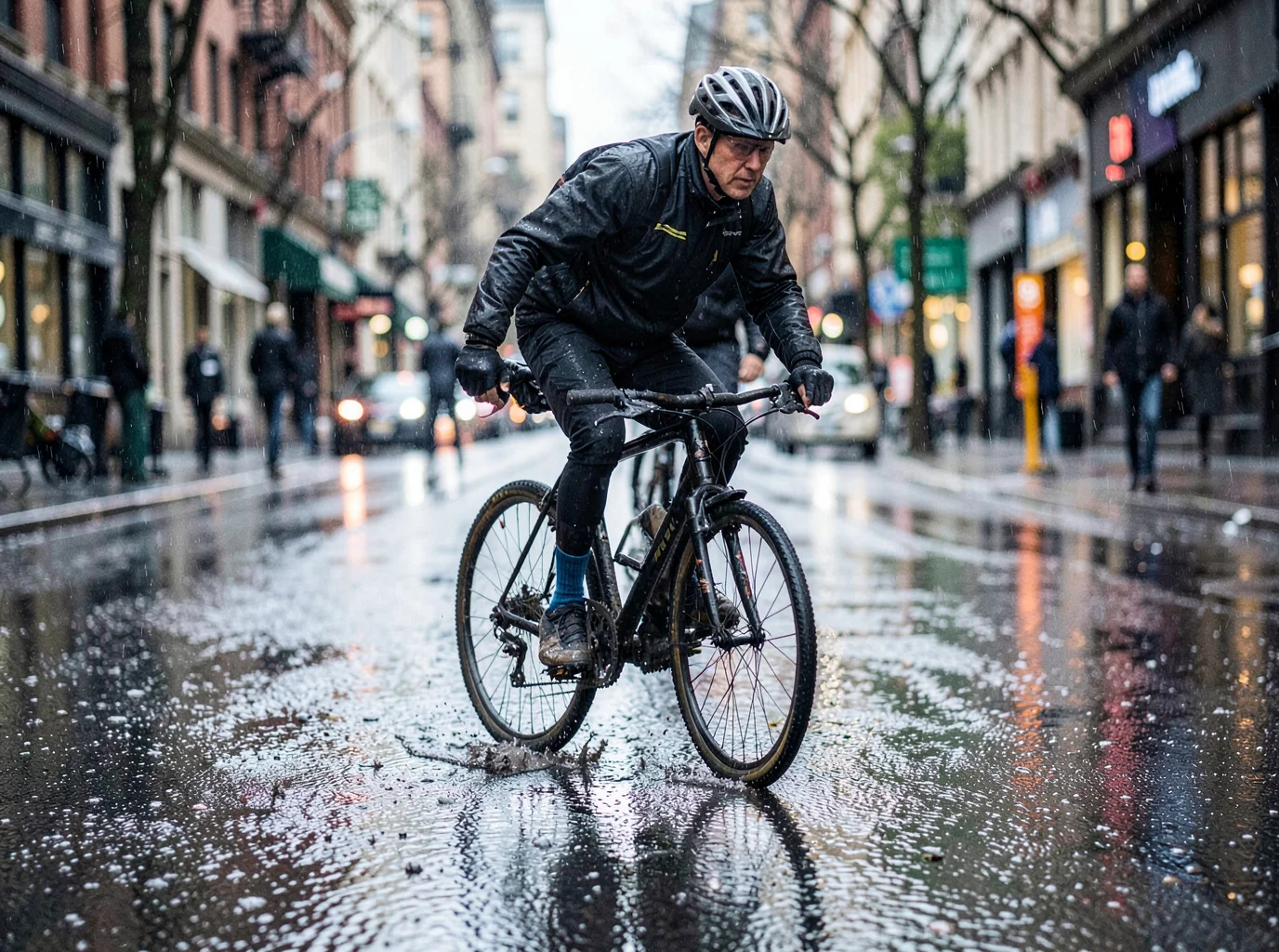
You’ve been there. The sky looks fine when you clip in, so you grab the vest instead of the jacket. Twenty minutes later you’re soaked to the bone on the side of a wet road, questioning every gear decision you’ve ever made. Or maybe you went the other way. You zipped into a full-sleeve shell for what turned out to be a dry, breezy afternoon, and spent the whole ride swimming in your own sweat. A windproof gilet and a packable cycling jacket solve different problems. For brands, custom Waterproof Cycling Vests offer an easy way to build a seasonal line.Picking wrong costs you more than comfort. This is a real-world breakdown of when each piece earns its spot in your bag, built around the rides you actually do.
Wind Protection: How a Cycling Vest and Full-Sleeve Jacket Feel on the Road
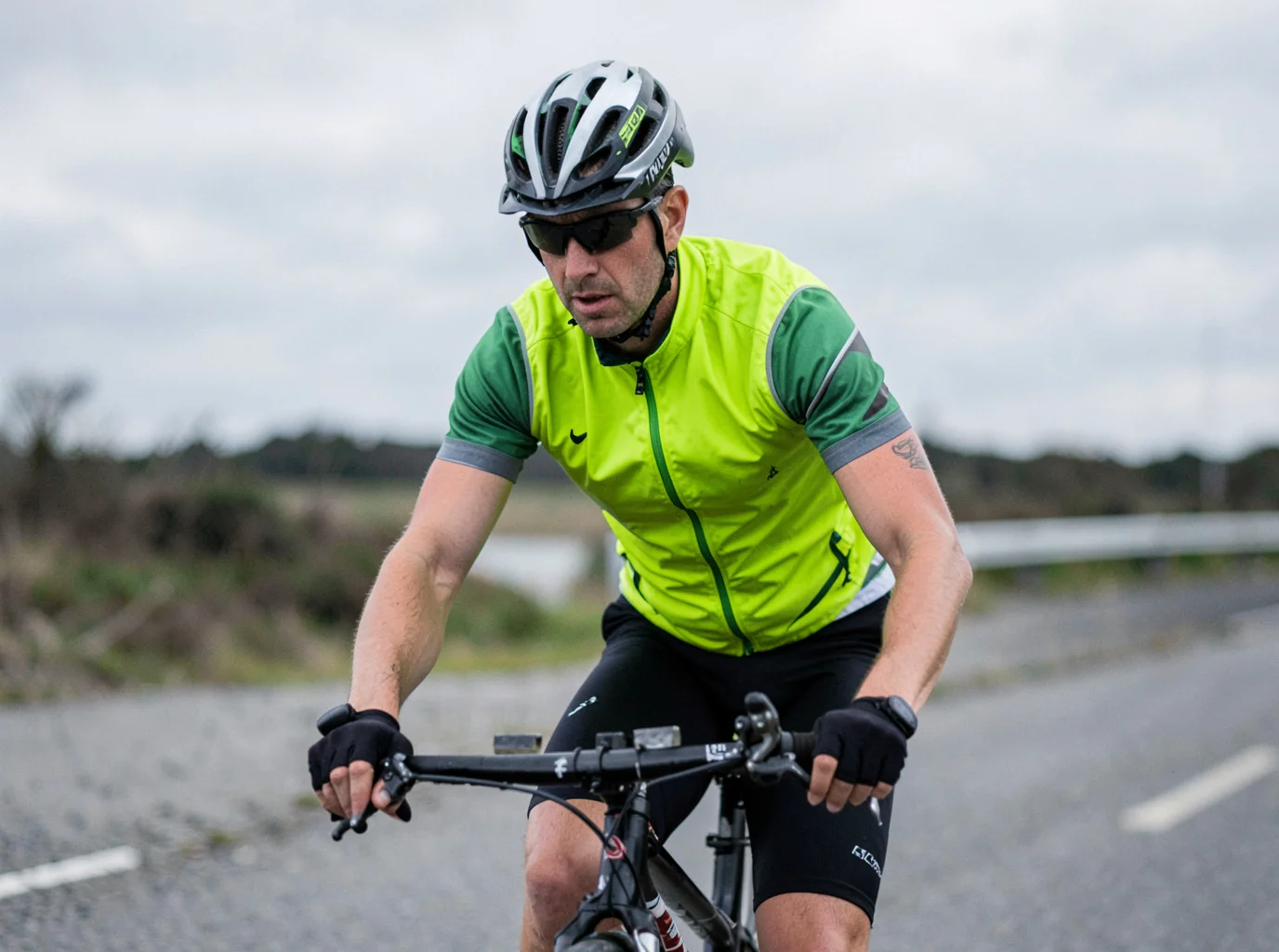
Your torso and your arms don't need the same treatment. That's the whole logic behind a windproof gilet cycling setup. A wind vest blocks cold air across your chest and back while leaving your arms bare to the airflow. On a climb-then-descend route, that split matters. You grind uphill without overheating, then hit the descent with your core shielded from wind chill while your arms stay ventilated. A full-sleeve jacket doesn't offer that choice. It seals everything, which feels warmer and more insulated, but also less airy. On rides with big temperature swings, that lack of flexibility works against you.
Where each one earns its place:
Vest — cool starts that warm up, climb-and-descend routes, 10–20°C / 50–68°F conditions
Jacket — consistently cold, windy, or wet rides, especially below 40°F when arm coverage stops being optional
Fit plays into this too. Road-specific vests and jackets are both cut close to the body to cut drag and stop flapping at speed, so neither one should feel baggy or loose once you're in the drops.
Construction details separate a decent vest from a great one.A reliable Waterproof Cycling Jackets manufacturer can also customize panel construction. Sportful's Bodyfit Pro Wind Vest is a good reference point: Gore Windstopper on the front panels, Aero Stretch fabric on the back. That combination blocks wind where you need it, chest and front torso, while letting heat escape through your back. It's targeted wind resistant cycling gear, not blanket coverage.
One distinction worth knowing before you buy: "windproof" and "wind-resistant" aren't interchangeable. A true windproof membrane cuts wind chill hard. A wind-resistant one just takes the edge off a light breeze. If you're descending at 40+ km/h in cold air, that difference decides whether your vest does its job.
Rain Protection: Why a Vest Is Not Automatically a Smaller Rain Jacket
Here's a mistake I see a lot: someone assumes a waterproof vest is just a rain jacket with the sleeves cut off. A vest only covers your torso. Your arms are exposed the entire ride. In a straight-down drizzle, that might not matter much. But add wind, or ride into rain coming at an angle, and your arms take the full hit. That's lateral rain soaking whatever isn't covered.
A waterproof vest still has a job. It's genuinely useful for light rain, high-output efforts, or as a backup layer stuffed in a jersey pocket for "just in case." But it loses effectiveness fast once wind picks up or rain stops falling straight down. A proper cycling jacket for rain riding is a different tool entirely. It gives you full sleeve coverage, plus vapor escape so you're not trading rain protection for a sauna effect.
The Waterproof Numbers That Actually Matter
Waterproofness and breathability compete with each other. More water resistance usually means less breathability, and Waterproof Cycling Jackets manufacturers quantify this with column ratings:
1,000 mm — the baseline for calling something "waterproof," fine for light drizzle
5,000–10,000 mm — solid rainwear range, with 10,000 mm handling higher-intensity riding
20,000 mm+ — built for sustained downpours and serious pressure exposure
Before you buy, look for a sealed waterproof membrane rather than just a DWR coating, a column rating of 10,000 mm or higher for real rain, and a breathability rating in g/m² if you're riding hard. DWR alone makes water bead and roll off. It's water-resistant, not waterproof. There's a real difference. A vest reducing heat buildup is not the same as a jacket keeping your arms dry for three hours in the rain.
Breathability and Core Temperature Regulation During Hard Efforts
Sweat evaporation is your body's main cooling system once you're pushing hard. Extra fabric either helps that process along or gets in its way. Many riders overheat without ever figuring out why—it's often because their vest or jacket blocks breathability.
The fabric matters more than the cut. Moisture transfer capacity determines whether sweat evaporates or pools against your skin. One study comparing shirts during a 45-minute run at 50% VO2peak found a polyester-elastane blend produced significantly lower core temperature in the final 15 minutes than 100% cotton. Air permeability drives that gap. For high-intensity cycling, industry benchmarks target 100–200+ CFM in the fabric, paired with a moisture vapor transmission rate above 15,000 g/m²/24hr. Below 5,000 g/m²/24hr, you're wearing a plastic bag with a zipper.
Fit and structure matter as much as the waterproofing spec.
Mesh or open-knit panels beat dense knits for hard efforts
A close fit supports wicking; a tight fit blocks airflow
Even a breathable rain jacket for cycling needs a strong vapor gradient to work
A gilet wins here by design. For team orders, bulk Waterproof Cycling Vests can simplify seasonal sourcing.Bare arms move more air than any vent ever will.
Scenario Match: Windy, Mostly Dry Spring and Autumn Rides
Spring and autumn rides swing 15–20 degrees between your driveway and your turnaround point, with rain rarely showing up. Vest territory.
A wind vest is your first add-on here. It cuts the chill without trapping heat, and it packs down small enough to fit in a jersey pocket once the sun breaks through. Pair it with a lightweight merino or long-sleeve summer jersey as your base layer, then add removable arm and knee warmers to dial temperature up or down as the ride unfolds. That layering system beats one heavy jacket because you strip pieces off mid-ride instead of stewing in them.Brands can request a custom wholesale price for Waterproof Cycling Vests at volume.
Wind above 20 mph / 32 km/h changes the math. At that threshold, look for windproof cycling gear built from something like GORE-TEX INFINIUM WINDSTOPPER, a fabric that stays windproof, showerproof, and breathable at once. Add light gloves and a reflective vest for low-light shoulder-season rides.
Scenario Match: Commuting Through Unpredictable Showers
Your commute doesn't care about your gear preferences. It just needs you dry, visible, and not sweating through your work shirt by the time you clock in. Jacket wins here.
A 3-layer waterproof-breathable shell with DWR coating and sealed seams is the practical baseline. A specialized Waterproof Cycling Jackets vendor can support fabric and seam customization.Target 5,000mm hydrostatic head for persistent light rain, 10,000mm+ if heavy downpours are common on your route. The Showers Pass Transit CC Jacket nails the commuter brief: covered upper-back vent, small front armpit vents, 3-layer Artex fabric that breathes without soaking through.
Prioritize these features:
Underarm or back vents for active riding
Drop-tail hem to cover your seat
Reflective elements for low-light visibility
A packable cut that layers over office clothes
The Helly Hansen Seven J Jacket sits around 2 lbs with solid Helly Tech waterproofing, built for exactly this urban, unpredictable-weather use case.
Scenario Match: Long, Cold, or Consistently Wet Rides
Four-plus hours in the saddle changes the equation entirely. Jacket, full stop. No vest, no split-coverage compromise. At 32–40°F with rain that won't quit, your best bet is a long-sleeve thermal jersey layered under a hard-shell rain jacket, backed by winter tights, thermal socks, and neoprene shoe covers with a thermal lining.
Passing showers and continuous rain aren't the same problem. A breathable, water-resistant shell handles the first. Continuous rain demands a true hardshell with less insulation underneath, or you'll overheat inside your own waterproof breathable membrane cycling gear. This is where waterproof breathable membrane cycling technology earns its price tag. Below 10,000 mm handles light rain fine. Push into 10,000–15,000 mm for moderate conditions, and go over 15,000 mm when the forecast says "heavy, all day."
Breathability numbers matter just as much here. Above 20,000 g/m²/24h keeps you dry from the inside on long, sustained efforts. Below 10,000 g/m²/24h only works for shorter rides or jackets with real vents.
Layering Details That Prevent Water From Sneaking In
Small details separate a warm, dry ride from a miserable one:
Keep sock cuffs tucked below shoe-cover cuffs, so water doesn't wick down into your shoes
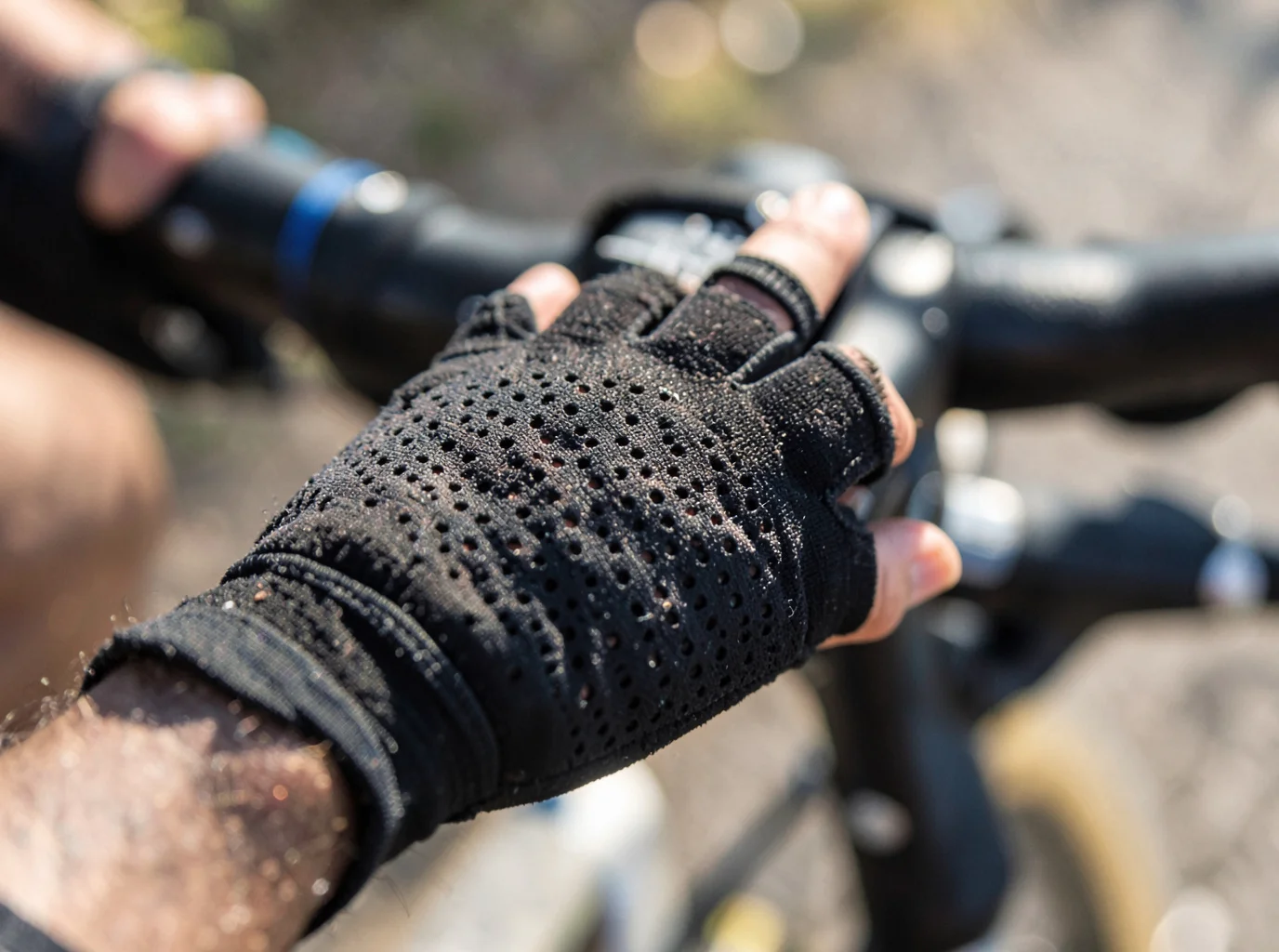
Overlap glove cuffs and jacket sleeves, so runoff gets pushed outward, not inward
Tape shoe vents shut on the coldest, wettest days to cut heat loss
For footwear, layer thermal socks under multi-layer membrane shoe covers, or invest in winter-specific shoes with a fleece liner and insulated sole. Shimano's MT7 Gore-Tex SPD shoes (£94) are a solid benchmark if you're shopping this category directly. On hands, prioritize a fully waterproof shell glove over heavy insulation. Below 30°F, add pogies or bar mitts. This is core temperature regulation cycling gear built for endurance, not a quick errand in the rain.
Scenario Match: Mountain Routes With Rapid Temperature Changes
Elevation rewrites the temperature rules on you, fast. Climb 1,000 meters and you can lose anywhere from 6.5°C to 9.8°C, depending on how dry the air is. A 5,000-foot climb often means the summit sits 10°C colder than the trailhead. Push to 10,000 feet and you can be flirting with freezing, even if the parking lot felt warm at 8am.
This is where a single-piece decision, vest or jacket, stops working. Neither one covers the full range you'll hit between the base and the summit.
Build a layering system instead:
Use a base layer that wicks sweat on the grind up. Add a vest at the summit and strip it on the fast, exposed descent. Keep a packable jacket in your jersey pocket for the descent, when wind chill and elevation combine hard.
Dry mountain air cools faster than moist air, so alpine routes swing harder than coastal climbs at the same elevation. Pack for both directions of the ride, not just the one you started in.
The 30-Second Vest-or-Jacket Decision Check
Four questions settle it.
Ride duration: Under 90 minutes, a vest covers you. Past two hours, exposure adds up fast — go jacket.
Wind speed: Below 20 km/h, a vest's wind resistant cycling gear handles it. Above that, you need arm coverage.
Rain probability: Dry or drizzle, vest. Sustained rain, jacket.
Temperature: Above 15°C, breathability wins, so vest. Below 10°C, warmth matters more than airflow.
Score three or four "jacket" answers and skip the vest. Score three or four "vest" answers and save your money for a packable cycling jacket later. Most riders end up needing both pieces in a proper cycling layering system, just not on the same ride.
The Most Common Mistakes With Cycling Vests and Jackets
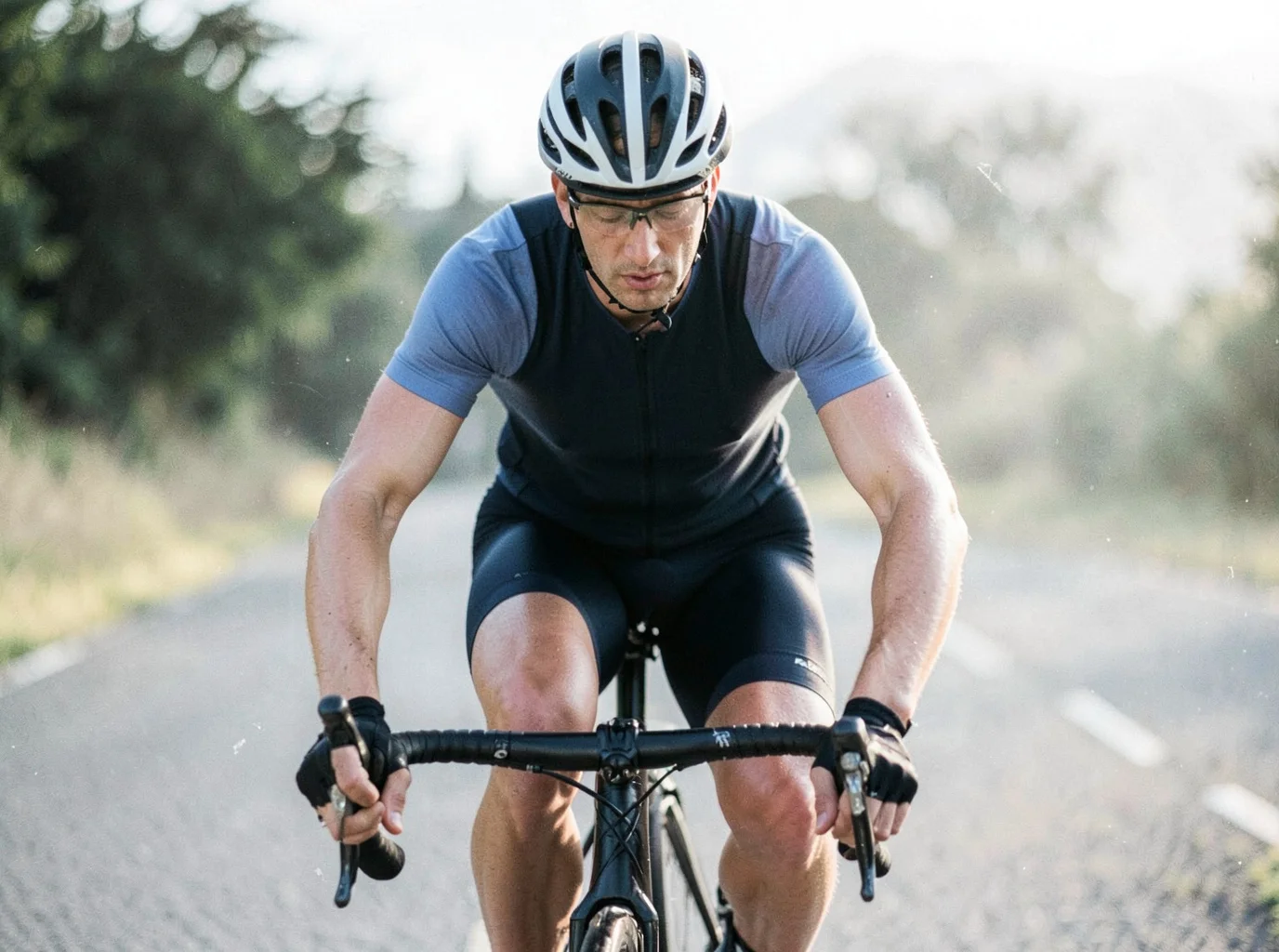
Fit trips up more riders than fabric choice ever does. A cycling vest or jacket needs to sit close to your body without pinning your arms or blocking your reach to the bars. Too loose and it flaps, catching wind like a sail. Too tight and you can't get into the drops. Many vests run small. If you're layering a base layer or jersey underneath, size up, or you'll be stuck choosing between coverage and mobility.
Weather mismatches cause the second-biggest headache. A windproof shell handles cold, dry rides fine. It won't save you in rain. That job belongs to a fully waterproof shell with a sealed membrane and taped seams, not a wind vest and a hope. Wearing a heavy waterproof jacket on a dry day just traps heat you didn't need to trap.
A good packable jacket or vest should stuff into a jersey pocket, ideally under 5 oz and folding to roughly palm-sized, 10×10 cm. Jackets need a longer rear hem for road spray, a shorter front for your riding position, and sleeves long enough to stay covered on the drops. A jacket works as your outer shell; pair it with a wicking base layer, not bare skin. Reflective strips matter most at dawn, dusk, and in winter light, yet riders skip them constantly. A full zip, sealed collar, and adjustable cuffs stop wind leaks that ruin an otherwise good setup.
When Buying Both Makes More Sense Than Choosing One
Most experienced riders already know this intuitively, and retail research backs them up: pairing two complementary products beats forcing a single choice, but only under specific conditions. In one joint-evaluation study, 89% of shoppers picked a bundle over a standalone item when the pieces genuinely worked together, and their willingness to pay rose with it. A vest and a packable cycling jacket fit that complementary profile almost perfectly. Neither replaces the other; each covers a gap the other leaves open.
The catch is timing your purchase around real discount thresholds. Studies on bundle psychology show that a 20% price cut barely moves buyers toward the combo. People still lean toward buying separately. Preference only flips decisively around a 45% discount, where the bundle finally feels like the smarter deal rather than a marketing trick.
A practical version of "buy both" for cycling gear:
Vest + waterproof arm sleeves for shoulder-season rides where wind and light rain both show up
Vest + packable jacket stuffed in a jersey pocket, swapped mid-ride as temperature or rain risk shifts
Buy the vest first if budget is tight, then add the jacket once your riding season demands full-sleeve coverage
Watch for retailer bundles priced near that 45% mark. Below it, standalone purchases usually still win on value.
Feature Priorities for a Practical Cycling Outerwear Setup
Seven features separate gear that works from gear that just looks like it should: waterproofing, breathability, windproofing, seam sealing, DWR finish, weatherproof zips, and reflective details. Skip any one and you've built a weak link into your setup.
The non-negotiables:
A 10,000mm+ waterproof rating paired with 10,000g breathability is the working benchmark for moderate-to-heavy rain with hard pedaling. Anything less and you're compromising on one side or the other.
Fully seam-sealed construction — DWR coating alone won't stop water finding its way through stitch holes.
Weatherproof or storm-proof zippers. A great waterproof breathable shell with a leaky zipper is a contradiction.
Giro's Chrono Expert Rain Jacket is a good example of a premium spec: 15,000mm waterproof, 15,000g/m² breathable, fully seam-sealed, DWR-coated, with an exterior zipper guard and back exhaust ventilation. That's the ceiling most riders should benchmark against, even if they land lower on price.
Construction details that matter more than marketing copy:
2.5-layer waterproof/breathable shells with pit zips or vent openings, so you can dump heat on a climb without stopping to unzip everything
Elastic cuffs and hems that seal out spray without cutting circulation
Recycled ripstop nylon with bluesign approval, if sustainability factors into your buying decision
Fit and packability round out the list. A form-fitting, cycling-specific cut cuts flapping and keeps hems stable in riding position. An ultralight, stowable jacket earns its spot in a jersey pocket. Reflective accents on the zipper, back, and arms are the difference between being seen and being missed at dawn or dusk.
Conclusion
Match your gear to the rides you actually do, not the rides you imagine. If your rides are windy commutes with the occasional dry spell, a windproof gilet cycling setup earns its keep through breathability and packability. If you're riding through genuine downpours, a proper waterproof breathable membrane jacket is non-negotiable, no matter how tempting the lighter vest looks.
Don't assume one piece has to do everything. Run your ride through the 30-second check, be honest about your local weather patterns, and don't be afraid to build a small layering system instead of hunting for a single perfect garment. Grab the piece that solves your most frequent problem first, add the second when your riding demands it.For retailers, wholesale Waterproof Cycling Jackets make a practical second category.