When the temperature drops and your team's training rides stretch into the cold months, the right tights choice keeps a squad comfortable and high-performing instead of shivering and distracted. It might seem a minor detail, until you're fielding complaints about slipping waistbands on descents or explaining to your budget-conscious manager why one option costs more per rider. Thermal cycling tights and winter cycling bib shorts aren't interchangeable—the differences go beyond what most procurement checklists cover: fit architecture, warmth retention, layering compatibility, and how easily each style takes custom cycling team branding . Before you place a bulk order for your roster's winter apparel, understand what you're trading off with each choice and which one earns its place in a serious team's kit bag.
Cycling Tights: Design, Fit & Winter Performance
Waist tights solve a simple problem: get riders dressed fast, get them off the bike fast, get them to a bathroom fast. That's the whole design philosophy behind traditional cycling tights, and it shows in every seam.
How the fit works
A wide elastic waistband does all the heavy lifting here. No shoulder straps, no bib panel—just a stretchy band that sits at your waist and holds everything in place. Premium versions add silicone grippers on the inside of the waistband. This stops the slide-down problem that plagues cheaper thermal cycling tights during long descents or aggressive pedaling.
The waistband itself usually runs high and wide, covering more of the abdomen and lower back than you'd expect. This isn't just for coverage—it's a warmth strategy. That extra fabric overlaps with your jersey or jacket, sealing out cold air at the exact spot where wind chill hits hardest. Get the tension wrong, though, and a too-tight waistband digs into your stomach. The sweet spot brands aim for: wide elastic, a moderate high-rise cut, and non-slip grip. They balance the warmth of insulated cycling leggings against wearability.
Where waist tights outperform bibs
Compare fit and function side-by-side, and waist tights win on speed and convenience. Short training rides, commutes, quick bathroom stops between sessions—this is their territory. Van Rysel's winter tights target the 5–10°C range. They're squarely positioned as cold-but-not-brutal riding gear.
Pricing across the range
Entry-level : £42.49–£80 (US$50–100), for basic warmth, everyday training, and commuting.
Mid-to-premium : £80–£229 (US$119–$355), with better thermal fabric, ergonomic cuts, low-bulk padding, and wind resistance.
Cycology's winter tights sit at US$119.95–139.95. They're built around high-density padding and a supportive wide waistband.
For team training days packed with rest stops, that quick-change advantage matters more than most managers realize until they've timed a mid-ride bathroom break in bib tights.
Bib Tights: Design, Fit & Winter Performance
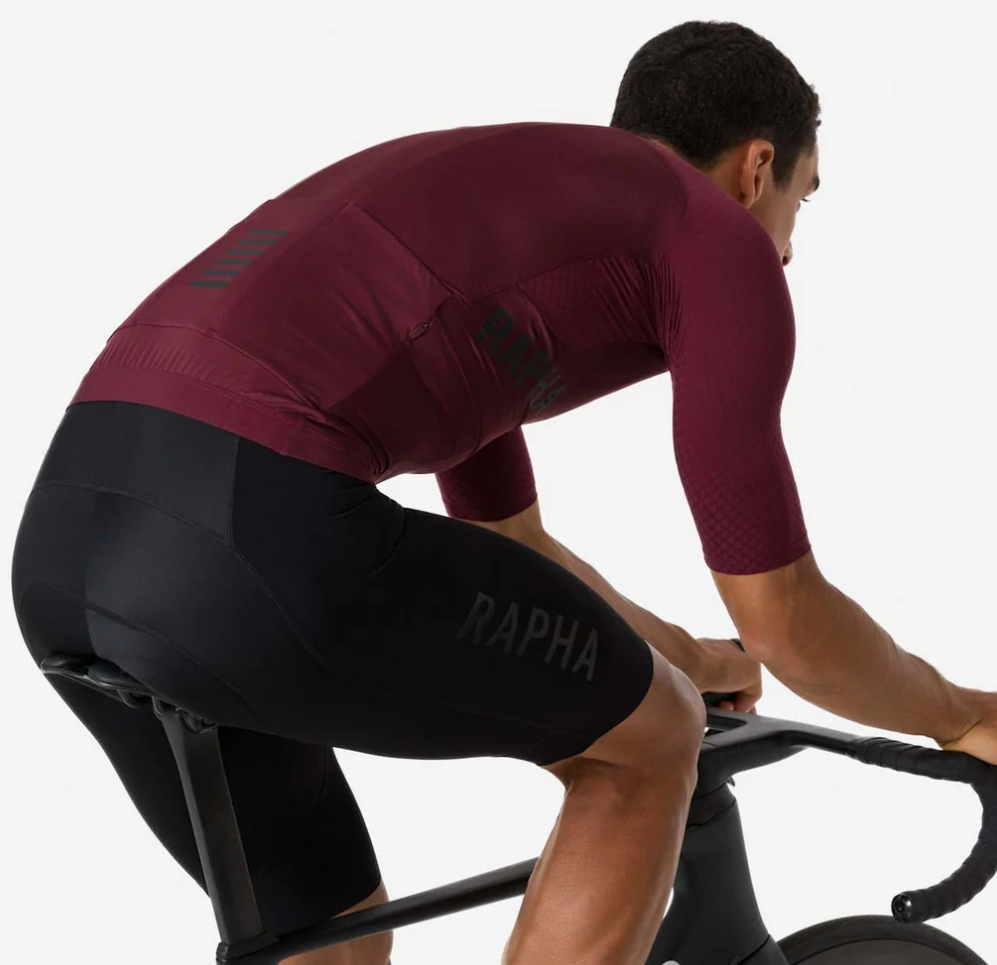
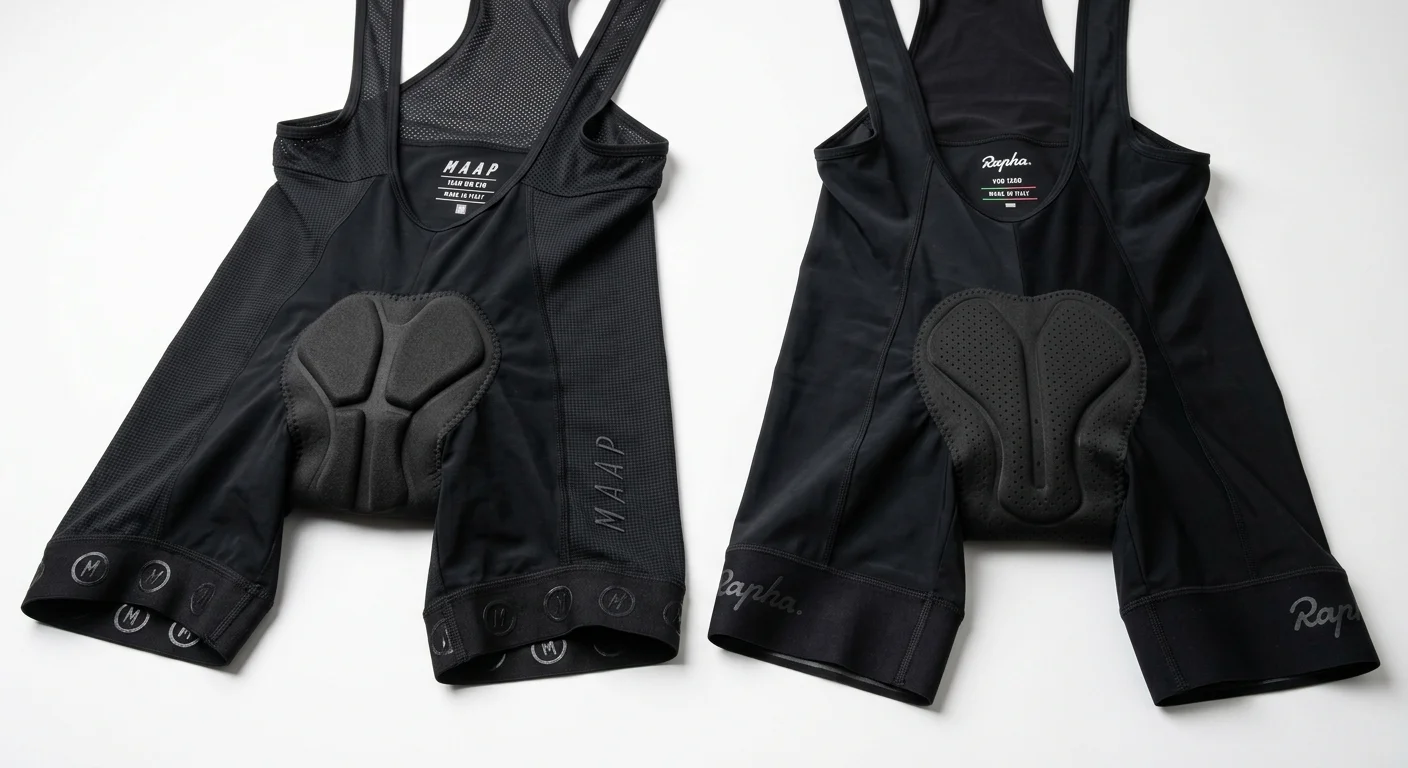
Bib tights never move, which is the one problem waist tights can't solve. Shoulder straps replace the elastic waistband entirely, and that design choice changes how these thermal cycling tights perform on long winter rides.
The warmth logic behind the strap system
No waistband means no gap at your lower back, the spot where cold air usually sneaks in. Bib designs extend the front panel high and stretch the back coverage all the way up to shoulder height, wrapping your kidneys and core in one continuous layer. Some riders still feel a brief chill through the lower back opening at the start of a ride, but that fades once effort level climbs. Others describe it as "generous torso coverage"—warmth from covering more skin.
Why straps beat elastic on long rides
Bib tights don't rely on tension to stay up. The straps do that job, which matters most when you're hunched in an aero position for hours. A high-quality pair holds at zero waist slippage even in a deep forward lean, with no gradual creep down your hips like you'd get with insulated cycling leggings. The straps spread pressure across your shoulders instead of squeezing your stomach, and well-designed straps (seamless, mesh, or elastic) leave no pressure points.
Best-fit scenarios
Winter base-training blocks, long endurance rides, wind-exposed tempo sessions, climbing intervals, and extended front-position road training with frequent gear shifts.
Pricing and team customization tradeoffs
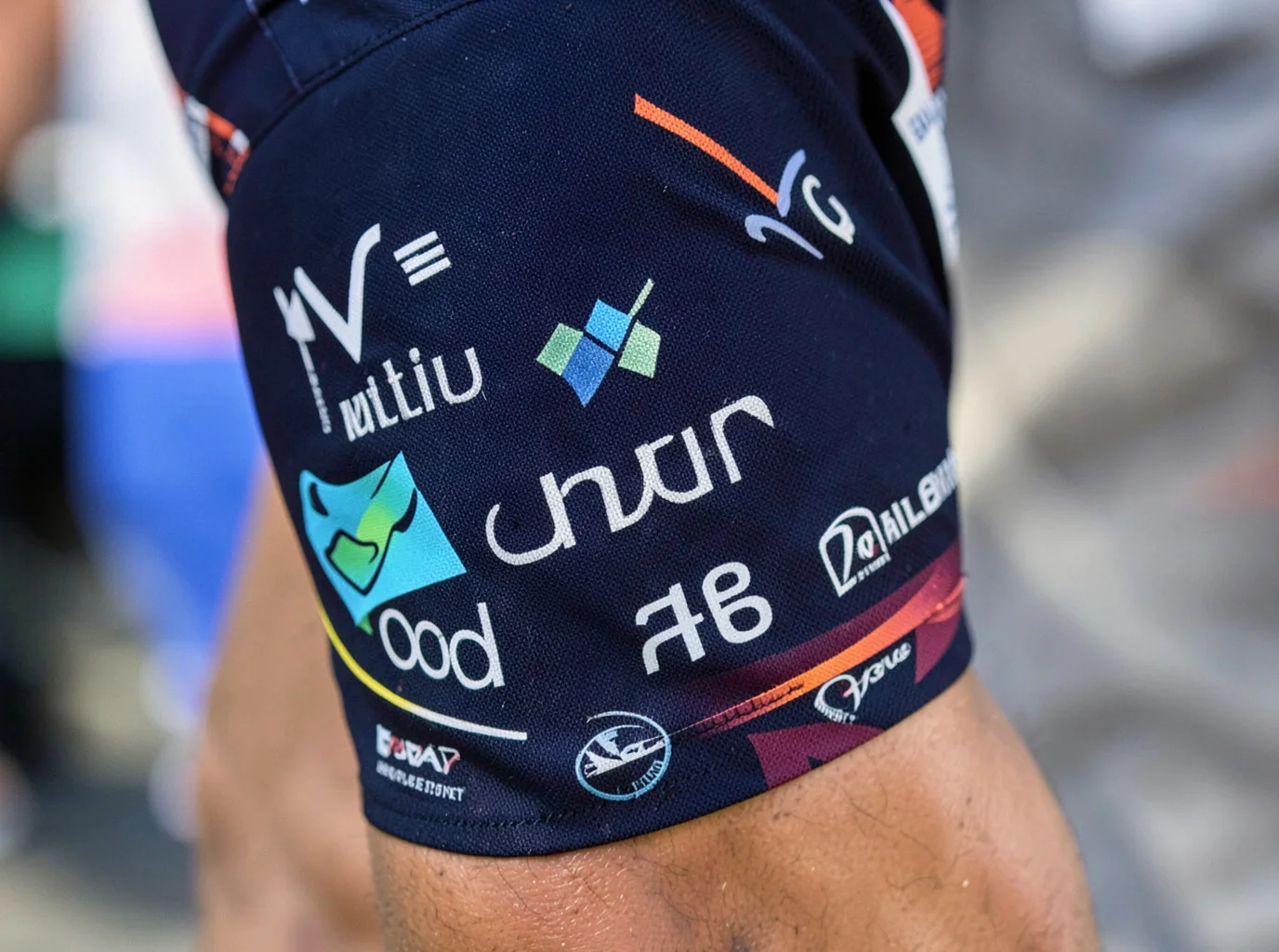
Bib tights sit in the mid-to-premium bracket, with race-tier fabrics pushing prices higher than standard cycling bib shorts winter models. For team cycling kit customization, the strap zone is the tricky part. Mesh and elastic straps don't hold large prints well, so logos usually stay small—woven labels, heat-transfer, or silicone badges. Put your main branding on the outer thigh, lower calf, or upper hip instead. That's where custom team cycling tights hold detail best without adding to strap-development costs.
Core Difference: Fit Structure & Warmth Retention Comparison
Numbers settle most debates faster than opinions do. So here's what the actual test data says about thermal cycling tights versus bib tights, broken down by the metrics that matter on a cold ride: airflow, skin temperature, slippage, and how long a rider holds proper form.
The physics behind the warmth
Bib tights wrap the torso as one continuous piece. No waistband seam means no gap for wind to exploit. Functional comparison testing puts the aerodynamic payoff at 3%–5% lower drag for bib designs, because removing the waist strap kills the turbulence that forms around a cinched waistline. That turbulence gets worse past 35 km/h —exactly the speed range where a team's fast group rides tend to live.
Waist tights, by contrast, lean on elastic tension and fabric density to trap heat. It works, but it's a less stable system. The same testing found 0.5–1 cm of downward slippage over a long ride, and every millimeter of slide opens a fresh gap for cold air to sneak through the lower back.
Skin temperature tells a different story
Here's the twist: bib tights aren't automatically warmer everywhere. Their open-waist structure helps sweat evaporate faster, which shows up as a 1.2–1.8°C drop in surface skin temperature compared to sealed waistband tights. Translation—bibs manage moisture better, waist tights trap heat more aggressively. One isn't universally superior; they optimize for different problems.
Fit stability over time
Posture matters more than most riders admit. Testing data shows bib tights help riders maintain optimal riding position for over 4 hours before fatigue-driven slouching sets in, largely because shoulder straps redistribute pressure away from the stomach and hips. Waist tights don't offer that same structural support during extended efforts, though they still win on quick changes.
Fit Comparison at a Glance
Metric | Bib Tights | Waist Tights |
|---|---|---|
Aero drag | 3–5% lower | Baseline |
Skin temp | 1.2–1.8°C cooler (better ventilation) | Warmer, less breathable |
Slippage risk | Minimal | 0.5–1 cm over long rides |
Posture stability | 4+ hours | Shorter window |
Best for | High wind speed, long distance, cold weather cycling gear priority | Quick changes, everyday training |
If your team rides in sustained cold with high average speeds, the fit-structure data leans toward bib tights. If convenience and turnaround time top the priority list, standard tights still hold their ground.
Winter Team Kit Customization: Fabric & Technical Requirements
Fabric choice decides everything else in a custom order—warmth, cost, and how the finished kit actually performs on race day. Get this wrong and no amount of clever design saves the fit.
The three fabrics that matter
Roubaix / Super Roubaix fleece : The industry default for winter cycling apparel for teams. Brushed inner fleece traps heat, smooth outer surface sheds light moisture. Used across jerseys, tights, and 3/4 bib tights. You'll see it labeled "Super Roubaix®" or "Thermal Roubaix" on most spec sheets.
Fleece-backed inner layers : Standard in fleece-lined tights and long-sleeve jerseys. The job is simple: hold warm air against your skin.
Windproof membranes (3-layer) : Placed on wind-exposed zones (chest, forearms, front thigh). Look for "100% windproof" or a breathable rating over 10,000 on spec sheets. This is where high-speed descending teams should spend their budget.
Most public winter kits rate comfort around 5–6°C (41–43°F) . Thicker Roubaix builds or membrane-reinforced pieces push that comfort range lower.
Technical details that separate good kits from bad ones
High-rise waist panels function like a second base layer, keeping your core warm on long cruises.
Membrane placement should sit on the front thigh, knee, and saddle-front zone. The back needs breathable stretch fabric to prevent overheating on climbs.
Chamois thickness should scale with ride duration. Medium-density pads work for short-to-mid training. Long, cold rides call for thicker, more supportive padding.
Rear and underarm panels stay ventilated to manage sweat buildup.
DWR water-repellent treatment paired with Roubaix or membrane fabric handles road spray and damp cold.
Budget-based customization paths
Budget teams : Roubaix body plus a targeted membrane on the chest, thigh, and knee with a standard chamois. Works for 5–10°C training and commuting squads.
Performance teams : Multi-layer membrane with premium Roubaix, high-rise core panels, and a thicker chamois. Built for racing, sustained descents, and high wind-chill regions.
Balanced default : Roubaix main fabric, front membrane, high-rise waist warmth, and a mid-thickness pad. This is the most common, cost-effective formula used in public winter kits.
Decision Framework: Choosing Tights vs Bib Tights for Your Team
Temperature is the single biggest variable in this decision, and most procurement mistakes trace back to ignoring it.
Match gear to the thermometer
10–14°C : Tights or bib shorts + leg warmers. Most cycling guides use 12–14°C as the switch point from summer shorts to winter leg gear.
6–10°C : Winter bib tights. This temperature range is where they work best.
0–8°C : Thick, wind-resistant bib tights. Wind resistance matters as much as insulation here.
Below 0°C : Heavier woven, wind-blocking bib tights. Non-negotiable at this point.
High-intensity training (climbs, frequent gear changes): Lighter, breathable thermal tights even in cold, because sweat management matters more than raw warmth.
Long cruises, recovery rides, early mornings : Bib tights, thanks to fuller coverage and stable fit.
Match gear to team budget
Team Level | Recommended Setup | Budget Reality | Temp Range |
|---|---|---|---|
Entry-level club | Basic tights or entry bib tights | Entry bibs start around $130–150 | 6–14°C |
Advanced club | Mid-range bib tights, few tights as backup | Mid-tier €134.95–249.95, premium up to $325 | 0–10°C |
Competitive team | Layered: light + mid + extreme cold | Split budget across 1–8°C, 0–10°C, sub-zero tiers | Sub-zero to 10°C |
Three quick rules: Prioritize temperature under 12–14°C, training intensity for sweat-heavy sessions, and bib tights whenever wind, descents, or damp cold enter the equation.
Common myths, debunked : Bib tights are sometimes cheaper. Tights are useful in cold. Thicker fabric can cause overheating near 10–14°C.
Winter Cycling Tights & Bib Tights Buying Checklist for Teams
Ten seconds. That's roughly how long an experienced buyer needs to spot a bad winter kit spec sheet—no windproof zoning, vague fabric names, no chamois grade listed. Use this checklist before you sign a purchase order.
Warmth & fabric structure to verify
Zoned insulation : The front thigh and shin should carry a windproof membrane. Back panels use brushed fleece for breathability. That front-block, back-breathe split is standard in quality fleece-lined cycling tights.
Coverage check : Make sure the wind layer reaches the thigh front, shin front, outer knee, and lower leg front—these zones catch the most wind chill. Full-leg membrane coverage is rare and usually unnecessary.
Fabric layering : Single-layer thermal fabric with a partial front membrane is the common setup. Carvico Super-Roubaix micro-fleece paired with a directional wind film is a reliable benchmark to ask Cycling Tights And Bib Tights suppliers about by name.
Chamois quality : Dual-density foam with thinner edges reduces chafing on long rides. Castelli's Kiss Air2 pad and Endura's 600 Series (CVP shaping, gel inserts, antibacterial surface) are useful reference points when comparing cycling tights and bib tights supplier samples.
Moisture management : Mesh straps and high-breathability rear leg panels prevent overheating during intervals.
DWR treatment : A light water-repellent coating handles splash and drizzle. Don't expect full waterproofing.
Rated temperature range : Ask for a stated comfort range. Some kits list -6°C to +10°C, so your whole roster works off one standard.
Supplier evaluation for team cycling kit customization
MOQ : Around 50 units per design is standard for custom team cycling tights. Workable for clubs and mid-size squads.
Lead time : Samples in 10–21 days, bulk team cycling kit production in 3–4 weeks. Some cycling bib tights factories quote 30–45 days end-to-end.
Fabric testing : Always request swatches or a sample garment first. Test windproof feel, breathability, pilling resistance, and pad pressure/friction before committing to a bulk run.
Sample sign-off : Check fit, cuff grippers, strap elasticity, seam flatness, reflective placement, and logo color accuracy.
Supplier fit : Pick cycling tights and bib tights factories offering men's/women's patterns, multiple fabric thicknesses, and chamois options. This makes mixed-roster ordering far simpler.
Quick team FAQ
Can sizing be standardized? No. Use chest/waist/hip/inseam charts and fit samples, not everyday clothing sizes.
Can tights and bib tights mix on one roster? Yes, as long as color, fabric finish, reflective trim, and pad grade stay consistent.
Should the whole team use one pad? Split into short-ride and long-ride pad tiers if training distances vary widely.
Put these as direct line items in your next cycling tights and bib tights supplier RFQ, and you'll cut back-and-forth revisions significantly.
Conclusion
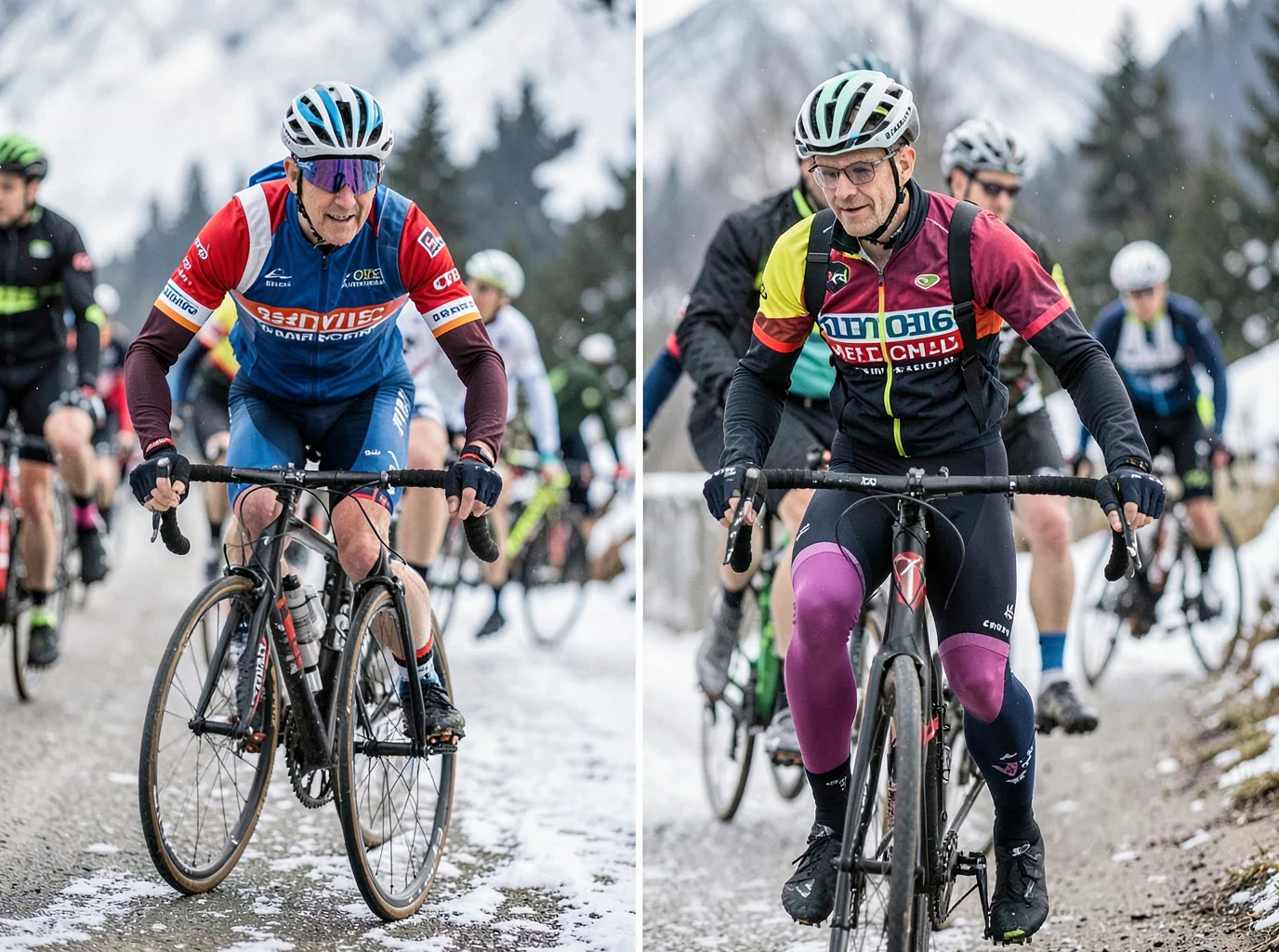
The choice between cycling tights and bib tights comes down to your team's riders, riding conditions, and budget. Bib tights retain heat better and don't slip because of the suspender design, making them the go-to for brutal winter mileage. Tights allow faster transitions and easier sizing, which matters when you're outfitting a roster with different body types.
If you're managing a team kit order, match fabric weight and cut to your actual climate and training volume. Custom team cycling tights prevent cold spots, chafing, and mid-ride discomfort that generic sizing can't solve.
Ready to outfit your squad for winter? Reach out for a fabric and fit consultation before you place your bulk order. Your riders will feel the difference on the first cold morning out.