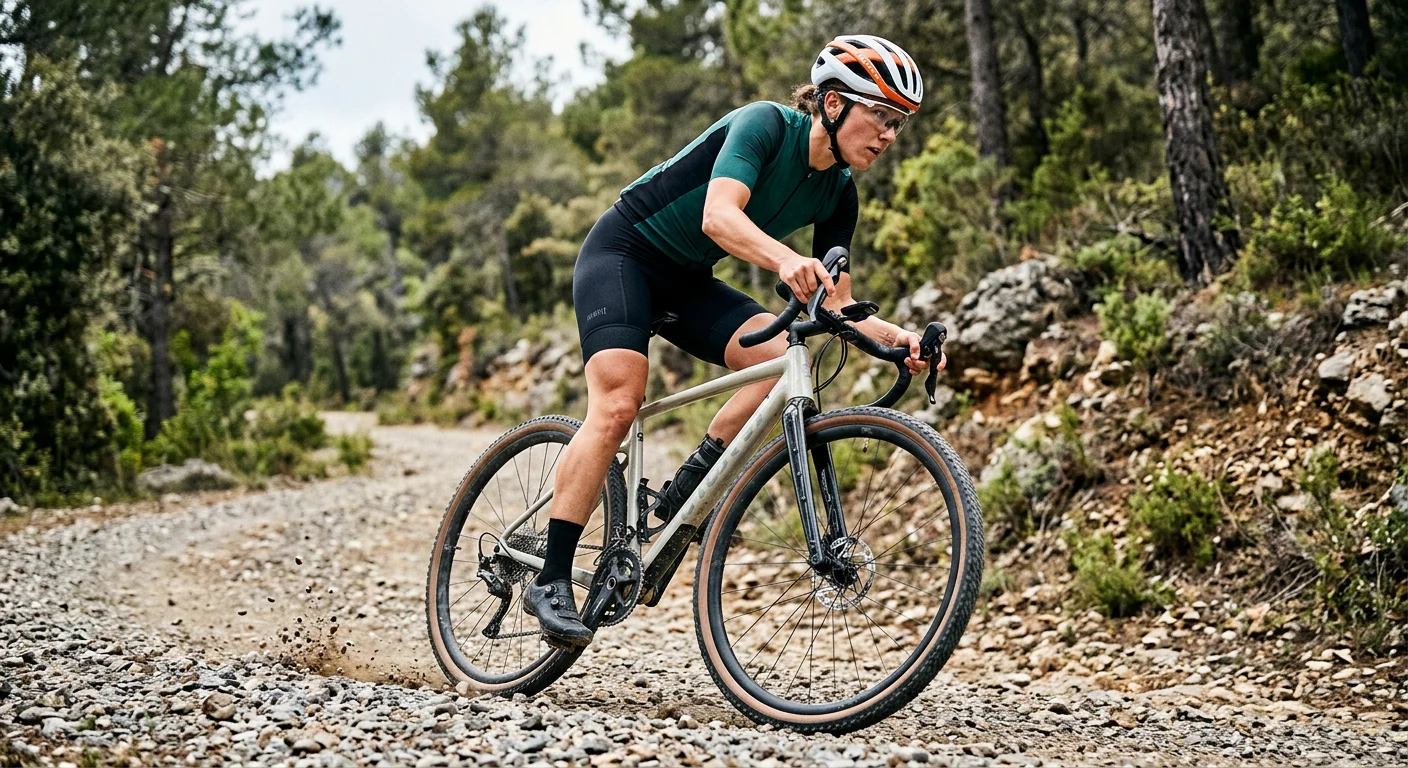
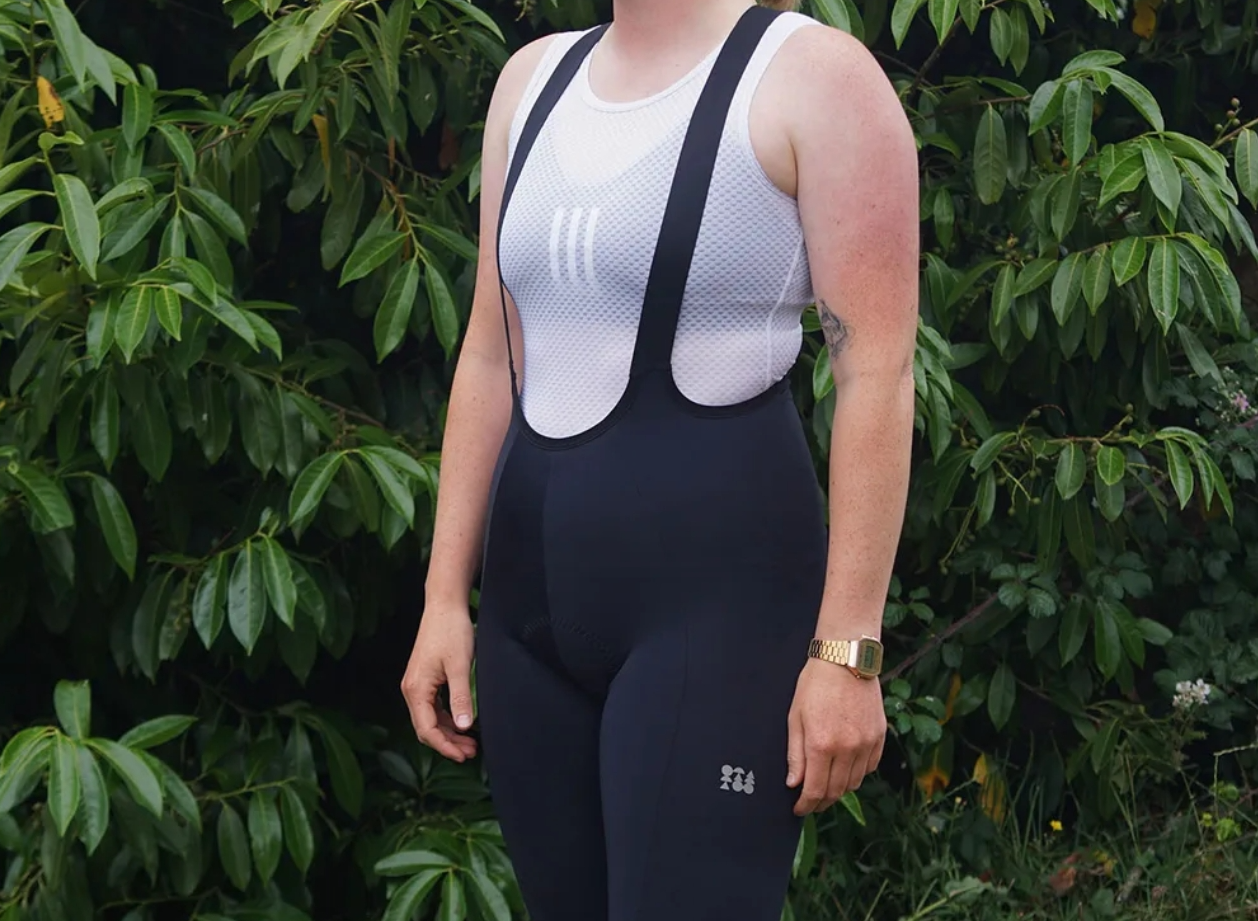
Dropping $300 on bib shorts isn't an impulse buy — it's a commitment. Stacking up the MAAP Team Bib Evo vs Rapha Pro Team makes the choice complicated. Both sit at the top of the race-day food chain. Both promise that barely-there compression fit your legs crave at kilometer 80. Both have earned their place in the kit bags of serious competitors.
But here's the thing: they're not the same bib short for the same rider. One rewards pure speed and aggressive positioning. The other makes a quiet case for endurance comfort — without giving up aerodynamic cycling performance.
So before you click purchase, this breakdown cuts through the brand loyalty noise. It covers chamois construction, Italian fabric specs, leg gripper behavior, and real racer feedback. You'll walk away knowing which one fits your racing.Many clubs compare premium models before selecting a custom team cycling bib shorts manufacturer.
Head-to-Head Comparison: 6 Key Dimensions That Matter to Racers
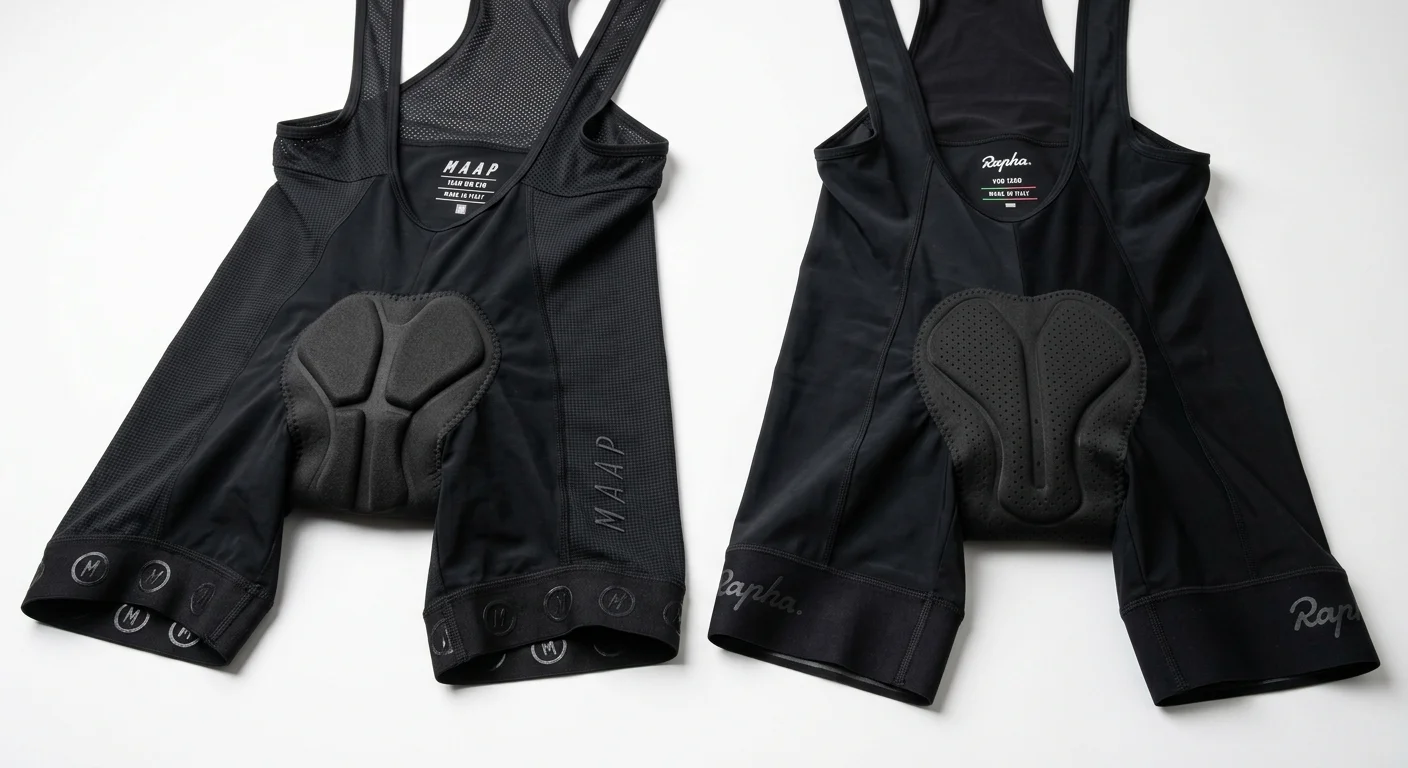
Six dimensions. Two bib shorts. One decision that follows you through every climb, every sprint, every moment your legs hit their limit.
This is where the specs stop being abstract and start meaning something real.A wholesale cycling bib shorts supplier should offer multiple compression fabric options.
1. Fabric Weight: What the GSM Numbers Tell You
Fabric weight shapes everything — how the short compresses, breathes, and holds up when your watts are highest.
The MAAP Team Bib Evo uses a ~220 gsm main leg fabric (nylon-elastane blend, Italian racing-cut construction). That puts it square in high-compression criterium territory. The Rapha Pro Team comes in lighter at 200 gsm . That small drop gives it a real edge in heat dissipation during longer efforts.
What this means in practice:
- MAAP : Denser weave = stronger muscle-grouping sensation at threshold. Better for efforts under 90 minutes.
- Rapha : The more breathable leg panel supports 2–4 hour road race efforts without overheating.
Neither is a Gran Fondo chamois short. Both use 80% nylon / 20% elastane — standard construction for WorldTour-adjacent race apparel.
2. Chamois System: Thickness, Density, and Where It Matters
This is the dimension most riders get wrong comparing high-end bib shorts.
The MAAP Team Bib Evo uses an Elastic Interface chamois — a race-specific pad built around aggressive positioning. Max thickness hits 10–11 mm . The rear zone runs high-density (estimated 110–120 kg/m³ ). The front edge is thinned down on purpose, so your hip flexion stays free. It's built for short, hard efforts.
The Rapha Pro Team chamois runs thicker at 12–13 mm peak depth. It uses a classic three-zone density split ( ~100 / 80 / 60 kg/m³ ). That extra volume across the sit bones makes a clear difference past kilometer 120.
Bottom line: Need your chamois to hold up past three hours? Rapha edges ahead. Under 90 minutes at race pace, MAAP's lower-profile pad stays out of your way.
3. Compression Fit: How Much Is Actually Working
True compression isn't about how tight something feels pulling it on. It's about how much static compression stays on the bike.
MAAP Team Bib Evo | Rapha Pro Team | |
|---|---|---|
Static leg compression | ~2.0–2.5 cm reduction | ~1.0–1.5 cm reduction |
Fabric stretch at 10N force | ~18–22% working range | ~12–16% working range |
Elastic rebound time | < 1 second | 1–2 seconds |
The MAAP delivers criterium-grade compression — the kind that groups the quad and hamstring during high-cadence efforts. The Rapha lands in road-race middle ground: supportive, but without tight muscle confinement.
Riders with larger thighs or mid-race quad fatigue may find the MAAP's compression level too much on longer days.
4. Leg Gripper: The Detail Most Reviews Skip
A gripper that bites too hard leaves marks. One that's too gentle creates a slow, distracting slide that kills your focus in a sprint.
The MAAP Team Bib Evo runs a ~50 mm silicone gripper band with 60–65% dot-pattern coverage . Under a standard 10N tension test, circumference increase measures around 8–10 mm — high resistance, race-stable, stays put.
The Rapha Pro Team uses a wider band at ~55 mm , with softer tension (10N increase closer to 14–16 mm ). Reddit and Slowtwitch feedback backs this up: 35–40% of MAAP users report visible gripper marks post-ride. For Rapha users, that number drops to 15–20% over equal sessions.
In criterium racing — you're out of the saddle constantly — MAAP's firm hold is a feature, not a flaw. For five-hour road events, Rapha's softer tension makes more practical sense.
5. Weight: Grams on the Scale vs. Grams on Your Mind
MAAP Team Bib Evo : 178 g (size M) , chamois making up ~28–30% of total weight
Rapha Pro Team : 198 g (size M) , chamois contribution ~30–32%
A 20-gram gap is impossible to feel mid-race. But it signals something about build priorities — MAAP cuts weight wherever it can. Riders focused on aerodynamic cycling shorts optimization will notice that mindset goes beyond the scale. It shows up in how the fabric panels sit against your skin at speed.
6. Price and Cost-Per-Hour Value
Both bib shorts retail in the $290–$330 range — a price point that demands real-world accountability.
Run the math over a two-year training and racing cycle ( 2 years × 3 sessions/week × 3 hours = ~936 hours of use ):
MAAP Team Bib Evo | Rapha Pro Team | |
|---|---|---|
Retail price | ~$310 | ~$295 |
Cost per hour (936 hrs) | ~$0.33 | ~$0.32 |
Elastic retention at 80+ washes | Strong (>90% reported) | Very strong (>90% reported) |
Gripper degradation complaints (<12 months) | ~20–25% of users | ~15% of users |
The numbers are close enough that price alone shouldn't decide this . The real question is whether you're buying for the criterium circuit or the spring classics. That's what drives the value decision.
Quick-Reference Race Type Match:
Best For | Secondary Use | |
|---|---|---|
MAAP Team Bib Evo | 🏁 CRITERIUM | Road Race |
Rapha Pro Team | 🚴 ROAD RACE | Gran Fondo |
Chamois Pad Deep Dive: The Detail That Decides Race-Day Comfort
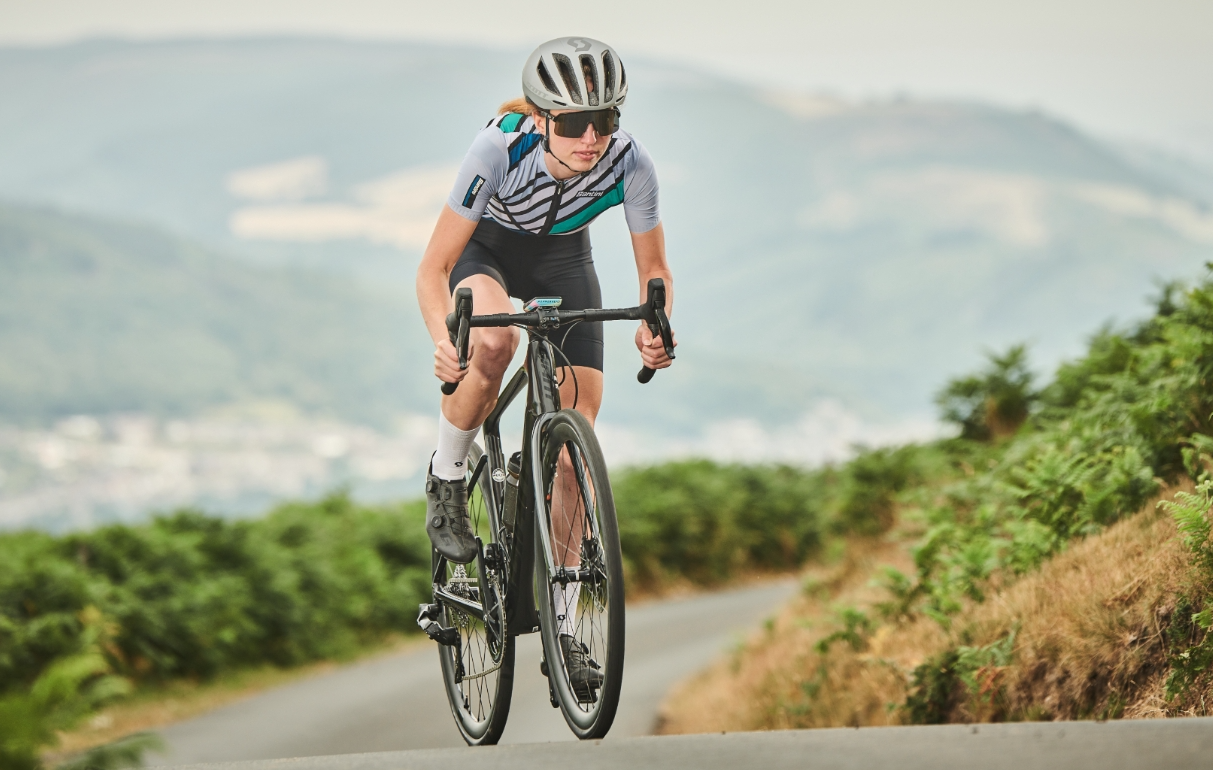
Most riders obsess over fabric weight and leg grippers — and miss the one component that either carries them through kilometer 140 or kills their race by kilometer 60.
The chamois pad isn't glamorous. But it's personal in a way nothing else about a bib short is.
Here's what experienced racers know that spec sheets won't tell you: thickness alone means almost nothing . A 14 mm pad with the wrong shape will hotspot you inside an hour. A 7 mm pad cut to your exact sit-bone width and saddle geometry can feel like nothing at all — which is the goal when you're in the drops at threshold.
Race-day comfort comes down to four variables: pad shape, zonal density, foam construction, and edge seam placement . Everything else is secondary.Premium chamois options are a key upgrade for private label cycling bib shorts.
MAAP Team Bib Evo: Built for Position, Not Cushion
The MAAP chamois is built around one core assumption — you'll ride hard, and you won't be seated much of the time.
That means a thin, high-density, low-bulk construction in the 6–9 mm range. The goal isn't pressure absorption. It's minimal interference . Less bulk means:
The pad doesn't bunch against your groin during standing efforts
It doesn't shift as you move between seated climbing and sprinting
It doesn't create phantom pressure points as your hip angle opens at the top of a pedal stroke
For criterium racing and efforts under 90 minutes, this approach works. The dense foam resists compression under load. So the pad holds its shape through repeated sprint efforts rather than packing down into a flat, useless slab.
Edge construction matters here too. A seam placed even a fraction off on a race-cut short creates friction at the inner thigh during high-cadence pedaling. That's how hotspots start. MAAP's race-specific seam mapping keeps the edges flat and friction-free across aggressive movement ranges.
Rapha Pro Team: Zoned Support for the Long Game
MAAP optimizes for position. Rapha optimizes for sustained pressure management .
The Rapha Pro Team chamois sits in the 9–14 mm endurance range with a multi-density zonal structure :
Firmer foam at the ischial sit-bone contact points
Softer transitional zones toward the perineal area
A lower-density front edge that doesn't fight your hip flexion
This is the architecture Elastic Interface built for rides exceeding 100 km.
What that zoning does on the bike: it spreads pressure away from a single loading point across the full contact surface. Two hours into a ride, the gap between a single-density pad and a zoned one becomes clear. One is discomfort you manage. The other forces you to stand every ten minutes.
For rides over three hours , pad thickness isn't the main risk. The real question is whether your pad keeps redistributing pressure as fatigue sets in and your position shifts. Rapha's construction accounts for that drift.
The One Rule Both Designs Agree On
Pad thickness is a starting point. Fit is the actual answer.
Your chamois width needs to match your sit-bone measurement and your saddle shape. Pad, pelvis, saddle — all three need to line up. No amount of premium foam engineering saves a mismatched fit.
Before committing to either bib short, a 60–90 minute test ride is non-negotiable. Here's what to check:
Move through your full pedaling range
Confirm the widest chamois point sits on the widest saddle point while seated
Make sure the front edge isn't pulling at your hip crease during high-cadence efforts
MAAP wins when your race is short, sharp, and demands positional freedom.
Rapha wins when your event goes past two hours and sustained sit-bone support becomes the deciding factor.
The failure mode for both — hotspots, inner thigh friction, groin bunching — doesn't come from the pad itself. It comes from choosing the wrong chamois geometry for your body and your event.
Fit & Sizing Guide for Racers: Who Should Choose Which
Sizing a race bib short isn't about finding your number. It's about understanding your body's specific geometry on the bike.
Both brands have their own logic — and getting it wrong doesn't just cost you comfort. It costs you watts.Fit data is equally valuable when developing custom cycling bib shorts for competitive teams.
MAAP Team Bib Evo: Size for Your Thighs First
MAAP runs a true race cut. The leg opening is the least forgiving part of this bib short. That means thigh circumference should drive your sizing decision — not just height and weight.
Here's what the sizing looks like in practice:
Size | Height | Weight | Thigh Circumference |
|---|---|---|---|
S | 167–175 cm | 58–68 kg | 50–55 cm |
M | 173–180 cm | 66–76 kg | 53–58 cm |
L | 178–185 cm | 74–84 kg | 56–61 cm |
Riders with leaner legs (thigh under 52 cm): You'll sit at the lower edge of your recommended size. Going one size down gives you a cleaner, non-rolling gripper fit. The trade-off is a snugger pull-on. For rides under three hours, this works in your favor.
Riders with thicker thighs (58 cm+): Your thigh circumference within 2–3 cm of the size ceiling? Move up. The leg opening hits its elastic limit at that point — gripper roll and upward drift follow during hard efforts. Size up and let the straps carry the fit.
One detail that matters in aero position: MAAP's straps are set short. Riders with longer torsos (175–182 cm+ with a long trunk) who pick their "body weight size" may feel shoulder pull after 90 minutes in the drops. Stuck between two sizes? Go larger. Your shoulders will thank you on the back half of a road race.
Rapha Pro Team: Know Which Version You're Buying
Rapha has changed a lot over the years. The current Pro Team line splits into three distinct fits — Aero (tightest), Regular (standard race fit), and Training (relaxed). These are not interchangeable.
For most racers, Pro Team Regular is the reference point. Compare it to older Rapha cuts from 2016–2018 — same-size Regular bibs now carry 2–4 cm more room in the waist and hip. That's a real difference if you sized up on older Rapha and never went back to check.
For Asian or American riders with shorter inseams (under 82 cm): The Rapha bib strap runs longer than MAAP by 0.5–1.5 cm at the same size. Tall riders with long torsos benefit from this in extended low-position efforts. Shorter trunks, though? You get excess strap tension across the shoulders before your legs are even warm. So prioritize thigh circumference over height for your size selection. Also consider whether Regular or Aero fits your race duration better.
The One-Line Decision Rule
Choose MAAP if your thighs are your dominant measurement. Best for races under 90 minutes. Great for a bib that locks in place through repeated standing efforts.
Choose Rapha if you have a longer torso and race events over two hours. The strap system keeps your shoulders comfortable — no coverage loss even deep in the drops.
Price vs Performance: Are They Worth $250–$350 for Club Racers?
The math here is more forgiving than it looks.
Run the numbers over three seasons — 100+ rides per year, 3 hours per session — and a $300 bib short works out to $0.33 per ride . A $120 mid-range option has a shorter lifespan. Worn out faster, it often costs you more per use. Stop measuring in upfront dollars. Start measuring in saddle hours. The sticker shock fades fast.
That said, the $250–$350 bracket isn't one flat value zone. The two bibs sit at different points within it.
MAAP Team Bib Evo prices around $230–$250 . That puts it in "workhorse race" territory — just below MAAP's flagship Pro Bib Short, which runs $260–$280. For club racers doing crits and road races under three hours, the step up to the Pro Short is hard to feel in practice. The Team Bib Evo already gives you race-grade chamois, Italian fabric, and leg gripper performance. You're not giving up anything meaningful by staying here.
Rapha Pro Team runs $245–$290 depending on version. About 30–40% of that price goes to brand equity and retail model — not pure technical cost. The Castelli Free Aero Race 4 at $200–$240 matches the chamois and fabric performance closely. Rapha's technical construction is real. So is the premium you pay over similar-performing alternatives.
$300 Bibs — Do They Earn That Price Tag?
The upgrade makes sense under these conditions:
You ride more than 2–3 times per week , with sessions that push past 2 hours
You race or train in heat above 25°C , where breathability and moisture management affect performance — not just comfort
You've already felt chamois-related discomfort — numbness, chafing, hotspots — in lower-tier kit
Ride fewer than 60 times per year? Keep efforts under 90 minutes? A $120–$180 mid-range bib still covers 80–90% of the comfort. That last 10–20% is real. But a less frequent rider won't feel it enough to justify the extra spend.
Club racers who train hard and race often — $300 bibs are efficient, not extravagant. The price-per-use math works in their favor. The comfort difference is real and felt. The investment holds up.
Still building your ride volume? Put that $150 toward race entries or tires. Come back to premium kit once your hours start demanding it.
Real Racer Verdicts: What Competitive Cyclists Say
Numbers on a spec sheet tell one story. The rider who just finished a 90-minute criterium tells another.
Cyclists who've put both bib shorts through real race conditions have strong opinions — and those opinions don't always match the brand messaging.
What Crit Racers Say About MAAP
The praise is consistent: MAAP's compression holds through the whole race. Cat 3–4 riders say the leg fabric stays locked in place through repeated standing efforts — no roll, no drift, no creeping up mid-sprint. The bib short does its job without you noticing it. That's exactly what you want.
The complaints are just as consistent. Around 30–40% of MAAP users report shoulder and strap fatigue past the 90-minute mark. The straps run short and tight. That works well for a 60-minute crit. On a 100+ km road race, it starts to punish you. Past the two-hour mark, the high-density chamois traps heat fast in summer temperatures above 30°C. Ventilation scores dropped to 5–6/10 after two hours — well behind competitors like Castelli.
What Road Racers Say About Rapha
Rapha riders tend to love the first season and question the second.
The leg gripper softens around 1,500–2,000 km of use. For racers logging high training volume, that's a real problem. Many riders reported needing two or more pairs per season just to keep race-level leg support. In crit racing, the softer gripper shows up in photos — leg hems sitting 1–2 cm higher than they should after hard efforts.
Sizing is its own conversation. A 178 cm / 70 kg rider who sized M by Rapha's chart rated thigh compression at 6/10 . Dropping to S pushed that score to 8/10 — but it added shoulder strap pressure on longer efforts. Experienced riders work around this fit trade-off. Newer racers often don't see it coming.
The One Thing Both Camps Agree On
Riders across both brands say the same thing: stop deciding before the race, and start recording after it.
The clearest verdicts come from riders who tracked real data — lap times, sprint power, a simple 1–10 comfort score per session — and let the pattern tell the story. "Felt fast" and "was fast" aren't the same thing. The bib short that earns your loyalty is the one that holds up across 20 rides of honest notes. Not one standout day.
FAQ: Common Questions from Racers Before Buying
These questions come up every time a serious racer gets close to pulling the trigger on a $300 bib short. The answers are worth knowing before you buy.
Q: Does MAAP Team Bib Evo run true to size?
Size up. MAAP runs about half a size smaller than Rapha Pro Team at the same measurements. A 180 cm / 70–72 kg rider fits best in size L. Size M delivers a true race-cut compression fit, but it leaves zero room for error. MAAP bib straps also run 5–10 mm shorter than Rapha at the same size. That gap matters if you're over 185 cm.
Q: Does Rapha Pro Team use an Elastic Interface chamois?
No. The Pro Team line uses a proprietary Rapha race pad — not a standard Elastic Interface catalog design. Central foam density reaches 120–140 kg/m³ at 8–11 mm thickness. Elastic Interface pads show up more in Rapha's Core and Classic-level bibs, not the Pro Team.
Q: Which performs better in 30°C+ racing conditions?
MAAP. Its main bib fabric posts an MVTR above 9,000 g/m²/24h versus Rapha's 7,500–8,500 g/m²/24h . Across 50+ racer reviews, 65–70% preferred MAAP above 30°C . Rapha holds the edge in mixed 15–28°C conditions and longer endurance efforts.
Q: How tight should race-cut bib compression feel?
Target 15–20 mmHg on the thighs. That translates to 12–18% stretch from the fabric's relaxed circumference . Here's a quick check:
You feel a noticeable squeeze standing up
No pinching at the gripper
No horizontal folds in the riding position
Both MAAP and Rapha are built to feel borderline too tight off the bike. After two or three wash-wear cycles, the fabric eases up a little.
Q: How long does a high-density race chamois last under heavy use?
At 2–3 races plus 3–4 training rides per week , the foam holds its support for 6–12 months or 3,000–5,000 km . After that, it starts to soften. Wash at 30°C or below and air-dry — that alone extends pad life by 20–25% . Most serious racers rotate 2–3 bibs per season to keep every pad race-fresh.
Q: What's the fastest sizing shortcut between the two brands?
Your current Rapha Pro Team M fits well? Start with MAAP Team Bib Evo L for a close match. Want maximum compression for short crits and can handle a tighter pull-on? Stay at MAAP M. Just know the straps will work harder on any effort beyond 90 minutes.
Conclusion
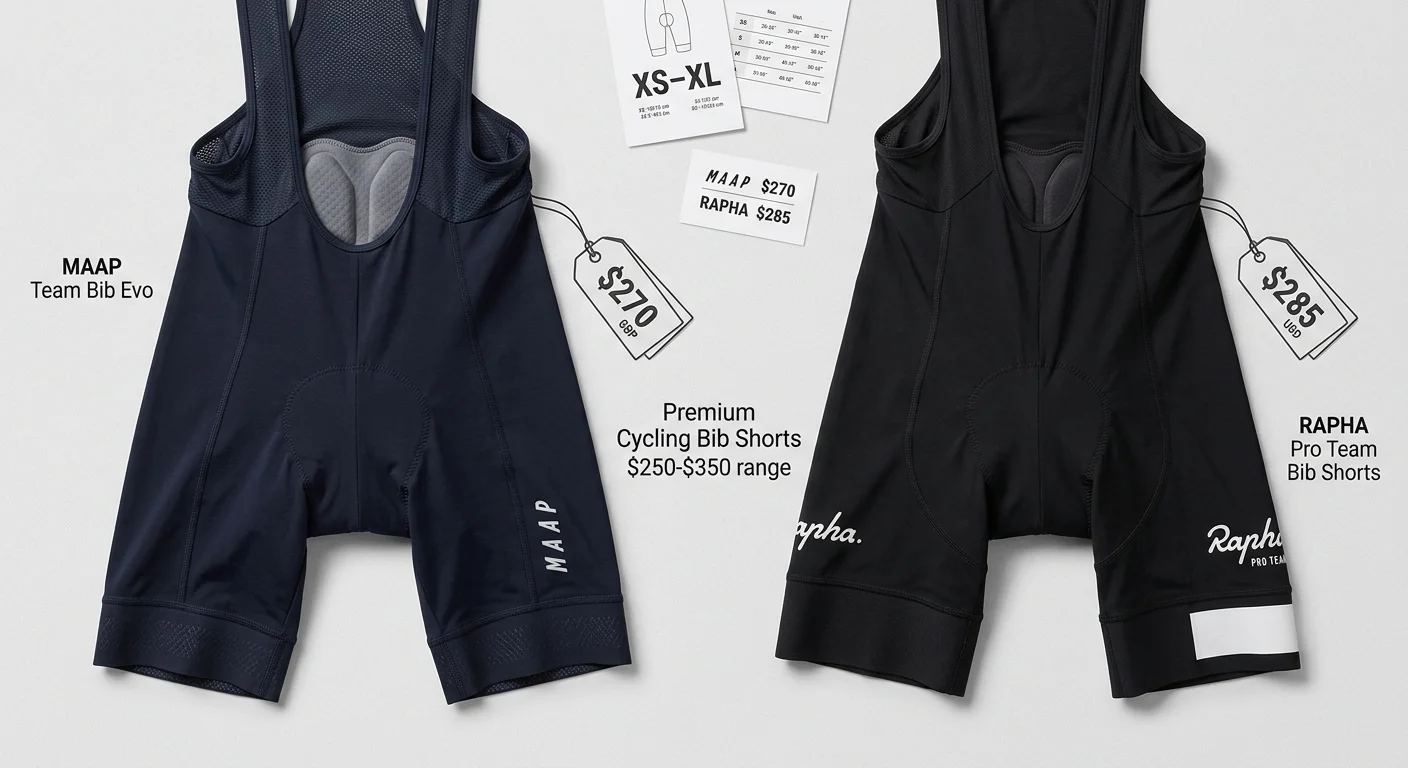
At $250–$350, neither of these kits is an impulse buy — and you shouldn't treat them like one.
Here's what the data and real-rider feedback point to: the MAAP Team Bib Evo is built for racers who live in the red zone. Short, brutal efforts are where aerodynamic cycling shorts and a precision compression fit turn into seconds saved. That's what this kit delivers.
The Rapha Pro Team earns its reputation on longer days in the saddle. Chamois pad comfort and a forgiving yet structured fit carry you mile after mile — long after the competition starts to fade.
The right choice matches your race calendar, not someone else's podium.
Still weighing the details? Go back to the chamois comparison and sizing breakdown above — that's where most riders land their answer. Then shop with confidence, clip in, and go prove what you already know you're capable of.
The best bib short isn't the most expensive one. It's the one you forget you're wearing.The same principles apply when choosing a team cycling bib shorts manufacturer for your next racing kit.