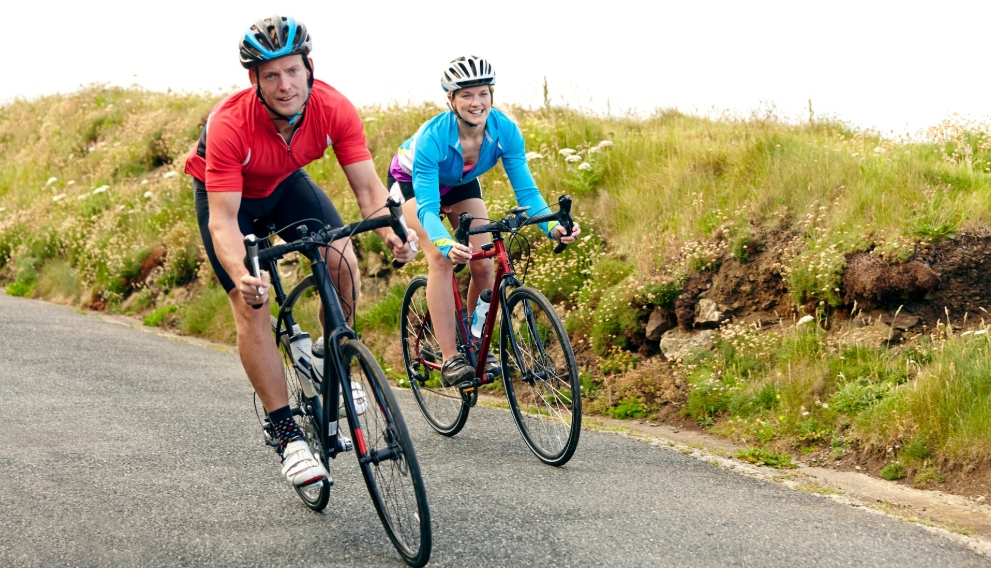
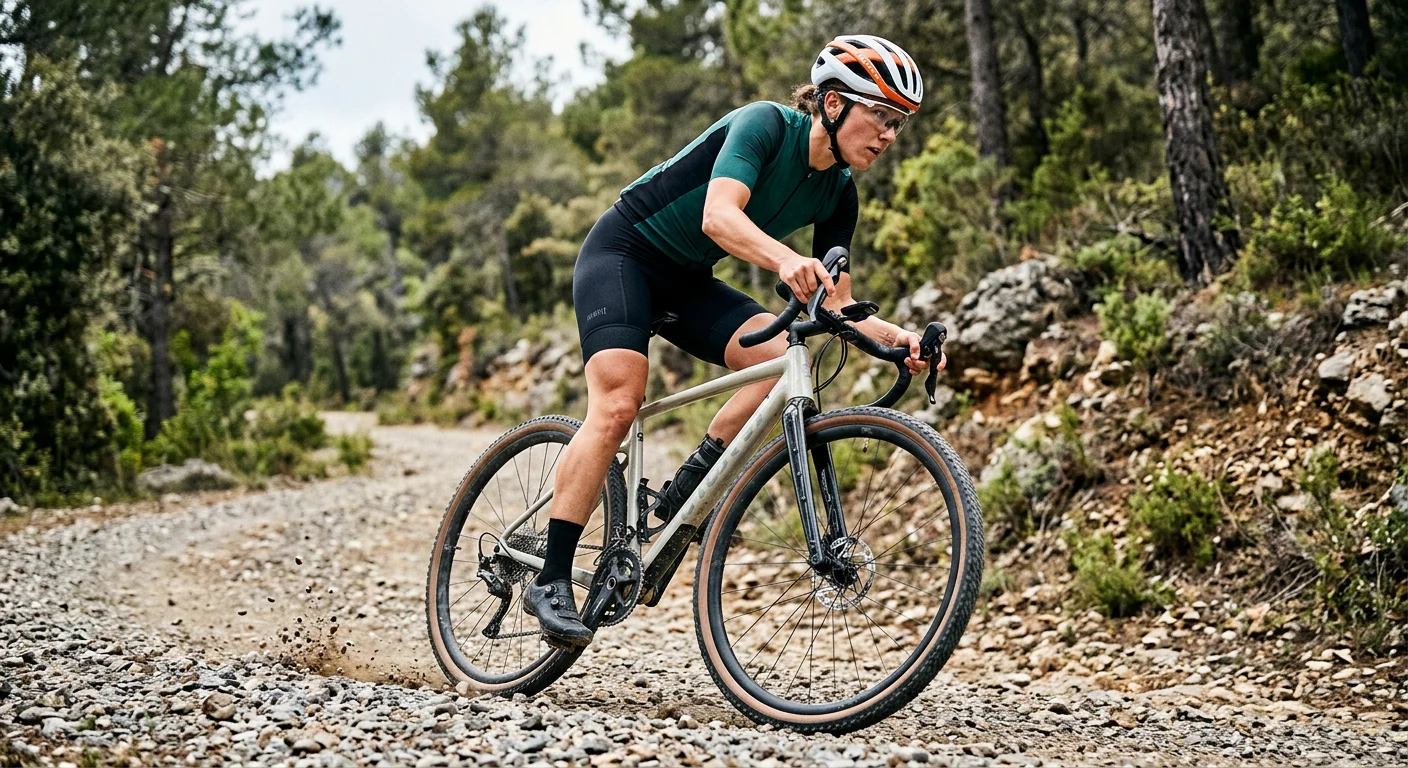
Every cycling fan hits a point where watching the race isn't enough — you start feeling it. The women grinding through mountain stages at the Tour de France Femmes or sprinting to the finish at La Vuelta Femenina stop looking like athletes on a screen. They start looking like a reflection of something real.
These seven riders didn't just collect jerseys or shatter records across the UCI Women's WorldTour. They changed what ambition means on two wheels. They showed what a woman's body can push through, what a true comeback looks like, and what it takes to compete in a sport that spent decades ignoring women existed at all.
Take Marianne Vos — her dominance stretches across generations. Then there's Demi Vollering, rewriting the Grand Tour record books right now. Each of these women brings something extraordinary to the table. And each one has something worth learning from.For cycling brands inspired by elite athletes, partnering with an experienced cycling apparel manufacturer is one way to translate professional performance insights into products for everyday riders.
Opening Hook: Why These 7 Riders Rewrote the Rules of Women's Cycling
Not long ago, a women's cycling Grand Tour winner took home less than 10% of what her male counterpart earned. Same effort. Same suffering. Same brutal mountain stages.
Today, the numbers tell a different story:
Top women's races broadcast across 50+ countries
Prize money now sitting at 80–100% of equivalent men's events
The UCI Women's WorldTour grew from 13 races in 2016 to more than 20 major events per year
That shift didn't come quietly. And it didn't happen on its own.
Seven specific women made it impossible for the sport to look away. British women's race license holders grew 72% in just a few years. Cycling UK's female membership surged 150%. Tour de France Femmes relaunched in 2022 — and millions of viewers watched eight straight days of women racing for yellow. These numbers have names behind them.
This is what changing a sport looks like: not one big breakthrough moment. A steady build of wins, visibility, and proof that women's cycling belongs at the center of the conversation — not the edges.The sport's growing popularity has also increased demand for custom women's cycling apparel designed for teams, clubs, and emerging cycling communities around the world.
1. Marianne Vos — The Benchmark Every Female Cyclist Is Measured Against
Three road world titles. Eight cyclo-cross world titles. Two Olympic golds. A track world championship. And a career that has refused, for over two decades, to slow down.
Marianne Vos didn't just build a palmares — she built a standard. Coaches, analysts, and fellow professionals all reach for the same reference point in women's cycling. Her name comes first. Not out of habit. Out of simple, stubborn fact.
What Makes Her Different From Every Other Champion
Most elite cyclists find their discipline and stay there. Vos treated that idea as a suggestion.
She earned her first senior world titles in 2006 — on the road and in cyclo-cross, in the same year. Two years later, she won track world gold in the points race at the 2008 World Championships. That result made her the first woman in history to hold world titles across road, track, and cyclo-cross — all at once . No one else on this list comes close to that.
Her consistency is almost uncomfortable to look at:
Runner-up at the Road World Championships four consecutive years (2007–2010) — even her second-place finishes define an era
Cyclo-cross world titles spanning 2006 through 2022 — sixteen years between her first and last
2023 Giro Donne victory , proving the engine still runs at the highest level of women's Grand Tour racing
Behind every high-performance cycling kit is a reliable cycling apparel factory capable of delivering the technical fabrics, ergonomic construction, and durability demanded by competitive riders.
Built for the Long Game
Beyond the trophies, Vos represents something rarer — longevity as a philosophy. Her peak didn't last a season or two. It lasted generations . The women now competing at the UCI Women's WorldTour level grew up watching her race. Some of them are still watching her race today.
That span matters for anyone serious about cycling. Gear, training, and commitment to craft — these are long-game decisions. Athletes who last don't win on talent alone. They win on preparation, recovery, and the right equipment for every condition the road throws at them.
Vos has raced in mud, mountain cold, and championship heat. She has dominated across road, track, and cyclo-cross. That range reflects something practical: versatility wins .
2. Annemiek van Vleuten — The Rider Who Proved Crashes Don't Define Champions
On August 7, 2016, Annemiek van Vleuten was 30 seconds from Olympic gold.
She was alone at the front, descending the Vista Chinesa on a wet road at 70 km/h. She lost control and flipped over a guardrail. Three fractured vertebrae. A severe concussion. Two days in intensive care in a Rio hospital. She was 33 years old. The race she had been winning — the one she was supposed to win — finished without her.
Her teammate Anna van der Breggen crossed the line first.
What happened next is the part worth sitting with.
The Comeback Nobody Could Have Written
Van Vleuten returned to WorldTour racing in 2017. Not with caution. Not by rebuilding through smaller races. She came back and did what she does best — attacking from an absurd distance out, solo, daring anyone to chase her down.
The results that followed are hard to take in:
Giro Donne overall wins: 2018, 2019, and 2022 — each one post-crash, each one won by margins of minutes , not seconds
Tour de France Femmes 2022 — the inaugural edition, won overall despite losing time to illness in the opening stages
Multiple Strade Bianche victories , including solo attacks over gravel sectors that demand the exact descending confidence Rio nearly destroyed
She has said in interviews she never lost the fear of descending after Rio. She kept attacking on downhills anyway.As women's cycling continues to grow, many cycling brands are expanding their collections through OEM/ODM cycling apparel services to bring innovative race apparel to market more efficiently.
What She Changed
Van Vleuten reshaped how women's Grand Tour racing gets designed — not just how she raced it. Her signature move — long-range solo attacks, 30 to 60 km from the finish — forced rival teams to build multi-rider chase coalitions just to slow her down. Race organizers responded by adding harder mountain stages, longer distances, and back-to-back climbing days. Queen stages now reach 2,000 to 3,000 meters of elevation gain. Stage lengths pushed toward 130 to 150 km. The modern template for women's Grand Tour racing took shape, in large part, around the problem of stopping her.
Her climbing output sits at around 5.5 to 6.0 W/kg over sustained efforts. That puts her on par with top men's WorldTour climbers in relative terms. Add in her time trial ability — which pulled 30 to 60 seconds over GC rivals on a consistent basis — and she turned multi-minute winning margins into a routine outcome. These were races that used to end in sprint finishes or photo-finish gaps.
She retired at the end of 2024. Eight years of top-tier dominance after three broken vertebrae and two days in an ICU. The numbers alone make the case — but what stays with you is something harder to measure: she chose, every single time, to go back down the mountain.
3. Anna van der Breggen — From Peloton to Podium to DS:Complete Cycling Mind
On the same road where van Vleuten lay injured, Anna van der Breggen crossed the finish line in Rio. She didn't just win the Olympic gold — she took that moment in with total calm, then built an entire career around it.
That composure is the whole story.
A Palmares That Covers Every Dimension
Van der Breggen didn't specialize. She mastered .
Olympic road race gold, Rio 2016 — she finished in 3:51:27, ahead of Emma Johansson and Elisa Longo Borghini. Marianne Vos came in over a minute back.
Flèche Wallonne Féminine: 7 straight wins (2015–2021) — a record that sits in a class of its own
3–4 Giro Rosa overall victories — she ruled the women's cycling Grand Tour that defined that decade
2020 Road World Championships double — she became the first rider ever, men's or women's, to win both the road race and the individual time trial world title in the same year
That last point deserves a pause. Pure climbing instinct and precision power output, in the same season. That's not versatility. That's a complete package.This evolution has also encouraged many retailers and cycling businesses to launch private label women's cycling apparel that reflects the increasing professionalism of the sport.
The Move Nobody Saw Coming
She retired after 2021. Then she stepped straight into a sports director role at SD Worx–Protime — one of the most competitive UCI Women's WorldTeams in the peloton.
Most riders leave the sport and take their knowledge with them. Van der Breggen built hers into a full system. Pre-race scenario plans. Pacing charts for final climbs. Radio instructions tied to exact time-gap numbers. Every hard lesson from seven years of Mur de Huy finishes now goes to the next generation.
A complete cycling mind doesn't stop at the finish line. It keeps going.
4. Demi Vollering — The New Face of Women's Grand Tour Racing
Stage 7. Col du Tourmalet. Ninety kilometers, summit finish. This is the kind of stage that strips a peloton down to its rawest form. No tactics left. Just legs.
Demi Vollering attacked. She gained 1 minute 50 seconds on her closest GC rival in a single afternoon. She pulled on yellow. The 2023 Tour de France Femmes was already decided.
The final winning margin: over 3 minutes ahead of Lotte Kopecky. Annemiek van Vleuten — the woman who defined women's Grand Tour racing for close to a decade — finished 3 minutes 59 seconds back. That gap is not just a number. It is a handover.
A Complete Rider, Not Just a Climber
Vollering is not a one-trick climber. That is what sets her apart from almost every other rider in her generation.
Take the final stage of that 2023 Tour — a 22.6 km time trial in Pau . She finished second overall, just 10 seconds behind specialist Marlen Reusser. On flat road. Against a European TT champion. She also carried a 20-second time penalty from earlier in the race for drafting. She still won by three minutes. That is a different kind of dominance.
She also swept the 2023 Ardennes Triple — Amstel Gold Race, Flèche Wallonne, and Liège–Bastogne–Liège — all in the same spring. Short, brutal climbs. Explosive efforts. Three races, three wins, back to back.
Then came La Vuelta Femenina in 2024, and again in 2025 . Two overall wins in a row. Multi-week stage racing demands a specific kind of fitness. Vollering has it. That consistency is what separates good riders from the ones who shift the sport forward.
What She's Building
In 2025, Vollering made one of the biggest transfers in women's cycling. She left SD Worx for FDJ–SUEZ as their lead GC rider. She brought a palmares that includes the 2025 European Road Championship on top of her Grand Tour titles. FDJ–SUEZ didn't just sign an athlete. They built a team around a new kind of women's cycling star.
Her skill set covers it all — high-mountain climbing, elite time trialling, reduced-group sprinting . That combination is exactly what top-level women's GC racing demands right now. The blueprint for the sport has changed. Vollering drew it.Growing participation has likewise created new opportunities for cycling clubs and retailers to work with a dependable cycling apparel wholesaler to meet rising demand for women's performance gear.
5. Pauline Ferrand-Prévot — The Multi-Discipline Pioneer Who Refused to Choose
In 2015, Pauline Ferrand-Prévot was 23 years old and wearing three rainbow jerseys at once.
Not as a figure of speech. She held the road world title from 2014, the cyclo-cross world title from that season, and the mountain bike XCO world title — all at the same time. No one in cycling history, men's or women's, had ever done that before. No one has done it since.
The Year That Rewrote the Record Books
Most elite cyclists pick one discipline. Ferrand-Prévot treated that as optional.
Her titles broke down like this:
2014 Road World Championship — won at 22, alongside a Flèche Wallonne victory the same season
2015 Cyclo-cross World Championship — Tabor, dominant
2015 Mountain Bike XCO World Championship — her first of what would become five
That combination made her the first and sole person in cycling history to hold world titles across road, cyclo-cross, and mountain bike XC at the same time . Three disciplines. Three rainbow jerseys. One season.
The Longer Arc
From 2019, she shifted her full focus to mountain bike racing. She went on to collect five XCO world titles (2015, 2019, 2020, 2022, 2023) and two XCC world titles (2022, 2023) . Then came Paris 2024 . She won Olympic XCO gold at 32. The performance was so commanding that media had one word for it: "dominant."
Then she did something almost no one saw coming. She announced a full return to road racing for 2025 with Team Visma | Lease a Bike. She set herself a three-year window to compete for a Grand Tour title.
She needed one.
In her first road season back, she won Paris–Roubaix Femmes with a long solo breakaway. Then she won the 2025 Tour de France Femmes overall, taking the final two stages back-to-back. GCN Racing built an entire episode around one question: How did Pauline Ferrand-Prévot complete cycling?
What She Changed
Over her career, Ferrand-Prévot built up 15 senior world titles across road, cyclo-cross, XCO, and XCC. That range did something real for women's cycling. It pulled three separate fan communities into the same conversation. Road audiences started watching mountain bike XCO. MTB fans tuned in for Paris–Roubaix. Each time she crossed into a new discipline and won, she brought an audience with her.
That is a different kind of influence. Not just pushing women to ride faster — pushing them to ride wider .
6. Lizzie Deignan — The Voice and Victory Behind British Women's Cycling
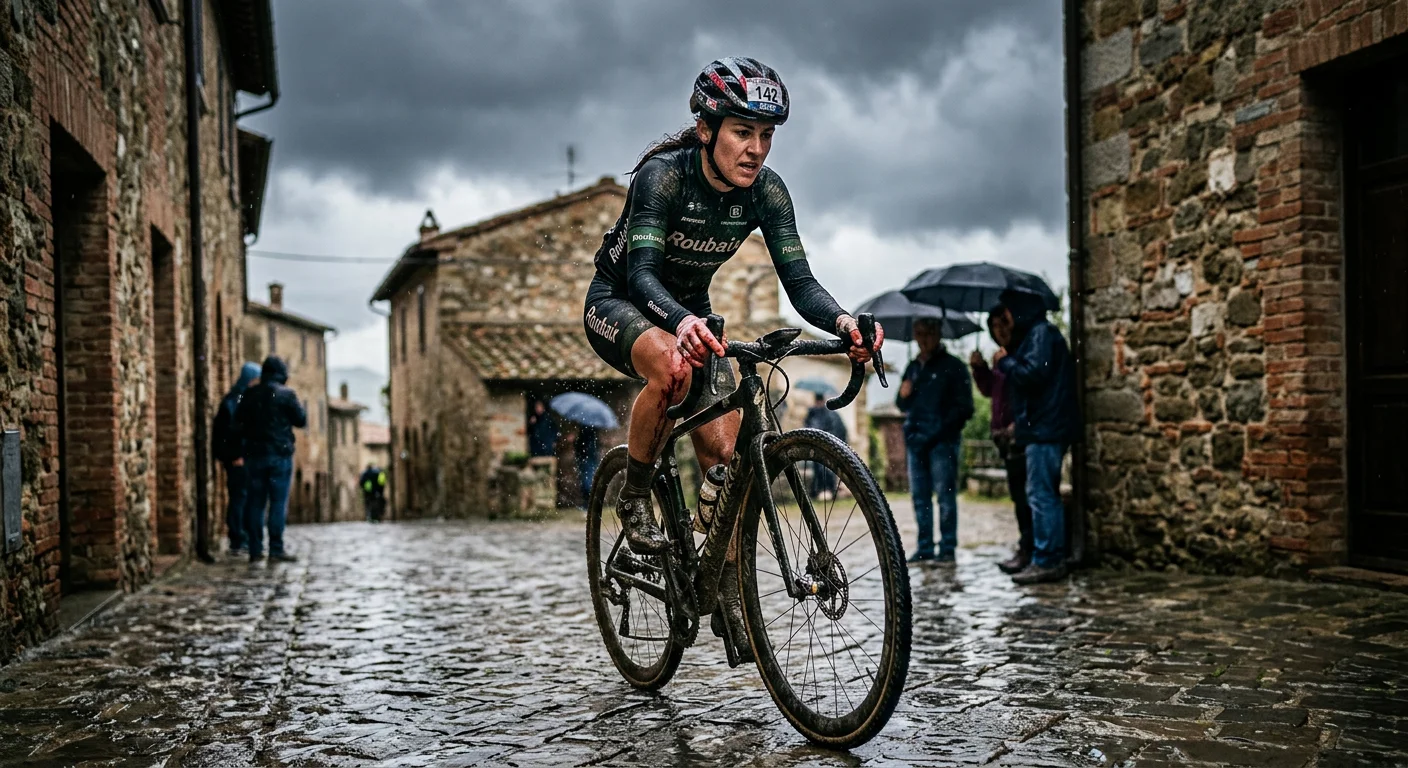
October 2, 2021. Cobblestones slick with rain. Blood on her hands. And 80 kilometers of solo riding already in her legs.
Lizzie Deignan crossed the finish line at the Vélodrome André Pétrieux — the legendary Roubaix velodrome — as the first-ever winner of Paris-Roubaix Femmes. Behind her: Marianne Vos, 1 minute 17 seconds back. Elisa Longo Borghini, 1 minute 47 seconds. She rode all 29.2 km of cobbled sectors alone, into the wind. The entire women's peloton chased her down. None of them made it.
That image — bloodied, triumphant, singular — became the defining photograph of women's Monument racing.
Victory as a Foundation, Not a Finish Line
Before Roubaix, Deignan had already built a palmares that earned her a permanent place in the conversation. Her 2015 UCI Road World Championship rainbow jersey put her face on televisions across 50 countries every race weekend for a full season. Multiple British national titles made her the default cover image for women's cycling in the UK press — BBC Sport, Cycling Weekly, Guardian sport sections. Women's cycling was fighting for editorial space back then. She was the name editors reached for.
Her victories across Flanders, Liège-Bastogne-Liège, Strade Bianche, and La Course gave the press a story to tell and a result to anchor coverage around. The cameras were rarely there. She kept showing up and winning anyway. That consistency kept women's road racing visible in the English-speaking market, year after year.
The Harder Conversation
Here is what separates Deignan from most champions: she used every finish line as a platform.
She gave birth in 2018–2019, then came back to win Liège-Bastogne-Liège in 2020 . She didn't stay silent about what that experience cost her. She named it. She spoke openly about the lack of maternity protections in women's WorldTour contracts. She tied her own story — pregnancy, a pause, a return to the top level — to the hard reality most women riders faced. Most of them didn't have her public profile or her financial resources.
UCI later added maternity provisions into WorldTour contract frameworks: guaranteed contracts through pregnancy, partial salary during leave, and protection against dismissal. Trek-Segafredo built one of the sport's most forward-thinking maternity policies. Deignan's name sits in the context of both.
She pushed on prize money too — the gap between what women earned at Monument-level classics versus what men took home. Roubaix's prize parity structure didn't appear out of thin air. Athletes had to stand up in public and say the pay gap was wrong. Deignan was one of them.
In her post-race interview after that first Roubaix win, she said she wanted to leave the victory for the next generation. Performance and policy, tied together — that is the whole of her legacy.
7. Beryl Burton — The Forgotten Pioneer Every Modern Female Cyclist Owes a Debt To
In 1967, Beryl Burton passed the leading male rider in a 12-hour time trial. As she went by, she offered him a liquorice allsort.
She was already going faster than him. She had been riding for hours. And she was in the mood to be polite about it.
That detail — small, almost absurd — says everything. Burton didn't just beat men. She beat them with so much ease she had room left over for courtesy.
The Numbers That Should Have Made Her Famous
The 1967 Otley CC 12-hour time trial is where the records stop making sense in the best possible way. Burton covered 277.25 miles in 11 hours, 59 minutes, and 15 seconds . That distance beat the existing men's competition record by 0.73 miles . Her record stayed ahead of the men's mark for two full years . Historians and cycling analysts searched for anything like it across every endurance sport. Nothing came close.
It didn't stop there:
First woman to ride 25 miles in under 1 hour, 50 miles in under 2 hours, 100 miles in under 4 hours
1968 100-mile TT : finished in 3 hr 55 min 5 sec — she beat every man in the field that day. The second-placed woman crossed the line 23 minutes behind her
Her 10-mile record of 21 min 25 sec , set in 1967, held for 26 years
25 consecutive British Best All-Rounder titles (1959–1983)
96 national championships . 7 world titles .
She did all of this with no professional contract, no coach, no sports science team, and no sponsorship. She trained at an elite level while handling domestic responsibilities at home. That was the unglamorous reality for a woman athlete in 1960s Britain.
The Recognition Gap
She received an OBE in 1968. She joined the British Cycling Hall of Fame. Yet Cycling UK later described her as "Britain's greatest cyclist no one's heard of."
That gap — between what she did and how little of it survived in public memory — is exactly why she belongs here. Think about what Marianne Vos, Demi Vollering, and their generation compete within today: WorldTour contracts, prize money campaigns, mountain stages built around women's racing. None of that existed for Burton. She built her legacy with none of it. She built it in spite of it.
She died in 1996 of heart failure. She was on her bike at the time. She was 58.
What These 7 Champions Teach Us About Riding With Purpose
Seven careers. Seven different roads to the top. And underneath all of them, the same quiet truth: the best riders aren't just exceptional in body — they're built differently in mind.
Each woman in this list adapted. Conditions changed. Crashes happened. The sport refused to make space for them. They adjusted and kept going. That adaptability — the willingness to change the plan without losing the goal — is something you can train. Coaches who work with elite women cyclists often recommend changing your route, pace, or gear setup once or twice a week. Then track how your body and mind respond. Over time, that builds something real.
Mental toughness shows up in the data, too. Top-level women cyclists log 12–20 hours of quality training per week during build phases. They sustain that for 8–12 week blocks . What separates them isn't just the hours — it's what they do after a bad session. Try a structured 10-minute debrief. Note three things that worked. Pick two to improve. Do that consistently, and you become a different kind of rider.
And then there's the question of purpose. Every woman on this list competed for something larger than a jersey. That focus — on the sport, on other women, on what comes next — is what made their wins mean more than wins.
Gear Up Like the Riders Who Changed the Sport
The equipment these athletes race in isn't accidental. It's built for the exact way they ride.
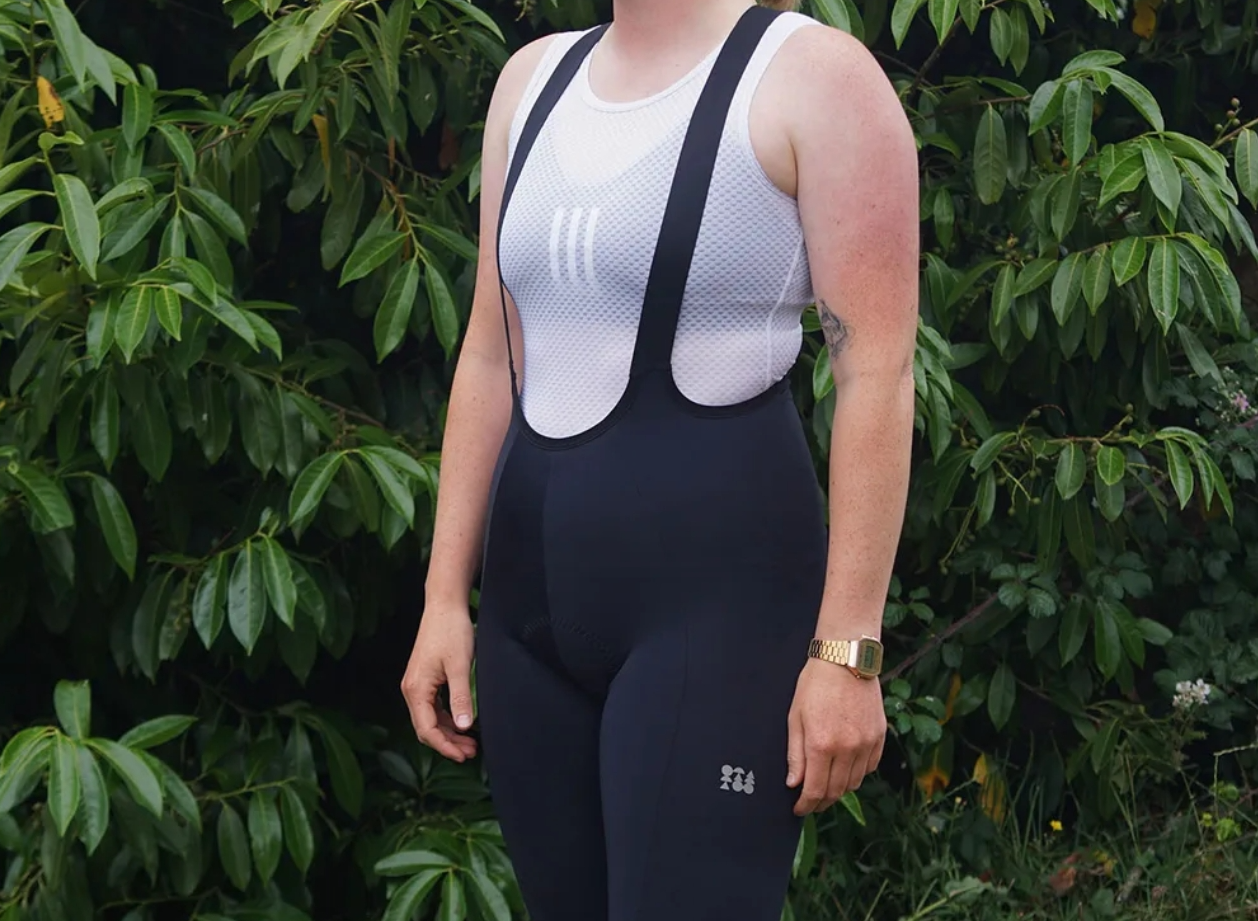
Race-level women's cycling apparel uses a 15–25 mm front-to-back length differential . That cut matches the forward lean of a riding position. Fabric weight also varies by zone:
Shoulders and upper arms use heavier, textured fabric (around 120–150 g/m² ). This creates micro-turbulence that reduces drag.
Chest and core panels stay lighter and smoother ( 90–120 g/m² ) to cut wind resistance where it counts most.
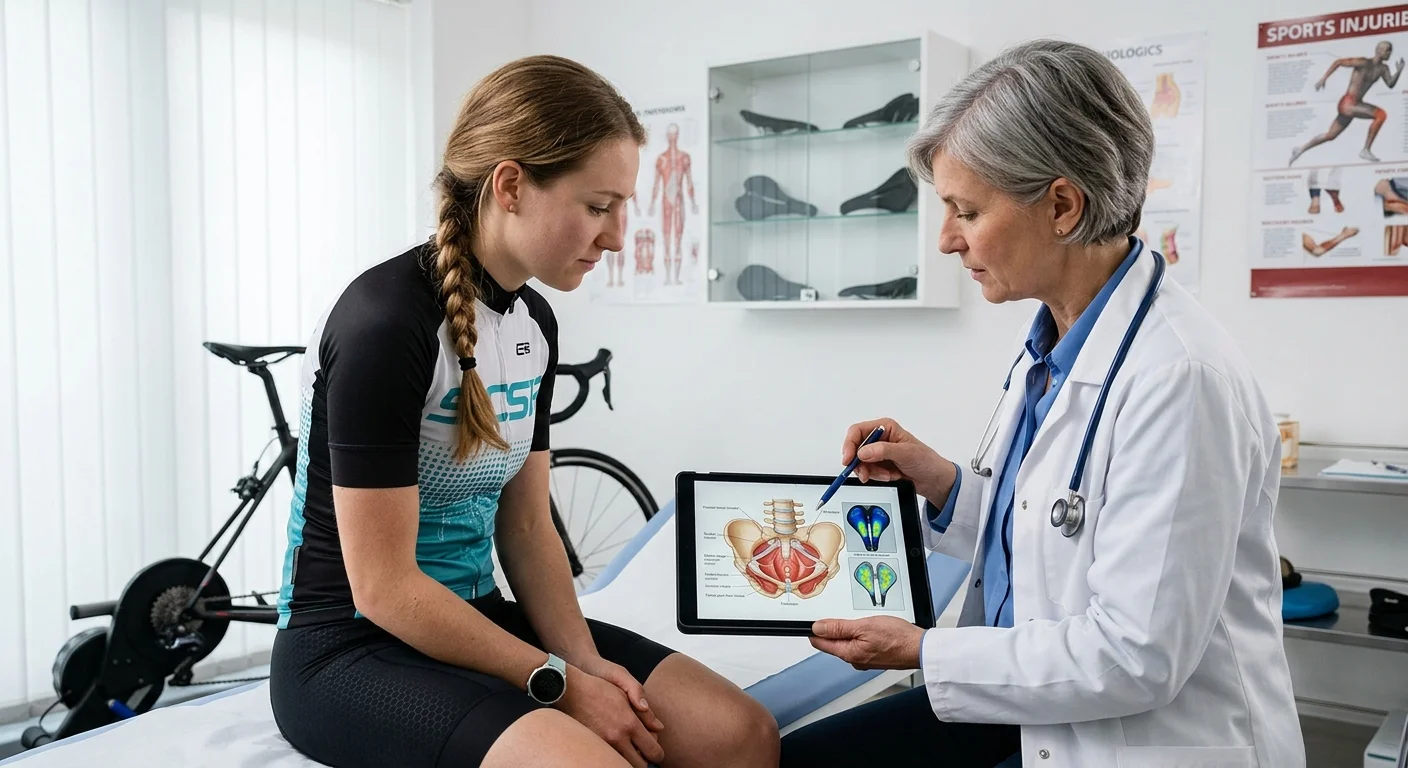
For long rides, look for four-way stretch fabric with 120–140% elongation . That range lets you move your hips and shoulders fully without the jersey pulling. On women's-specific shorts, chamois padding should support from the sit bones to mid-thigh. Look for a wider high-density foam zone and a deeper pressure-relief channel — especially for rides over two hours.
The fit test is simple. Standing, it should feel snug. In riding position, that tension should ease. No pulling. No bunching. No restricted breath.
Ride Like the Best: Explore Our Women's Cycling Apparel Collection
Built for race-day performance.
Conclusion
Beryl Burton raced alone through the Yorkshire night. Demi Vollering attacked the cols of La Vuelta Femenina with sharp, relentless precision. What connects these seven women isn't just talent. It's the refusal to wait for permission.
Women's cycling history wasn't handed to these riders. They carved it out — crash by crash, kilometer by kilometer. Often without cameras, contracts, or crowds. The sport delivers those things now. Back then, these women had none of it.
Every time you clip in, you're pedaling a road they paved.
Their stories lit something. Don't let it stop at the screen. Explore how the right kit — built for your body, your ride, your ambition — can close the gap between spectator and cyclist. Because the best thing these UCI Women's WorldTour legends ever did wasn't win races.
It was make you believe you could, too.For cycling brands planning their next women's apparel collection, balancing product innovation with competitive wholesale price of cycling apparel strategies is an important step toward serving this fast-growing market.
[Shop women's cycling apparel built for riders who mean business →]