You've been there: cursor hovering over "club fit" vs. "race fit" on the club kit order form, wondering if it actually matters. It does. About 90 minutes into a Sunday group ride, you'll feel it—your jersey either rides up your back or chokes your shoulders on every climb.
A relaxed fit cycling jersey and an aerodynamic one aren't sized differently by accident. They're built for opposite jobs. Brands looking for custom Club Fit Cycling Jerseys often adjust the cut and fabric balance to match different riding groups.One keeps you comfortable for four hours of chatting in the peloton. The other's cut to shave watts off a 20-minute crit.
This guide covers where those cuts diverge—sleeve length, hem drop, fabric tension—then gives you a 3-second self-test to settle the debate for your body type and riding style. No more second-guessing your size chart.
Club Fit vs Race Fit Cycling Jersey: Cut, Ease, Sleeves, and Hem Design
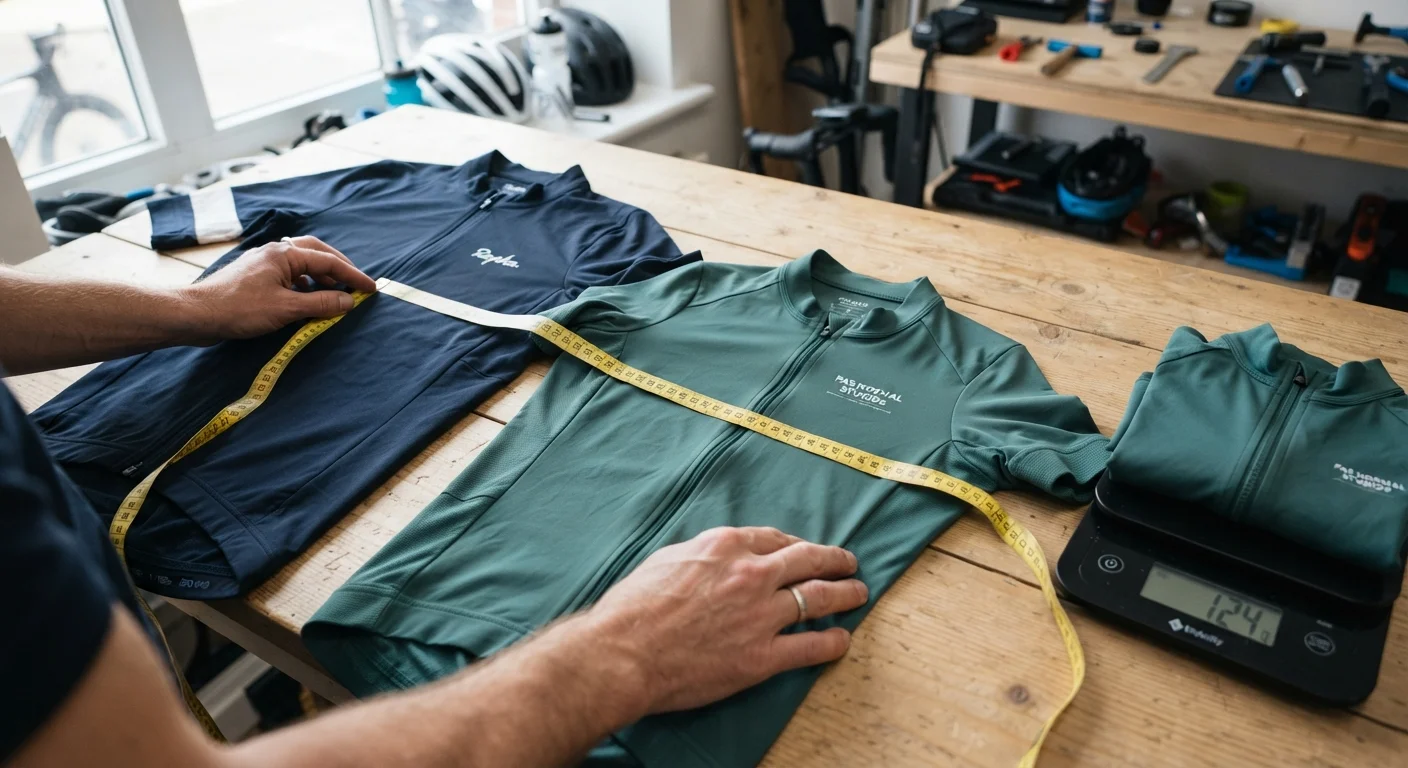
One brand's fit guide says club fit runs almost a size different from race fit. You can measure that with a tape.
Chest and Waist: Where the Real Gap Lives
A Club Fit and Race Fit Cycling Jerseys manufacturer's sizing benchmark breaks it down like this:
Measurement | Race Cut Jersey | Club Cut Jersey |
|---|---|---|
Chest margin | 0.5"–1" | 1.5"–2" |
Waist margin | 0.3"–0.7" | 1.2"–1.8" |
A compression fit cycling jersey moves with your muscles; a casual cycling jersey moves with you. Some fit guides suggest splitting the difference by adding 1–2 cm of ease at the belly and waist for a less aggressive feel, but keeping shoulders and sleeves snug. You still want the aero benefit up top, even if you're loosening up around the midsection.
Sleeves: Negative Ease Isn't a Typo
Race sleeves have negative ease, 3–8% smaller than your actual arm, paired with a wide 40–55 mm gripper band. They stay locked in place at speed. Club sleeves have 0–3% negative ease with a slimmer 20–30 mm band, so some flutter is normal — just physics at lower intensity.
Hem Design: The Silicone Question
Race fit hems run 2–6 cm smaller than your natural waist, gripped with silicone to stay flush against bibs when you're hunched over the bars. Club fit hems sit closer to natural waist size, often with 0–2 cm ease and partial or no silicone gripper.
If the jersey rides up or shifts noticeably mid-ride, the fit's too loose. Some brands have three tiers: Comfort Fit (relaxed), Club Fit (tailored with raglan sleeves and elastic hem), and Pro/Race Fit (trim with set-in sleeves and silicone gripper). Know which tier you're buying into before you check out.
Comfort and Pressure: All-Day Club Fit vs Second-Skin Race Fit
Pressure is the whole story here. A performance cycling jersey built for racing traps you against the fabric, no gap, no give, no flapping when the wind hits 35mph on a descent. That's the "second-skin" feel riders talk about. A relaxed fit cycling jersey backs off the pressure so your ribs, shoulders, and gut aren't fighting fabric for four hours straight.
Fit Geometry
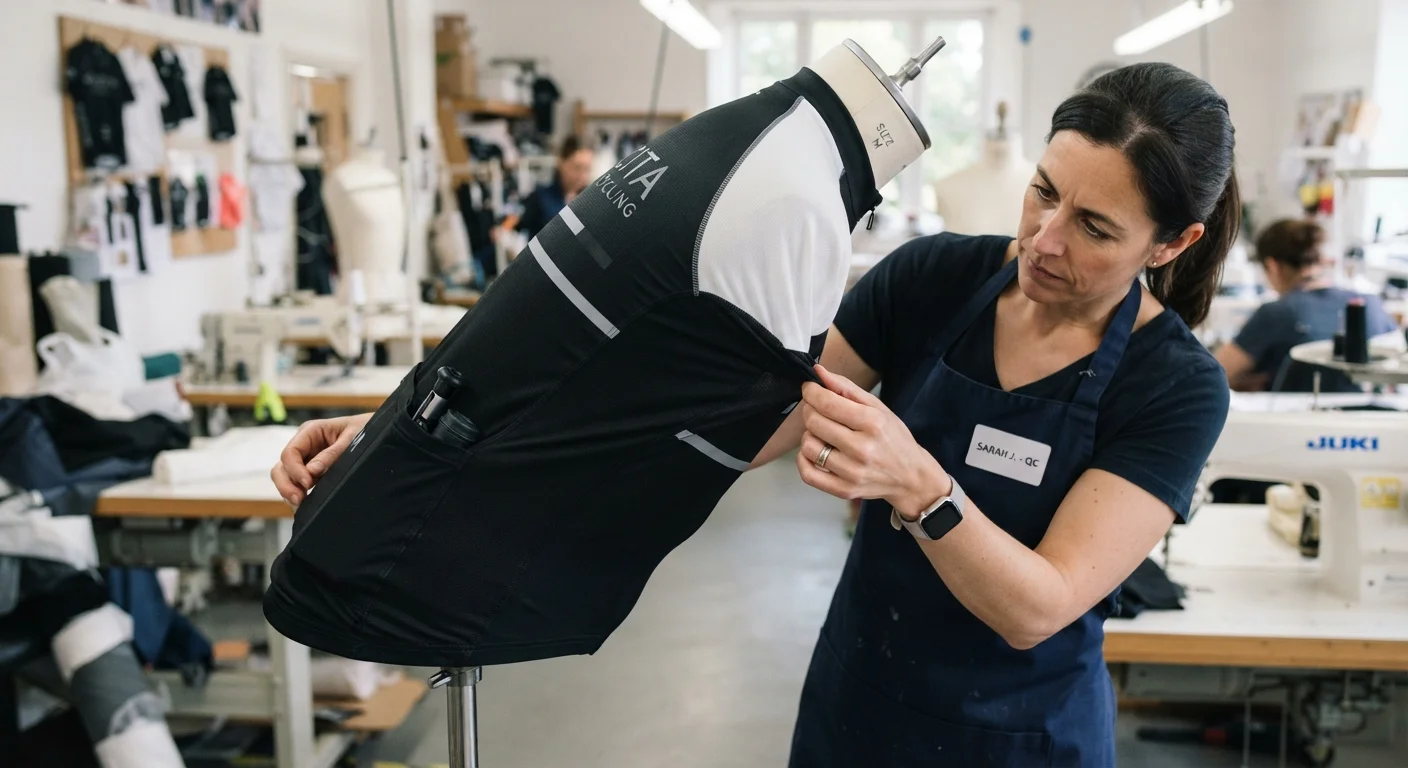
Race cut jerseys run a longer back panel and shorter front, built for a bent-over position where your torso stretches out and your belly compresses.Many teams choose OEM Race Fit Cycling Jerseys when they need competition-ready designs with consistent sizing. Stand upright in one at a coffee stop and it bunches weird. Club cut jerseys skip that asymmetry. The shape stays forgiving whether you're hunched over the bars or sitting up chatting with the group.
Underarm Mobility and Fabric Weight
This is where the compression fit cycling jersey really separates from club fit:
Spec | Race Fit | Club Fit |
|---|---|---|
4-way stretch | 20–30% | 10–20% |
Armhole width | 2–4 cm narrower | 2–4 cm wider |
Fabric weight | 90–130 g/m² micro-mesh | 120–160 g/m² |
Giant calls it plainly: race cut reduces wind resistance, relaxed fit stays "not too loose and not too tight." Voler's sizing logic puts club fit close to a full size up from race fit. Attaquer's "all-day" cut keeps the aero silhouette but swaps in softer fabric for distance comfort.
Sizing shortcut : stuck between sizes? Size up 1–2 on race fit. Club fit usually runs true to size.
Breathability, Sweat Control, and Cycling Jersey Fabric Technology
Fabric doesn't care whether you're wearing club fit or race fit—it just needs to move sweat and let heat out. Polyester dominates jersey construction for a reason: roughly 80% of cycling jerseys use it, prized for fast drying and high moisture transport. It dries 2–4x faster than cotton , which matters whether you're grinding a 4-hour club ride or hunting a podium finish.
Blend matters more than fiber alone. A common performance jersey mix runs 92% polyester / 8% spandex at 150 g/m² —light enough to disappear on your back. Other jerseys lean on 85% polyester / 15% elastane for extra stretch, or nylon blends where durability trumps weight. Merino wool blends show up too, good for shifting weather, though they wear out faster than synthetics.
Where the Tech Lives
Mesh panels at the back, underarms, and shoulders push airflow where you sweat hardest. Dual-surface knits pull moisture off skin with hydrophobic inner yarns, then spread it outward to evaporate. And you can check moisture-wicking benchmarks: 800+ g/m²/h signals a strong summer-ready jersey.
Race fit and club fit both lean on this same fabric science. The difference is cut, not chemistry.A reliable Club Fit Cycling Jerseys manufacturer focuses on pattern accuracy, fabric testing, and long-term wear performance.
Aerodynamics and Speed: When Race Fit Produces a Real Advantage
Numbers don't lie, and these ones are brutal. Swap a loose club kit for a tight race-fit jersey and bibs, and you save 5–12 watts . Upgrade further into a properly fitted, textured skinsuit and that number climbs to 10–25 W at 40 km/h . Go full tight racing suit against baggy clothing, and you save 15–30 W . That's free speed, no extra fitness required.
Speed Changes the Math
Aero savings aren't fixed. They scale with velocity. At 35 km/h , a snug aerodynamic cycling jersey nets 8–12 W . Push to 45 km/h and that advantage jumps to 15–25 W . The faster you go, the more the race cut earns its keep.Teams usually evaluate a Race Fit Cycling Jerseys supplier by material options, production consistency, and delivery capability.
What This Means Over Distance
Small drag reductions translate into real clock time. A 0.02 m² CdA cut saves 60–90 seconds over 40 km . A 0.03 m² reduction saves close to 2 minutes . Push CdA down by 0.05–0.06 m² , and you're banking over 3 minutes in a 40 km time trial. That's the entire gap between the podium and fourth place.
Club Rides, Endurance Routes, and Racing: Scenario-by-Scenario Fit Choice
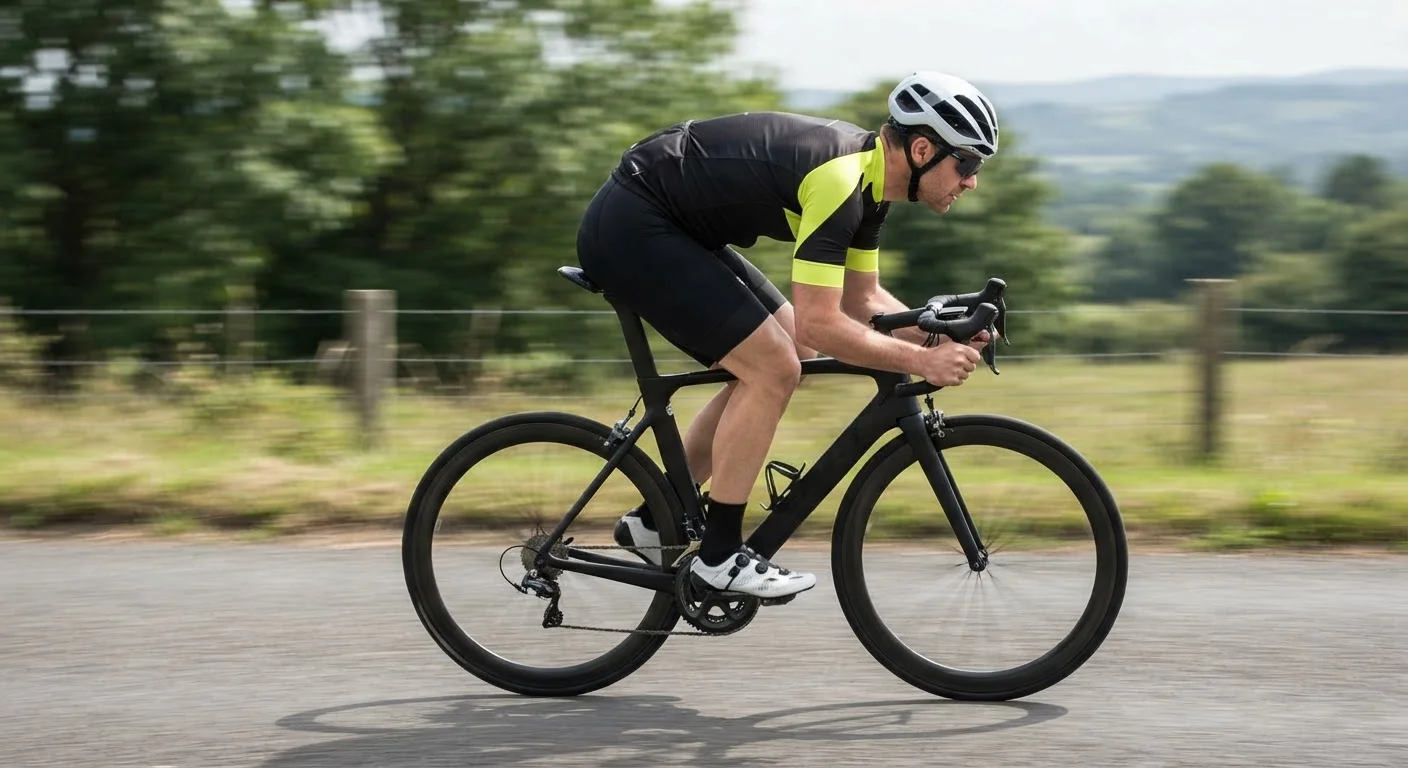
Your riding position tells you more about which jersey to buy than your closet ever will. Bike geometry and jersey cut both describe how much your torso folds forward. Match them and the decision gets easy.
Club Rides: The Balanced Middle Ground
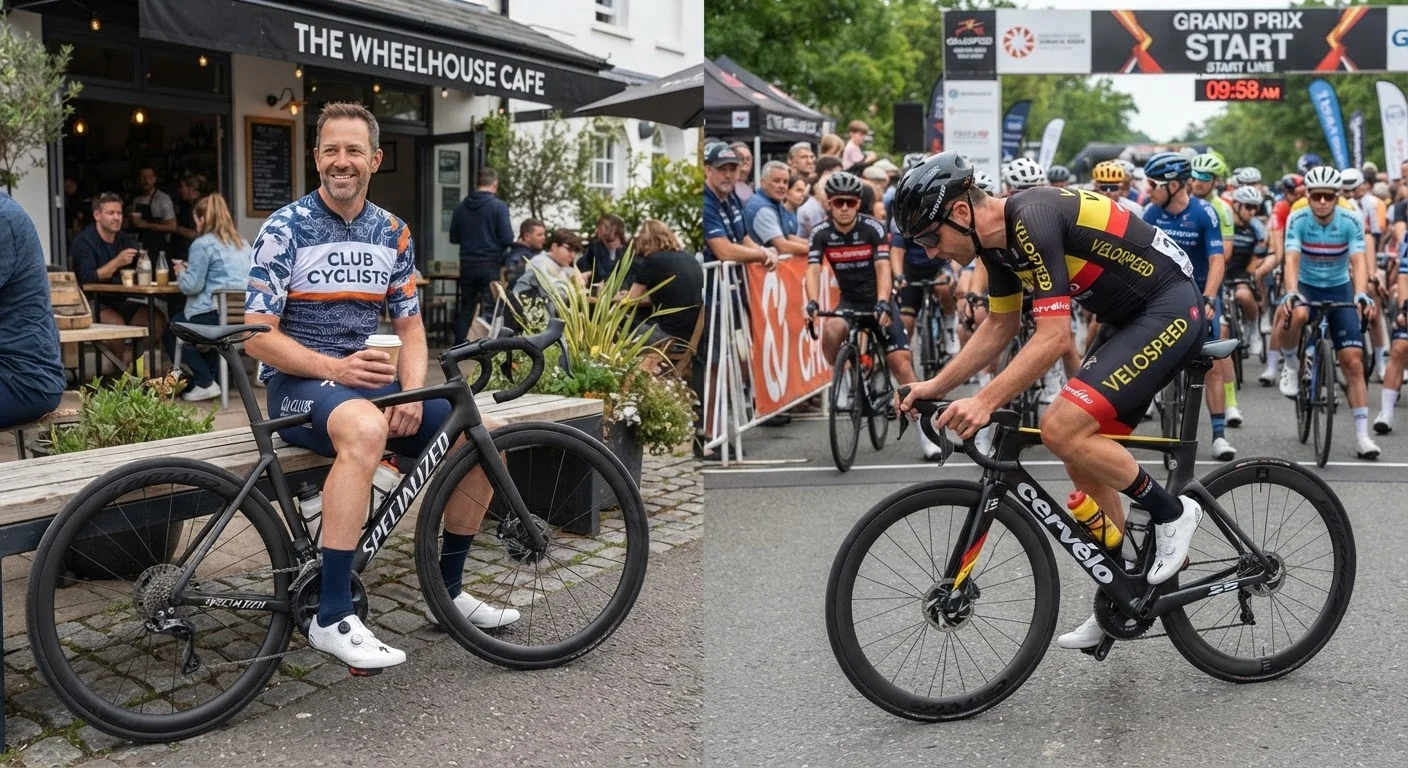
Most club riders and amateur racers sit in what fit guides call a "performance-all-rounder" position, with a stack-to-reach ratio around 1.45–1.55 . It's the sweet spot where you have enough forward lean to hold a paceline at pace and enough openness to breathe through a 3-hour Saturday loop. A club cut jersey matches that posture. It's slightly upright but still aero enough to not get dropped when the group surges.
Endurance Routes: Comfort Wins Over Six-Plus Hours
Push past 1.55 stack-to-reach and you're in endurance territory with a higher stack, shorter reach, and less strain on neck, shoulders, and lower back. Canyon's Endurace (size M) shows this: 590mm stack, 378mm reach , roughly 30mm higher than their race-oriented Aeroad. Bikes built this way usually pair with 28–32mm tire clearance for stability over rough roads. Jersey-wise, this is where a relaxed fit cycling jersey earns its keep.Bulk buyers often compare custom wholesale price options for Club Fit Cycling Jerseys before placing seasonal orders. Your torso stays more vertical for hours, so a jersey with generous chest and waist margin won't fight your breathing on climb four of six.
Racing: Aggressive Geometry, Aggressive Cut
Drop under 1.45 stack-to-reach and you're aggressive: lower, faster, more aerodynamic, and yes, harder on your back. This is race-bike territory, and it demands a race cut jersey to match with a longer back panel, compressed front, built for a body folded over the bars at speed.
Quick rule : if your bike feels stretched, you'd shorten the stem. If your jersey feels wrong for your position, the fix is the same logic: match cut to posture, not just chest size.
Body Shape and Riding Posture: Matching Fit Types to the Rider
Your knees don't lie. Fit professionals measure riders by joint angles now, not just height and inseam, because two cyclists with identical measurements can sit completely differently on a bike. That difference decides whether a club fit cycling jersey or a race fit version works for your frame.
Three Postures, Three Fits
Bike fitters break riding position into three categories:
Upright — knees bend wide, torso stays vertical, best for short club spins and traffic-heavy commutes
Neutral — weight spreads across hands, seat, and legs, the same balance a club cut jersey is designed to support
Extended — low, stretched, folded over the bars, where a race cut jersey earns its aero payoff
Joint Angles Give You the Answer
Endurance riders hold hip angles of 35°–40° and shoulder angles around 85°–90° . Aggressive, race-focused riders drop hip angle to 25°–35° with shoulders closing to 70°–80° . That tighter fold is why race fit jerseys use a longer back panel — your torso needs the extra fabric back there, not up front.
If your elbows stay soft and your spine stays neutral on climbs, you're built for club fit. If your hips close at speed, race cut matches your body's working angle.
Three-Second Fit Self-Test: Decide Before Comparing Sizes
Skip the size chart for a second. Do this instead.
Raise both arms overhead. If the hem climbs past your belly button, you need club fit's extra ease, not a bigger race cut.
Lean forward 45 degrees , hands mimicking your bar position. Fabric pulling tight across your shoulders and gapping at the chest? Race cut. Everything staying flat and unstretched? Club fit.
Slide two fingers under the hem band. Easy glide with room to spare means club fit territory. Snug with real resistance means you're built for race fit's grip.
One more check: faint pressure marks after 30 minutes are normal. Deep red grooves that don't fade mean you sized down too aggressively—regardless of which cut you chose.
Fit first. Size second. That's the whole decision.
Cycling Jersey Sizing Chart Logic: Preventing a Wrong Fit or Wrong Size
A chest measurement alone won't save you. Most cycling jersey sizing charts grade in 2–4 in / 4–5 cm chest increments, with back length climbing roughly 2 cm per size . A men's chart runs 70, 72, 74, 76, 78 cm across sizes. Match your chest but miss that length step, and the jersey rides short exactly where an aggressive position lifts the back panel.
Measure chest at its fullest point, waist at the natural line, and height for torso length. Between sizes? Race fit rounds down if chest and waist allow; club fit rounds up. Women's charts split bust and under-bust separately, since bust-only sizing misfits high-support cuts entirely.
Conclusion
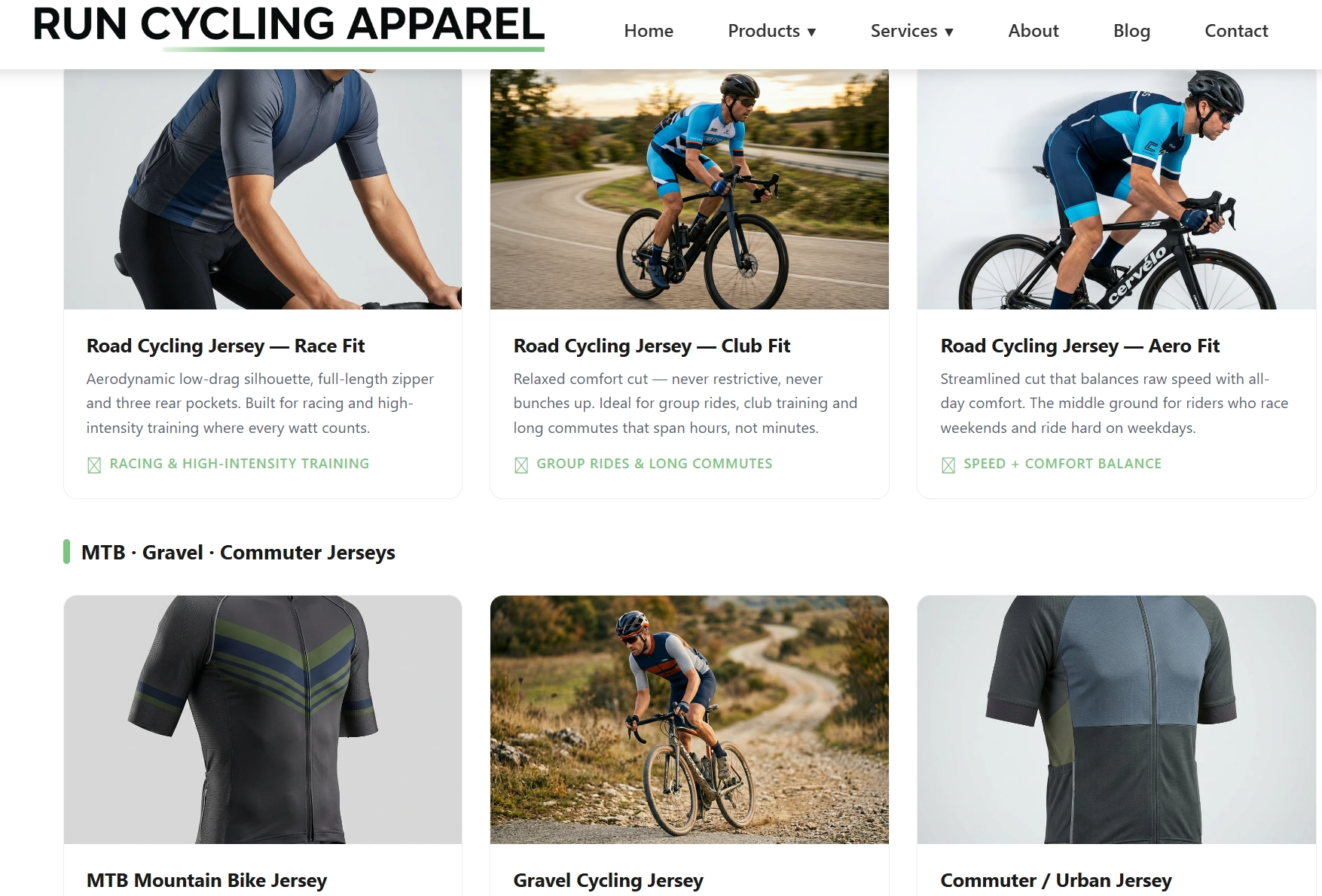
No single jersey is the "better" choice. The right one fits how you actually ride. If your Saturdays are about club miles, coffee stops, and all-day comfort, a club fit cycling jersey with room to breathe wins every time. If you're chasing PRs or lining up on a start line, a race cut jersey that hugs your body and cuts through the wind is non-negotiable.Cycling brands can develop ODM Race Fit Cycling Jerseys with tailored fits, technical fabrics, and unique team details.
Match the fit to your riding calendar. Run the 3-second self-test, cross-check your body type against the sizing chart, and size up one notch for club fit versus race fit. No more guessing, no more jerseys that flap at 30km/h or squeeze at mile 60.
Now go check your closet. If every jersey in there is one fit, you're leaving comfort or speed on the table.