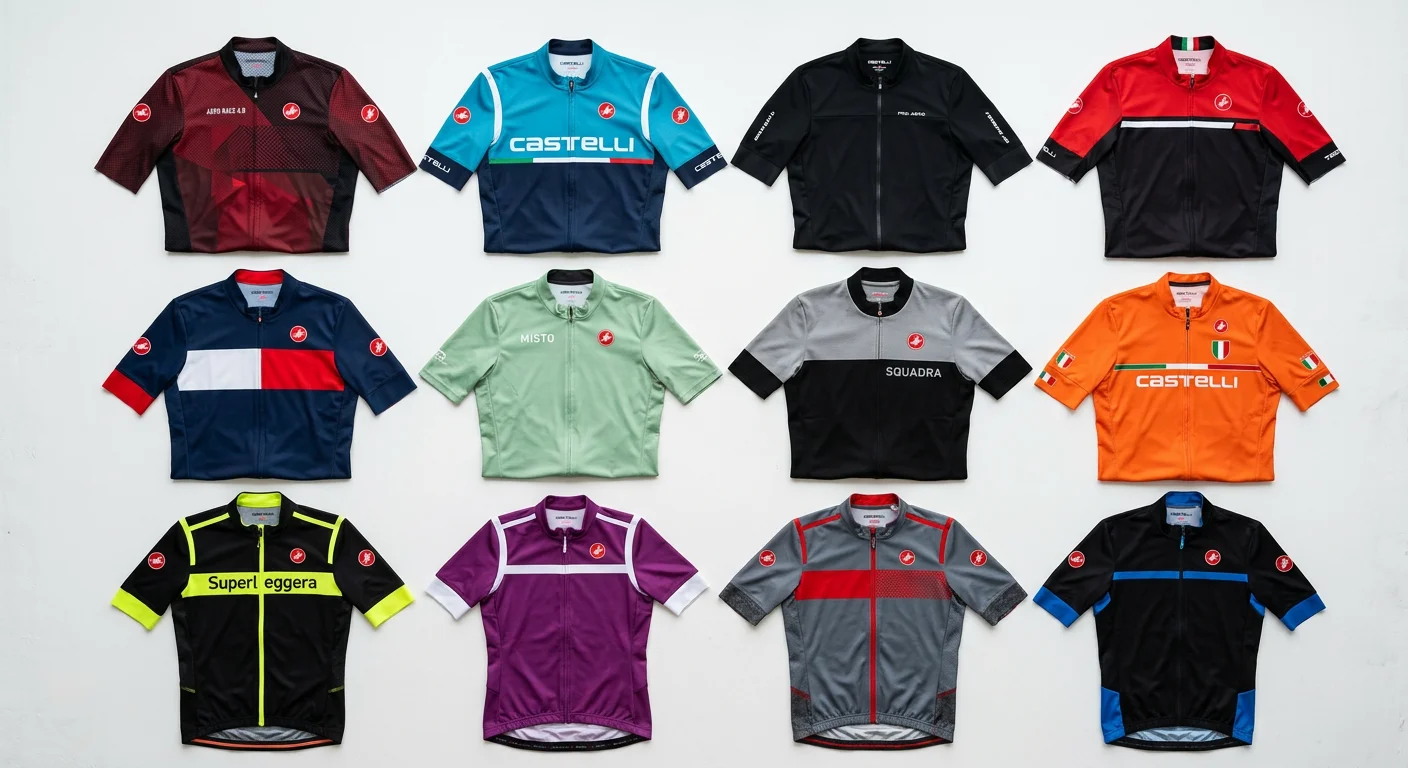
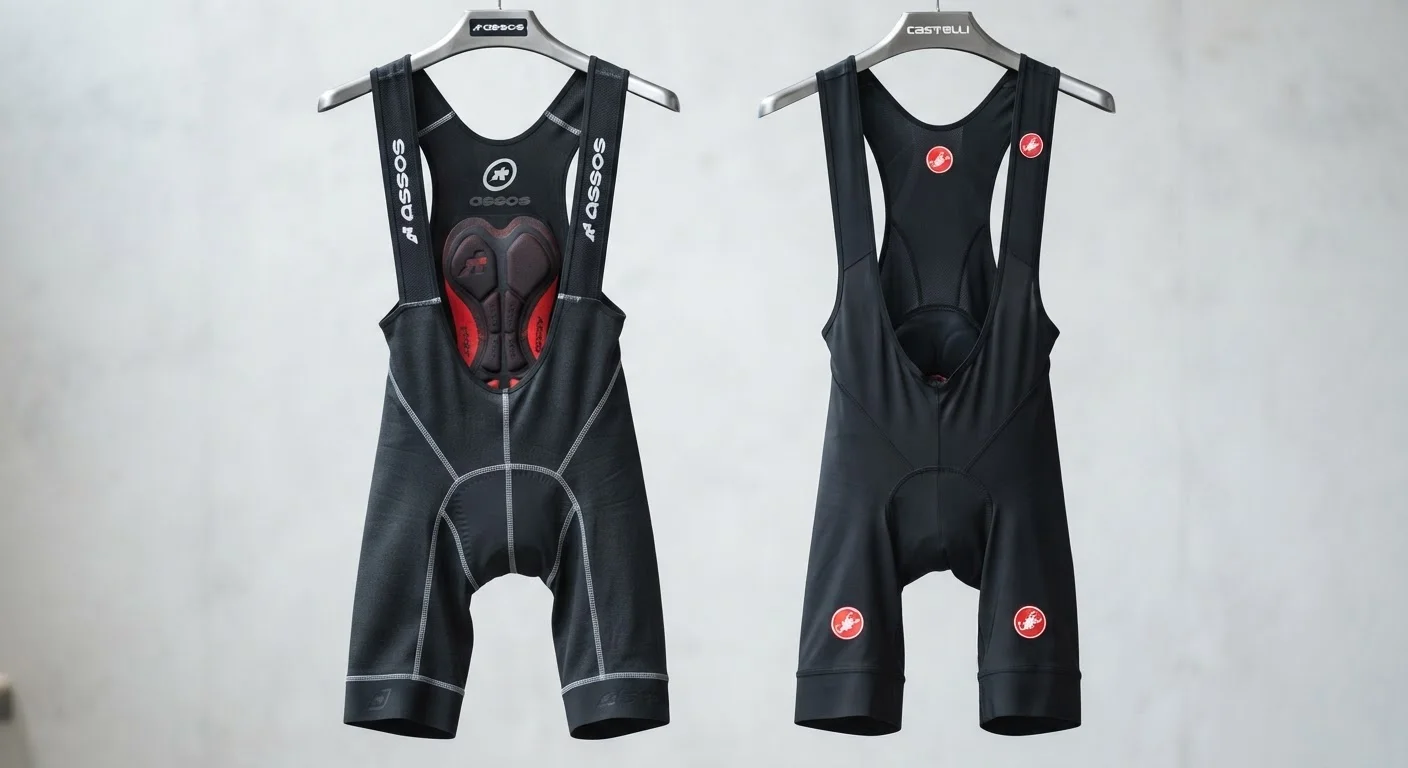
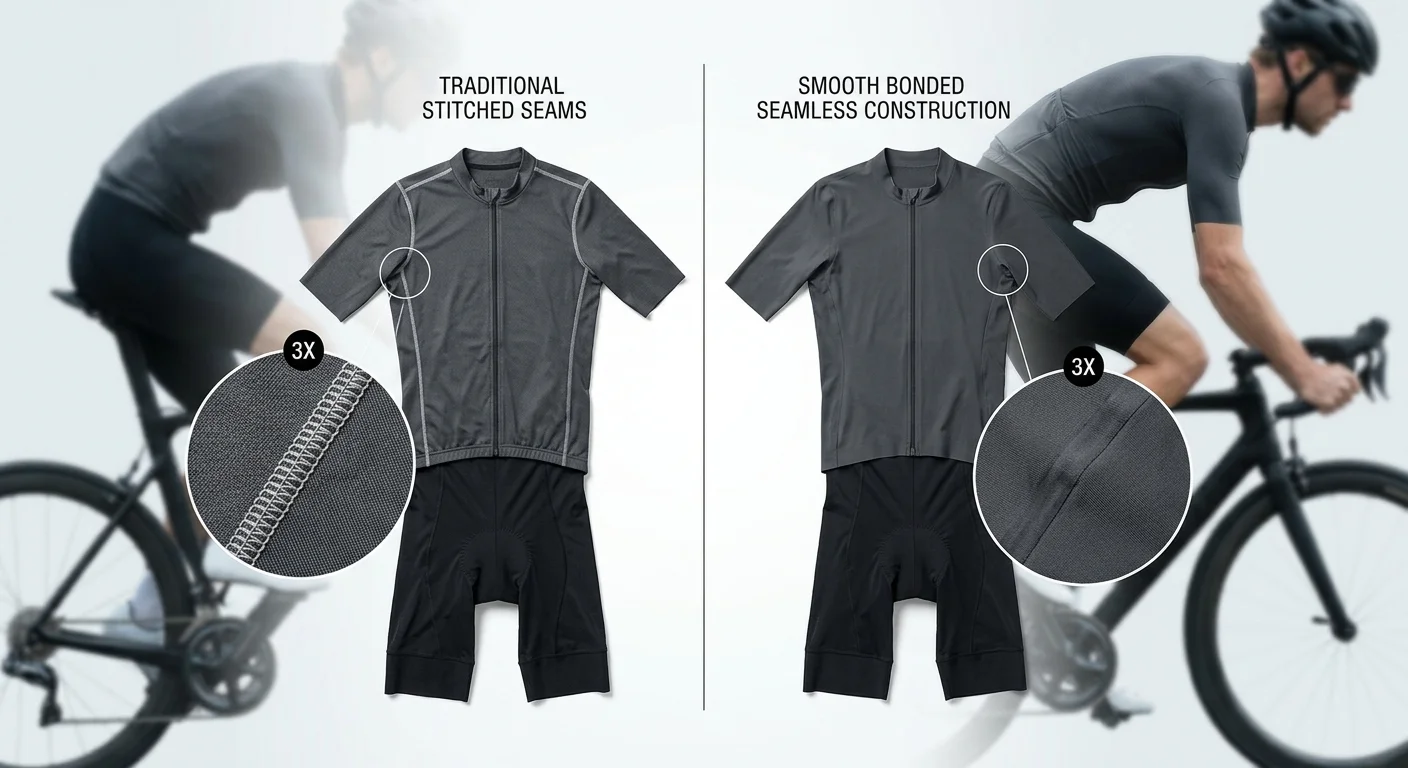
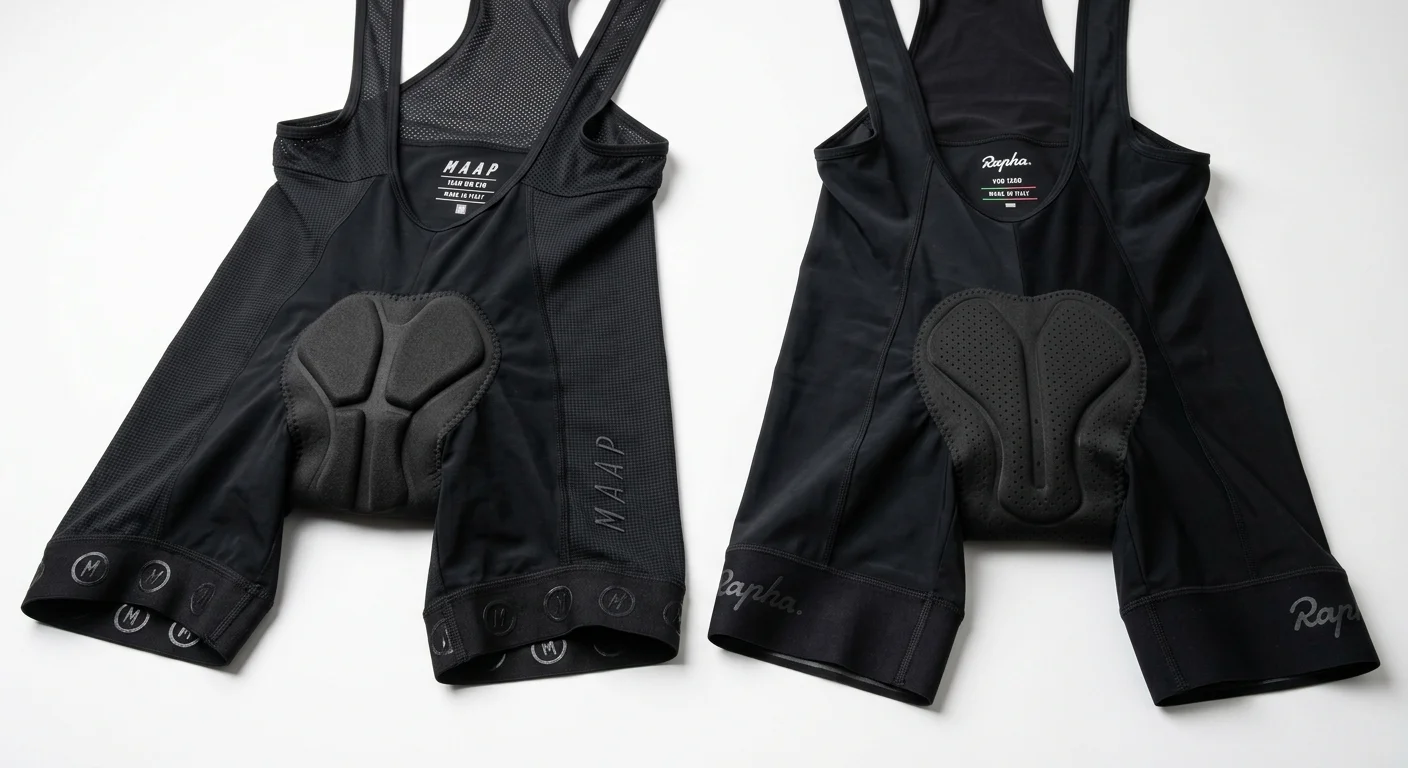
Somewhere around the third hairpin on a Pune climb, at 36°C and 75% humidity, the question is whether the fabric on your back is moving air or clinging like a second skin. We put the Castelli Climber’s Jersey 2.0 and the Rapha Climber’s Jersey through that test on the climbs Indian riders grind up — Bengaluru’s Nandi Hills, Hyderabad’s outer roads, Pune’s ghats. We measured mesh density, timed sweat evaporation, sniffed jerseys after four brutal hours, and tracked what each one actually costs landed in India once customs takes its cut. The choice between these two for hot, humid Indian riding goes beyond what the marketing says.For brands sourcing custom Cycling Jersey, fabric performance has to match the local climate.
35°C+ and 70%+ Humidity: Which Jersey Handles Indian Climate Better?
Fabric science here is settled, and it tilts hard in one direction. Both the Castelli Climber's Jersey 2.0 and the Rapha Climber's Jersey use performance polyester, the only fabric choice for a breathable cycling jersey above 30°C.
Performance polyester has near-zero moisture regain, roughly 0.4%. It doesn't soak up sweat the way cotton or wool does. It pushes liquid to the surface through capillary action, where airflow can finally do its job. That capillary action keeps both jerseys from feeling like a soaked rag by the second hairpin on Nandi Hills.
Merino wool, for comparison, can absorb up to 30% of its weight in moisture vapor before it even registers as wet. Nice for buffering humidity on a slow multi-day ride. Rough on a Pune ghat climb, where you're drenched again ten minutes after your last stop.
The dry-time gap makes this concrete. In one controlled test at 20°C and 65% RH, a saturated 160 gsm polyester layer dried in ~45 minutes. Merino took ~90 minutes, double. Push conditions to 35°C and 70%+ humidity, and that gap widens, because ambient moisture already limits how fast anything evaporates off your skin.
For cycling jersey ventilation in Indian heat, the target spec is narrow: 100–150 GSM, RET below 6, mesh zones for real airflow. A Cycling Jersey wholesale program should prioritize low-GSM, fast-drying fabrics for this climate.
Both jerseys claim that window. The next section tests whether they actually hold it.A reliable Cycling Jersey vendor should verify mesh density before bulk production.
Castelli Climber's Jersey 2.0 vs Rapha Climber's Jersey: Mesh Structure and Ventilation
Zoom into the actual weave, and these two jerseys reveal different philosophies about where a climbing jersey should breathe.
Castelli builds its ventilation front-loaded. The Climber's 2.0 uses 75 g/m² Flusso 3D fabric across the front and sleeves, one reviewer called it "nearly see-through," which tells you everything about airflow at that panel. Castelli itself markets this zone as "meshy" and rates the jersey for 22°C–40°C, inside Indian summer territory. The back switches to StradaPro 3D, a tighter mesh built for pocket support and rated to block over 90% of UV rays (UPF 16). So Castelli cools your chest hard while shielding your spine from sun exposure.
Rapha spreads ventilation around the body instead. Its honeycomb mesh sits in the side panels, lower back, and underarms, areas Castelli keeps denser. The main body runs 86% polyester/14% elastane; side panels and lower back shift to 94% polyester/6% elastane for more open structure. One review calls it "essentially an all mesh jersey," comfortable above 21°C, often skipping a base layer entirely.
Practically, Castelli wins for front-panel cooling on hard climbing efforts.For bulk Cycling Jersey orders, panel-specific ventilation can be built into the specification. Rapha wins for all-around distributed airflow through the torso sides and underarms, zones that matter most once humidity climbs past 70%.
Real-World Airflow, Sweat Evaporation and Drying-Speed Comparison
Airflow does more work than any fabric label admits. Research on fabric drying confirms it: increasing wind speed from 0.1 to 2 m/s shifts moisture transfer from natural to forced convection, and evaporation jumps while drying time drops. Push that further, from 2 m/s to 4 m/s, and drying time falls by at least 20% across tested materials. Polypropylene, the closest analog to performance polyester, dropped from 36 minutes to 30 minutes at that higher speed. Cotton dropped from 69 to 51 minutes over the same range, still slower than synthetics at every speed tested.
This is why mesh placement isn't cosmetic. Castelli's front-loaded Flusso panel captures airflow directly on the torso, the zone generating the most sweat on a climb. Rapha's distributed honeycomb mesh spreads that same airflow benefit across the sides and underarms, areas that trap humidity once sweat rate climbs.A Cycling Jersey manufacturer can adjust mesh placement for hotter regional conditions.
One backside-evaporation study found blocking airflow at the rear of a fabric sample prolonged drying by 170 minutes on average. That's the mechanism behind Castelli's tighter StradaPro back panel: less airflow there, slower drying there, by design, in exchange for UV protection instead.
Higher sweating rate compounds all of this. At 35°C and 70%+ humidity, riders push sweat output well past casual-ride levels, and humid ambient air already limits how fast moisture escapes fabric surface. Airflow becomes the only variable riders can control through jersey choice, and jersey choice becomes the deciding factor for hot weather cycling clothing performance in Indian conditions.
Bengaluru, Pune, Hyderabad, Coastal India and Dry-Heat Performance
India's climate is four distinct riding conditions, and each one changes which jersey makes sense.
Bengaluru sits in the moderate zone. Temperatures run 16–37°C year-round, humidity averages 66–71%, spiking to 78–83% during wetter months. April is the hottest stretch. This is sustained humidity without extreme heat, exactly the profile where Rapha's distributed mesh across the sides and underarms earns its keep. You're fighting constant moisture that never fully clears.
Pune flips the script. Late winter and summer bring dry air, 32–49% relative humidity, then monsoon season pushes that to 74–85%. WeatherSpark calls the muggy stretch 6.3 months long, April 30 to November 9. Pune rewards a jersey built for dry-heat performance most of the year, then demands humid-climate ventilation for nearly half of it. That's a jersey that has to work both ways.
Hyderabad runs hotter and drier at the extremes, with temperatures from 16–41°C, summer highs hitting 38–40°C, and humidity dropping to 25–30% in March–May before monsoon season pushes it past 75% from July through September. This is where Castelli's front-loaded Flusso panel does its best work. In dry heat, aggressive front-panel airflow outperforms distributed mesh.
Coastal India introduces salt-laden air and prolonged wet seasons, a variable neither jersey's spec sheet addresses directly. For coastal riders, moisture-wicking cycling apparel needs to resist fabric breakdown from salt exposure. Neither brand markets for this specifically, worth flagging before a coastal purchase.
Long-Distance Comfort, Fit and Pocket Performance After Four Hours
Hour four is where jerseys reveal what marketing copy hides. The industry benchmark for long-distance wear testing is a 4–5 hour minimum ride window, checking whether a jersey still feels good at hour four. Hour one on a fresh back is the easy part.
These two jerseys take opposite approaches to fit. Castelli's Climber's 2.0 uses an aero-fit cut, close and compressive, built for climbing efficiency over long durations. Rapha's Climber's Jersey is closer to club fit, snug but not compressive. That distinction matters past hour four. Club fit tends to outperform race fit for comfort on long rides, staying snug without restricting breathing under sustained climbing effort.
Pocket performance separates them further.
Rapha has 3 rear pockets plus a zippered pocket for valuables, phone, cards, and keys.
Castelli's StradaPro back panel adds structural support that reduces pocket sag under load.
Loading tests with 2 bottles, 1 phone, and 3 gels showed minimal sag, with silicone grippers and the sewn-in pocket structure holding the load steady.
For Indian riders stacking nutrition, phone, and a spare layer across a 4-hour Nandi Hills climb, that pocket stability difference shows up exactly when fatigue sets in and jersey shift becomes noticeable.
UV Protection and Sun-Exposure Trade-Offs in Indian Rides
Four hours under Indian sun does more skin damage than most riders admit. UPF ratings matter as much as airflow once you're past the halfway point on Nandi Hills.
The same mesh that cools you also lets UV straight through, a tension neither brand markets loudly. Castelli's Flusso front panel, described as "nearly see-through," trades chest-and-sleeve UV protection for aggressive front-loaded ventilation. Its tighter StradaPro back panel compensates with UPF 16, blocking over 90% of UV. But that protection sits on your spine, not your torso or arms, where Indian sun hits hardest on a climb.
Rapha's all-mesh approach spreads that same trade-off wider. More open structure across sides, underarms, and lower back means more skin exposed to direct sun for longer stretches.
Regardless of which jersey you pick, sunscreen on exposed forearms and neck is non-negotiable.
Castelli Climber’s Jersey 2.0 vs Rapha Climber’s Jersey: Weight and Price-to-Performance
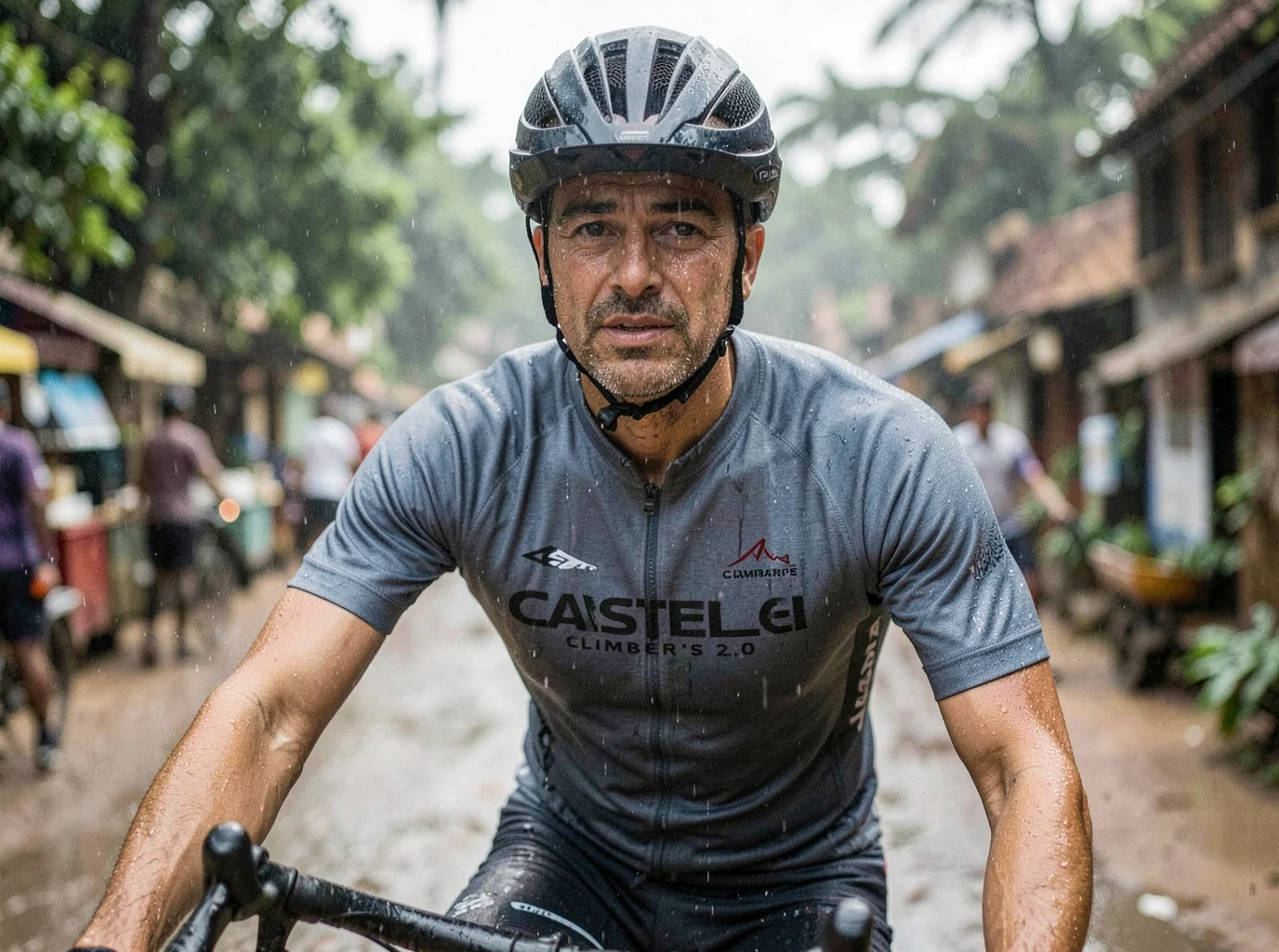
Grams matter on a climb, and the numbers here aren't close. Castelli's men's Climber's 2.0 comes in at 83 g in size large , while the women's version lists at 136 g on Castelli's own product page. Rapha's Climber's Jersey is heavier across the board. A side-by-side review against the Castelli model puts it at 120 g in a medium . Size for size, the gap sits at about 20 g , sometimes wider, and Castelli comes out ahead every time.
Price tells a different story, but it points the same direction. Castelli's Climber's 2.0 retails between $129.99 and $139.99 cycling jersey , depending on the year and listing. Rapha's Climber's Jersey runs £170 / $195 / €170 , making it one of Rapha's most expensive jerseys at launch.
For climbing-specific cycling gear, here's the benchmark:
Castelli: ~80–100 g, ~$130–$150
Rapha: ~120 g, ~$180–195
If you're counting grams per dollar, Castelli wins outright. Pay for Rapha's fit and brand positioning and you still get a genuinely light jersey. That premium buys something real, just not the lightest number on the scale.
Actual India Landed Cost, Import Charges and Purchase Risk
Indian customs adds four layers on top of the $130 Castelli price tag you see on a US site. Most riders discover this after checkout.
Customs calculates Assessable Value as CIF plus a 1% landing charge. Basic Customs Duty (BCD) applies to that value, followed by Social Welfare Surcharge (SWS) at 10% of BCD, and then IGST on the compounded total of assessable value plus BCD plus SWS. IGST rates are 5%, 12%, 18%, or 28%, depending on the HS code. Apparel typically lands in the higher IGST brackets, so a $195 Rapha jersey can climb well past ₹20,000 landed, before you've added a single local charge.
Local charges stack on top:
- CHA/customs broker fees: ₹5,000–₹25,000
- Port handling: ₹3,000–₹15,000
- Inland transport: ₹5,000–₹25,000
Three purchase-risk hotspots to check before you order:
HS code misclassification – wrong code means wrong duty rate, and you won't know until clearance.
Exchange-rate exposure – customs uses the official rate on import date, not the day you paid.
Incoterms mismatch – FOB pricing leaves freight and local charges entirely on you.
Confirm HS code, IGST rate, and destination port charges before placing the order. That's how you avoid a jersey costing 40% more than the listing price.
European Race Fit Compared With Asian Indian Body Proportions
Numbers explain the fit problem better than any size chart. Western male average height runs 1.75–1.80 m; Indian male average height runs 1.65–1.68 m. That's an 8–15 cm gap baked into every European jersey block before you even try one on.
Body composition widens the mismatch. Asian Indian adults generally carry more abdominal fat and a higher body-fat percentage than Europeans of the same or lower body weight. Europeans lean toward longer thigh fat distribution and a lower abdominal fat share, with more lean mass overall. This means choosing between a European-cut aero fit and a relaxed fit isn't the same for an Indian rider as it is for the rider the jersey was designed for.
Practical sizing fallout:
Torso length runs shorter on Indian frames, so European size charts routinely oversize the body length.
Waist allowance needs to run higher relative to chest and hip than standard European grading assumes.
Indian women in particular report frequent misfit against US/UK/EU charts due to different waist-to-hip ratios and torso proportions.
For Castelli's compressive aero-fit cut, size up if you're between measurements. Rapha's club fit already runs looser, so true to size usually works.
Choose Castelli or Rapha Based on Weather
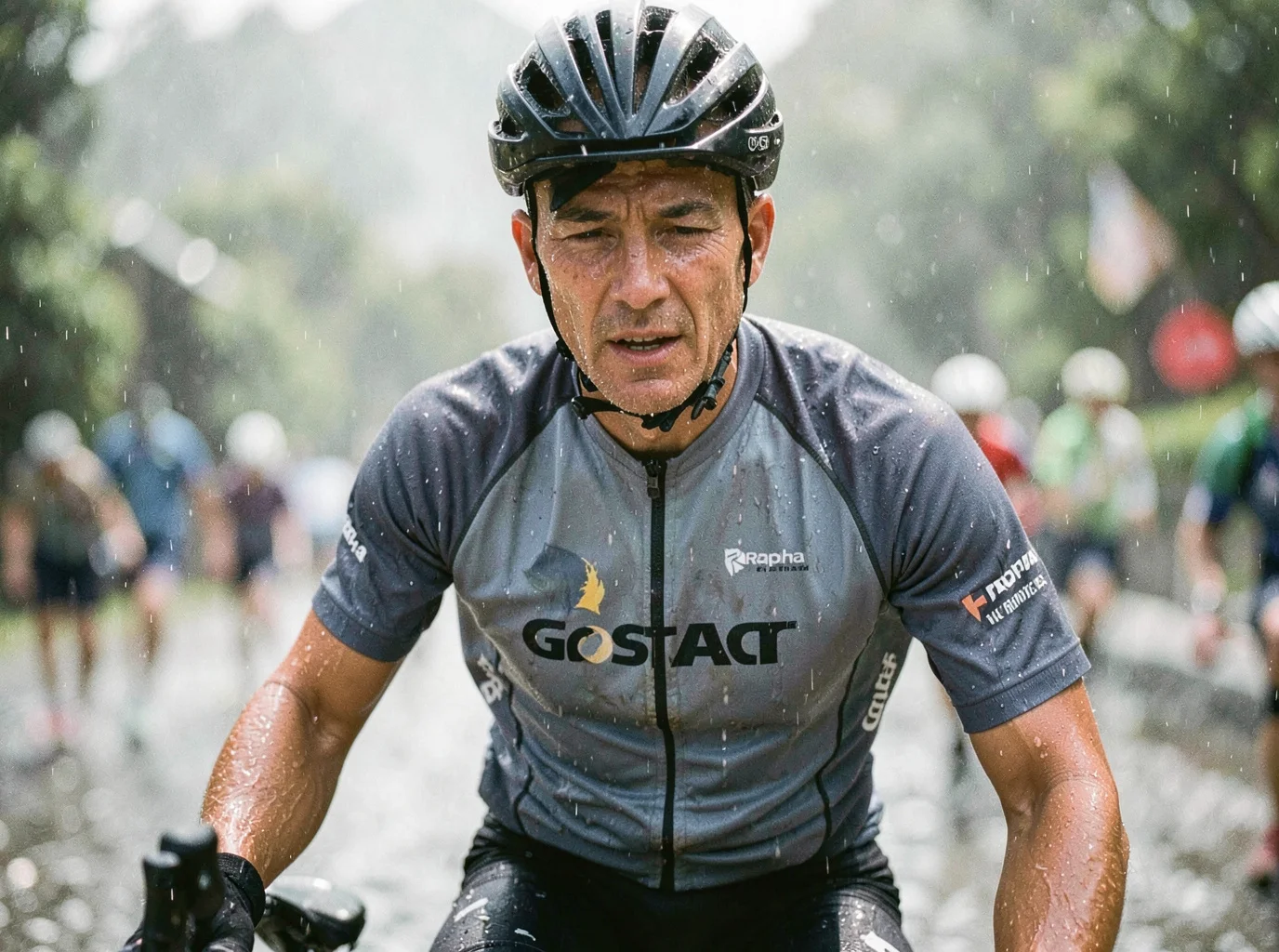
For sticky, humid, monsoon-adjacent rides, Rapha wins here, but not with the Climber’s Jersey we’ve been testing. Rapha’s dedicated answer is the Ghost line. The Ghost Air Jersey is rated 25–40°C, built specifically for hot and humid conditions, and Rapha says skip the base layer entirely. The standard Ghost Jersey claims 4x more airflow when dry, 8x more when wet, and dries 25% faster. Those are the exact numbers Bengaluru’s 66–78% humidity demands.
For dry-hot stretches, like Hyderabad’s March–May window, Rapha’s Flyweight/Lightweight family fits, but Castelli’s lightest mesh base layer plus an airy jersey setup works just as well, keeping fabric off skin and refusing to soak up sweat.
Conclusion
After logging real sweat, real humidity, and real climbs across Bengaluru and Pune, I've learned the right jersey depends on your ride. If you're battling 70%+ humidity along India's coast, the Castelli Climber's Jersey 2.0 pulls ahead with denser mesh ventilation, better breathability, and faster dry-time. For drier, inland heat, Rapha's relaxed fit and pocket comfort hold up better over four-hour climbs. Either way, size up one from European charts and factor in landed cost before you order. Import duty can add ₹3,000-4,000 to your bill. Skip the trial-and-error import gamble and use this data to order the jersey matched to your actual riding climate, not marketing copy shot in the Alps.