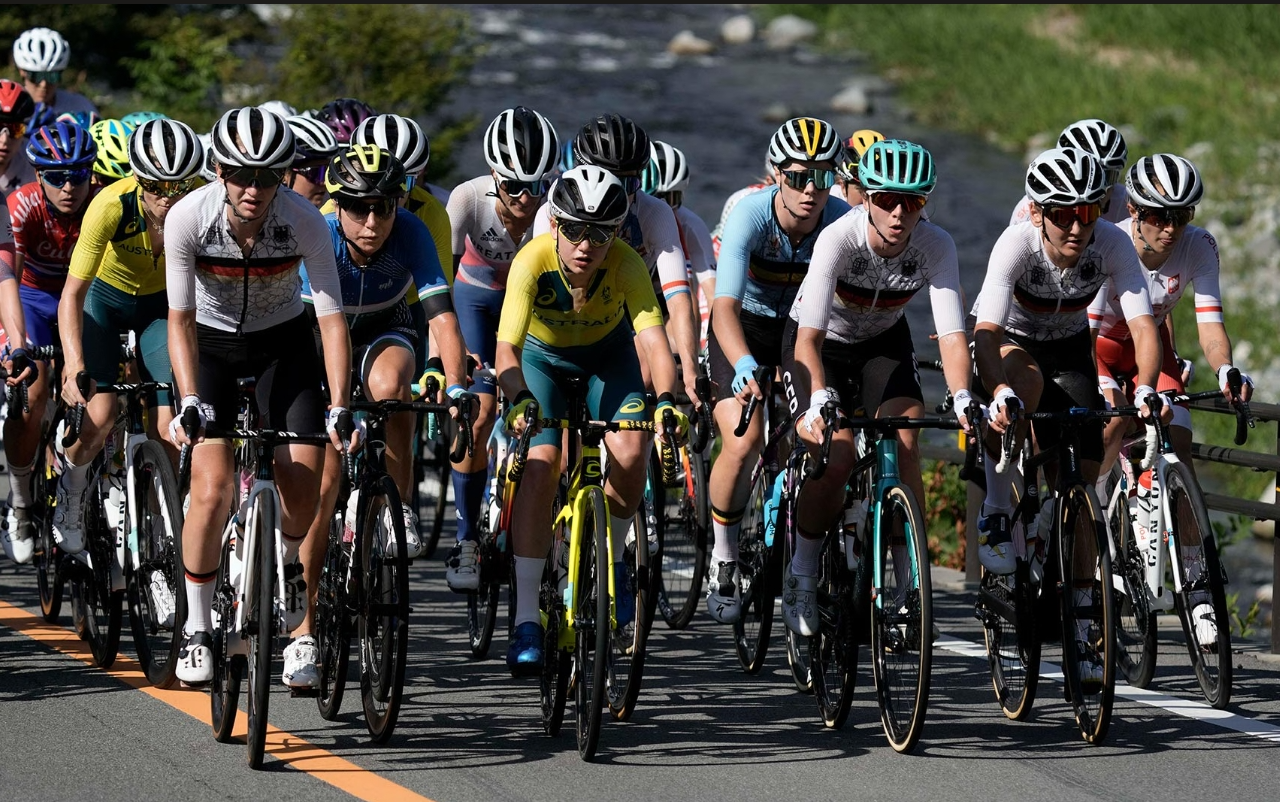
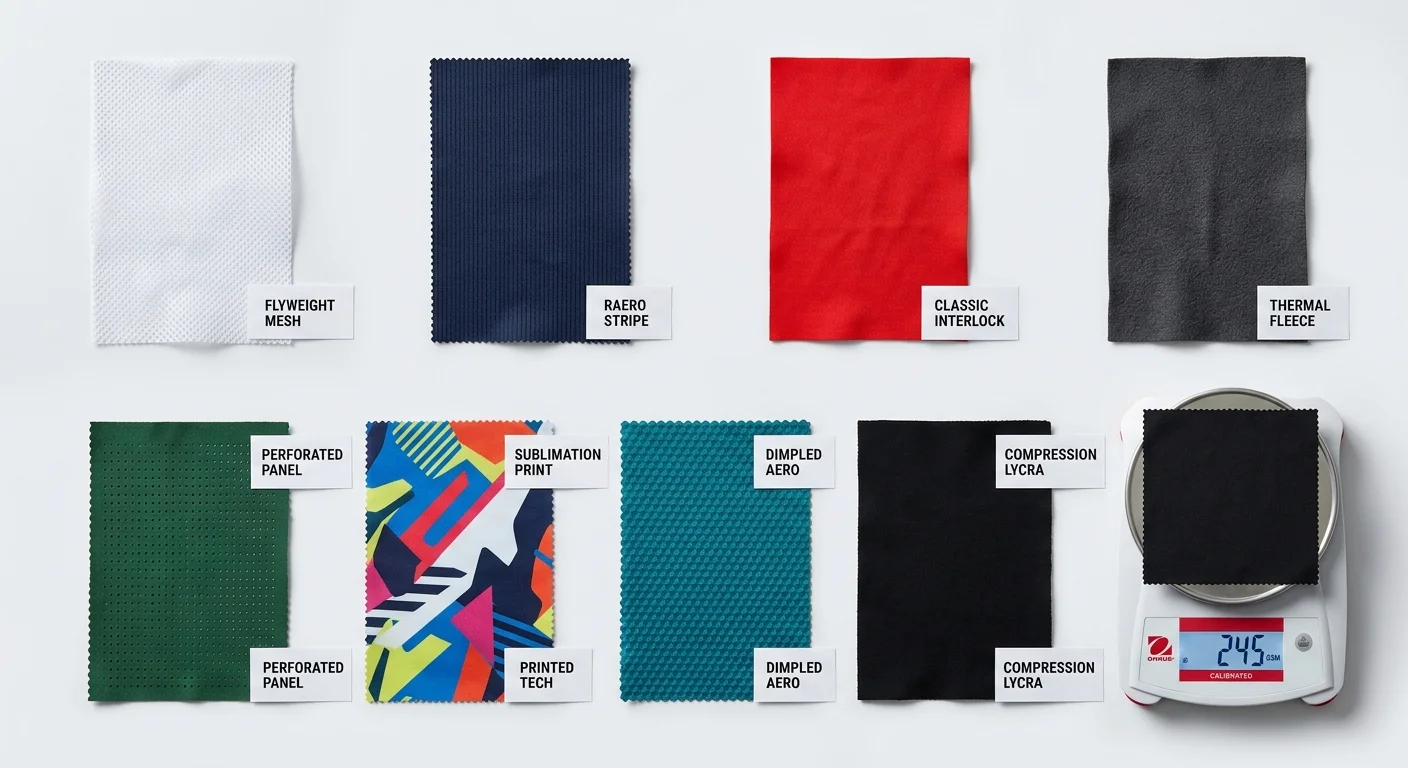
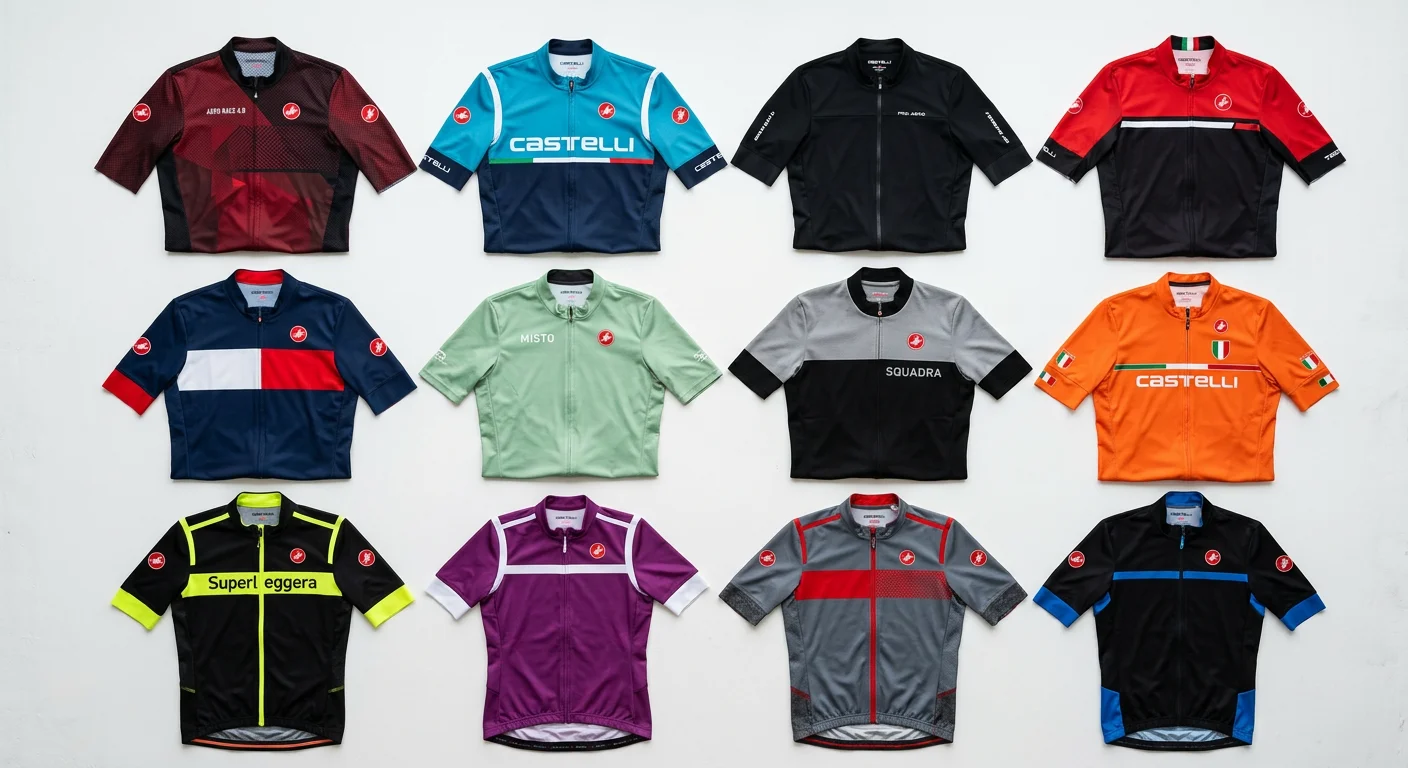
You've felt it mid-ride — that slow, maddening burn where a seam digs in and there's nothing you can do at mile 40. That's the difference between a jersey that disappears on your body and one that fights you the whole way. It comes down to one construction decision: bonding technology vs. traditional stitching.
Both have real strengths. Both have real tradeoffs. What matters is how those tradeoffs hit you — chasing a podium finish looks very different from grinding out a century ride.For cycling apparel brands developing performance-focused products, working with an experienced cycling apparel manufacturer can help evaluate bonding technology, stitching methods, and fabric combinations for different riding scenarios.
This breakdown covers it all:
Aerodynamics
Durability
Skin comfort
Moisture management
Real-world longevity
No fluff. Just what you need to pick chafe-free cycling shorts and ultralight cycling clothing that fit how you ride.
Head-to-Head Comparison: 7 Performance Dimensions That Matter Most to Cyclists
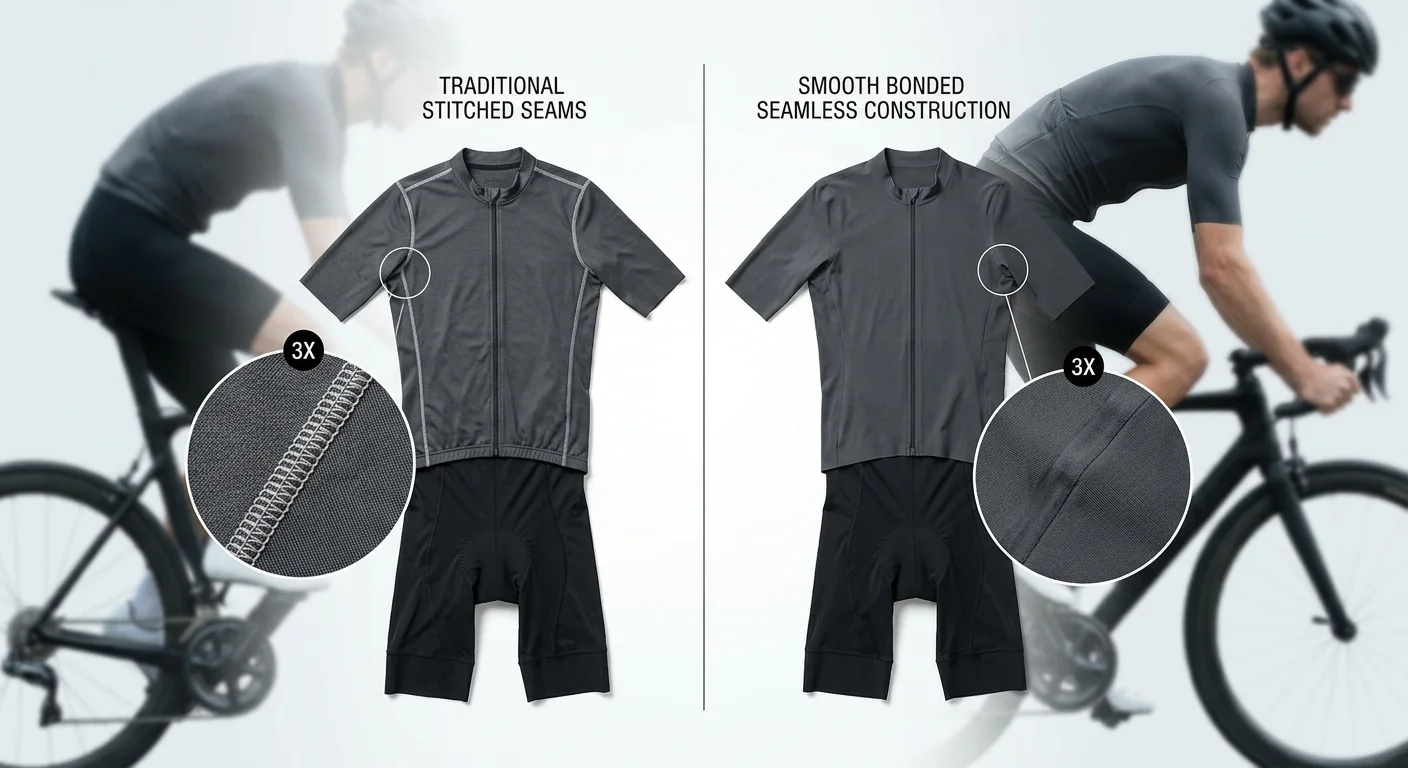
Seven dimensions. One clear winner in each. Here's how bonding technology and traditional stitching stack up where it counts.Brands looking to create unique performance collections can explore custom cycling apparel solutions to optimize seam construction, fit profiles, and technical details based on their target riders.
1. Aerodynamics
Fit wins before fabric does. According to TrainingPeaks, optimizing your riding position alone can save 20–30 watts — the right jersey builds on that gain.
The verdict: A close-cut, low-wrinkle build with tight cuffs and collar edges beats a loose fit. Seam type is secondary. For a true aerodynamic cycling kit , pattern and silhouette matter more than stitched vs. bonded. That said, bonded construction removes raised seam ridges that catch wind at the surface — a smaller but real edge at race pace.
2. Comfort & Chafe Resistance
"Comfort is performance." TrainingPeaks puts it plainly. Any cyclist who has gritted through the last 30 miles of a century ride knows why.
The verdict: Engineering beats padding. Chafe-free cycling shorts don't rely on a thicker chamois. They use fewer seams, better panel placement, and a build that keeps friction off the inner thigh and saddle edge. Both bonded and flatlock seams beat traditional raised-seam stitching here. Bonded edges take the top spot at the most sensitive contact zones — nothing raised, nothing rubbing.
3. Wind & Water Resistance
This is where welded seam sportswear earns its price. Traditional stitching punches hundreds of needle holes along every seam line. Each one lets wind and moisture push through.
The verdict: Heat-bonded and ultrasonic welded seams beat stitched seams for water resistance. They seal the seam fully — no gaps, no perforations. For rain rides, mixed-weather racing, or triathlon transitions, bonded construction wins. The tradeoff is airflow — and that leads to the next category.
4. Breathability & Moisture Management
Dense bonded films can cut off airflow right where you need it most. Traditional stitched construction, paired with open-knit fabric panels and zoned ventilation at the back and underarms, moves heat out faster.
The verdict: For a high-performance moisture wicking cycling jersey , the key is directional moisture transfer. Fast wicking from skin to fabric. Fast evaporation at the outer layer. Open-knit mesh zones and high-wicking yarns beat a tight bonded build during hard, sustained efforts. Breathability and waterproofing are two different scores. Don't trade one for the other without knowing it.
5. Weight
The numbers tell a clear story. Wikipedia's cycling performance data shows that dropping 1 kg from combined rider and bike weight adds 0.01 m/s on flat ground at 9 m/s — but gains 0.04–0.07 m/s on a 7% gradient .
The verdict: Ultralight cycling clothing pays off most on climbs. On a flat criterium, the weight gap between a bonded race bib and a standard stitched training bib barely registers. On a mountain stage or a long gravel day, every gram you cut — from panel count, zipper gauge, and stripped pockets — adds up in ways you feel in your legs.
6. Wash Durability
High-performance construction breaks down at its weakest point. That's almost always the seam under repeated washing — not the fabric. Key testing standards here include ISO 13935 (seam tensile strength), ISO 12947 (Martindale abrasion), ISO 6330 (domestic washing), and ISO 15487 (pilling and appearance change).
The verdict: Long life comes from the full system — strong thread, abrasion-resistant fabric, and a finish that holds past 50 wash cycles. Fabric weight alone doesn't decide it. Bonded seams carry one real risk: delamination over time, especially with hot water or harsh detergents. Traditional stitching, done with high-strength thread and clean seam finishing, tends to outlast bonded builds in long-term wash testing.
7. Cost & Retail Price
Manufacturing complexity drives price — not fabric weight. Here's the practical breakdown:
Tier | Price Range | Typical Construction |
|---|---|---|
Entry-level training | US$30–70 | Standard overlock/flatlock stitching, basic moisture-wicking fabric |
Mid-range performance | US$70–150 | Ergonomic paneling, partial bonding, premium chamois |
High-end race/aero | US$150–300+ | Full bonded seams, aerodynamic sleeves, custom Pad, welded finishes |
The verdict: Welded and aerodynamic builds carry the highest material and labor costs. A well-made stitched training kit — quality thread, solid panels, reliable chamois — gives most riders the best price-to-performance ratio. Performance cycling bib shorts at the race end of the price range are worth the cost if you compete. For training volume, you're buying durability and comfort efficiency, not aero gains.
The Summary at a Glance
Dimension | Winner | Why |
|---|---|---|
Aerodynamics | Bonded (close-fit) | Eliminates surface ridge drag; fit is primary |
Chafe resistance | Bonded / flatlock | No raised seam edge against skin |
Water resistance | Welded seam | Eliminates needle-hole perforations |
Breathability | Traditional stitched + open mesh | Better airflow through seam and fabric zones |
Weight | Ultralight bonded | Fewest panels, thinnest construction |
Wash durability | Traditional high-tenacity stitched | Lower delamination risk over time |
Value | Standard stitched training kit | Lower BOM, reliable longevity |
No single construction method wins every category. The right choice matches your ride type, your budget, and how hard you push your gear.
Cycling Scenario Guide: Which Construction Should You Choose?

The comparison table tells you what each construction can do. Your ride type tells you what it should do for you.
Here's the breakdown — four scenarios, clear guidance on where bonding earns its place and where traditional stitching holds the line.
Road Racing & Triathlon: Go Bonded Where Wind Hits First
At race pace, the gains are small but stackable. Wind tunnel testing across major performance brands shows that bonded construction in key wind-facing zones — shoulders, upper sleeves, chest panel, outer thigh — saves 2–5 watts . That translates to a 0.5–1% efficiency gain . Over a full-distance triathlon, that margin adds up to tens of seconds .
The zones worth prioritizing:
Shoulders and sleeve junction — heat-bonded or laser-cut edges remove surface ridges that disrupt airflow at the shoulder break
Cuff edges — top race kits compress bonded cuff thickness to 1–1.5 mm , with no visible stitch line on the outer face
Chest-to-side panel seam — bonded film keeps the front panel flat. It supports aerodynamic fabrics at speeds above 40 km/h, cutting total drag by 1–3%
Outer thigh seam on bib shorts — bonded tape smooths the leg silhouette and stops airflow separation along the seam line
Don't bond everything, though. The crotch and inner thigh zone needs multi-needle lock stitching with reinforced bar tacks. This matters a lot on 100+ km days. Pure bonding breaks down in high-abrasion, high-sweat areas over time. Secure the chamois with dense stitching, not adhesive. It needs to hold through thousands of sit-stand cycles.For cycling retailers and distributors, partnering with a reliable cycling apparel wholesaler can also provide access to different construction options, helping them offer products suited for racers, endurance riders, and everyday cyclists.
Long-Distance Endurance: Hybrid Is the Right Answer
A 200 km gravel day has different demands than a criterium. Chafe builds up over hours. Weight hits you on climbs. Durability matters across every zone.
The hybrid approach used by endurance-focused brands fits well here:
Bond the collar and cuff inner edges — soft bonded binding at 1–2 mm stops the slow red marks that appear after hour four
Bond the upper back-pocket edge — a hidden adhesive layer keeps each pocket ( 10–12 cm wide, 13–15 cm tall ) holding its shape with a phone and two gels inside ( 200–300 g total load). No stitch line pressing into your lower back
Stitch the shoulder and side panel main seams — these structural lines go through 100+ wash cycles. Stitched construction outlasts bonded builds in long-term durability tests
Stitch the crotch and seat zone — high-density nylon-blend fabrics with multi-needle stitching reach 50,000+ Martindale abrasion cycles without failure. Bonding doesn't come close at that mileage
Mountain & Gravel: Zoned Reinforcement Over Full Bonding
MTB and gravel riding need flex, not just speed. The construction focus shifts to movement range and snag resistance.
Bonded zones that pay off:
Shoulder and elbow outer edges — removes catch points against pack straps or trail debris
Inner calf bonded grip strips — clears the stitch-line pressure mark where the cuff meets knee protection
Keep traditional stitching on the outer leg seams, seat, and crotch. MTB-specific fabrics run heavier — 180–220 g/m² . They use double-needle stitching because crashes and rock abrasion need burst strength, not aerodynamic smoothness. Elbow and knee reinforcement panels use an oversized thread gauge for that same reason.
Wet Weather & All-Conditions Commuting: Seal Everything That Faces Rain
Waterproofing is binary — either the seam stops water or it doesn't.
Use PU or TPU seam tape at 10–20 mm width on shoulders, the back yoke, and every external panel joint. There's no compromise here. Quality all-weather cycling jackets stay dry inside through simulated rainfall at 50–100 L/m²/hour for two straight hours. That performance holds only if every external seam is sealed tight.
Interior mesh, ventilation baffles, and hem drawcord systems can stay stitched. They need airflow and adjustability more than waterproofing. Look for a moisture vapor transmission rate ( MVTR ) of 10,000–15,000 g/m²/24h or above. That's the point where commute-level output stays comfortable without trapping heat inside a sealed shell.
The right call isn't bonded or stitched. It's knowing which zones of your kit need which treatment — and building or buying to match.
The Hybrid Construction Strategy: How Elite Cycling Apparel Brands Get the Best of Both
The best race kits don't pick a side. They engineer a deliberate split.
Brands like Rapha , MAAP, Assos, and Castelli don't debate bonding versus stitching. They assign each construction method to the zones where it performs best. The result is a hybrid construction strategy that no single-method kit can match — not on aerodynamics, not on longevity.
The logic falls into two clear categories:
Bond where air and friction dominate — sleeve hems, leg grippers, chest panels, collar and zip plackets
Stitch where load and fatigue dominate — waistbands, rear pockets, bib strap anchor points, chamois perimeter
At the WorldTour level, that means over 70% of aero-critical seam length (sleeves, shoulders, leg openings) gets bonded or taped. At the same time, over 80% of structural load seams stay stitched. Those aren't random percentages. They show where each construction method holds up under real mechanical stress.
Where Bonding Earns Its Place
Bonded leg grippers cut hem thickness from 2.5–3.0 mm (folded and stitched) down to 0.8–1.2 mm (single layer with tape). That's the difference between a pressure ridge that marks your inner thigh after three hours and an edge you stop noticing by kilometer 30.
On ultralight cycling clothing built for aero performance, bonded sleeve hems remove the 1–2 mm surface step that traditional overlock seams create. Wind-tunnel data from racewear suppliers puts the drag savings at 3–8 watts at 45 km/h . Small on its own. Significant when every other system on the bike is already dialed in.
Bonded construction on heat bonded athletic wear also pays off at collar and cuff edges. Top race jerseys compress bonded cuff thickness to under 1.2 mm , with no visible stitch line on the outer face.
Where Stitching Stays Non-Negotiable
Rear jersey pockets carry 500–1,500 grams of nutrition, tools, and gear. Sprint accelerations and rough road impacts push dynamic forces on those pocket seams to 1–2× bodyweight in short spikes . PU bonding tape doesn't have the fatigue strength to handle that load across a full season of training and racing.
Elite brands reinforce pocket corners and attachment points with 4–8 bar-tacks per jersey . They use lockstitch or zigzag thread at 40–60 tex — a thread weight chosen for tensile retention under repeated load cycles.
The chamois attachment follows the same logic. A pad goes through tens of thousands of compression cycles across a bike's working life. Multi-row lockstitch at 2.5–3.5 mm stitch length is the one construction that keeps consistent attachment without delamination risk. Nothing else comes close.
The Practical Hybrid Map
Here's how a well-engineered performance cycling bib shorts and aero jersey distribute construction across zones:
Zone | Construction | Reason |
|---|---|---|
Leg grippers | Bonded laser-cut edge | Aero + chafe reduction |
Sleeve hems | Bonded PU/TPU tape, 15–25 mm | Removes surface drag step |
Front chest panels | Bonded or minimal flatlock | Faces airflow head-on at race posture |
Side panels & underarm | Flatlock stitched | High stretch + ventilation mesh needed |
Waistband (rear 180°) | Stitched + silicone gripper | Pocket load support + position stability |
Rear pockets | Multi-row lockstitch + bar-tacks | Load-bearing, sweat-exposed, high-fatigue zone |
Bib straps | Fully stitched with reinforced binding | Supports >50% of shorts + cargo weight |
Chamois perimeter | Multi-row lockstitch | Withstands thousands of compression cycles |
The takeaway is simple. Seam-sealing activewear built for real performance doesn't default to one method across the whole garment. It reads each zone by what that zone does — then picks the construction that wins there.
That's the gap between a kit that costs more and one that's built better.
Does Bonded Cycling Clothing Last? Durability, Washing & Long-Term Care Facts
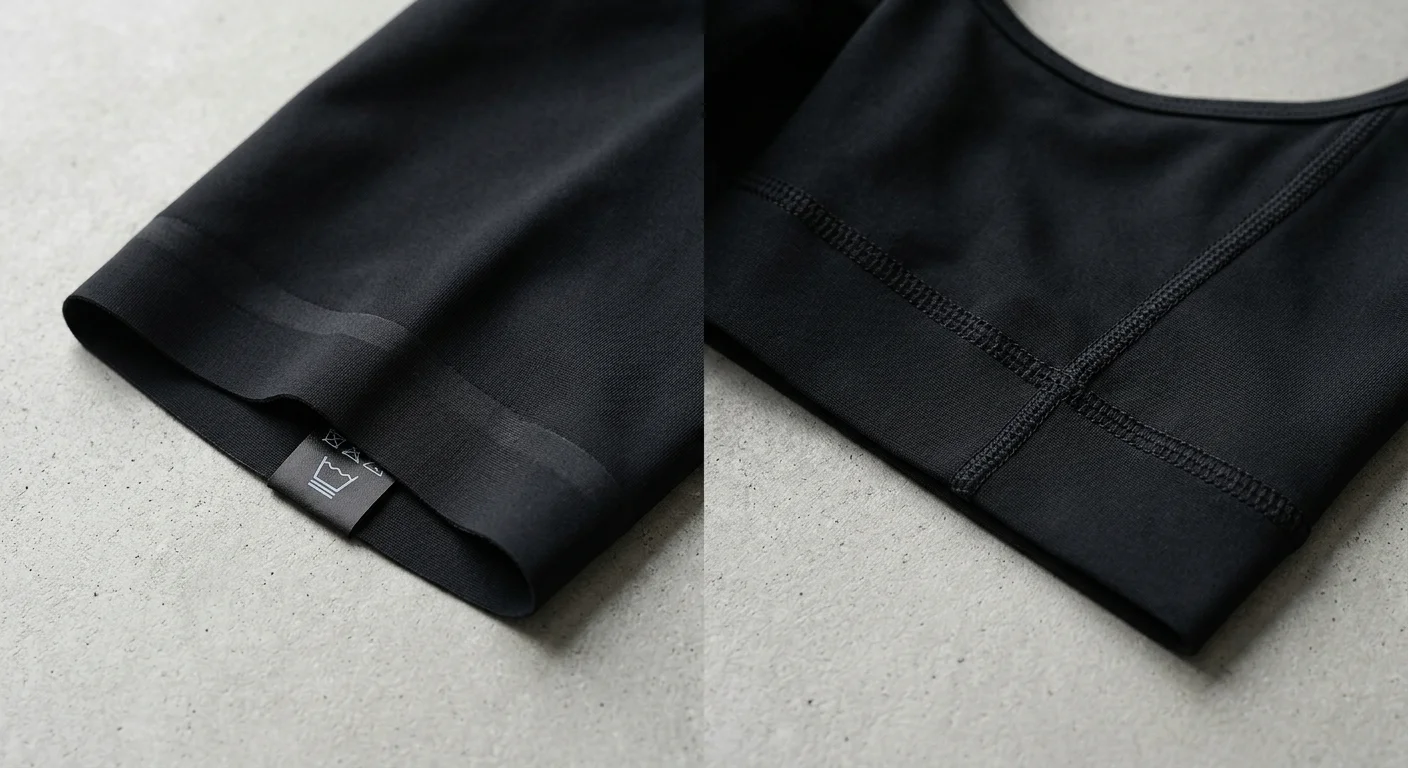
The short answer is yes — but you need to treat it right. The gap between "lasts two years" and "peels apart after six months" comes down to how you wash it.
Here's what the testing data shows, and what it means for your laundry routine.
What ISO Testing Tells Us About Bonded Seam Longevity
Quality bonded cycling apparel isn't measured by feel — it's measured by numbers. The benchmarks that matter:
Seam burst strength ≥ 80–100 N on high-load zones like shoulders and outer thighs
Stretch recovery : no seam gap larger than 1 mm after 20–30% stretch cycles
Wash durability : bonded seams tested under ISO 105-C06 repeated wash protocols — mid-to-high-end brands target 50+ standard wash cycles with less than 10% adhesive strength loss
Ride 3–5 times per week with regular washing. A well-constructed bonded kit holds for 2–3 years without meaningful delamination . That's the industry benchmark for thermal bonding fabric technology built to spec.
The risk isn't the adhesive itself. It's what you do to it.
The Care Rules That Protect the Bond
Temperature is the biggest threat. Every 10°C above 30°C speeds up adhesive aging. That shortens bonded seam lifespan by an estimated 20–30% per step up. At 60°C with harsh detergent, heat-bonded seam strength can drop 20–40% within just 10–20 wash cycles .
Follow these rules without exception:
Wash at 30°C, gentle cycle — never exceed 40°C
No tumble dryer — drum drying at 50–60°C with mechanical impact can cut garment lifespan by 30–50%
No fabric softener — it builds a film at the adhesive layer. This increases seam slippage and delamination over time
No bleach or harsh alkaline detergents — they break down both the adhesive layer and elastane fibers at the same time
Wash inside-out , zip closed, fasteners secured — direct drum abrasion on laser-cut edges leads straight to edge lifting
Air dry flat or hung in shade — UV exposure and heat (including a hot car trunk) speed up Lycra and adhesive breakdown
Bonded vs. Traditional: Care Complexity Side by Side
Traditional flatlock stitching handles heat better. The thread survives warmer washes better than adhesive films do. That's the real tradeoff of seam sealing activewear : better aerodynamics and chafe resistance, but a stricter care routine.
Care Factor | Traditional Stitched | Bonded / Thermal Bonded |
|---|---|---|
Max wash temp | 30–40°C tolerable | Strict ≤30°C |
Tumble dryer | Not recommended, but less damaging | Hard no — cuts lifespan 30–50% |
Fabric softener | Reduces moisture-wicking performance | Risks seam delamination |
Aging signs | Pilling, fading, frayed thread | Edge lifting, seam bubbling, impression marks |
Store your bonded kit dry, in a cool ventilated space, flat-folded or on a wide hanger. Narrow hangers left under shoulder seam tension for weeks put stress on bonded zones that carry more load than you'd expect.
Treat it well, and heat bonded athletic wear holds its structure and performance through seasons of hard riding. Ignore the care rules, and you're not buying durability — you're renting it.
FAQ: Quick Answers to the Most Common Questions About Cycling Apparel Construction
Seven questions. Real answers. No hedging.
Q: Are seamless cycling shorts more breathable than traditional ones?
Same fabric, same weight — seamless wins at the contact points. Traditional stitched zones stack 2–3 layers of overlapping material. That buildup cuts local breathability by 10–20%. No seam means no buildup. That said, fabric structure and GSM still drive breathability more than construction does.
Q: Can you repair a bonded seam once it starts peeling?
No — not at home. Heat-bonded films fuse at 150–180°C under industrial pressure. You can't match those conditions with household tools. The real fix is converting the failed zone to stitching. It's a little less smooth against the skin, but it holds up structurally.
Q: How should budget guide my construction expectations?
Under US$60: Standard overlock stitching, basic chamois. Fine for rides under one hour.
US$60–120: Flatlock seams, 6–8 panel construction, dual-density chamois. Built for 2–4 hour days.
US$120–250+: Bonded crotch zone, laser-cut leg openings, 170–190 g/m² UPF 50+ fabric. Built for 4+ hour efforts and race days.
Q: How do professional brands decide between stitching and bonding?
They don't pick one — they split the job. WorldTour-level bib shorts keep 70%+ of the surface area stitched for structural durability. Then they bond at the crotch, inner thigh, cuffs, and leg grippers — the zones where friction and aerodynamics matter most. Stitching handles load. Bonding handles surface.
Q: What's the smart seam strategy for custom team kit?
For club and amateur race orders: go flatlock throughout, laser-cut cuffs, single-seam or seamless crotch panel. That upgrade alone — over a standard overlock build — makes a real difference in long-ride comfort. Unit cost stays under US$90. For elite squad budgets: add bonding at the aerodynamic zones. Expect US$100–180 per piece at MOQ 20–50 units.
Conclusion
The seam running down your cycling kit isn't just a construction detail — it's a performance decision.
Bonding technology gives you an aerodynamic edge, chafe-free comfort, and clean moisture management. Serious riders need all three on race day. Traditional stitching brings proven durability and breathability. It holds up across thousands of training miles. The best cycling apparel doesn't make you pick one or the other. It puts each technology in the right place for the right job.
Now you have the framework to stop guessing. You can choose with confidence. Targeting a podium finish? Great. Going for your first century ride? Same principle applies. The right construction matches your body, your conditions, and your goals.
Browse the Runcyclingapparel .com performance collection. Look at how each piece describes its seam construction. You'll know what those details mean — and why they matter.
That's the difference between buying cycling clothing and choosing it.