Your feet are freezing at mile ten, and you're standing in a bike shop parking lot with two boxes in your hands, trying to decide if $40 worth of neoprene is going to save your winter rides or if you actually need to drop $150 Winter Cycling Shoes Or Overshoes on dedicated boots. Sound familiar? For most riders, this is the question that determines whether you're commuting through January or hanging your bike up until spring.
We tested waterproof cycling shoe covers against thermal cycling shoes in three brutal conditions: 0°C, -5°C, and steady rain. When we cross-referenced the results against real rider budgets and weekly mileage, the findings came down to how often you actually ride, not which product has the flashiest marketing. By the end you'll know which camp you fall into, with a decision tree you can run through in under three minutes.
0°C, –5°C, and Rain: Which Option Protects Feet Better?
Insulation requirements change the moment you cross below +5°C. Above that, most riders don’t need anything special. Below it, the gap between waterproof shoe covers and thermal cycling shoes becomes real.
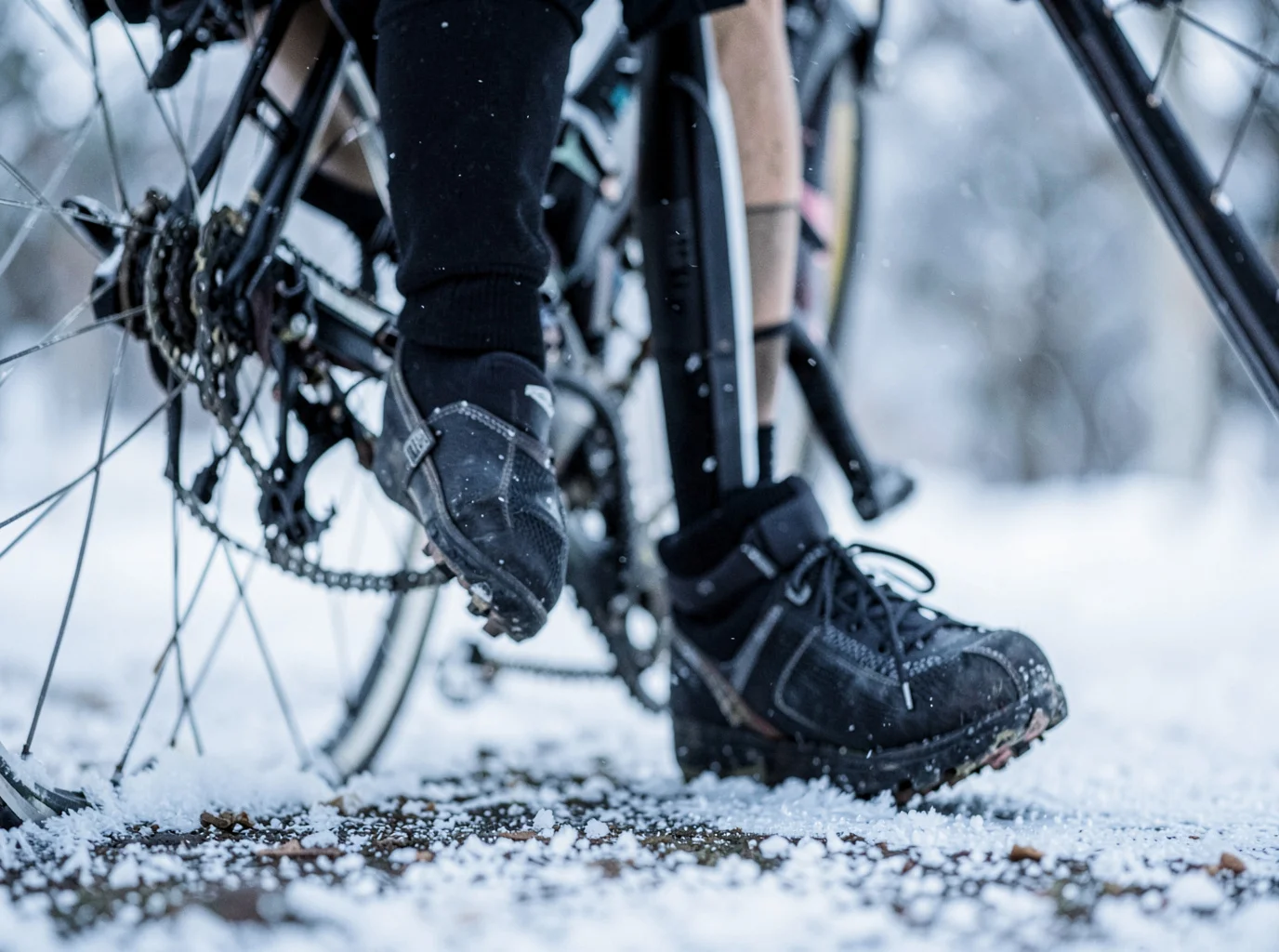
At 0°C , a waterproof insulated boot with seam-sealed construction and a grippy cold-weather outsole outperforms a basic shoe cover or a non-waterproof shoe. Neoprene overshoes work fine with a solid base layer, but you can’t rely on them alone.
At -5°C , insulation decides it. This is where you need thicker insulation—guides point to progressively more material as you move from +5°C down to -5°C and into -15°C. Thermal cycling shoes built like real insulated boots (7mm liners or thicker, rated into negative Fahrenheit) hold heat that thin overshoes can’t match.
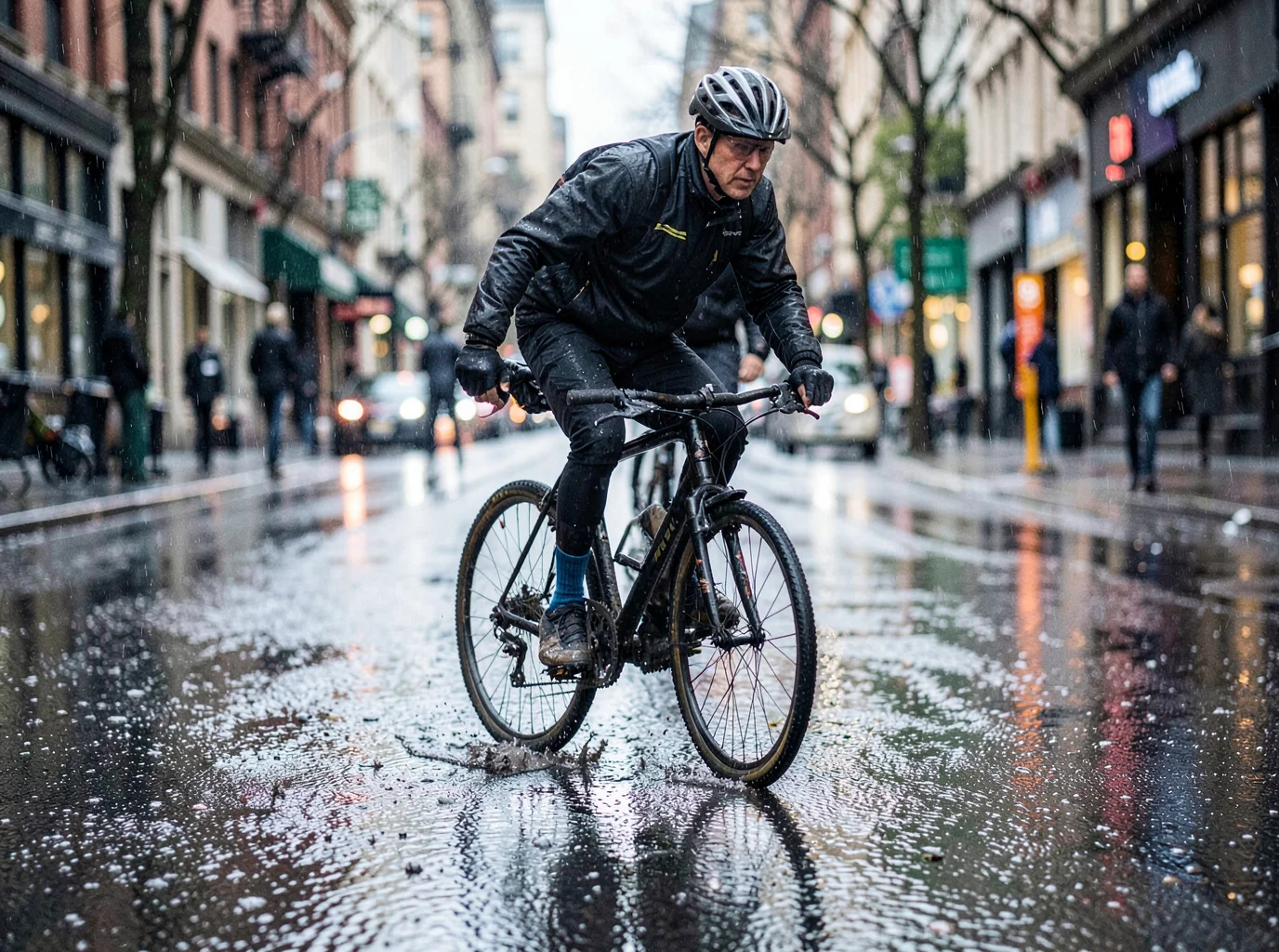
In rain , full waterproofing matters more than insulation. “Waterproof” versus “water-resistant” stops being marketing language. Waterproof gear keeps feet dry through heavy downpours and deep puddles. Water-resistant gear survives light splashes. Taller shafts and sealed seams win here, so a well-made waterproof shoe cover with a proper membrane can compete with or beat insulated boots that skip the sealing.
The construction that works across all three conditions shares a common spec sheet: a waterproof-breathable membrane (GORE-TEX, OutDry, Hydroseal), seam sealing, insulated lining, cold-flex rubber that won’t harden in the cold, and deep lugs for traction. Whether you get that spec in a $150 winter boot or a $40 pair of cycling overshoes stacked on your existing shoes depends on the condition you ride in most.
Cost Versus Use Frequency: When Does Each Option Make Financial Sense?
The value of winter cycling gear depends on how often you use it. A $150 pair of insulated cycling boots and a $40 pair of waterproof cycling shoes covers aren't competing products. They're two different math problems depending on how many times your tires touch pavement between November and March.
The break-even math is simple. Divide the purchase price by the number of times you'll use the gear. That gives you cost per use (CPU), and CPU matters more than the number on the price tag.
Weekend rider (1-2 rides/week, ~15 cold-weather rides per season): Overshoes at $40 ÷ 15 uses = $2.67/use . Insulated cycling boots at $150 ÷ 15 uses = $10/use . Overshoes win here by a wide margin.
Regular commuter (3+ rides/week, ~60 uses/season): Overshoes CPU drops to $0.67/use, but neoprene overshoes take a beating under daily flexing and typically need replacing after one hard season, which resets the cost. Thermal cycling shoes at $150 ÷ 60 uses = $2.50/use , and they're built to survive multiple winters.
Daily commuter across 2-3 seasons (150-225 total uses): Insulated cycling boots fall to $0.67-$1/use , landing in the "excellent value" bracket. This is the same logic behind a $365 coat worn daily for a year. Frequency turns expensive gear cheap.
The hidden-cost catch: factor in replacement neoprene overshoes (roughly $30-40 every season for heavy commuter use) against a durable thermal boot with near-zero maintenance. Run your own numbers against your actual weekly rides. That's the real answer.
Four Real-World Rider Profiles and the Clear Recommendation for Each
Numbers only get you so far. Match yourself to one of these four profiles and the decision gets obvious fast.
The Fair-Weather Weekend Warrior rides road bikes 1-2 times a week, mostly above -5°C, mostly dry pavement. Budget matters more than bragging rights. Go with waterproof cycling shoe covers. A $40 pair of neoprene overshoes over your existing summer shoes handles occasional cold snaps just fine. Add cycling toe covers underneath for extra warmth on the coldest mornings, and you've solved 90% of your winter road cycling footwear problem for the price of two coffees a week.
The All-Weather Daily Commuter rides year-round through genuine winter — snow, sub-zero mornings, black ice on the way to work. This rider logs 60+ cold-weather rides a season and can't afford gear that fails halfway through the ride. Get thermal cycling shoes or dedicated insulated cycling boots. The CPU math already favors boots at this frequency, but the real reason is reliability. Neoprene overshoes for winter flex and crack under daily commuter abuse. A sealed, insulated boot doesn't quit on you at mile eight in a snowstorm.
The Rain-Climate Rider — think Pacific Northwest, UK, or anywhere that measures winter in inches of rainfall rather than degrees below zero — needs waterproofing over insulation. Pick high-end waterproof cycling shoe covers with a real membrane and taller shafts, not the $15 bargain-bin version. Cold isn't the enemy here. Standing water is. A well-sealed overshoe beats a "water-resistant" boot every single time in this climate.
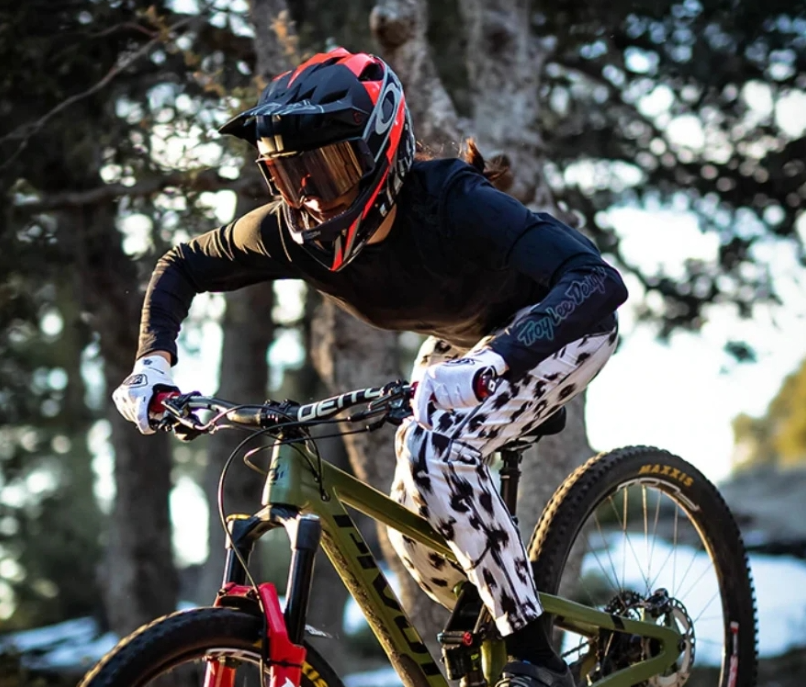
The Mountain Biker Tackling Winter Trails deals with mud, rocks, and unpredictable footing on top of cold. This rider needs grip and structure, not just warmth. Go with insulated cycling boots built with stiffer soles and deeper lugs. Overshoes shred fast on technical terrain, and cycling shoe insulation only matters if the boot survives the ride.
Four different riders, four different answers. None of them require guessing.
Winter Cycling Shoes Versus Overshoes for Road, Commuting, and MTB Use
Cleat compatibility drives this decision, before you even think about warmth. Road winter cycling shoes and road overshoes run on 3-bolt cleats (Look, SPD-SL, Speedplay), so swapping between them is straightforward. MTB and gravel riders don't get that convenience. Overshoes built for 2-bolt SPD cleats need wider sole openings and reinforced tread zones to survive walking off-bike, and most road-style covers aren't cut for that.
Weight and build differ by category too. Integrated winter road shoes run 327–465 grams per shoe depending on size, as a single piece rather than a shoe-plus-cover combo. Overshoes stay lighter and more variable — a GORE-TEX and fleece model from Cycling Weekly's lineup comes in around 200 grams, while thicker neoprene versions add bulk cycling shoes or overshoes for cold-weather performance.
Neoprene thickness maps directly to temperature range:
Thin windproof covers: 40–55°F (4–13°C)
Fleece-lined, moderate insulation: 25–40°F (-4–4°C)
Thick neoprene, 2mm+: 10–25°F (-12 to -4°C)
Below 10°F (-12°C): heavy insulated overshoes recommended
For commuting, removability wins. Overshoes come off the second you're indoors, which matters if you're stashing wet gear at a desk job. Waterproof softshell versions handle mixed wet-cold commutes better than straight neoprene.
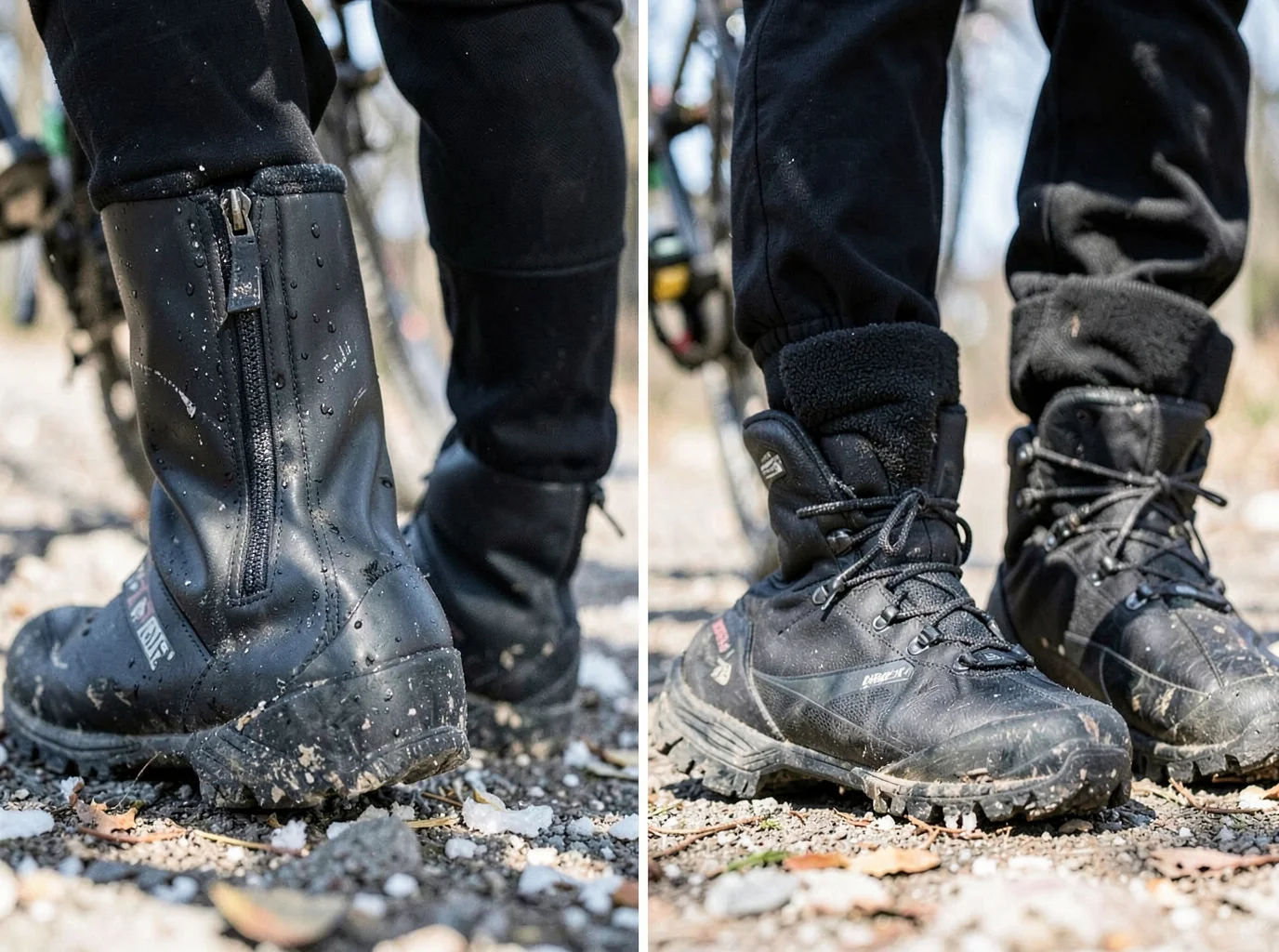
Closure systems and materials vary by use case. Road overshoes lean toward rear zippers or zipperless cuffs for a sleek fit; MTB overshoes favor zipperless, mud-resistant designs since zippers clog fast off-road. Winter shoes themselves often use BOA or dual closures with fiber-reinforced soles, sized roughly EU 36–50. Products like the Fizik Waterproof Winter Overshoe (3-layer membrane, YKK zip) show how far overshoe engineering has closed the gap with dedicated boots — for road riders, at least.
What the Temperature and Waterproofing Data Actually Suggest
Industrial waterproofing standards reveal something cycling brands rarely advertise: a "waterproof" rating on paper and a waterproof product in the field are two different claims. One AS 4654.1 test package required membranes to survive 2 days at 85°C and 2 days at -15°C with zero cracking, fractures, or surface defects. The WPM 750 sample that passed held tensile strength above 3.99 MPa at 85°C and 4.16 MPa at -15°C , with elongation over 500% at both extremes. That's the kind of range a waterproof-breathable membrane in your cycling toe covers or insulated cycling boots needs to survive a season of temperature swings between a warm garage and a -5°C ride.
Freeze-thaw testing backs this up. DOT protocols cycle specimens between 0°F and 40°F , holding the cold end at 0 ± 3°F and the thaw end at 40 ± 3°F. That's the temperature band most winter cyclists ride through in a single season, and the same stress that eventually cracks cheap neoprene overshoes.
The bigger takeaway from testing standards across the industry: a product passing a one-time waterproof test still needs separate proof for hot/cold cycling durability and installation tolerance, because the usable field window is often narrower than the nominal rating printed on the box. That's exactly why a $150 pair of thermal cycling shoes with sealed seams often outlasts a $40 overshoe rated for "0°C and below" — the membrane spec sheet only tells half the story. Test conditions rarely match the ride you're actually doing.
Existing Shoes Plus Overshoes Versus One-Step Winter Shoes: Cost-Efficiency Comparison
Retail pricing tells a different story than the marketing copy. Current waterproof cycling shoe covers run $25–$90: Endura Road Overshoes at $80, MT500 Overshoes at $75, Fizik Waterproof Winter Booties at $70, GripGrab Aqua Shield around $55, and premium picks like Spatzwear Pro Overshoes at $125. Budget hunters can go lower: Dexshell Heavy Duty at $39.32 on sale, Endura Freezing Point II at $27.51, db extreme weather at $24.49, with basic cycling toe covers as cheap as $15.
One-step winter shoes cost more. Benchmark pricing for insulated winter road cycling footwear lands around $100–$250+, with "One Step" branded models retailing at €119.20–€172.00, closer to premium footwear than an accessory.
BikeRadar flags that overshoes commonly cost £50 (roughly $65–$75) per pair, but heavy winter riders replacing them every 1–2 months can burn through about £300 a year. That's more than two pairs of dedicated winter shoes.
The math depends on how long overshoes last. If they survive a full season, they stay the cheaper pick. If they shred in 4–8 weeks, which happens fast with daily commuter flexing, their effective seasonal cost jumps past a single durable boot. The best value is in mid-tier overshoes, $45–$70, which balance weather protection against price without paying for max-performance materials you won't outlast anyway.
Three-Minute Decision Tree for Choosing Winter Cycling Shoes or Overshoes
Skip the research rabbit hole. Run through this four-question filter and land on your answer before your coffee gets cold.
Above 45°F (7°C), riding dry roads? Grab basic cycling toe covers or a light windproof shoe cover. Nothing fancier needed.
Between 35–45°F (2–7°C), dry or mixed conditions? Full windproof overshoes with light insulation cover it. Thin neoprene works fine here too. AGU shoe covers are built for this zone, rated at 5°C and below.
Between 0–35°F (-18–2°C), wet or windy? This is neoprene overshoes cycling territory. Castelli 's Diluvio Pro runs 4mm neoprene for cold-wet riding. BBB overshoes carry a 0–5°C cycling shoes manufacturer rating, though testers at Cyclingnews pushed real-world use up toward 10°C without issue. Prioritize tall cuffs and zipperless designs. Zippers leak; sealed seams don't.
Below freezing, riding long or fighting genuinely cold feet? Step up to insulated winter cycling boots. Lake's CX146 is temperature-rated to -4°C for a reason. Dedicated construction beats stacked accessories once the mercury drops that far.
Conclusion
There's no universal winner between winter cycling shoes and overshoes. The right answer depends on your riding life. If you're logging one or two rides a week in mild drizzle, waterproof cycling shoe covers over your current kicks will save you money and still keep your toes functional. But if you're commuting daily through sub-zero mornings or chasing road miles in genuine winter, thermal cycling shoes are the smarter long-term investment. Your feet (and your wallet, over several winters) will thank you.
Run your numbers through the decision tree one more time: frequency, budget, climate. That's the whole equation.
Now stop scrolling through gear reviews and buy the option that matches your actual Tuesday-morning ride, not someone else's Instagram-worthy winter loop.