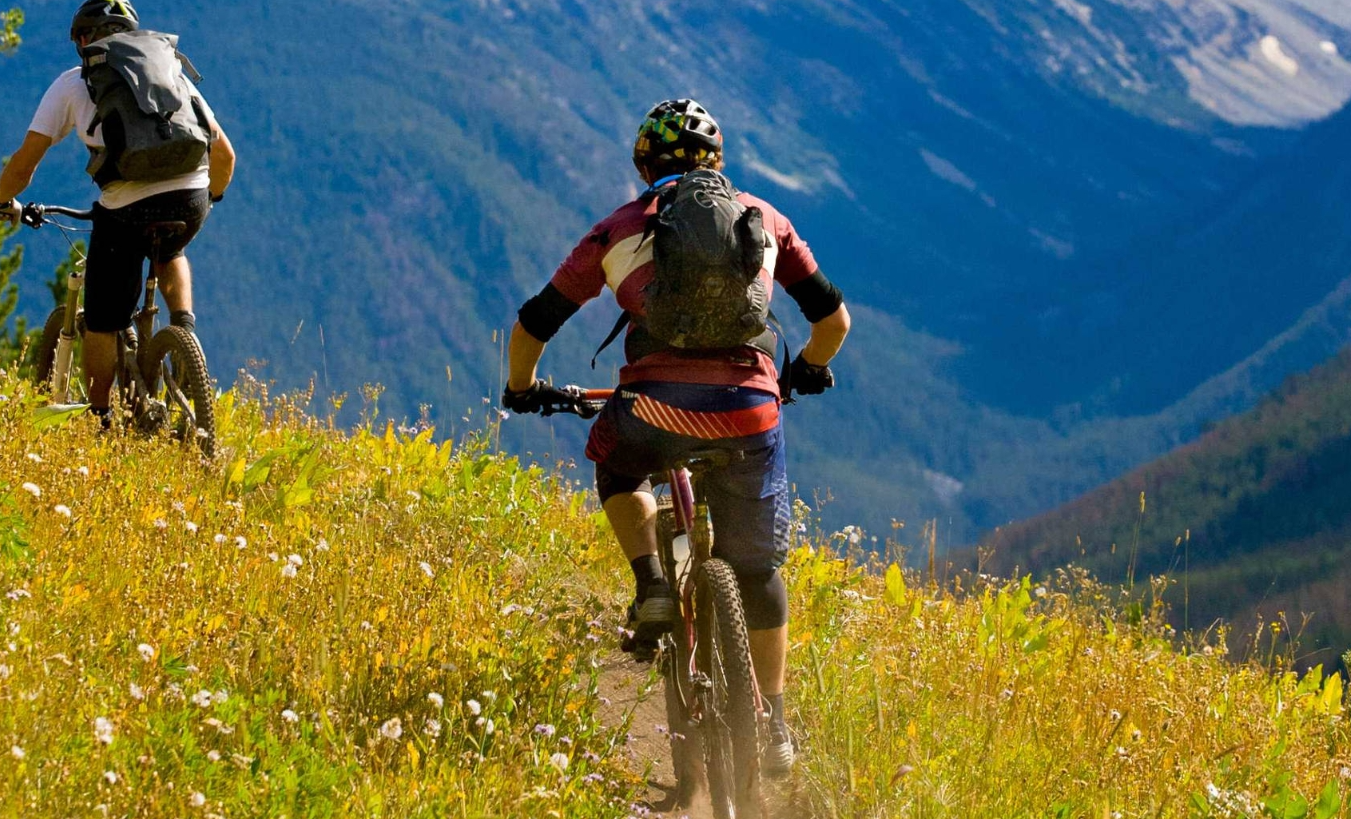
Twenty minutes into a fire-road climb, sweat's already soaking through your jersey, and you're cursing every extra ounce of fabric bunching under your pack straps. Ten minutes later, you're railing into a rock garden at speed, thankful that same jersey's sleeve length kept your elbow pad from riding up when you clipped a boulder. That's the enduro rider's dilemma. No other discipline asks one piece of gear to perform this hard in two opposite directions. After spending a full day testing jerseys through both extremes, I can tell you the answer is a Club Fit bike jersey. It sits in the middle ground between a typical race cut and a baggy relaxed fit. Here's exactly how the fabric weight, sleeve coverage, and torso ease solve the climb-versus-descent problem, and how to check if this fit works for your riding style.Brands can develop custom Enduro Mountain Biking Jerseys around specific fit and protection needs.
What to Wear Enduro Mountain Biking on Long Climbs: 120–180 GSM Breathable, Moisture-Wicking Fabric
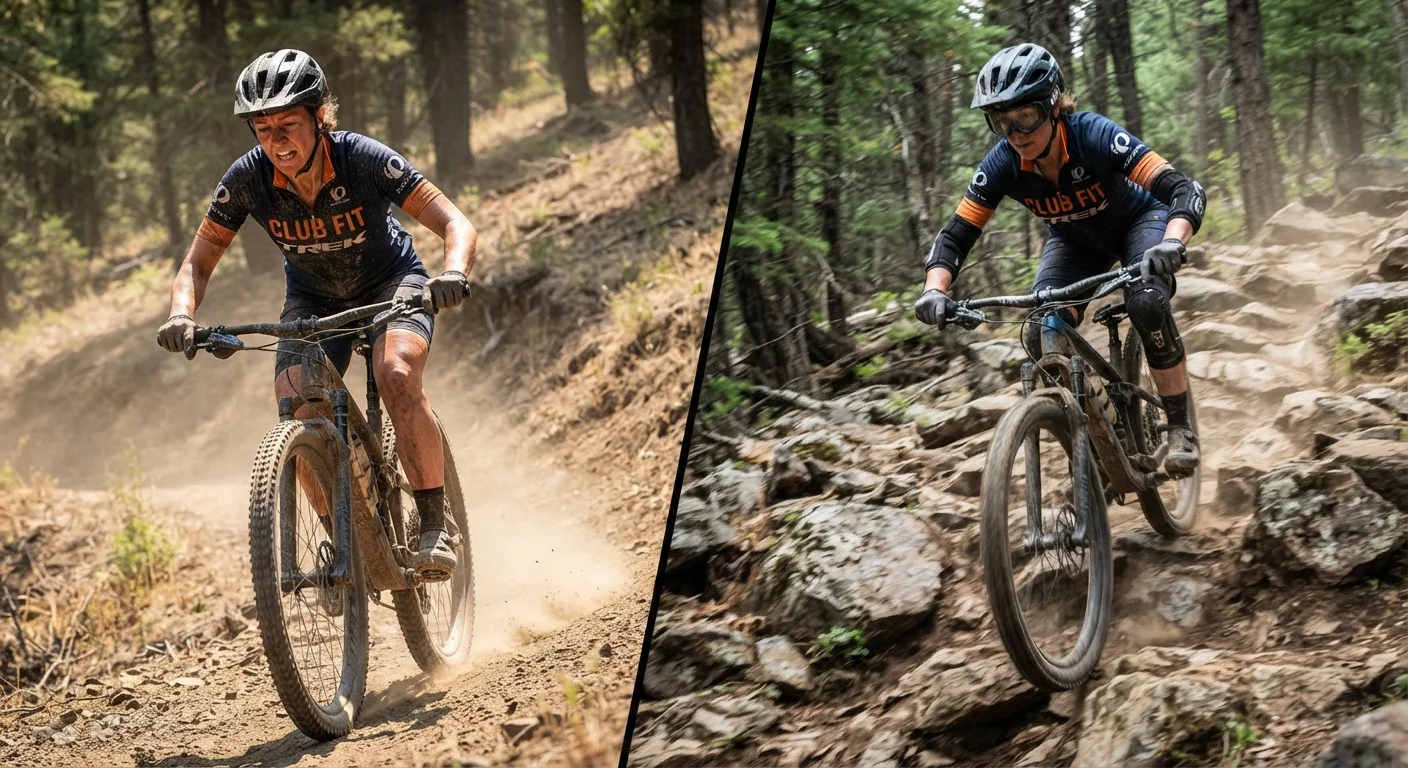
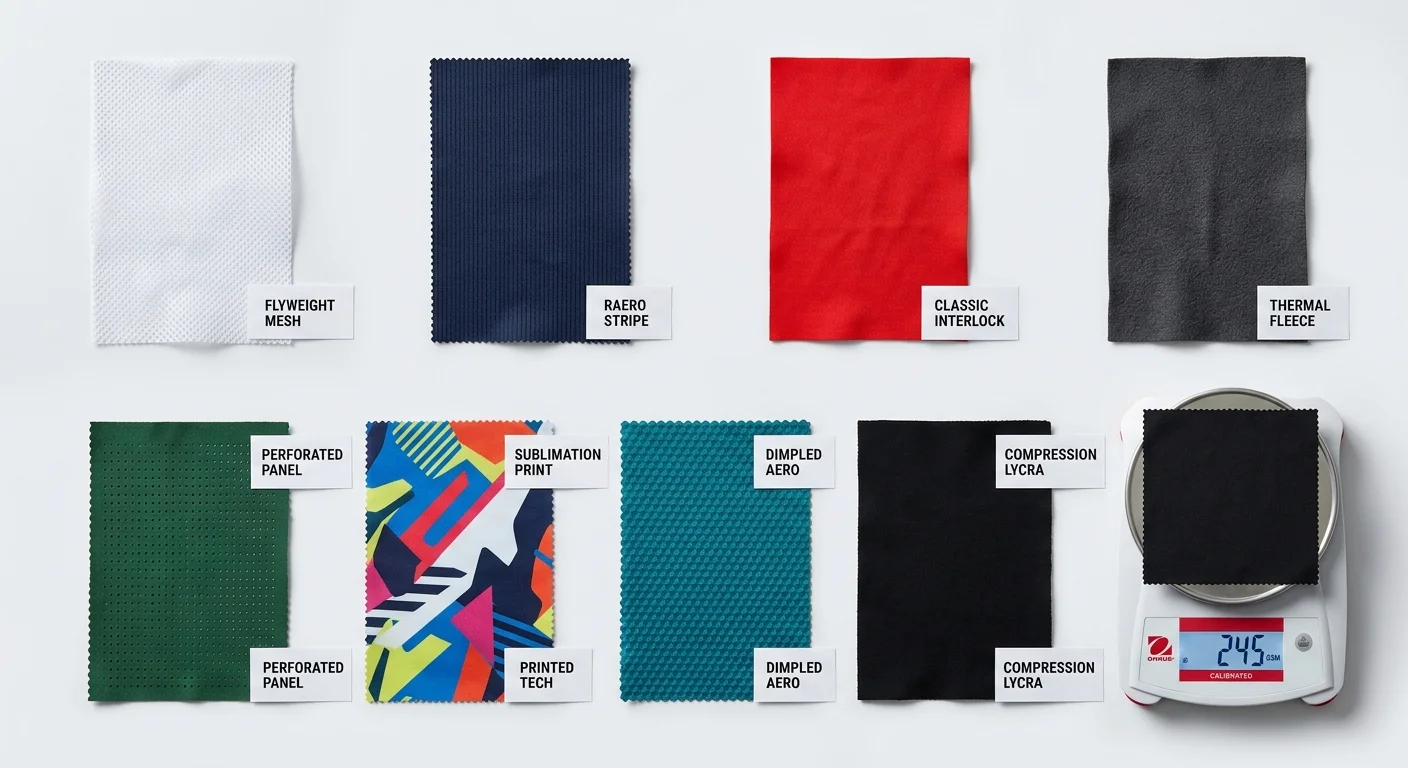
Fabric weight is the number that matters most on a climb, and it's measured in GSM, grams per square meter. For enduro-style ascents, you want to land somewhere in the 120–180 GSM range, with 150–180 GSM hitting the sweet spot most riders settle on. Go lighter than that and you sacrifice coverage. Go heavier and you're carrying sweat instead of shedding it.
Why 150–180 GSM works
It dries fast, so a soaked back doesn't turn into a cold, clammy problem when the trail flattens out. It has enough weight to survive brush contact without feeling paper-thin. And it still breathes under a hydration pack.
Most jerseys in this weight class use 100% polyester micro-interlock , bird's-eye mesh , or a polyester/spandex blend (often 90/10 ) for stretch and recovery. You'll see the same pattern in jerseys built specifically for this discipline. Fox's Flexair Diffuse SE runs 89% polyester / 11% elastane with quick-drying TruDri fabric. Troy Lee Designs' Sprint Pro uses 92% polyester / 8% elastane for the same breathable, moisture-wicking effect. Yeti's enduro jersey pairs a 100% polyester body with wicking panels and HeiQ Pure anti-odor treatment, which matters more than you'd think after a five-hour ride.
Vent panels do the real cooling work. ION builds its enduro jerseys with mesh side panels positioned exactly where sweat pools, calling it "active wicking." Some, like ION's line, add a brrr cooling finish applied directly to the fiber for a sensation that doesn't wash out after a few rides.
If you're chasing pure airflow on brutal climbs, drop to 120–150 GSM with a mesh or micro-interlock weave. An experienced Enduro Mountain Biking Apparel manufacturer can adjust GSM and ventilation by riding condition.If you're layering pads underneath and expect regular brush contact on the way down, push toward 170–180 GSM instead. That upper range still breathes, it just holds up better against the abuse a loose-fitting MTB jersey takes once the trail turns technical.
Enduro Jersey Requirements for Technical Descents: Sleeve Coverage, Abrasion Resistance, and Armor Clearance
Rock gardens don't care how breathable your jersey was on the climb. The moment you point downhill, the game changes. Now you need coverage, durability, and enough room to move without a jersey that binds against your protective gear.
Sleeve length is non-negotiable for technical descent protective gear. Enduro and DH-oriented jerseys almost always run long sleeves or 3/4 sleeves , and it's a functional choice. Short sleeves leave forearms exposed where riders make first contact with trailside rocks, roots, and brush during a crash. Long sleeves also keep elbow pads from creeping down mid-descent, which is the same problem I mentioned earlier when that jersey sleeve kept my pad in place after clipping a boulder.
Abrasion resistance shows up as reinforced sleeve panels, most commonly Cordura®. Fox builds its Defend line with Cordura sleeve panels layered over TruDri moisture-wicking fabric, so you get durability without giving up the sweat management you need on the climb back up. POC does something similar with Cordura sleeves , and some POC lines add Vectran reinforcement for extra tear resistance. One Fox enduro jersey spec breaks down as 78% polyester, 19% polyamide nylon, 3% elastane , a blend chosen to survive brush contact at speed.
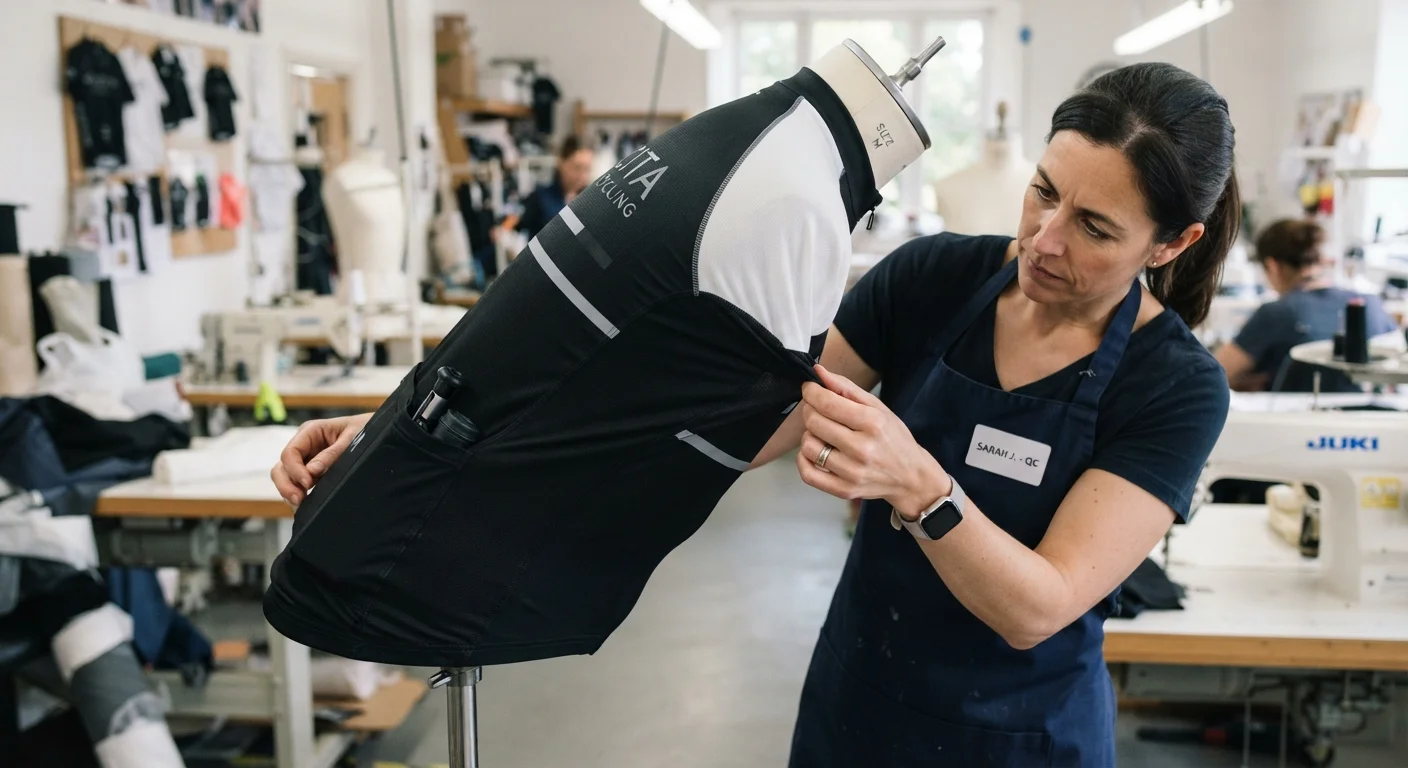
Armor clearance is where fit language matters most. Brands describe these jerseys as relaxed fit , body armor-compatible , or cut to complement body armor . That wording is deliberate. You need torso and arm volume for elbow guards and light chest protection to sit underneath without restricting your reach on the bars or your shoulder rotation through a berm.OEM or ODM Enduro Mountain Biking suits can be developed with dedicated armor clearance.
This is where a race-cut jersey falls apart for enduro riding layers. It's built tight, with no spare volume for armor. A true relaxed fit solves the armor problem but often runs too loose for the climb, flapping under a pack. That gap is why a Club Fit jersey exists in between the two.
How a Club Fit Bike Jersey Bridges Climbing Ventilation and Downhill Protection
Think of a Club Fit jersey as the negotiator between two riders who don't want to compromise. The race-fit rider wants nothing flapping. The relaxed-fit rider wants room to breathe and armor underneath. Club Fit splits the difference by giving you roughly 1.5 to 2.5 inches of torso ease , enough drape to layer light chest protection without turning into a wind sock on the fire road.
The cut borrows from endurance sizing conventions. Many club-fit jerseys reference northern European or US sizing charts and use fabrics like Lancaster micro-mesh, lightweight, quick-drying material that pulls double duty. It vents well enough for a 40-minute climb, then holds its shape well enough to layer over slimline armor on the way down.
Zip design matters more than most riders realize. A half-length or full front zip gives you the same on-demand cooling a race jersey offers, minus the compression that fights your pack straps. POC's Resistance Enduro 3/4 Jersey pairs that half-zip with mesh under the arms and across the back, exactly the placement club-fit jerseys borrow for sweat management on sustained efforts.Teams should confirm their Enduro Mountain Biking Jersey supplier's MOQ before finalizing the design.
Sun and abrasion coverage come built in. Most club-fit and trail-oriented jerseys carry UPF 30–50 protection, some push to 50–75+ on dedicated enduro cuts, plus an elastane blend that stretches with elbow guards instead of resisting them.
The result is a complete trail riding clothing system, not a compromise. You get climbing ventilation on the way up and MTB body armor compatibility on the way down, in one piece of gear.
Race Fit vs Club Fit vs Relaxed Fit Jersey: Compare 0–2, 2–4, and 4–6 Inches
Numbers settle arguments faster than opinions do. So here’s the actual torso ease across all three cuts, measured in total inches of extra fabric around your chest and waist.
Race fit runs 0–2 inches of torso ease. One fit guide specifies 0.5–1 inch chest margin and 0.3–0.7 inch waist margin. That’s a jersey built for road racing and time trials, where wind resistance matters more than layering room. There’s no air gap or space for armor; it’s skin-close by design.
Club fit runs 2–4 inches of torso ease, with 1.5–2 inches chest margin and 1.2–1.8 inches waist margin. This is the “not too loose, not too tight” zone one cycling apparel guide describes, balancing aerodynamics with actual comfort. It’s the category most guides point toward for casual riding and bikepacking, though enduro riders have quietly adopted it because it flexes with the day instead of fighting it.
Relaxed fit runs 4–6 inches of torso ease, sitting at 2–3 inches chest margin and 2–2.5 inches waist margin. This is the mountain biking and commuting cut, roomy enough for clear movement through chest, waist, and belly, but loose enough to flap once speeds pick up on a fire-road climb.
Real-world sizing backs this up. Ostroy’s race-cut jersey in a size S measures 15.5 inches chest under armpit and 14 inches lower waist. Its club-style equivalent, same size, runs 16.5 inches chest under armpit, sometimes wider depending on the size range.
For quick reference: 0–2 inches means race fit, close to skin, no air gap, aero-first. 2–4 inches means club fit, athletic, slightly forgiving, no flapping. Bulk programs can also request a custom wholesale price for Enduro Mountain Biking Jerseys based on volume and specifications.4–6 inches means relaxed fit, roomy, comfort-first, maximum mobility.
For enduro riders comparing relaxed vs race fit jersey options, club fit is the only cut that moves with you in both directions.
Mountain Bike Jersey Fit Guide
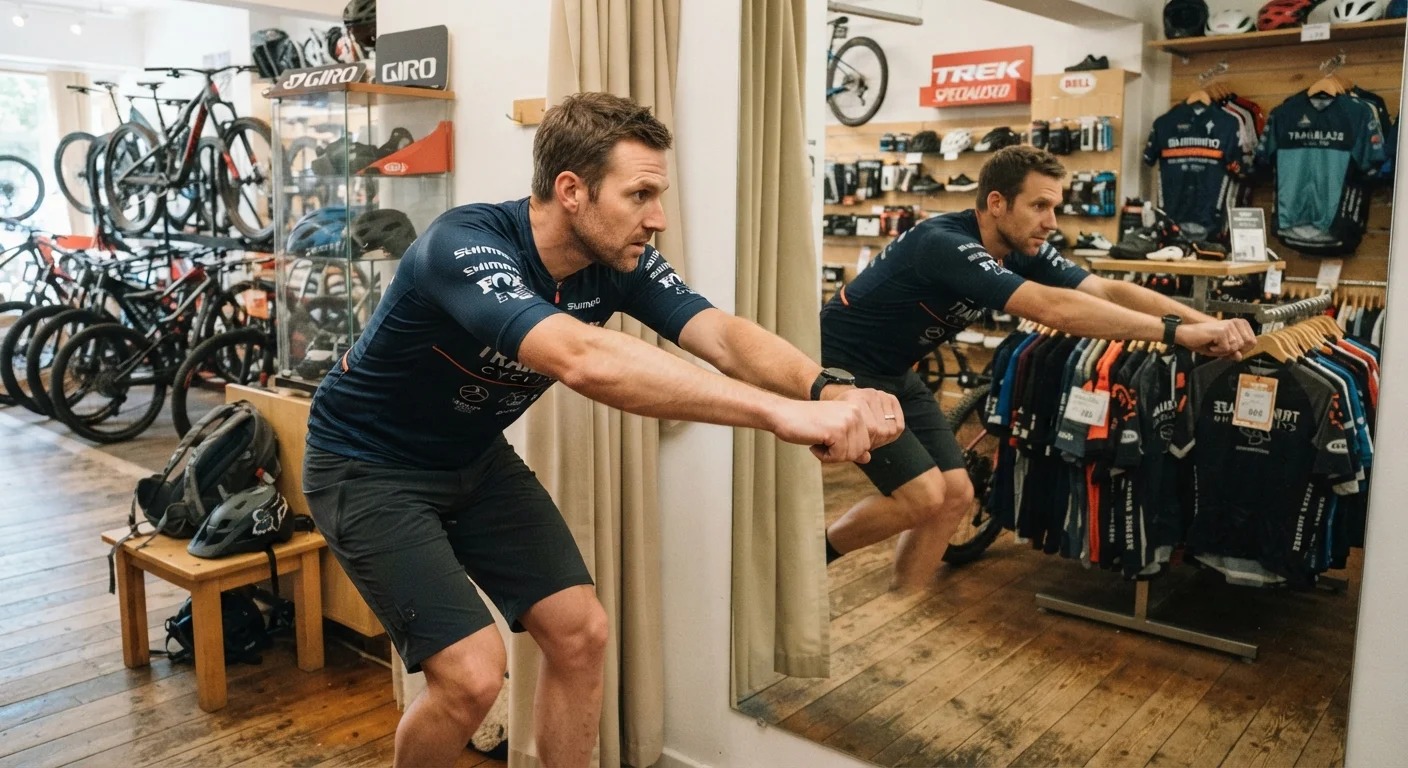
Standing in a bike shop, a jersey almost always looks right. It's not until you're bent over the bars, arms extended, that the truth comes out. Here's the field test that matters.
Sleeve length, checked at rest and in motion. Standing still, the sleeve should sit 1–2 inches above your elbow. Reach forward like you're grabbing your bars, and that sleeve should rise just enough to clear the joint without exposing your forearm. Let fabric hang past the elbow at rest, and you've got a jersey that's too big, one that'll bunch under an elbow pad on the way down.
The elbow coverage check. Do a forward reach in the fitting room. Sleeves should cover the elbow without bunching at the joint or restricting your reach. This single test tells you more than any size chart.
The arm-movement test. Raise both arms overhead, then swing them through a full range like you're pumping through a berm. You want sleeves barely snug — loose enough that all your fingers slide under the cuff, tight enough that nothing flaps once you're moving at speed.
Riding-length drop, front to back. Most MTB jerseys run longer in back than front by design. Look for a hem that drops 2–3 inches below the belly button in back, covering your lower back and the top of your shorts when you're bent over the bike. The front stays shorter so it doesn't bunch against your stomach on the climb.
Riding with armor underneath? Size up. That extra inch in the sleeve and torso keeps this whole system working once pads are in play.
Club Fit Buy-or-Skip Decision: Test Sweat Management on Climbs and Body Armor Compatibility on Descents
Before you buy or skip a club-fit jersey, test its sweat management on climbs and body armor compatibility on descents.
Run the jersey through both extremes before you buy. A five-minute fitting-room check won't tell you what a 40-minute climb and a rock garden will.
Look for a jersey labeled relaxed fit or club fit, with sweat-wicking synthetic fabric, breathable mesh panels, and explicit clearance for elbow guards or a back protector. Fox's Defend line sets the benchmark with TruDri sweat-wicking fabric and a fit specifically designed to leave room for armor underneath. That combination is what you want.
A 100% Ridecamp jersey review flagged exactly this problem, a "fairly tight fit" in a size medium with "no space underneath for a back protector or body armour." That's a race-fit jersey pretending it can do enduro work. It can't.
Pearl Izumi 's own MTB guidance says the jersey should skim the body with room to move and still clear pads. Not hug. Skim.
Run the two-part test yourself. On the climb, does the jersey feel clammy or stuffy under sustained effort? That's a fail. On the descent, does it flutter loose or pinch against your guards? Also a fail. One fit comparison noted club-fit jerseys can create a small fabric catch at the lat and clear moisture slightly slower than race-fit under hard efforts, a fair tradeoff for armor clearance most enduro riders will happily make.
If it passes both tests, buy it. If it fails either one, skip it and keep looking.
Conclusion

By the time you're pinning your elbows through a rock garden with sweat still drying from the climb behind you, you don't have time to negotiate with your gear. The real test of an enduro kit is how it performs in the fifteen seconds it takes to switch from spinning uphill to hanging on for dear life going down. What we've found, riding the same loop in three different cuts, is that a Club Fit Bike Jersey earns its keep precisely because it refuses to specialize. It breathes like a moisture-wicking mountain bike jersey should on the switchbacks, then tightens up just enough to keep armor in place when the trail drops out from under you. Don't take our word for it, though. Try the sweat test on your next climb, then the armor-clearance check on the descent. If both pass, you've found your one-jersey solution. For larger teams, a custom Enduro Mountain Biking Apparel collection keeps fit, branding, and production consistent.If not, you've saved yourself a return shipping label.