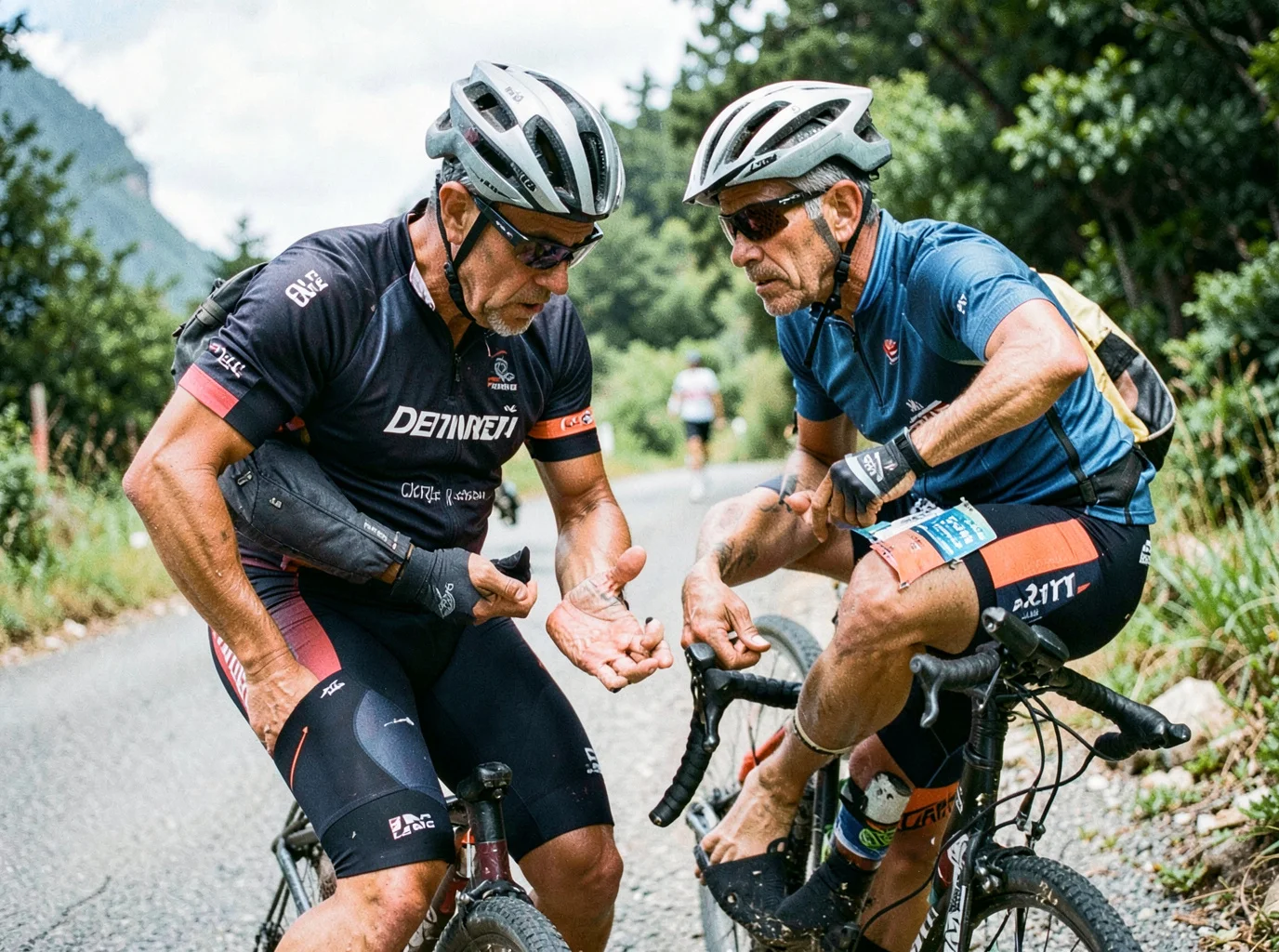
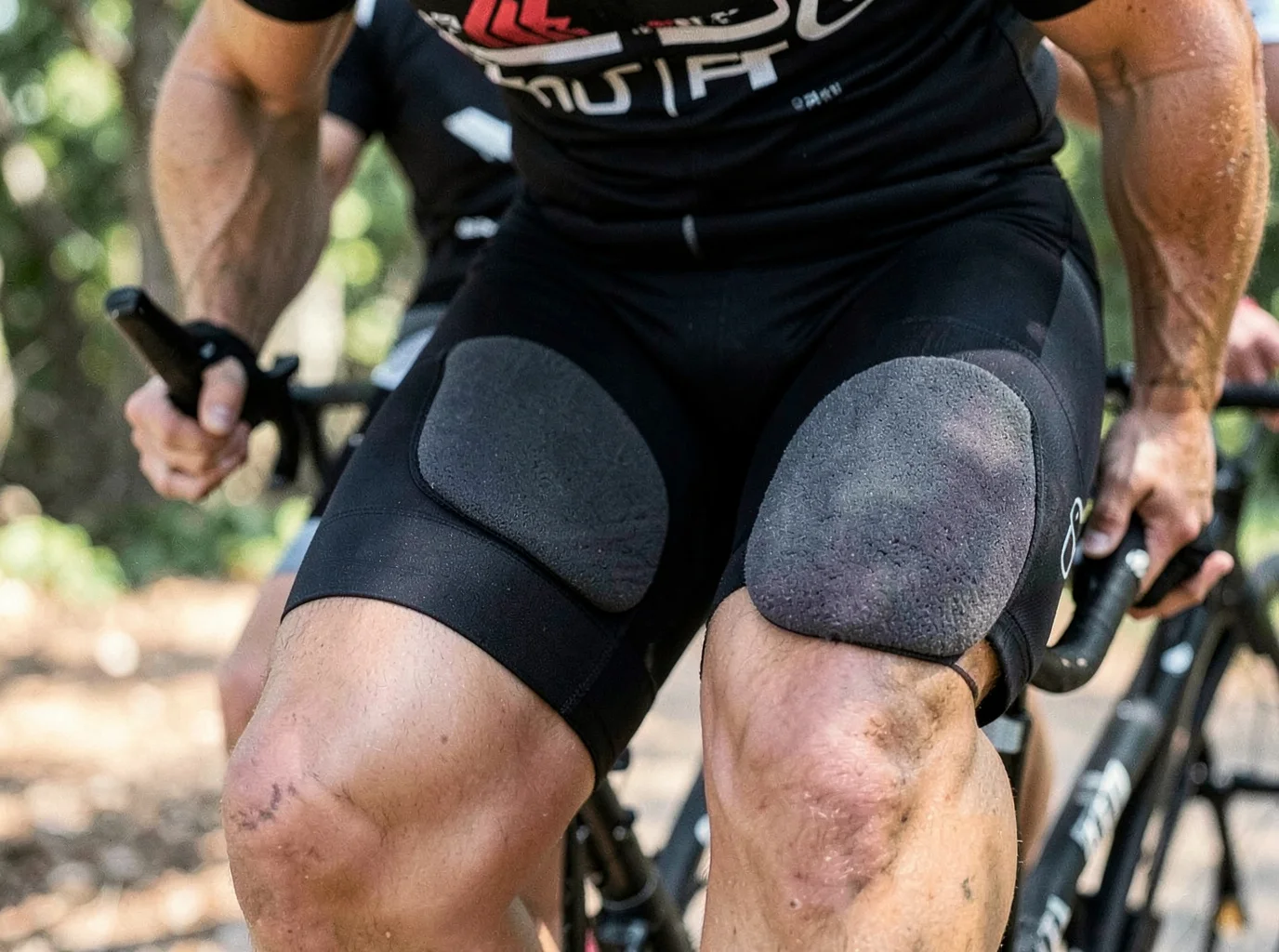
If you've ever pulled into your driveway after a long ride and reached back to check for blood, you already know that not all cycling shorts are the same. Marketing promises "all-day comfort." Reality gives you numb sit bones, chafed inner thighs, and a saddle sore that lingers for a week. Most men give up and ride uncomfortable. We didn't. We tested chamois padding, moisture-wicking fabrics, and anti-chafing bike shorts across real conditions—90-minute commutes, three-hour road rides, sweaty spin classes—so you don't have to guess. This is what held up, what looked good on paper but fell apart by mile 20, and which pair matches your body type, your route, and how long you're in the saddle.Brands sourcing custom men's cycling shorts can also adjust chamois density and panel placement for different rider profiles.
Road Rides Over 3 Hours: High-Density Padding and Bib Straps Do a Better Preventing Pressure
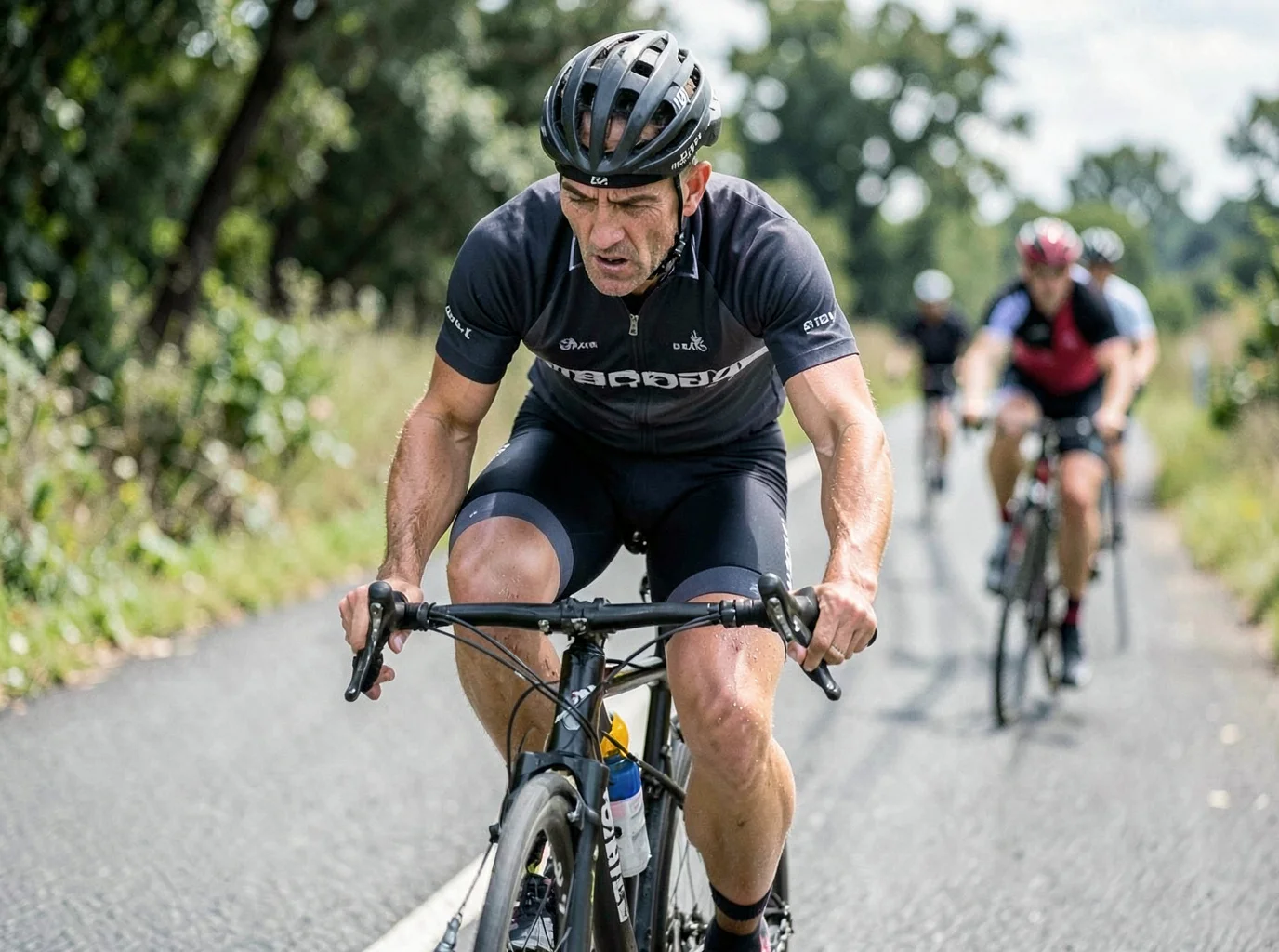
Most riders never think to ask what the density rating is on their chamois padding. It turns out to be the single biggest factor between a comfortable three-hour ride and a painful one.
Researchers tested three padding types across 3 rounds of 20-minute cycling sessions: basic (60 kg/m³) , intermediate (80 kg/m³) , and resistance (80 + 120 kg/m³) . The basic and resistance groups both reduced overall saddle pressure. But basic padding increased peak pressure in the perineal area the longer riders stayed in the saddle. The resistance group, by contrast, showed only a 0.6% increase in peak perineal pressure after 20 minutes, compared to 5.6% for intermediate and 8.2% for basic. Low-density foam breaks down under sustained load. High-density, multi-layer chamois padding holds its shape and keeps pressure distributed.
Saddle shape matters too. One comparison found average perineal pressure dropped from 37.2 ± 3.87 kPa with a standard saddle to 19 ± 8.29 kPa with a noseless design—proof that padding alone isn't the whole story.
What to look for based on ride duration:
Under 3 hours : multi-density chamois, core density 80 kg/m³ minimum
3–5 hours : mid-to-high density layered padding, 6–12mm thick , with stable foam recovery
5+ hours : 10–15mm high-density multi-layer padding, paired with bib-style shorts
This is where bib shorts vs regular shorts stops being a style preference. Regular waistband shorts dig in as fabric shifts and sweat builds—that's where chafing starts. Bib shorts move the tension to your shoulders instead of your waist, eliminating that slow squeeze and reducing fabric slippage that causes friction over long miles.
One caveat from a separate study on female riders: full-pad versus half-pad designs didn't meaningfully change subjective discomfort. Pelvic width and riding posture mattered just as much as pad thickness. Translation—buying the thickest chamois you can find won't fix a fit problem.
If you're shopping direct from a men's cycling shorts supplier, ask for foam density (kg/m³), layer structure, thickness in mm, and compression recovery specs. Vague marketing language like "extra comfort" tells you nothing.
Choose Pressure Distribution for Long Sitting, Hemorrhoids, or Prostate Sensitivity
Early in testing, we assumed thicker meant better. It doesn't. For hemorrhoids, prostate sensitivity, or hours on a saddle, the fix is smarter foam placement.
The goal is shifting weight away from the perineal, anal, and prostate-sensitive zones and onto your sit bones, buttocks, and thighs. That's a structural problem.
Based on clinical seat design, these options work.
Center-hole or U-shaped cutout chamois : The top pick for prostate discomfort or perineal pain. The cutout leaves the sensitive midline unsupported while your sit bones carry the load.
Ring-style or donut-pattern padding : Best if hemorrhoid irritation is your main issue. The center stays suspended; pressure moves to the outer ring instead.
Zoned support chamois : Padding is deliberately built up under the sit bones and thighs, leaving the anal and perineal midline unsupported.
Pressure redistribution beats immersion. A seat that cushions everything evenly still concentrates load if there's no cutout or zoning. Padding that spreads contact across a wider surface, rather than sinking uniformly, keeps localized pressure lower, which matters most over bony, sensitive areas.For team orders, a bulk men's cycling shorts program can specify different pad structures by riding duration.
A rough DIY reference some riders use is 1.5–2 inches (about 3.8–5.1 cm) of foam, sized around 16 × 14 inches, with a roughly 4 × 5 inch cutout in the center. It's crude, but it illustrates the principle: remove support where it hurts, add it where it doesn't.
When buying, if you're sitting over 15–20 minutes at a stretch on a hard saddle, and symptoms flare, choose a pad with a "center cutout" or "U-shaped relief" rather than something marketed as "extra thick."
Thick Thighs and Tall, Lean Builds: Leg-Cuff Pressure and Chamois Position Matter More Brand Name
Fit trumps brand every time here. For riders with thick thighs or a tall, lean frame, leg-cuff pressure and whether the chamois lines up with your sit bones matter more than the sizing guide most brands print.
Start with the leg cuff. It should sit at mid-thigh, firm but not deep enough to leave a groove. Pinch the fabric there. If you can grab more than about 1 cm of slack, size down.
For thick thighs, watch the inner leg and chamois edges. In riding position, the fabric should behave like a second skin: no bunching, no fold lines, no rub points on the inner thigh. Cuffs that run too short increase friction. Too long, and you get fabric pile-up and chafing near the knee. The sweet spot covers close to your knee's pedal stroke without dragging.
Tall, lean riders face a different issue. Bib straps can shift the chamois out of place. Straps should sit flat on the shoulders, without pulling the pad forward or back once you lean into riding posture.
The chamois must land directly under your sit bones, not shifted toward soft tissue. As a practical benchmark, the pad's rear edge should extend 10–15mm past your sit-bone contact point, with no gap up front.
Always test in riding position, not standing. Many compression cycling shorts fit fine standing still, then the chamois creeps forward the moment you lean forward and pedal.
After 60 minutes, check that there are no fabric folds on front or back of thighs, cuffs stay put without rolling or red rings, the chamois is still centered under your sit bones, and you have no numbness or inner-thigh friction.
Priority order for this body type: leg-cuff pressure > chamois-to-sit-bone alignment > strap stability.A men's cycling shorts manufacturer can refine cuff width and chamois positioning for different body builds.
Indoor Spin Class vs. Outdoor Commuting: Why One Pair Shorts Can't Give You Both Dryness,Durability
The fabric that keeps you dry during a sweaty spin class is not the fabric that survives six months of chain grease and curb scrapes. Indoor cycling and outdoor commuting pull in opposite directions, and most riders don't realize it until their "do-everything" shorts fail at both jobs.
Indoor spin classes demand lightweight, quick-dry, breathable fabric with minimal seams and a soft inner lining. You're moving fast, sweating heavy, and you need moisture-wicking cycling shorts that dry before you even step off the bike. Look for 4-way stretch with roughly 4% spandex or more . It reduces seam stress on every pedal stroke and keeps the fabric from binding when you're cranking hard.
Outdoor commuting demands the opposite : abrasion resistance, tear resistance, and some protection from wind and light rain. This is where Cordura earns its reputation. It's the go-to reinforcement for saddle contact points, knees, and calves. Pair it with a DWR coating (often labeled PFC-free DWR, CO DWR, or DWR C6) and you get a shell that shrugs off drizzle and road spray. The POC Ardour All-Weather Pants illustrate this well: 15000mm waterproof fabric at the knee and seat, Cordura patches at high-wear zones, and a breathability rating of 30000 gsm/24hr elsewhere.
The tradeoff is real. Abrasion-resistant fabric almost never dries as fast or feels as soft against skin as pure quick-dry knit. Products like the Outdoor Research Ferrosi Transit Pants—lightweight, quick-dry, UPF 50+ , made from bluesign-approved recycled nylon—get closer than most, but even they admit they're not waterproof, just resistant to "light drizzle."A men's cycling shorts vendor can offer separate constructions for indoor and commuting use.
If you split your week between spin class and commuting, expect to own two pairs, not one.
Hot, Humid Weather and Chafing-Prone Riders: Sweat-Wicking Speed Matters More Than Padding Thickness
Wet skin and wet fabric stick together. That's the whole problem. In hot, humid conditions, sweat that doesn't evaporate turns your shorts into sandpaper, and no amount of extra padding fixes that. What matters is how fast the fabric moves moisture away from your skin.
Fabric beats foam here. Moisture-wicking cycling shorts made from polyester-nylon-spandex blends pull sweat to the surface and let it evaporate. Cotton feels soft on the shelf, but it holds moisture against your skin for hours—that's exactly how you get chafing, saddle-area rashes, and pressure-sore-like irritation on long rides.
The winning combination for humid climates is a thin, breathable pad paired with fast-wicking fabric and good hygiene habits. A wholesale men's cycling shorts range can prioritize lightweight, fast-wicking fabrics for hot climates.When shopping, look for:
Moisture-wicking labels: polyester/nylon/spandex blends, not cotton
Flat-seam or seamless cycling shorts—fewer friction points where wet fabric rubs
Perforated panels or micro-fiber facing to keep air moving against your skin
Riding habits matter as much as gear. Stand up out of the saddle for 15–20 seconds every 10–15 minutes. That breaks the constant pressure-plus-moisture combo that causes most saddle sores in hot weather.
Before you ride, apply anti-chafing balm, petroleum jelly, or zinc oxide to your inner thighs, sit bones, and groin—this matters more in summer than in cooler months. After the ride, get out of wet shorts immediately. Riding home in soaked fabric, or leaving sweaty shorts on after you're off the bike, is how minor irritation turns into a real skin problem by the next day.
Priority order: wicking speed first, seam design second, padding thickness last.
Mountain Terrain and Frequent Standing Pedaling: Shock Absorption Needed, But Chamois Can't Shift on Saddle
Rough terrain throws a curveball at cycling shorts that smooth pavement never does. You're standing on the pedals half the time, dropping back into the saddle over roots and rocks, and every one of those transitions gives your chamois padding a chance to slide out of position. A pad that stays put on a road ride can end up bunched under one thigh by the time you're three miles into singletrack.
Better anchoring is the fix. Look for a memory foam and gel or gel-foam sandwich construction—this combo absorbs trail vibration far better than single-density foam, with thickness specs in the 20–35mm range doing the real work (one common build runs 20mm memory foam plus 5mm gel, another tops out around 3.5cm total thickness).
But damping means nothing if the pad shifts. The anti-slip layer matters just as much as the cushion above it. Silicone gel particles or a textured rubber strip on the underside grip the saddle instead of sliding across it. Some designs add drawstrings or side straps as a mechanical backup, locking the whole thing in place through hard bumps and repeated standing-to-sitting transitions.
Ventilation shouldn't get lost in the shuffle either. Standing climbs generate heat fast, and a hollow or grooved center channel keeps airflow moving so you're not adding sweat-related friction on top of trail vibration.
Anti-slip base first, foam/gel damping second, ventilation third.
Just Starting Out, Rides Under 1 Hour: Don't Sacrifice Everyday Comfort for Long-Distance Setup
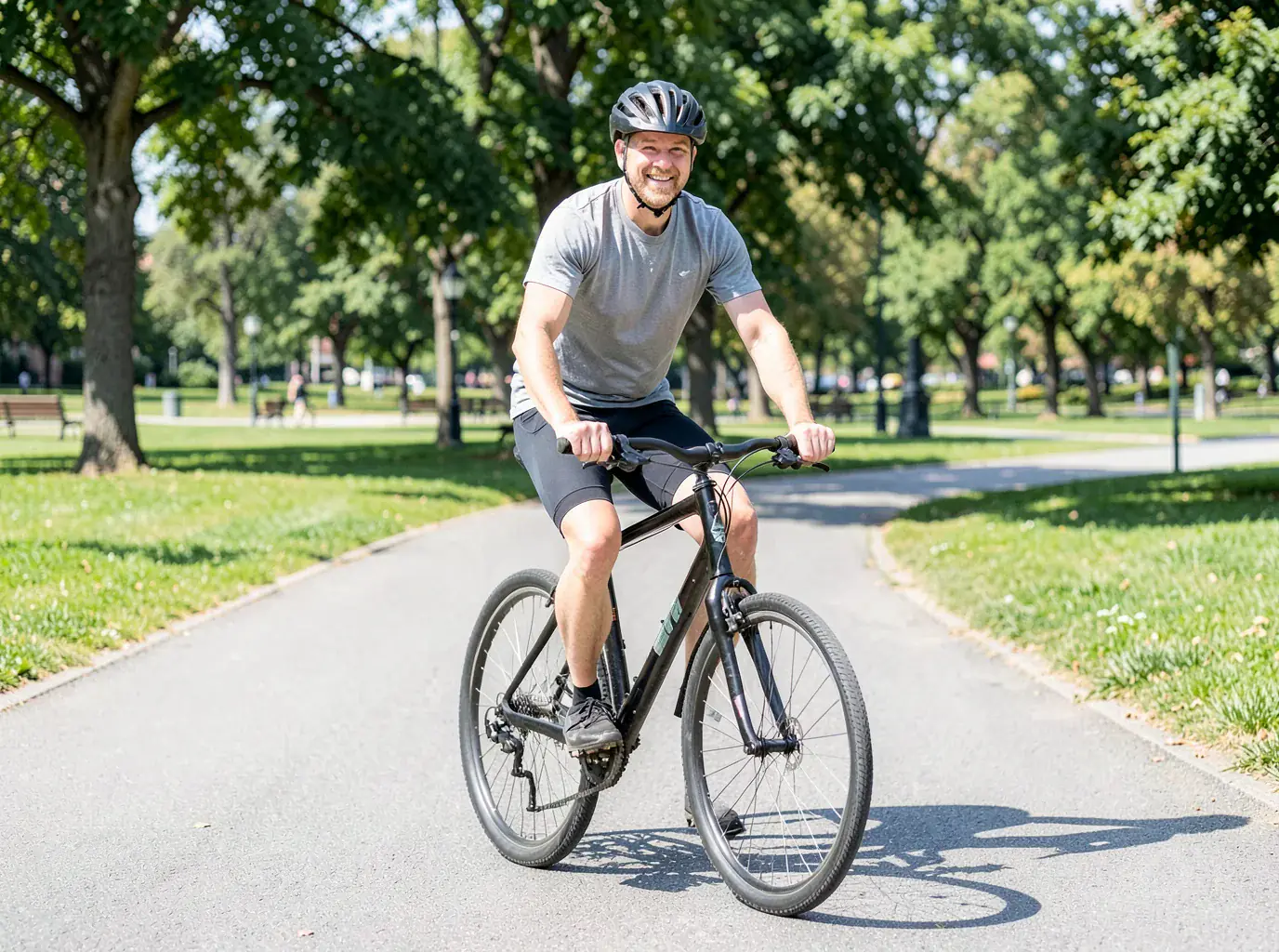
New riders almost always buy gear built for 100-mile rides before they've even ridden an hour. That's backwards. If you're doing 20–40 minute rides on flat ground—which is how most beginners should spend their first few weeks—comfort is your priority.
Skip the low, aggressive handlebar setup. Keep the bars higher and your posture upright. There's no reason to sacrifice daily comfort for a racing position you don't need yet.
Fit basics that matter more than any product spec:
Saddle height : Use the heel method—heel on the pedal at its lowest point, leg nearly straight. A more precise starting point is inseam × 0.883, or 1.09 times your inner leg length.
Saddle fore-aft : With cranks level, a vertical line from just below your kneecap should land roughly over the pedal axle.
Handlebar feel : Elbows slightly bent, never locked out. Bars typically sit 2–5cm lower than the saddle for casual riding, but go higher if comfort is your only goal.
Standover clearance : Leave at least 1–2 inches of gap over the top tube.
As for shorts, you don't need to debate bibs versus regular shorts yet. For under an hour, a snug pair with no visible bunching and decent chamois padding is enough. Save the seamless shorts and high-density foam for when your rides actually get longer.
Conclusion
There's no single most comfortable pair of men's cycling shorts. The right one matches how, where, and how long you actually ride. A guy grinding through 3-hour century rides needs a completely different chamois padding setup than a commuter doing 25 minutes each way, and pretending otherwise is how men end up chafed, numb, or worse.
Three things separate a good pair from a marketing gimmick, and most guys never check them: seam placement relative to your sit bones, which direction the compression fabric stretches, and whether the foam density matches your body weight, not just your inseam.
Before you buy another pair based on a flashy product photo, go back through the scenarios above, find the one that matches your Saturday morning ride, and buy for that reality.Brands can request a custom wholesale price for men's cycling shorts when ordering by volume.