The trick of finding "toasty enough for a chilly dawn ride" without drowning in sweat by mile ten is the eternal cycling apparel puzzle. That's what sent me digging into the Van Rysel Racer Long Sleeve Jersey. Decathlon's cycling arm has a reputation for punching above its long sleeve cycling jersey price point, but does that hold up when you're hunched over the bars at 25mph in variable weather?For brands, custom long sleeve cycling jerseys offer more control over fit and fabric. I put this jersey through real riding conditions to test fit across different body types, whether the thermal insulation delivers on its cold-weather claims, and if the fabric keeps up when your heart rate spikes. I'm also breaking down the practical details—pocket placement, zippers, seam construction—that separate a jersey you forget you're wearing from one you're always adjusting. If you're weighing this against pricier options, here's what you need to know before buying.
Van Rysel Racer Long Sleeve Jersey: Product Overview and Core Positioning
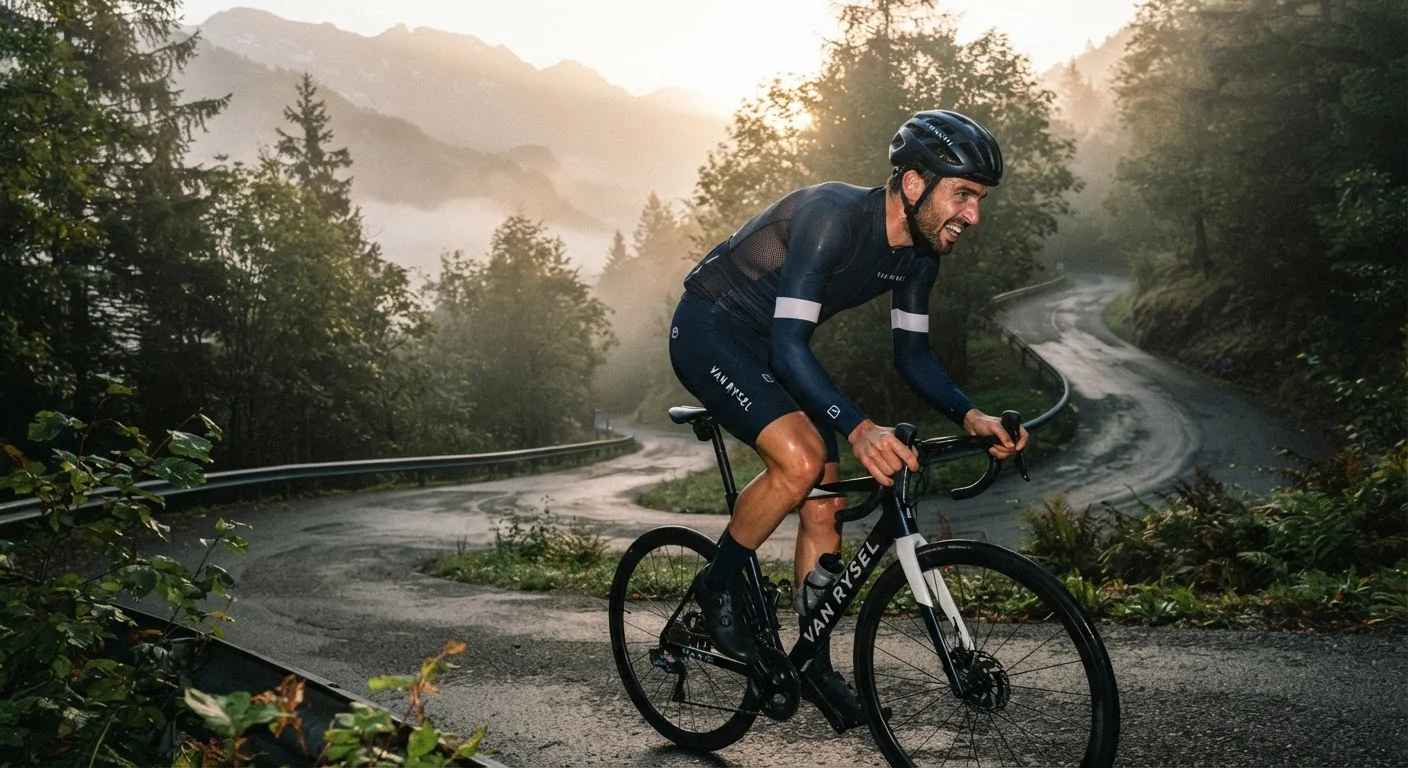
Decathlon built this jersey to bridge the gap between summer kit and full winter gear. The Racer 2 long-sleeve sits in that mid-season lane, covering autumn, spring, and even layered winter rides, earning its "bridge garment" label. Van Rysel's lineup gets more nuanced from there. The RCR long-sleeve steps up to a true PRO FIT at £64.99, leaning harder into competition use. Meanwhile the Racer Ultralight trades warmth for breathability, running around long-sleeve cycling jersey £44.99 for hot-weather riders who don't need thermal backup.
Who it's for : competitive and training cyclists chasing an aero, body-hugging cut that still performs when temperatures drop. This is built for effort—not commuting.
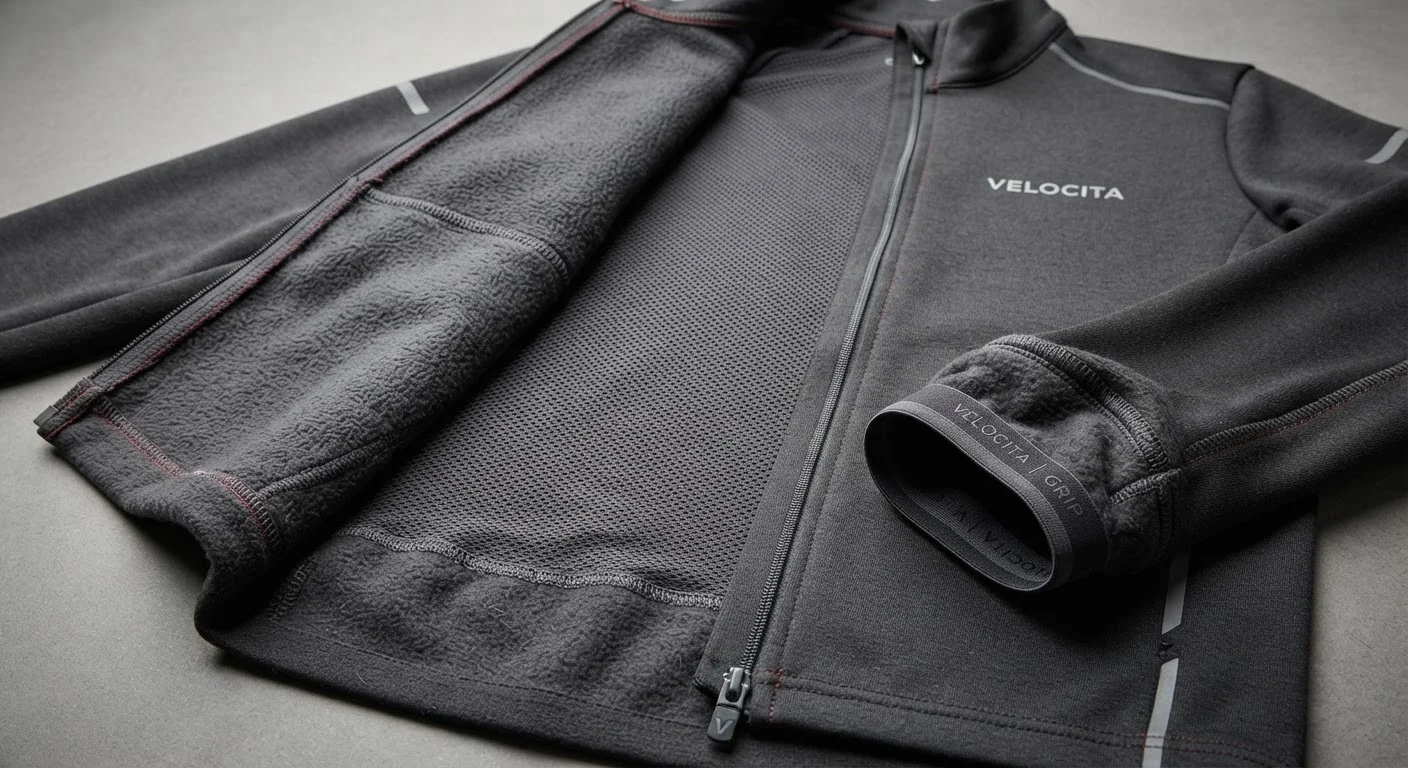
What makes it work : fleece lining handles the cold (both Racer 2 and RCR use it), while ventilated back and underarm panels vent heat when your effort spikes. Fabric composition backs this up. RCR runs 80% polyamide/20% elastane on the main body and 84% polyester/16% elastane on the back. You get three rear pockets plus one zipped pocket for your phone and keys.
Price-wise, the Racer 2 lands around $85 CAD in Canada. That's genuine value in the £45–£65 mid-season category, cheaper than premium pro jerseys but tougher competition for pure summer options.
Chest measurement makes or breaks a race-cut jersey. Van Rysel built the Racer around that logic, and it shows the moment you pull it on.
This is a race-fit garment through and through. That means a tight torso, minimal fabric excess, and a cut designed to disappear when you’re hunched over the bars. Sleeves stay short and close to the arm, with barely any size progression from S to XL - so this isn’t a relaxed, drop-shoulder design. The hem tells a different story. It runs longer than you’d expect, stretching from roughly 71cm at size S to 79cm at 2XL on comparable men’s slim-fit versions. That extra length matters once you’re in the drops, because it keeps your lower back covered instead of riding up.
A casual jersey gives you breathing room at the chest and waist. This race-fit jersey tightens everything, chest, waist, hips, to cut wind resistance. That makes fit far more body-type dependent.
Sizing: When to Stick With Your Number, When to Go Up
Lean, narrow-shouldered riders : your true size usually works fine. The race-cut design already assumes a slim frame, so sizing up just adds unwanted slack.
Broader-shouldered or muscular-armed riders : expect tightness across the chest and underarms, especially when reaching for the bars. Sizing up one notch typically restores mobility without sacrificing too much of the aero benefit.
Reference chest/waist data (inches) for a comparable race-fit jersey: Chest 32–33 / 34–35 / 36–37 / 38–39 / 40–41 / 42–43; Waist 26–27 / 28–29 / 30–31 / 32–33 / 34–35 / 36–37.
Practical measuring order
1. Measure bare chest without a base layer or jacket underneath.
2. Check where you land on the chart. If you’re at the upper end of a range and have wide shoulders, size up.
3. Decide your priority. For a racing-tight fit, stick to size. For all-day comfort or layering underneath, go up one.
The comfort feedback pattern is consistent across race-fit jerseys. Riders praise the aerodynamic hug and the no-flap-in-the-wind feeling, but dock points when shoulders or upper arms feel restricted during climbs or out-of-saddle efforts. If you’re built lean, this jersey will feel like a second skin. If you’re carrying more muscle through the shoulders, budget for that extra size.
Warmth (Thermal insulation performance): Applicable temperature range and limitations
Ten to fifteen degrees Celsius. That’s the sweet spot where the Van Rysel Racer Long Sleeve Jersey does its best work, and once you understand why, the rest of its thermal behavior makes sense.
The core temperature bands:
5–10°C : This is where the jersey starts needing backup. Pair it with a base layer and a windproof shell, because on its own, it won’t cut it once temps dip this low.
10–15°C : The jersey’s home turf. Most riders wear it alone here, maybe adding a thin base layer or vest if there’s wind chill to account for.
15–20°C : Things shift toward “light spring layer” territory. You’re not relying on warmth anymore—you’re using it for sun coverage and taking the edge off cool mornings.
50–55°F (10–13°C) : Real-world testing backs this up. Riders consistently describe “light insulation” in this range, especially on longer rides where you need steady core temp without overheating.
What happens outside that range
Push past 15–20°C and the jersey stops feeling like insulation—it starts feeling like a breathable sun layer. That’s fine, but don’t expect it to perform like winter gear. Drop below 5–10°C, and you’re exposed. Wind chill hits fast, especially without a shell layer blocking it. Get close to 0–4°C and this jersey has no business being your primary layer. Treat it as a mid-layer under a thermal base and windproof outer shell instead.
Why “light but warm” works—and where it breaks down
The thin fabric and long sleeves reduce skin exposure without adding bulk. Breathability comes first, warmth second. There’s no heavy fleece—just enough material to hold a microclimate against your skin. But without a wind-blocking membrane, that microclimate collapses fast on descents or in gusty conditions. Speed and wind limit this jersey more than raw temperature.
How it stacks up against winter-weight jerseys
Heavyweight winter jerseys are built for 0–10°C and below, prioritizing insulation and wind resistance over breathability. The Van Rysel Racer sits at the opposite end—light, flexible, and best extended downward through smart layering rather than relying on the fabric alone.
Layering cheat sheet
10–15°C : Jersey + thin base layer; add a wind vest if it’s breezy.
5–10°C : Base layer + jersey + wind vest or light jacket.
0–5°C : Thermal base + jersey as mid-layer + windproof shell—don’t go it alone here.
The recurring feedback pattern matches this: shaded climbs, early morning descents, breezy transitional weather. That’s where this jersey earns its keep.
Breathable and Sweat-Removing: Actual Performance During High-Speed Cycling

Your heart rate hits 160bpm on a climb, and suddenly warmth doesn't matter. Venting does. This is where the Van Rysel Racer Long Sleeve Jersey either earns its keep or falls apart.
Where the venting lives
Panel placement decides everything here. The most effective jerseys put mesh across the entire back or center-back panel. That's the layout that moves the most air during hard efforts. Underarm and side-panel mesh works differently. It's more targeted, handling localized heat and sweat channels rather than full-body airflow. Jerseys built this way tend to feel "overall breathable" but not as extreme as a full-back mesh design.
The Racer's construction uses ventilated back and underarm panels instead of a single continuous mesh sheet. That means you get solid heat management in the zones that matter most (back, armpits) without the jersey feeling like a fishnet.
How that compares to top-tier competitors
Take the MAAP Aeon LS as a benchmark. Testers wore it at high intensity with a mesh base layer underneath and reported feeling "perfect" around 9°C, staying comfortable even pushing toward the high 20°C range. Even at high intensity, it held up.
That same jersey was described as "not quite so breezy as some really open mesh jerseys." It has strong breathability but not the most extreme open-mesh ceiling.
The Van Rysel Racer sits in similar territory. It clears the bar that matters for a jersey, which is staying wearable during "pretty roasting" efforts without trapping heat or turning clammy.
The real benchmark for summer-capable jerseys
A long sleeve that stays comfortable at high 20°C temperatures, especially during high-intensity riding, qualifies as genuinely breathable summer gear. Anything less than that, and you're just wearing a mid-season jersey that happens to have short sleeves.
What decides sweat performance in practice
Back mesh coverage moves the most volume of air. Underarm and side venting handles localized hot spots. Open-weave polyester dries faster than tight knit fabric.
The riders who rave about jerseys in this category use phrases like "wicks sweat away brilliantly" and "extremely breathable." The goal is to pull moisture off skin fast enough so it evaporates before it pools. During high-speed efforts, that's the difference between a jersey you forget you're wearing and one that's soaked through by the first climb.
Details features: Pockets, auxiliary designs and practicality
Four pockets tell you everything about how a jersey wants to be used. The Van Rysel Racer follows the industry formula: three open rear pockets plus one zipped safety pocket. That's the standard layout for cycling long sleeves that need to hold snacks, flat-fix kits, and ride essentials without adding bulk. The zipped fourth pocket handles what you can't afford to lose: phone, cards, keys.
What separates functional pockets from frustrating ones:
Depth matters more than count. Well-built cycling pockets run around 6 inches (roughly 15.2cm) deep. That's deep enough that a phone or gel packet won't bounce out on rough pavement.
Zipper quality : YKK Vislon zippers show up on jerseys built to last. They slide easily, open one-handed while riding, and don't jam mid-ride.
Waist grip : Silicone gripper elastic at the hem keeps the jersey from riding up during long efforts. A small detail that saves constant readjusting.
Reflective placement worth checking
Low-light visibility comes down to where reflective elements sit. The strongest setups place strips at the waist, sleeve cuffs, and rear pocket seams. Three points that catch headlights from different angles during dawn or dusk rides.
Fleece zoning: not all warmth is equal
Some jerseys in this category brush fleece only where you need it—chest and outer arms—while keeping the back and inner arms thinner. That zoning balances warmth with breathability instead of wrapping you in insulation everywhere. Inner cuffs matter here too: a snug cuff blocks cold air from sneaking up your sleeve on descents, which the exterior cut alone can't solve.
Summary of advantages and disadvantages: Who should buy, and who should avoid?
No jersey works for everyone, and the Van Rysel Racer Long Sleeve Jersey makes that trade-off obvious fast.
What it does well:
Breathability and quick-drying performance hold up during high-intensity efforts and long climbs. Sweat clears fast instead of pooling.
Race-fit construction cuts wind resistance and eliminates flapping fabric. Riders who push pace get less drag.
Pockets hold gels, a spare tube, and small tools within easy reach mid-ride.
You get performance close to premium competitors like Endura Pro SL Race, at a fraction of the cost.
Where it falls short:
1.Tight fit punishes broader shoulders and thicker chests. Check your ego before sizing down.
2.Limited warmth means wind and descents expose you fast without extra layers.
3.Pocket capacity stays modest by design. It is fine for short supply runs but not for loaded touring days.
Who Should Buy It
Lean, training-focused cyclists chasing performance in warm-to-mild conditions, plus riders who want pro-level feel without pro-level pricing.
Who Should Avoid It
Anyone craving a relaxed fit, riding through cold winters, or hauling serious cargo should look elsewhere.
Purchase suggestions and alternative options
Timing changes the math on this jersey. Van Rysel's UK site regularly drops seasonal stock 9–20% off. You might see £54.99 drop to £49.99, or £49.99 to £39.99 on comparable pieces. Watch for those windows before paying full price of long sleeve cycling jersey.
Where the Van Rysel lineup sits, price-wise:
- Entry winter jackets: £29.99–£39.99 winter cycling jersey
- Mid-tier (EDR/RCR): £49.99–£69.99
- High-performance: up to £229.99
- RCR winter bib tights: £69.99; RCR Extreme (water-repellent): £79.99
If fit or warmth falls short, you can upgrade within the same family. Move from Racer to RCR for more insulation and windproofing, or pair the jersey with RCR Extreme tights for wet, cold rides.
Buy bottoms first since cold hits legs harder than arms, then decide if the jersey alone covers your temperature range or if you need a shell on top.
Conclusion
This jersey earns its keep in the 5–15°C range, where that brushed thermal fleece shines without turning into a sauna suit the moment you hit a climb. The race-cut fit is built for a lean, athletic build, but anyone carrying extra layers (literally or otherwise) will feel it pulling in the wrong places. And while the three rear pockets plus that zippered security pocket hold real-world gear better than jerseys twice the price, breathability takes a hit once you're grinding uphill at tempo.
Racers and fast group-ride regulars who dial in their layering with base layers and vests should buy it. Riders who run hot or need one jersey to do everything season to season should skip it.A reliable cycling jersey manufacturer can also adapt the same construction for team orders.
If your winter kit box already has a gap for a mid-weight racer jersey, this Van Rysel is worth the spot. Just try it on first. Fit is everything here, and you don't want to find that out mid-ride.