For years, new bike wear brands defaulted to Asia for manufacturing. Then shipping delays, quality control issues, and unpredictable tariffs made European buyers reconsider. That's exactly why Poland has quietly become the go-to for private label production: faster turnaround, tighter EU compliance, and craftsmanship that rivals—and often beats—overseas factories.
Not every Polish cycling clothing OEM is the same, though. Some focus on premium sublimation printing. Others work with low-MOQ startups. A few handle massive wholesale orders for established brands.
Below I break down four of the best cycling apparel factories in Poland: what they do best, who they're ideal for, and how to vet them before you sign a production contract.
Why Poland Is Emerging as a Private Label Cycling Apparel Hub
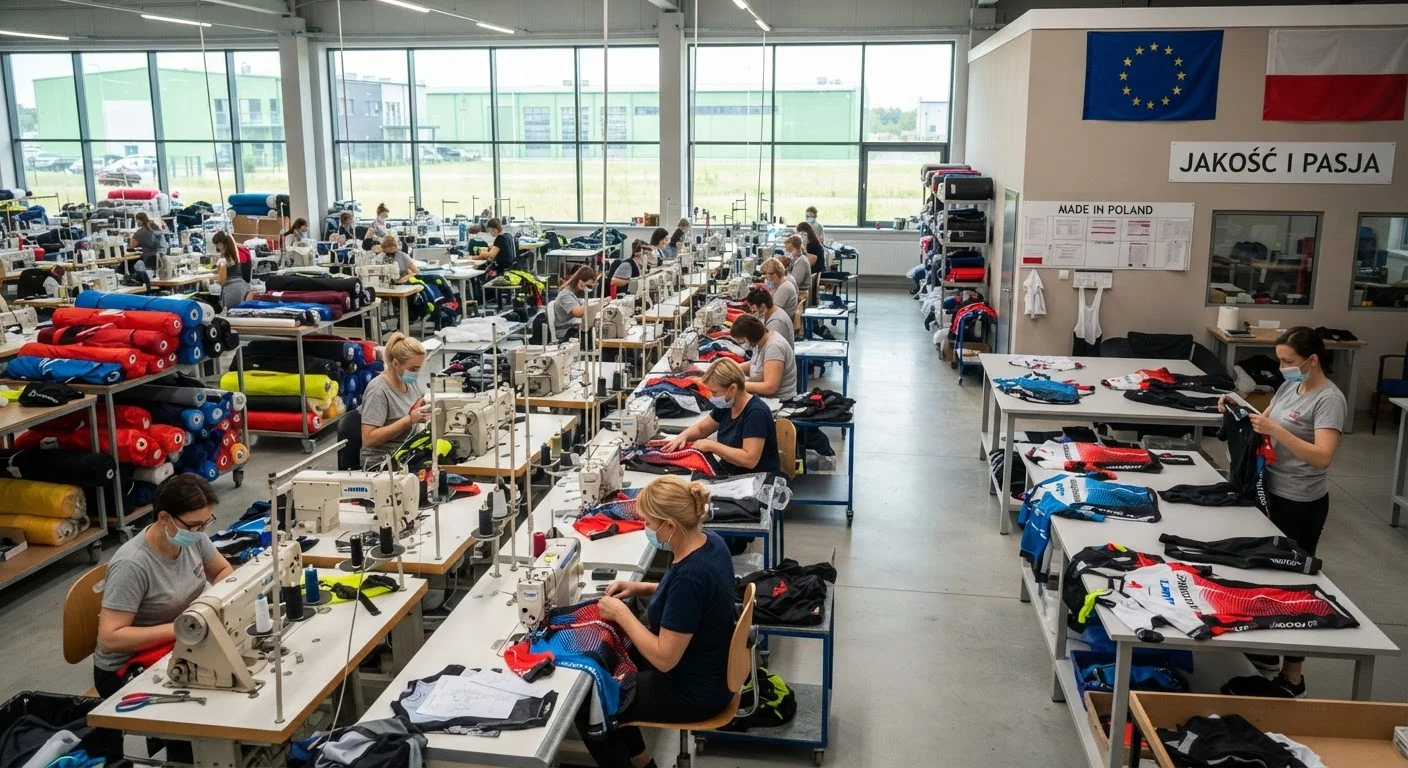
Poland's clothing sector employs 120,000 to 150,000 people , counting micro-enterprises and logistics roles. That includes 24,537 clothing companies and 44,300 formal employees as of 2024. That's infrastructure.
Export-built infrastructure. Poland ranks as the EU's 4th-largest clothing exporter , moving roughly €16.6 billion in apparel in 2024. That volume requires deep supplier networks, repeat-production capacity, and factories that already run private label programs—not just one-off jobs.
Where the factories sit
Most production clusters are in Łódź, Bielsko-Biała, and Poznań . That matters when you're vetting a cycling gear manufacturing partner in Poland. You're not stuck with one isolated plant. You get a regional ecosystem.
The cost conversation
Poland isn't the cheapest EU option. Loaded labor costs run around $11.40/hour . Compare that to Romania ($7.10), Bulgaria ($5.20), and Lithuania ($12.80). Germany sits at $42.60. Portugal averages €8–10/hour in textiles. Poland trades some cost efficiency for EU-market proximity, simpler customs, and faster reorder cycles.
That trade-off shows up in lead times. Europe-to-Europe production takes 4–9 weeks , far shorter than ocean freight from Asia. Goods move inside the single market with no MFN import duties or customs bottlenecks.
There's also a trust angle. 69% of consumers want to know how their clothes are made. 42% across 10 European countries say buying ethical, eco-friendly apparel matters to them. A "Made in EU" label on a custom cycling jersey manufacturer 's tag is a measurable purchase driver.
LUXA — Premium 100% Made-in-Poland Cycling Apparel
LUXA puts it straight: 100% of production happens in Poland, from cutting to final stitching. No hybrid manufacturing or "designed in Europe, made elsewhere" fine print. That's rare in this space, and exactly why LUXA lands on this list.
Product Range
LUXA's core lineup covers the essentials a private label buyer needs:
Cycling jerseys
Bib shorts
Socks
Base layers
Cycling caps
Accessories and bundles (with free shipping over €120)
Unisex cotton T-shirts, also made in Poland
That last item matters if you're building a lifestyle-adjacent brand alongside your performance line. LUXA is one of the few cycling gear manufacturers in Poland that also offers off-bike apparel.
Sourcing Model
LUXA sources fabrics and materials from European suppliers. The brand doesn't publish specific mill names, but the approach means shorter supply chains, fewer customs headaches, and material quality that meets EU textile standards without relying on overseas fabric shipments.
Where LUXA Fits in the OEM Landscape
LUXA's public pages don't expose a detailed private label workflow—no listed MOQ, no published sample lead time, no visible B2B case studies. That's typical for a brand-first company still building out its OEM side.
Industry benchmarks for premium, made-to-order cycling apparel factories in Europe show 10–50 pcs per design for low-MOQ runs, 50–100+ pcs for standard private label runs, and 2–6 weeks for sample development depending on fabric and print complexity.
These aren't LUXA-confirmed figures. Treat them as a realistic starting point for negotiations.
Best Fit
LUXA suits design-led, premium cycling brands running small-to-mid volume orders. If you need rock-bottom unit costs or mass-market scale, look elsewhere. If you want a genuine "Made in Poland" story backed by European material sourcing, LUXA earns a spot on your shortlist.
ELVELO — Multi-Sport Family-Owned Manufacturer
Names don't always match the business you expect. Public records tie "ElVelo" to a tequila brand out of La Cofradía distillery in Jalisco, Mexico, not a cycling gear manufacturer in Poland. There's no factory address, no MOQ data, no certifications, and no buyer testimonials linking that name to a sports apparel producer. That should stop you before you send a single inquiry.
Why This Matters for Your Sourcing Process
This gap shows why vetting a custom cycling jersey manufacturer starts with hard facts, not brand recall. Before you sign with any bike wear private label supplier, confirm the legal entity name matches what's on contracts and invoices, the factory location is a verifiable address, the product category list covers cycling, running, triathlon, or team sports, the MOQ per category and whether mixed orders are allowed, the certification set (BSCI, OEKO-TEX, GRS, or ISO), and lead times by category that are sport-specific, not generic promises.
What a Real Multi-Sport Supplier Should Offer
Real activewear manufacturers in Poland bundle logo branding, printing, packaging, sampling, and production control into one service. Some cycling apparel factories in Europe advertise full-package services — design, development, production, fulfillment, even e-commerce support — with 2–5 day turnarounds on select steps. Established multi-category makers often point to 20+ years in business as proof of stability.
If a supplier can't produce verifiable factory data, certifications, or case studies matching those benchmarks, treat that as a dealbreaker.
Raso Wear: Craftsmanship-Led Handmade Cycling Clothing
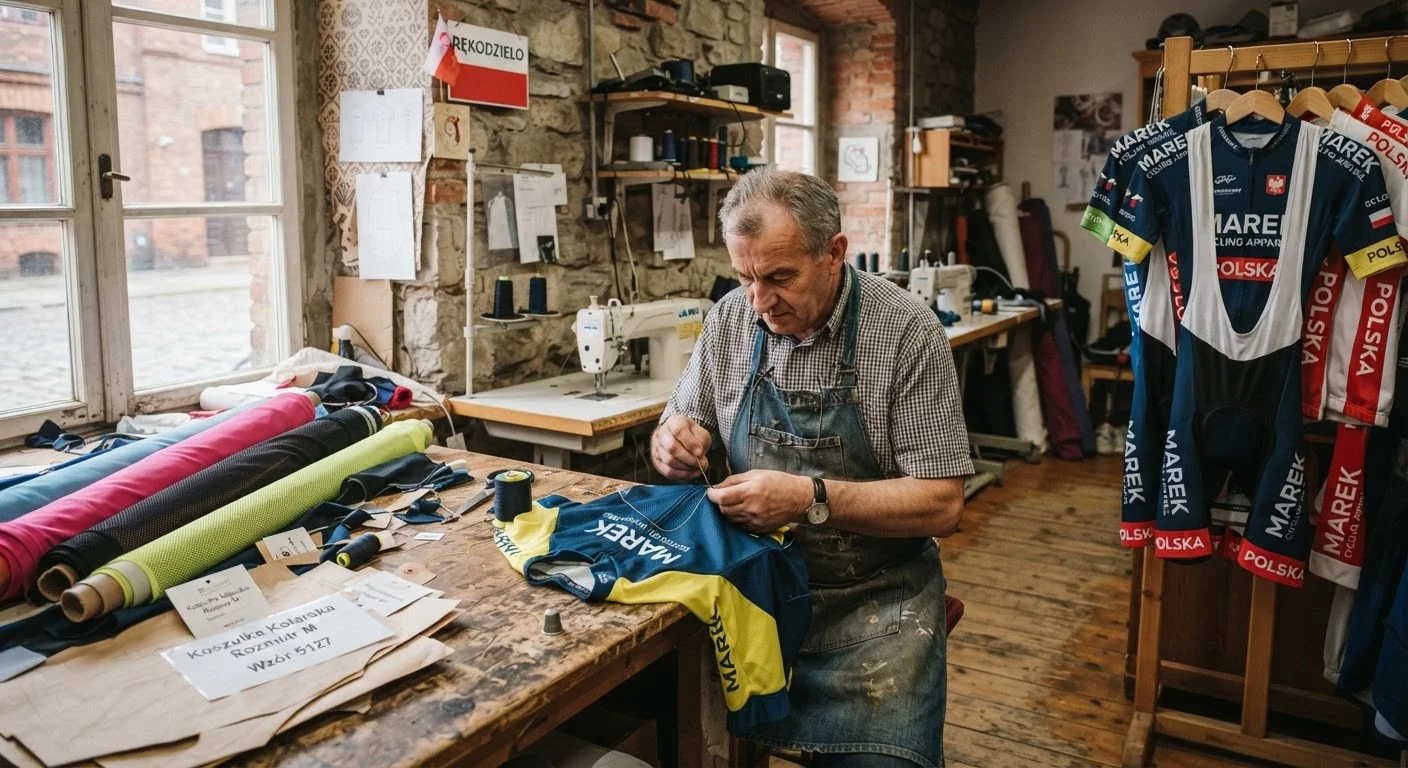
Small workshops with real cycling backgrounds make gear that fits differently. Raso Wear, founded in 2014 by a team with over 10 years of professional cycling experience, is a prime example. That experience is exactly why their fit logic works better than most.
Made in Stary Sącz, Southern Poland
Raso Wear’s whole identity centers on “cycling wear designed & handmade in Poland.” Production is in Stary Sącz , a town in southern Poland. The brand leans on a “crafted with passion and commitment” story. If you’re building a DTC brand around origin and craftsmanship, this kind of messaging works well.
Product Range
Raso Wear makes a full cycling wardrobe including jerseys, vests, bib shorts, pants, base layers, jackets, kids’ clothing, and accessories.
Pricing Reflects Premium Positioning
Cycling apparel retail pricing sits in the mid-to-high range typical of European craft manufacturers, with jerseys around €70–140 , bib shorts €100–220 , and cycling jackets €120–250+ . This pricing suits a premium, small-batch brand.
Order Process and MOQ Reality
Raso Wear requires a 30% deposit before starting production, with lead times of 4–8 weeks . Buyers email the order type, quantity, and sizing details upfront. Samples are fitted and confirmed before bulk production begins.
Best Fit
This suits club team kits, brand collaborations, and small-batch DTC drops. Skip Raso Wear if you need high-volume, fast-turnaround OEM production at rock-bottom pricing.
runcyclingapparel.com — Custom & Bulk Production Specialist
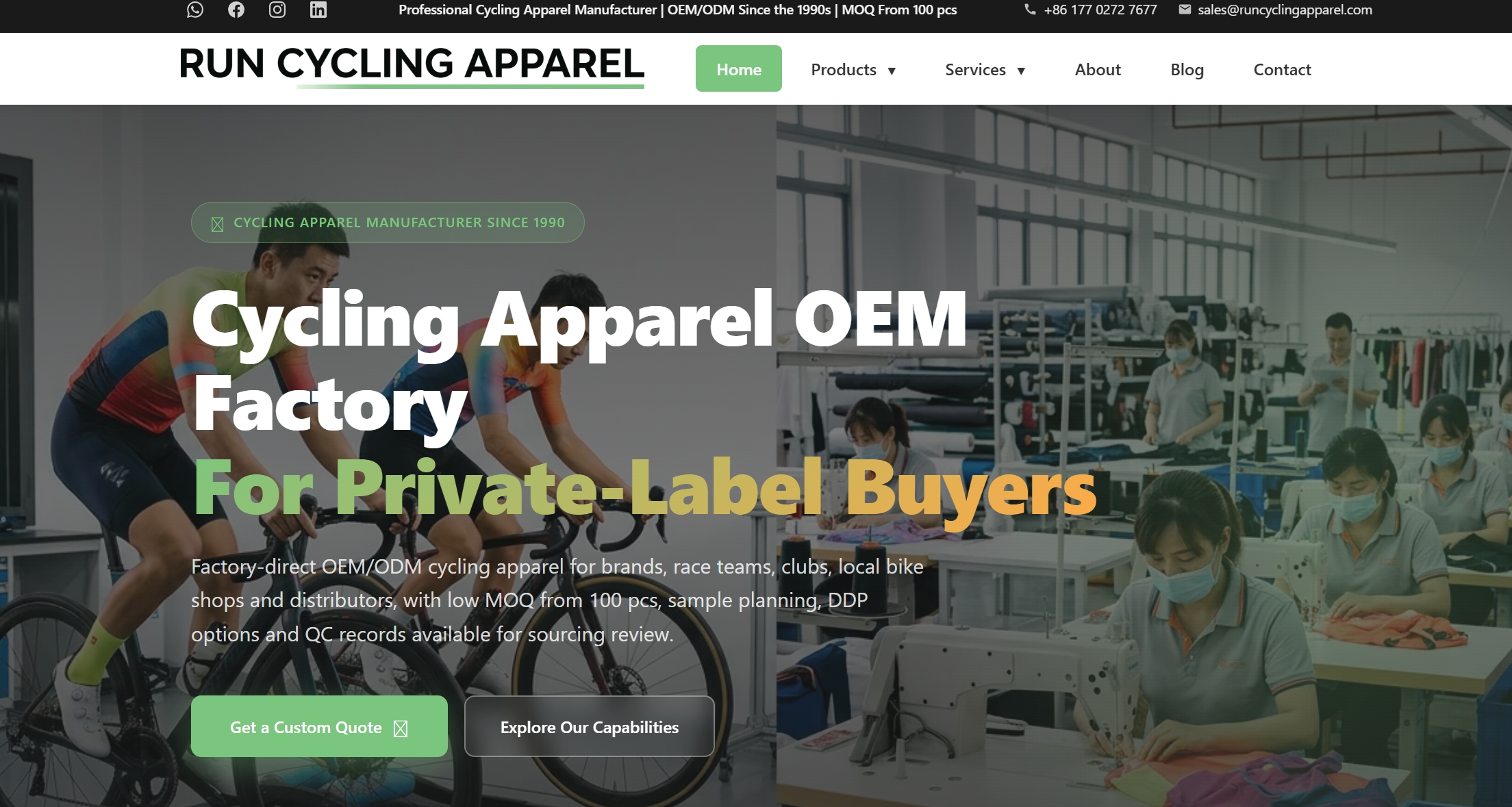
Some Cycling Apparel suppliers try to be everything to everyone. Run Cycling Apparel actually pulls it off—at least on paper. This factory-direct OEM/ODM cycling apparel manufacturer has been at it since the 2009s, serving brands, teams, clubs, bike shops, and distributors under one roof.
Product Range and Customization Depth
They cover cycling jerseys, bib shorts, jackets, and accessories. What sets them apart is how deep the customization goes. You're not just sticking a logo on stock inventory. The site lists full sublimation customization on colors, prints, fabric selection, fit blocks, labels, and packing. Send in your artwork, sizing specs, and brand requirements. You'll get a quote or reply inside 24 hours, a 3D mockup or tech pack within 48 hours, and a finished sample in 7 days.
MOQ Structure and Pricing Tiers
MOQ varies by page. Some products require 50 pieces, others 100. Pricing breaks into clear tiers: 100–199 pcs, 200–499 pcs, 500–1,999 pcs, and 2,000+ pcs, with per-unit cost dropping as volume climbs. That works for a small brand testing 50–100 units, a club ordering 100–500 pieces for a season kit, or an established label chasing 500+ units for better margins.
Delivery Speed and Market Claims
Bulk production runs 14–21 days, faster than the industry's typical 6–8 week benchmark from design approval to delivery. The company says it has earned trust from 500+ global cycling brands across 40+ countries, though you won't find independent reviews backing those numbers publicly. Reach sales at sales@ Runcyclingapparel .com or +86 177 0272 7677.
How to Evaluate a Poland-Based Private Label Manufacturer
MOQ, sample cost, lead time, and certifications are the four numbers that separate a real cycling clothing OEM manufacturer from a middleman. Get those wrong and you're stuck with dead stock or a blown launch date.
Ask These Before You Sign Anything
Standard MOQ for private label runs in this industry sits at 500–3,000 pieces per style. The efficient sweet spot is 1,500–3,000 units. Ask per style, per color, and per size instead of just a total. Some factories offer no-MOQ sample runs, but you'll pay retail or near-retail pricing per piece.
Sample development runs 3–5 weeks on average. Complex prints or custom fabric can stretch that to 6 weeks. Get the sample fee broken into four parts: tooling, shipping, revision costs, and whether that fee gets credited against your bulk order.
Lead time on a standard order runs 4–8 weeks. Custom sublimation printing, custom fabric dyeing, or compliance testing pushes that to 10–16 weeks.Any European cycling apparel factory quoting faster than that on a heavily customized order is either lying or cutting QC steps.
Confirm the Physical and Technical Details
Size charts: Get a written grading table with tolerances instead of a PDF screenshot from a catalog.
Fabric sourcing: Clarify stock fabric vs. custom-dyed vs. buyer-supplied. EU-certified fabric (OEKO-TEX Standard 100, ISO 9001, ISO 14001) should come with a checkable certificate number.
Padding and chamois: Request density, thickness, wash-cycle durability, and physical swatches. Photos don't tell you how a chamois compresses after 50 washes.
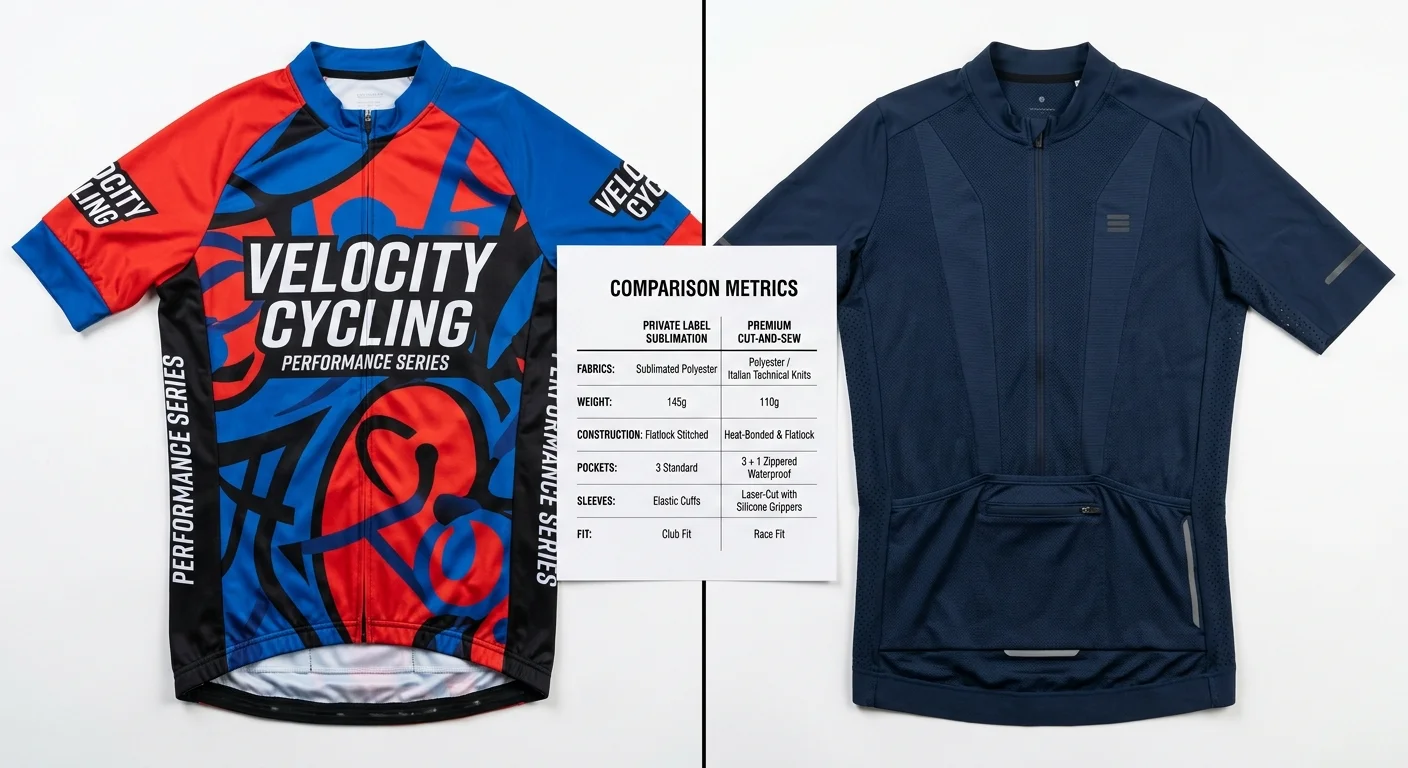
Printing method: Compare screen print, digital sublimation printing, heat transfer, and embroidery on wash durability, hand feel, and color-count limits.
Incoterms: Nail down EXW, FOB, FCA, or DDP in writing. A "delivered price" that doesn't specify EU customs clearance or VAT handling is a red flag for any bike wear private label supplier.
Verify the Factory Actually Exists
You need at least six checks: business registration and EORI number, real factory address (video audit if needed), which processes are in-house vs. outsourced, QC workflow (IQC/IPQC/FQC with AQL standards), export history from the last 6–12 months, and certificate numbers cross-checked against the issuing body's database.
Poland-Specific Advantage
For restocks or small-batch testing, a Poland-based activewear manufacturer typically delivers regular batches in 4–6 weeks. That's hard to match from an overseas cycling apparel factory in Europe's competitive set.
Matching the Right Manufacturer to Your Brand Type
Picking A cycling apparel factory in Europe isn’t a one-size-fits-all decision. Your order volume, brand positioning, and cash flow matter more than a manufacturer’s ranking on a list.
Startup or Premium Brand
If you’re testing a first drop or building a story-driven label, low-MOQ specialists fit best. At some OEM factories, minimums run 15 pieces with 3–4 week lead times; others start at 50 pieces. You can also use no-minimum print shops, but you’ll pay the highest per-piece cost for that flexibility.
Multi-Sport or Category-Diverse Brand
Brands selling jerseys, running gear, and triathlon suits need a manufacturer that can handle multiple garment types, so you don’t have to split orders across vendors. Plan around 50–100 pieces per style for validation runs, then scale to 100 units per style/color once demand proves out.
Teamwear and Clubwear
Club kits and academy orders rarely need bulk minimums. 10–35 pieces covers most roster-based orders, with some European suppliers offering single-piece, on-demand production.
EU-Origin Positioning
If “Made in Europe” is core to your pitch, confirm whether it means final assembly only or full fabric-to-finish production. Some factories market EU origin but outsource chamois padding or fabric dyeing elsewhere—verify before you print it on a label.
Conclusion
Poland has quietly become Europe's best-kept secret for cycling apparel private label production. Now you know why. From LUXA’s premium made-in-Poland craftsmanship to Runcyclingapparel.com ’s flexibility for bulk custom orders, each manufacturer on this list solves a different problem depending on your brand’s stage and volume needs.
Choosing a cycling clothing OEM manufacturer means matching MOQ requirements, certifications, and production capabilities to your actual growth plan. Startups need flexibility; established brands need scale and consistency.
Shortlist two or three manufacturers from this guide, request samples, and ask pointed questions about lead times and fabric sourcing before committing. As a European cycling apparel factory option, Poland offers something Asian manufacturers can’t—speed, quality control, and proximity to your EU customers.