Custom Color-Changing Cycling Apparel
Color that responds to sun or to body heat — useful for several things on a bike, and not for the request it gets mistaken for.
Color-changing finishes behave differently on cycling kit than on a cotton tee, because of how far the fabric underneath them is asked to move. That single fact decides where the effect can sit and how it should be specified.
If What You Want Is to Be Seen at Night, That Is a Different Line
Worth settling first, because it is the one request color-changing cannot answer.
Color-changing kit is often asked about as a way of being seen on the road. That is a different requirement, and it belongs to a different line.
What we make here is decorative and functional color.
That requirement has its own home on this site.
Where night visibility is handled for custom cycling apparel
What those standards actually assess
Being seen in the dark is what the high-visibility standards deal with — EN ISO 20471 in Europe, ANSI/ISEA 107 in the United States — and what they assess is fluorescent background and retroreflective material. Neither of those is what a color-changing finish does. A photochromic finish is driven by ultraviolet light, so once the light goes it sits at its palest: at exactly the moment a rider wants to stand out, it is at its least. Treating it as a safety feature would be the wrong way round.
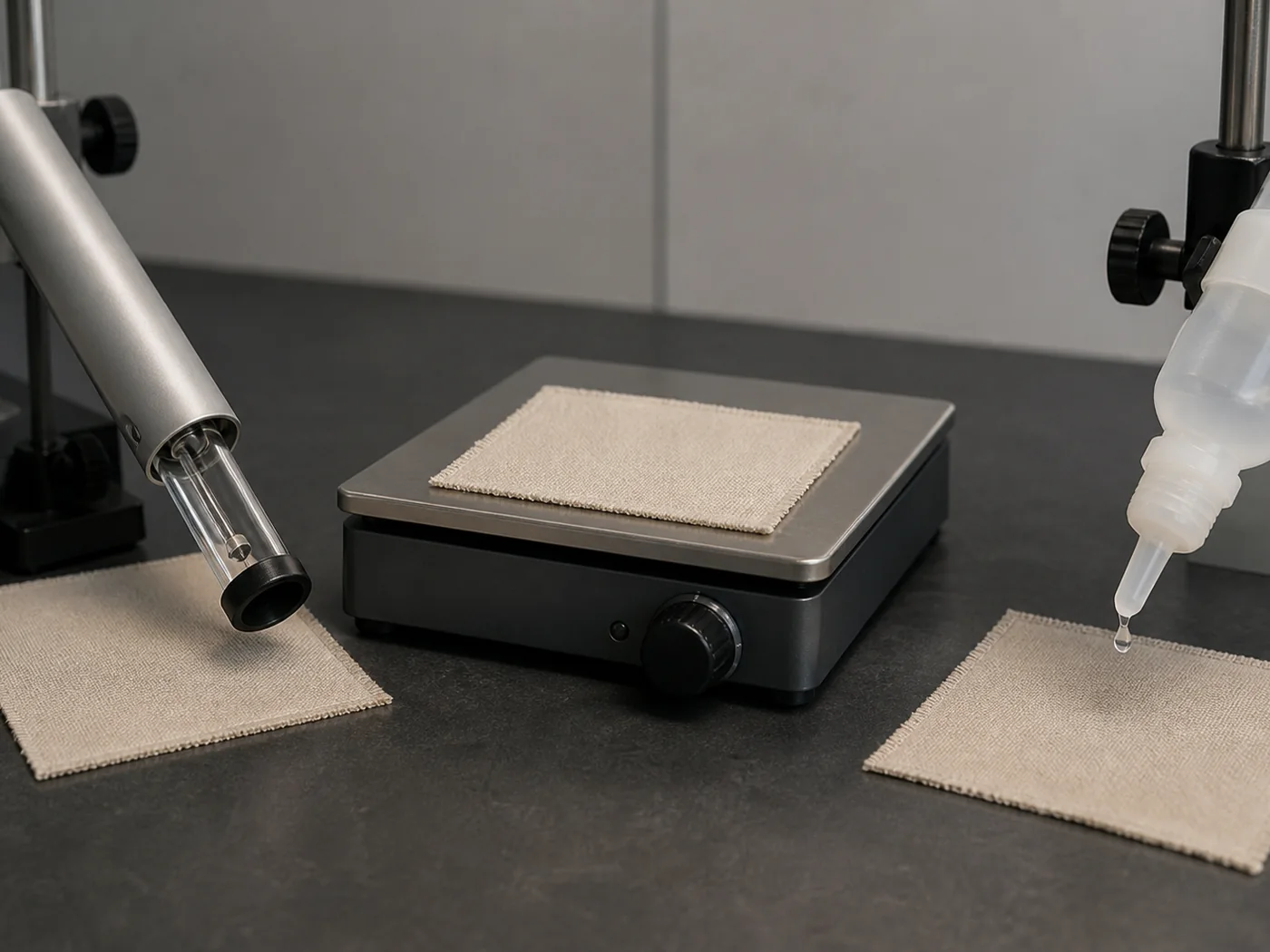
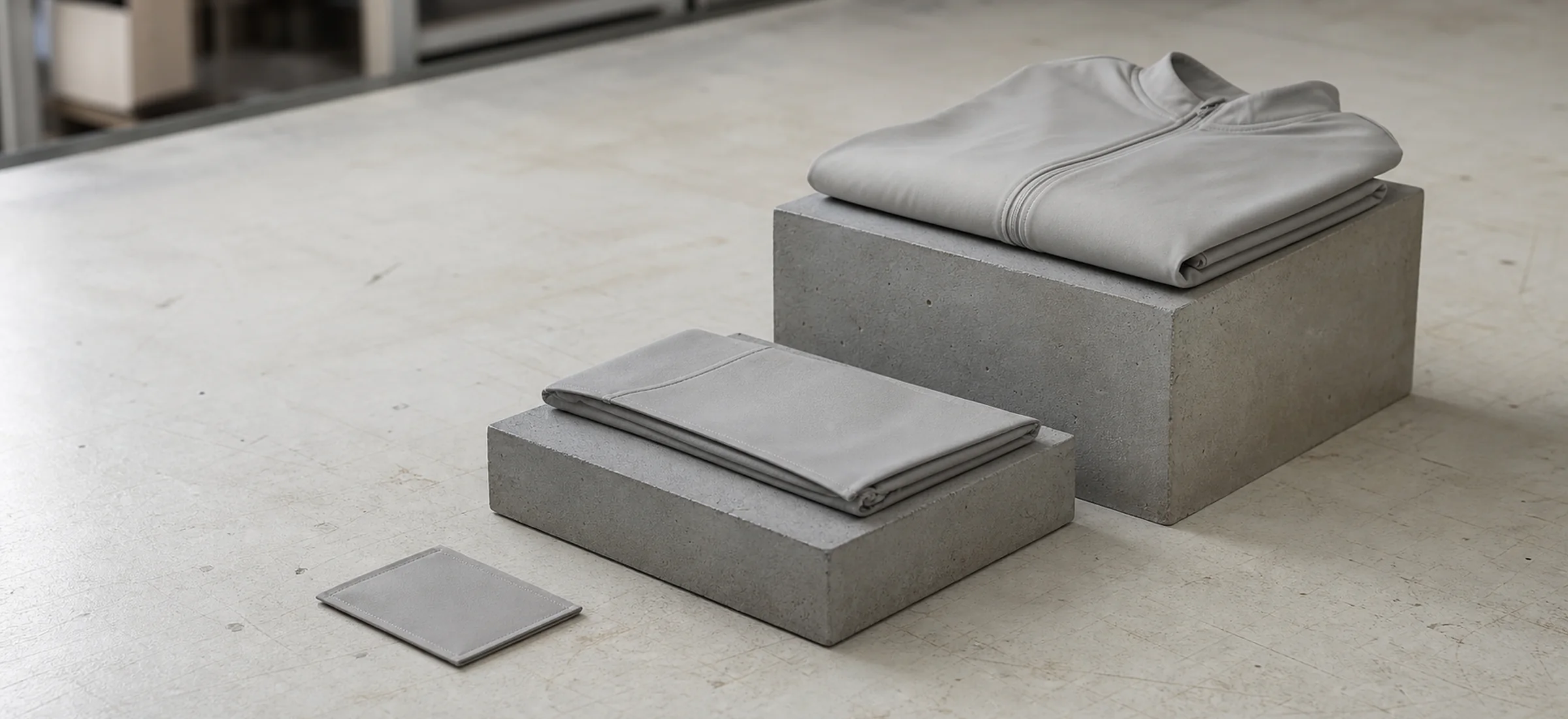
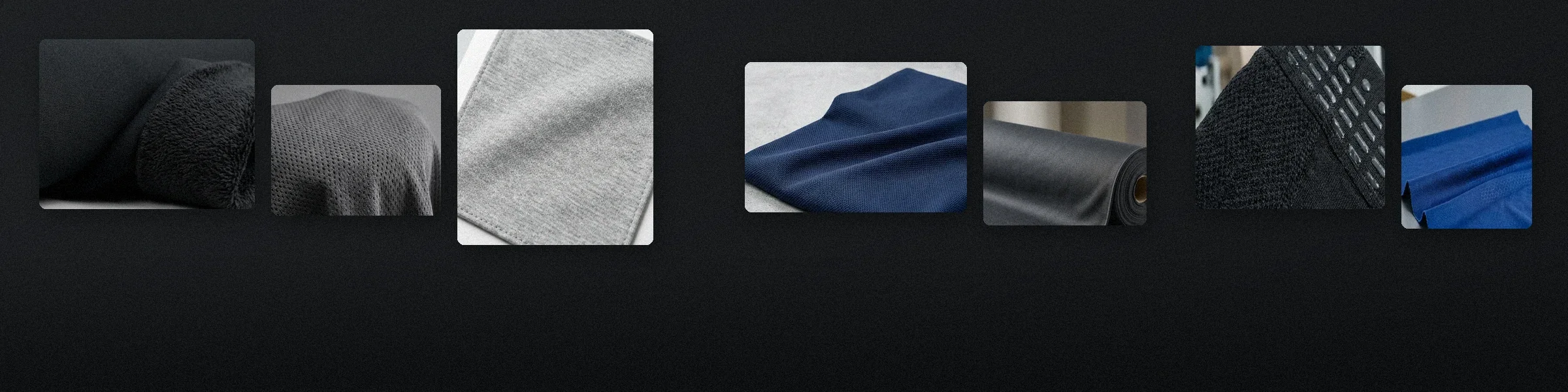
Bench set-up: each coupon sits with the instrument that drives it, not with a finished garment.
Which Trigger Suits Which Ride
The trigger decides the story you can tell, and the failure mode you inherit.
Sunlight-driven
The color appears in ultraviolet light and fades back indoors. On a bike it tracks the ride itself: on when the rider is out in the open, off when they are not, which makes it readable as a sun-exposure cue. It is the wrong choice where kit lives mostly indoors or under a jacket, and where a garment is expected to look identical years from now — sunlight is both its trigger and what wears it out.
Body-heat-driven
The color shifts once the fabric reaches a set temperature. Its case holds up better in cycling than in any other category, for the reason set out in the next section. It is the wrong choice where the garment will not reliably reach that temperature — a spring gilet worn open, or kit sized loose enough to sit off the skin.
Water-driven
A pattern appears when the fabric is wet and goes as it dries. It fits cycling poorly: riders are rarely wet in any controlled way, so most of a ride shows nothing.
Body Heat Tracks the Intensity Zones of a Ride
A ride has intensity zones, and skin temperature moves with them.
A trigger point specified around 31–33℃ lands, on a rider, close to the moment the warm-up ends and the effort turns hard. That is a rare thing in apparel: a color change that coincides with something the wearer is already feeling, rather than a novelty that fires at random.
It is also why cycling is the category where this argument holds up. A jacket worn at walking pace crosses that threshold slowly and unpredictably; a rider crosses it on almost every ride, at a point they can name.
One thing to hold on to before building a project around it: the change is not instant at a single degree. A full transition needs the fabric to move through a span of temperature, so the effect reads as a gradual shift across a climb rather than a switch.
The transition is a span, not a line: the fabric has to travel through it before the change reads as complete.
Cycling Kit Stretches More Than the Coating Does
This is the constraint that decides how much color-changing a jersey can carry.
Jerseys and bib shorts are the most stretched, closest-fitting garments we make. They are built from four-way stretch knits and worn under compression, and every one of those properties works against what a color-changing layer is.
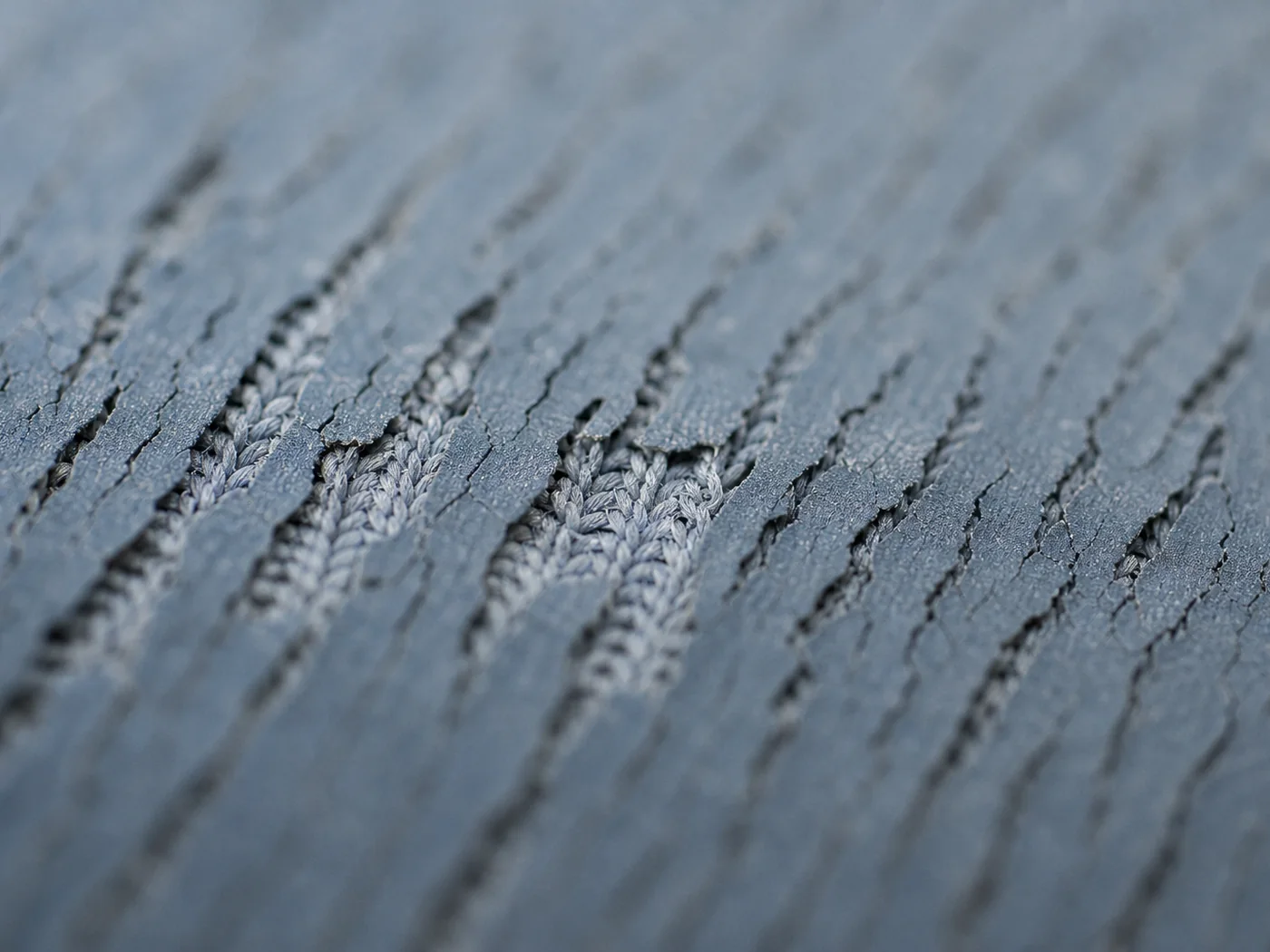
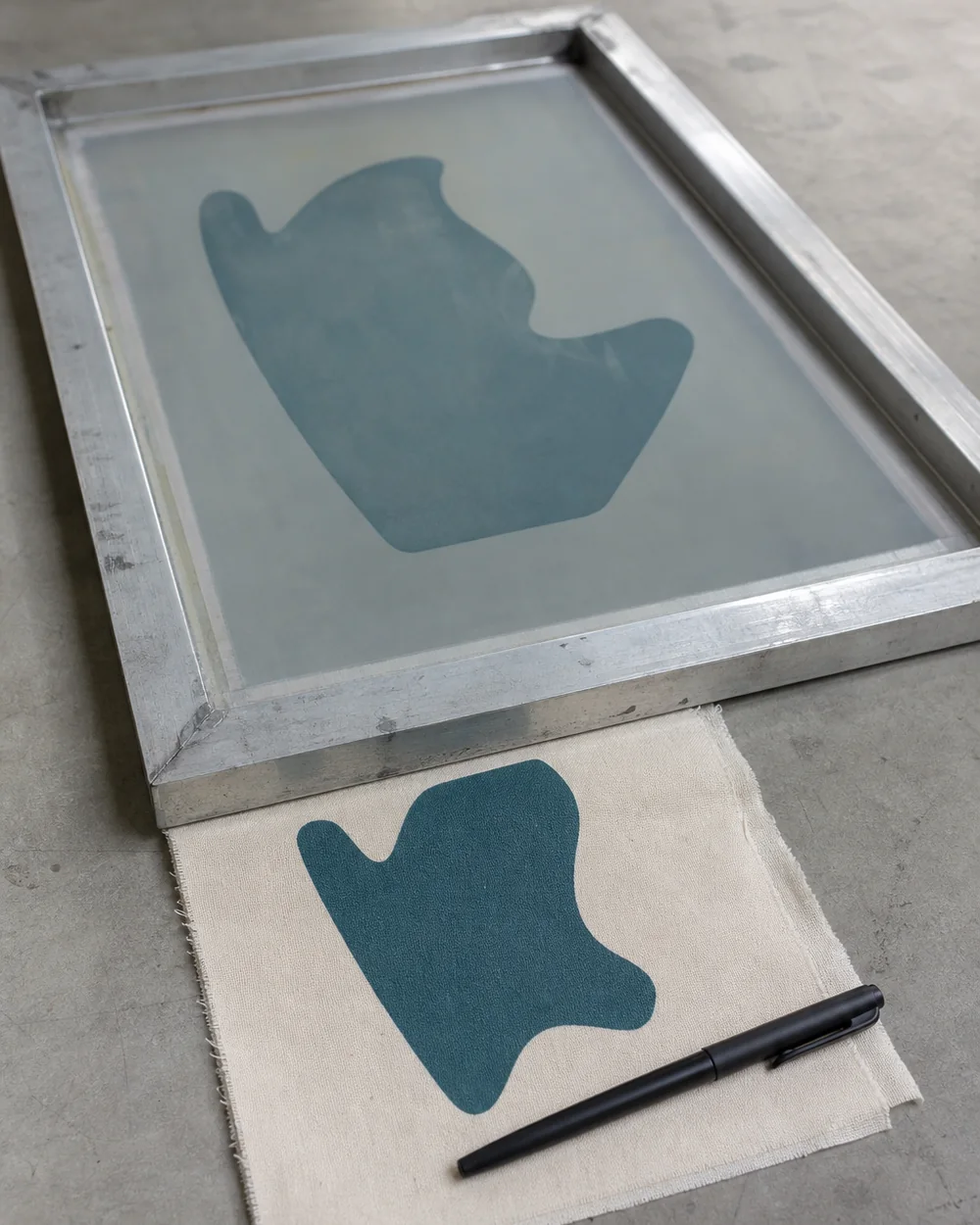
The color-changing effect is carried in microcapsules held in a printed layer, and that layer is, mechanically, rigid. Put a rigid layer on a fabric that is designed to elongate in every direction and then pull it over a moving body, and the layer is the part that gives: it cracks, it lifts at the edges, and it stops changing evenly, so what should be one color reads as a patchy one.
Why this is a category conclusion, not a general caution
On a cotton tee, a large color-changing panel is routine. On a race-fit jersey, the same panel is the highest-risk thing on the garment, and the risk scales with its area.
So Put It Where the Fabric Moves Least
The same effect, placed against the garment rather than against the artwork.
Once area is understood as the risk, the design question changes shape. Instead of asking how much of the jersey can change color, the useful question is where the fabric is doing the least work.
- Keep the area small.A compact mark survives what a panel does not, and it keeps the effect inside the part of the garment that moves least.
- Favour the low-stretch zones.The rear pocket panel, the shoulder and the cuff move far less than the chest and flanks, and they are where a color-changing mark has the best chance of still looking right after a season.
- Prefer the effect built into the yarn.Where a project can carry the development, putting the color-changing element into the fibre rather than on top of it removes the rigid-layer problem at its source instead of managing it.
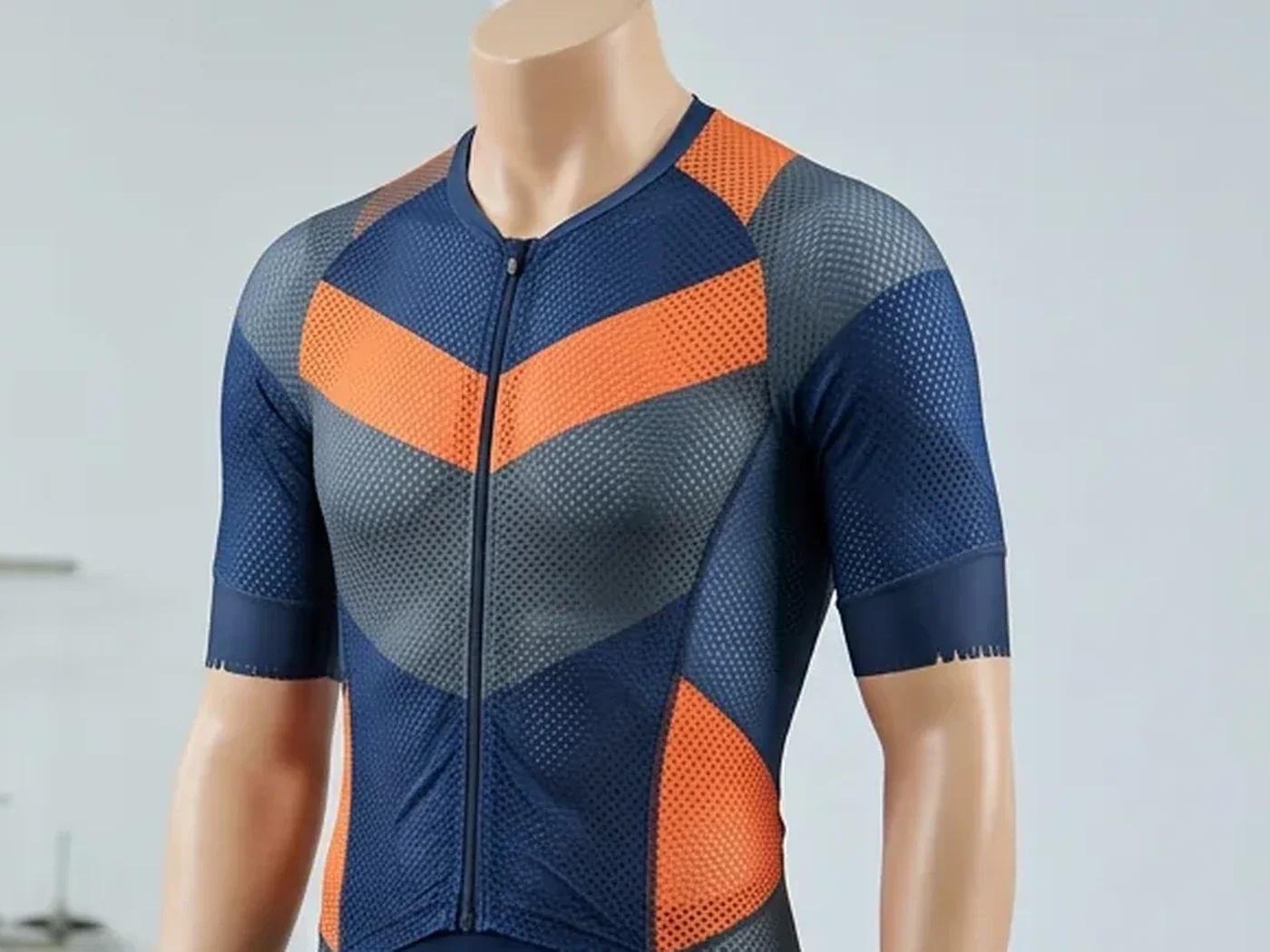
Ringed in white: shoulder yoke and sleeve cuff, the panels that move least. Ringed in amber: the chest and flank, where the fabric works hardest.
One area is simply out
The chamois region takes friction, sweat and sustained pressure at the same time, and no coating-based color-changing treatment belongs there. That placement is out.
Ask for Two Durability Numbers, Not One
Wash resistance is the one everybody quotes. It is not the one that ends the garment.
Published figures for wash resistance vary by how the effect is applied, and the spread is wide enough to decide a project on its own:
| How the effect is applied | Wash cycles reported in the literature |
|---|---|
| Surface coating or ordinary print | 5-10 |
| Microcapsule screen print | 30 |
| In-situ microcapsule or built into the fibre | 50 |
Those are published industry and literature figures for the method, not measurements of a garment we have made.
The number that matters more is rarely offered
Color-changing compounds also fatigue: under prolonged strong sunlight the mechanism degrades permanently, and once it has, the color does not come back. Wash resistance describes what laundering does; fatigue describes what the sport itself does. For a garment worn outdoors for hours at a time, fatigue is the one that ends the effect first.
So when a quotation comes back, ask for the fatigue cycle count alongside the wash count.
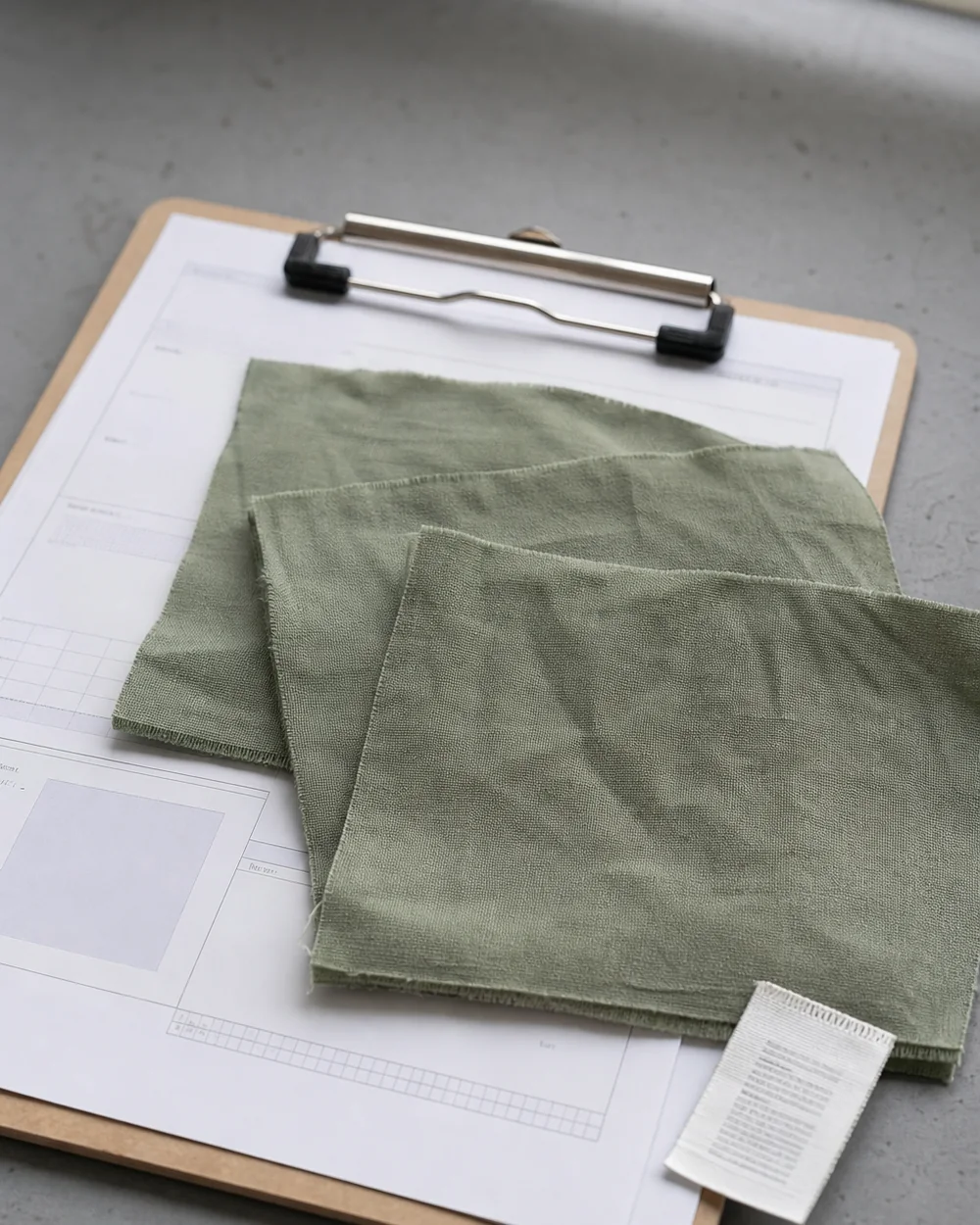
Coupons, care labels and the test record they belong to.
Three Shapes This Actually Takes
The workable version is usually smaller than the one first sketched.
A sun-exposure mark on the rear pocket panel
Small, printed, in the lowest-stretch zone on the garment. It is the easiest version to get right, and it suits club kit and event pieces where the mark is a talking point rather than the product.
A team badge or logo that changes
Still a local print, driven by either sun or body heat, and it puts the effect exactly where a club or a sponsor wants attention. The technical demand is low because the area is small.
A jersey that changes across the whole garment
This is the one most people describe first. It means taking the effect into the yarn or the dye stage, which raises both the minimum quantity and the development commitment. It is worth doing for an established brand with volume behind it, and it is worth talking out of for anyone else.
What a Color-Changing Quotation Is Built From
Five lines, and why none of them carries a published figure.
A local mark and a whole-garment treatment sit at different points in the supply chain, and the gap between them is an order of magnitude.
- The color-changing paste or masterbatch, which costs more than ordinary print paste and is consumed in proportion to the printed area.
- Screen or tooling set-up, and where the effect goes into the fibre, development that reaches back to the yarn stage.
- Fabric minimums, which for the yarn and dye routes are set by what a mill will run, not by garment quantities.
- Sampling and three separate tests — color-change response, wash, and fatigue. This is not ordinary sampling, and it should be priced as its own line.
- Yield loss, because inconsistent color change is a reject, and who carries that judgement needs to be written down before production rather than argued afterwards.
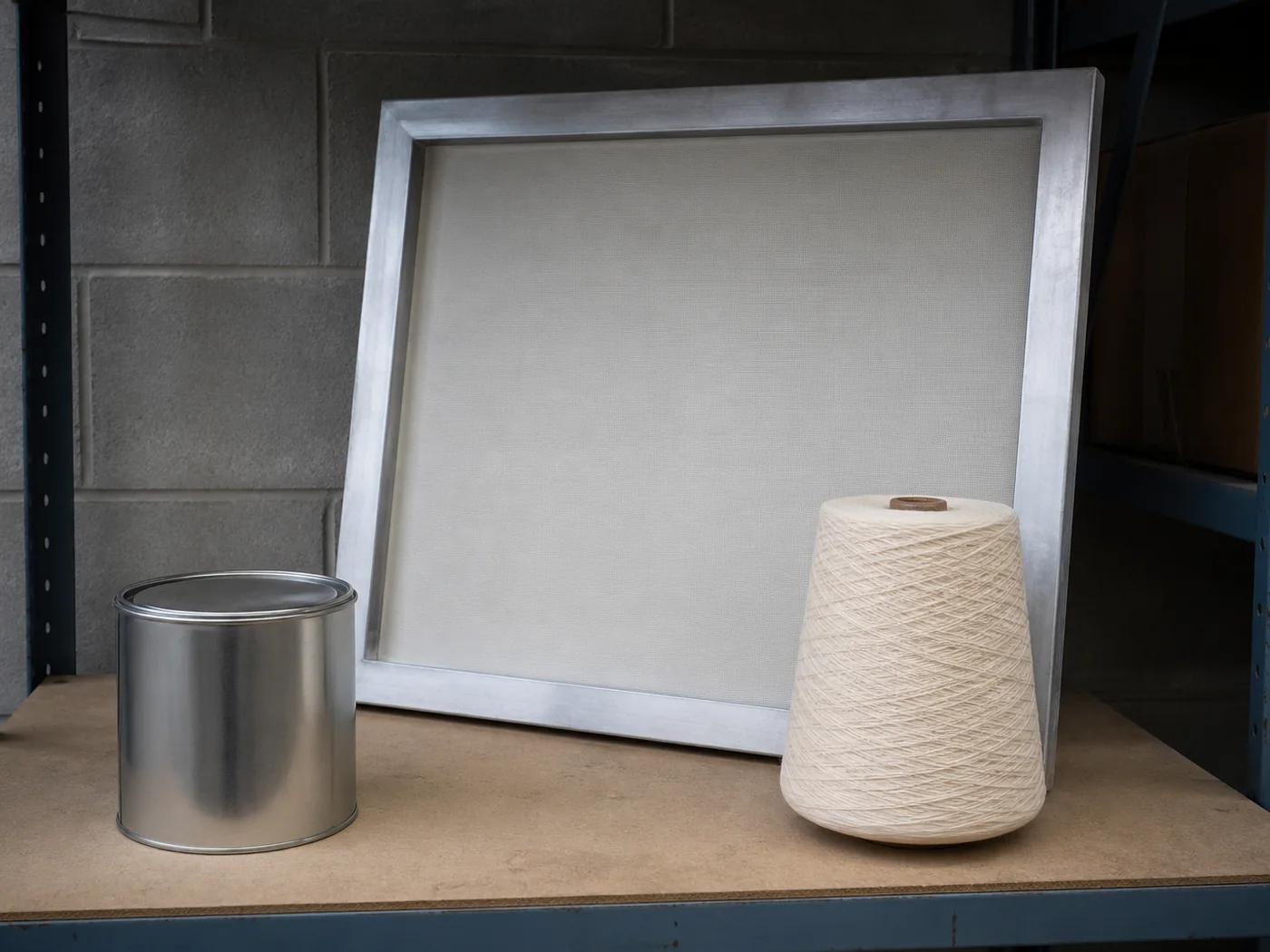
The three things a quotation is actually consuming: paste, tooling, and the fabric route behind them.
Figures against these lines are set once the paste, the placement and the fabric route are fixed.
How a Color-Changing Project Runs With Us
What each side brings to a first phase.
What we bring
We build cycling apparel. What we bring to a color-changing project is the part that decides whether it survives being worn: the fit and panel construction it has to sit on, the stretch behaviour of the fabric underneath it, the placement judgement set out in the placement section, and a read on how it will fail.
What you bring
What you bring is the other half of the specification: the garment the effect has to live on, the riding condition it is specified against, and the quantity behind it.
The pigment and microcapsule suppliers are upstream chemical makers rather than garment factories, and the link that decides a project — a printer or spinner who can put those materials onto our fabrics consistently, at production scale — is the part still being established. That tells you where the schedule risk sits and what a first phase is really for.
That is what joint development means here: a defined first phase that answers the material question on your fabric and your placement, before anyone commits to a production run.
Tell Us Which Shape You Are Considering
Three answers are enough to say whether it is worth starting.

Bring it as it stands, open parts included.
- A mark, a badge, or the whole garment — and if that is still open, it gets answered first.
- Where on the garment it would sit — this is what the risk turns on.
- How many pieces this run comes to — a range is fine at this stage.
We will come back on the shape, the placement and what a first phase would need to answer.
Not ready to send a brief yet? The full enquiry desk for custom cycling apparel manufacturing is on the contact page.