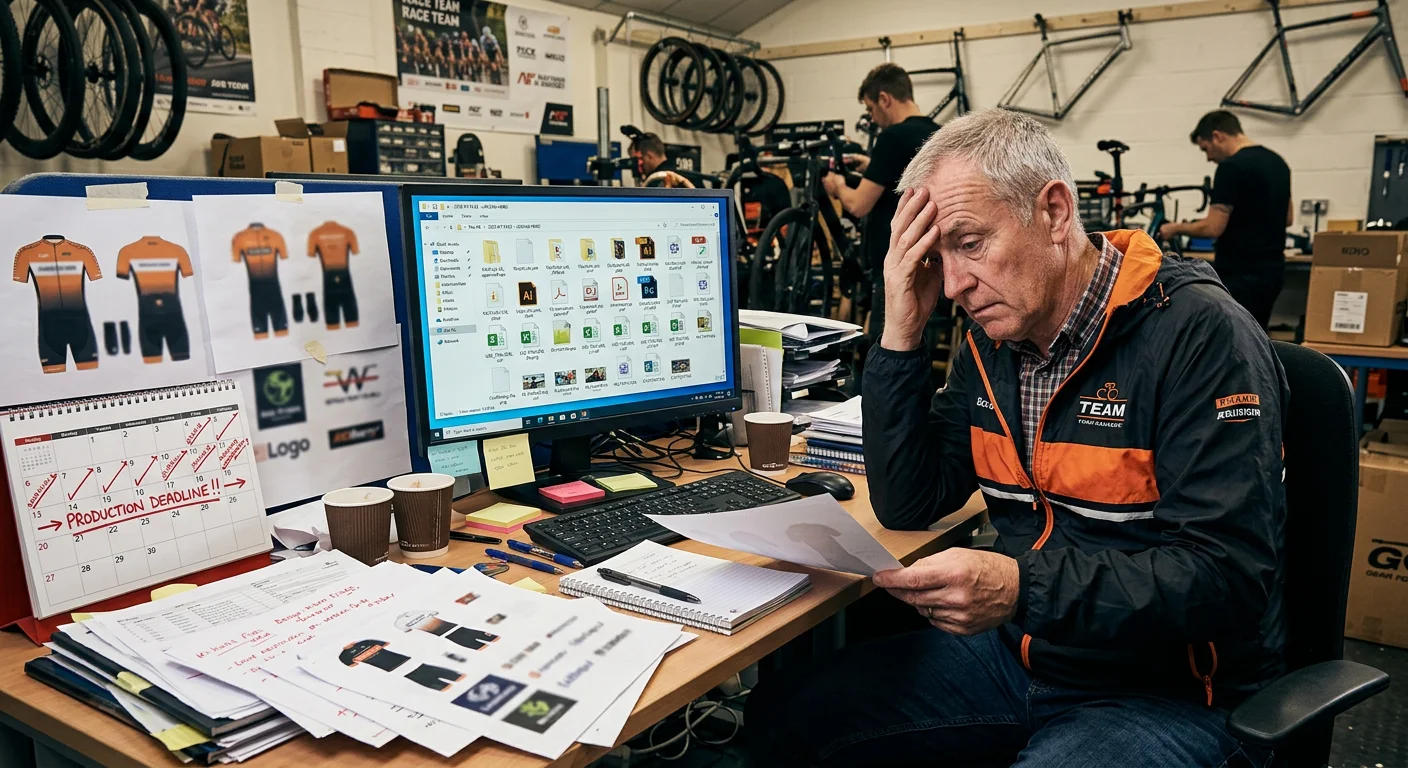
Your race jerseys are on the production floor. Your event is six weeks out. And your supplier just told you it's going to take eight.
That gap — between when you need your custom cycling kit and when it arrives — isn't just frustrating. Team managers, brand buyers, and club coordinators know the feeling: months of planning, gone in a single email. Here's what most people in this industry won't say out loud: most cycling apparel lead time delays aren't factory problems. They're process problems. And process problems are fixable.
The seven strategies ahead show where time gets lost across the cycling clothing production timeline. More than that, they show how to get it back. No cutting corners on fabric quality. No sacrificing the construction precision your riders are counting on.
Why Cycling Apparel Lead Times Are a Make-or-Break Factor for B2B Buyers
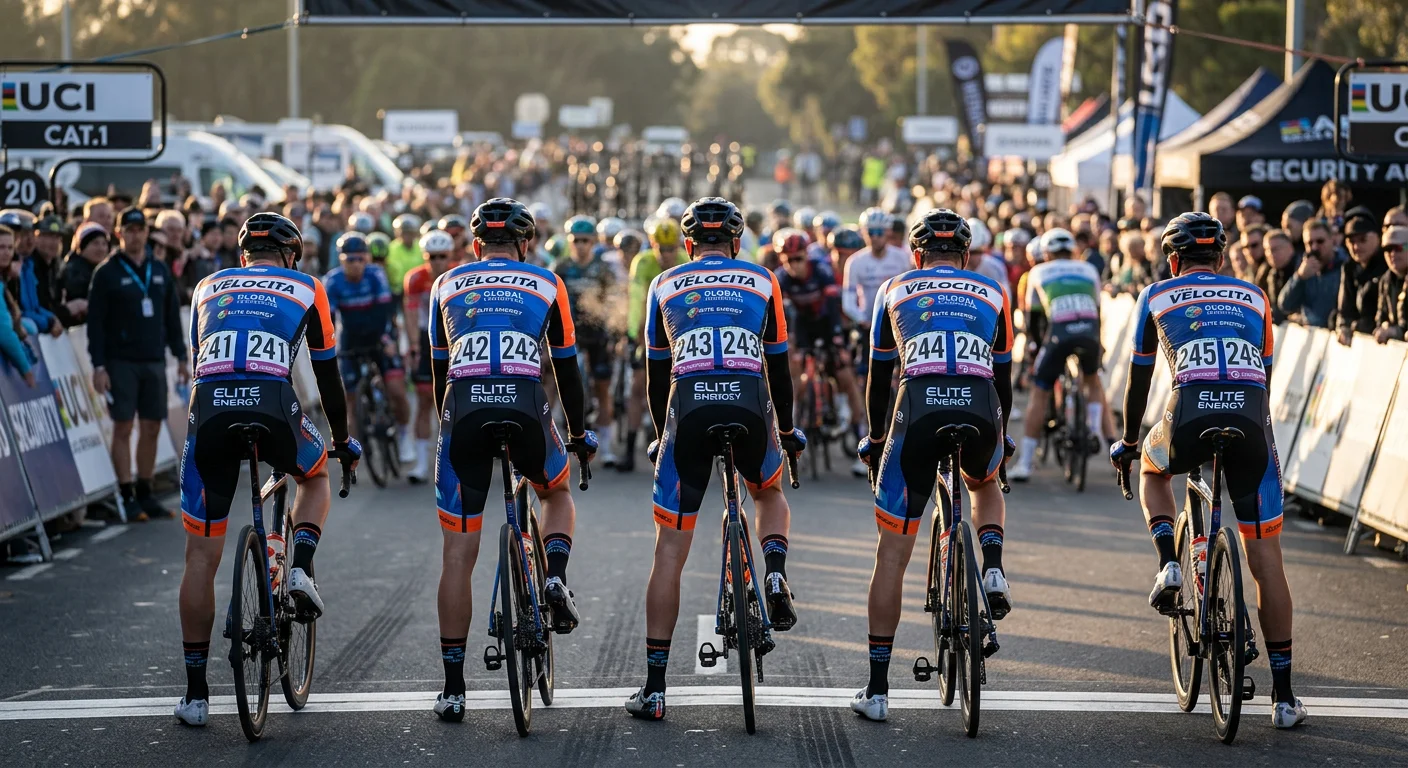
Lead times in cycling apparel aren't a logistics footnote. They decide whether a team hits the start line looking unified — or thrown together.
The industry standard for custom cycling kit turnaround is 6–8 weeks from final design approval to delivery . Add the full cycle — decision-making, sampling, production, quality control, shipping — and that window grows to 8–10 weeks . For complex pieces with full sublimation printing, multi-panel cuts, or performance padding, the timeline pushes to 100–110+ days .
Here's what that means in practice for B2B buyers:
Cycling teams and event organizers need to start procurement at least 6–10 weeks before race day . Not to get ahead of schedule — but to protect sponsor visibility, team image, and any resale window that follows.
Brand buyers and sourcing managers tracking service rates need those rates above 95% . Drop below that, and it starts cutting into reorder cycles and seasonal planning.
Bulk cycling wear orders carry compounding risk. One material delay can cascade across an entire production run.
The numbers show why the cycling clothing production timeline demands this level of attention. Fabric sourcing and dyeing alone account for 45–55% of total lead time delays. Factory sewing speed is almost never the real bottleneck. The pressure point sits upstream — before a single seam is sewn.
On top of that, 35% of first-order delays trace back to incomplete technical documentation. Missing specs. Ambiguous size charts. Unresolved colorway approvals. These aren't manufacturing failures. They're communication failures — and each one translates into lost weeks on your calendar.
For B2B buyers working against event deadlines, there's no buffer for that kind of delay. The margin is zero.
Way 1: Standardize Fabrics and Trims to Cut Cycling Clothing Production Time at the Source
Fabric sourcing is where most cycling apparel lead times fall apart. Most buyers don't see it coming until the delay email lands.
Here's the reality: programs built on custom, style-by-style fabric selections run 60–120 days from design approval to finished goods. Programs built on standardized, pre-qualified fabric platforms run 30–50 days . That's not a small improvement. You're cutting your cycling clothing production timeline close to half — without changing a single thing about how your jerseys are designed or constructed.
Build a Core Fabric Platform (3–5 Base Fabrics)
The most efficient cycling apparel suppliers don't source a new fabric for every style. They lock in 3–5 base fabric qualities that cover 80–90% of their range. Something like:
A lightweight jersey knit (~180 g/m² ±5%) for race jerseys
A compression lycra (~220–240 g/m²) for bib shorts and tights
A mesh panel fabric for ventilation inserts
A thermal brushed knit for winter base layers
A windproof shell for gilets and jackets
Consolidating demand across multiple styles into these platforms scales orders from ≈500 m per color on one-off programs to 3,000–10,000 m platform buys. Mills then reserve greige and yarn windows 6–8 weeks ahead . Your fabric is ready when production starts — not holding things up. Price breaks follow too: trim standardization alone drops component costs 10–35% through consolidated volume.
Cap Lab Dip Rounds at Two — Maximum
Open-ended color approval kills your calendar. Each extra lab dip round adds 3–5 days for submission, shipping, review, and re-submission. Across a multi-colorway cycling kit, that piles up fast — adding 1–3 weeks to your sublimation cycling jersey production schedule before a single panel is cut.
The fix is structural, not just a matter of discipline:
Build a core color library of 12–24 colors with documented L*a*b* digital standards
Set a written ΔE tolerance — ΔE ≤ 1.5–2.0 for standard sportswear colors, tighter for sponsor brand shades
Enforce a hard two-round maximum : Round 1 for initial options with ΔE data attached; Round 2 for one final adjustment. Round 2 falls within commercial tolerance? Issue a "deviation approved" sign-off and move forward
Freeze colors at the design-freeze gate — no post-freeze shade changes unless you accept the schedule consequence
This saves 6–10 calendar days per color . Across a full team kit with 4–6 colorways, that's a real chunk of your total cycling team kit delivery window — recovered before production even starts.
Build a Unified Trim Library
The same logic applies to trims. Most cycling apparel brands, on auditing their components, find 5–10 variants per trim category — different zipper specs, multiple elastic waistband widths, inconsistent silicone gripper patterns. Each variant means separate sourcing, separate stock, and slower line changeovers.
The rule: max 2 options per trim type .
Zippers : #3 coil for jerseys, #5 coil for jackets and vests — standardize the puller, tape color, and insertion method across the line
Elastic waistbands : 1–2 widths (e.g., 40 mm plain, 45 mm silicone-printed) used across bib shorts and tights without mixing
Hem silicone grippers : one tape width, one or two repeating patterns, colorways aligned to your core palette
One detail worth noting: switching from sewn woven wash labels to heat-transfer labels saves 10–20 seconds per garment on label operations. On a 1,000-piece batch, that's 2.8–5.6 operator hours recovered — time that feeds straight back into your bulk cycling wear order processing speed. Add broader trim consolidation to that, and PDCA-based standardization studies show per-style production time drops of ~19.8% and capacity gains of ~24.6% .
Standardization isn't about limiting your product range. It's about cutting the upstream chaos that adds weeks to every order before the factory floor ever gets involved.
Way 2: Front-Load Artwork and Size Data to Eliminate Custom Cycling Jersey Lead Time Waste
35% of first-order delays come from one cause: incomplete information handed over too late. Not factory errors. Not fabric shortages. Just missing Pantone numbers, low-res logo files, and size breakdowns that say "100 pieces" with no XL count attached.
The fix isn't complicated. It's structural.
A standard custom cycling kit runs 8–10 weeks from first contact to delivery. The production backend — sublimation printing, cut-and-sew, QC, shipping — locks in at 6–8 weeks once design gets approved. That window doesn't shrink much. What does shrink is everything before it. Get your artwork and size data in early, and you hit Artwork Freeze by Day 3–5 instead of Day 14-plus. That's 1–3 weeks of calendar time back before a single panel hits the press.
The Day-0 Intake Rule: Clock Doesn't Start Until the File Is Complete
Strong cycling apparel suppliers hold one firm policy: the production clock doesn't start until the intake package is complete . No exceptions.
Your Day-0 package must include:
Logo files in AI/EPS/SVG vector format — JPGs pulled from a website won't survive sublimation. Low-resolution raster files need redrawing. That adds 1–3 days of design labor before real production work even starts
Pantone PMS numbers for every color — main body, accent panels, each sponsor logo. "Red and blue" is not a color spec
A complete size breakdown table — not a total unit count. You need a full row-by-row split: XS–3XL, gender, cut, quantity per size. Miss this one field and you're looking at 2–5 days of back-and-forth , plus a full redo of production scheduling once sizes come in
Skip any of these on Day 0 and the clock stops — full stop. Top suppliers put this in writing as part of their delivery terms.
Day 1–3: Lock Artwork Before Anyone Argues About It
With a complete intake package, your supplier can build a 2D CAD layout and generate a 3D virtual sample by Day 1 . That virtual sample does real work. It catches logo stretch distortion on curved shoulder seams. It flags stripe misalignment across side panels at a 30–45° riding posture. It confirms Pantone color placement across every panel — all before anyone cuts a physical sample.
The target is Artwork Freeze by Day 3 . One hard rule comes with it: the frozen file gets labeled v1.0-FROZEN . Any change after that point restarts the 6–8 week production clock as a new project. Make that consequence clear upfront, and most late-stage revision requests disappear.
What 3D Sampling Gets Back for You
Swap one physical sample round for a 3D virtual review, and you cut 30–50% off the development phase . What used to take 3–4 weeks of sampling and international shipping shrinks to 1.5–2 weeks . On a total cycling clothing OEM lead time of 8–10 weeks, that's 1–2 weeks returned — pulled from the design side, with no drop in production quality on the back end.
Way 3: Use Demand Forecasting and Pre-Booked Fabric to Shorten Cycling Apparel Manufacturing Time
Fabric doesn't wait for your order. That's the part most buyers learn too late.
Standard functional cycling fabric — polyester-spandex blends from Italian or Taiwanese mills — runs a 20–30 day production cycle before it reaches the cutting room. Spinning takes 5–10 days. Knitting adds another 7–10. Dyeing, color confirmation, and finishing stack on 8–12 more. These three stages run in sequence. Every order triggers the full chain from scratch.
Pre-booked fabric breaks that chain.
Separate "Core Stock" Styles From Custom Orders — Before You Place Anything
Start with classification, not procurement. Pull 3–4 years of SKU-level order data and sort it by style, color, region, and month. You're looking for styles that show up year after year with little variation — club jerseys in consistent colors, standard bib short cuts, sleeves that sell at a steady pace across 8+ months each year. Those are your core stock items.
A working threshold: 500+ units per style per year, sold across 8 or more months. A colorway that makes up 40–60% of category sales in a given region counts as a core color. These are the styles worth pre-booking fabric for.
Custom and event-specific orders are a different case. Demand is project-based. The seasonal index shifts around. Over-committing to pre-dyed fabric creates deadstock risk. For those orders, the smarter move is greige fabric — undyed, held at the mill, ready to color once the order confirms.
How Pre-Booking Cuts 20+ Days From Your Cycling Apparel Manufacturing Time
Here's where the math matters. A standard fabric production run looks like this:
Spinning: 7 days
Knitting: 8 days
Trial dyeing + color sign-off: 4 days
Bulk dyeing + finishing: 8 days
Total: 27 days
Pre-book greige fabric during the off-season. Spinning and knitting happen in advance. Fabric sits warehoused and ready. Lock your core color formulas ahead of the race calendar. An order comes in — you skip straight to bulk dyeing. That single step takes 8 days . Color confirmation runs in parallel and is already resolved.
Result: fabric ready in 8 days instead of 27. Add in parallel color approval, and the net saving reaches 22–24 days per order cycle. Total finished-goods lead time compresses from 60–75 days down to 35–50 days .
Regional Suppliers Amplify the Effect
Pre-booked fabric pays off only if the fabric can move fast. A Taiwanese mill supplying a factory in eastern China ships in 3–5 days by sea. An Italian mill supplying European cut-and-sew gets fabric to the factory floor in 2–4 days overland. That's a 10–17 day total window from order confirmation to fabric at the machine.
Run that same pre-booked fabric model through a cross-continental supplier — Italian fabric to a Chinese factory, or the other way around — and sea freight alone adds 20–30 days , plus customs clearance and inland trucking. Even with greige pre-booked at the mill, you're looking at 25–40 days before fabric touches the production floor.
The combination that works: regional supplier + pre-booked greige + locked color formulas . Together, they cut fabric lead time from a fixed 27-day drag down to an 8-day execution window. That gap is the difference between missing a race calendar and staying ahead of it.
Way 4: Apply Lean Batch Production to Accelerate Cycling Kit Turnaround on the Factory Floor
The factory floor is where lead time gets saved or lost — and most of it gets lost in ways that never show up on a production report.
Traditional cycling apparel manufacturing follows one simple rule: finish the full batch before moving it forward. 500 jerseys get cut. All 500 wait for print. All 500 wait for sewing. All 500 wait for QC. The order sits at each station in a pile, and the pile is the problem. Work-in-progress (WIP) balloons to 250–400 pieces at any given moment. The total production clock runs 10 days. And if something goes wrong — a zipper alignment issue, a color shift in sublimation — it shows up at the end, after all 500 pieces are already affected.
Lean batch production breaks that rule.
Split 500-Piece Orders Into 50–100-Piece Transfer Batches
Don't release a 500-piece order as one big wave. Split it into 5–10 sequential batches of 50–100 pieces each . Each batch runs through cutting, sublimation printing, sewing, and QC as its own mini-production cycle.
Here's how each stage works:
Cutting : Once 50 pieces are cut, they move straight to print — no waiting for the remaining 450
Print/sublimation : Schedule the heat press in 50-piece rounds (~10-minute furnace cycles, averaging 0.2 min/piece on equipment time). This feeds the sewing line every 30–60 minutes instead of one massive push at the end
Sewing : Run each 50–100 piece batch through a dedicated U-shaped cell from start to finish. This keeps mid-batch pile-up low
QC : Release each completed batch for inspection and shipment right away — don't hold it until all 500 pieces are done
The results are measurable. Lean small-batch production cuts WIP by 50–80% compared to traditional push-batch methods. Order lead time drops by 25–40% — a 10-day production cycle shrinks to 6–7.5 days . Quality defects show up within the first few pieces of each batch, not at the end of a 500-piece run. That cuts problem detection time by 50–70% .
Time the Bottleneck Before You Reorganize Anything
Before rearranging the floor, measure it. Use SMV (Standard Minute Value) timing: stopwatch each operation across at least 10–20 individual pieces. Remove outliers. Then calculate the average cycle time per workstation.
Next, calculate your Takt Time — the pace the line must hit to meet daily demand. Example: 420 minutes of productive floor time, 420 pieces needed, Takt = 1.0 min/piece . Any station with an SMV above 1.0 is a bottleneck.
In cycling apparel, the bottleneck is almost always the same station: zipper assembly . Standard sewing operations run at 0.7–0.9 min/piece . Zipper assembly — alignment, insertion, finishing — runs 1.2–1.6 min/piece . That one station sets the pace for the entire line.
The fix is structural. Split the zipper workstation between two operators . Add positioning jigs. Pre-stage zipper alignment before the operator touches the machine. Industry Kaizen data shows this brings zipper assembly SMV down by 15–30% — enough, in most cases, to pull it back within Takt.
Build Multi-Skilled Operators Around the Highest-Risk Modules
Lean batch flow needs people who can flex with it. Cycling kit production involves high-frequency style changeovers — different cuts, colorways, and team configurations rotating through the same line. This puts constant pressure on single-skilled operators stuck at one station.
The answer is a skills matrix . Rows are operators. Columns are production modules: collar assembly, main body panels, zipper module, hem finishing, chamois pad integration. Each cell gets marked as proficient, in-training, or not yet covered. The target: every operator proficient in at least 2–3 modules , with the matrix reviewed and updated each quarter.
For cycling apparel, start cross-training on zipper assembly and sublimation print handling first. Those are the two stations most prone to becoming bottlenecks as styles change or batch sequencing shifts.
Pair this with U-cell layouts and SMED-style changeovers that target 10–30 minutes between style switches . Together, this multi-skill system keeps the line moving even as the order mix changes mid-week. The floor stays flexible. The batches keep flowing. And the calendar stops slipping.
Way 5: Digitize Approvals and Inline QC to Remove Hidden Waiting Time from Production Pipeline
Somewhere between "submitted for approval" and "approved," days disappear. Nobody logs them. Nobody reports them. They just vanish — and the order lands late, so everyone looks at the factory.
The factory isn't always the problem. Hidden waiting time is. It lives in approval workflows and end-of-line quality inspection — two areas that most cycling apparel operations still run on email chains, shared spreadsheets, and paper QC forms.
The fix isn't complicated. It's structural.
Lock Tech Packs Before Production Moves
A PLM system does one thing better than any inbox: it makes the current version of truth impossible to miss . Every size spec, BOM entry, and artwork file lives in one place. Suppliers access the live tech pack straight from the system — no waiting for an attachment that may or may not be the latest revision.
Two rules make this work:
Production orders can reference approved, published versions only. A design change creates a new version number. Suppliers get automatic notification. The "is this the latest file?" email stops existing.
Artwork approval is a hard gate. The artwork checklist must be signed off in PLM — logo placement confirmed, color layers approved, Pantone references locked — before the version gets published for production. No exceptions.
This one configuration cuts one of the most common hidden delays in custom cycling kit turnaround: the 24–72 hours a tech pack spends sitting unread in someone's inbox.
Set SLA Timers on Every Approval Node
Digitized approval workflows cut approval cycle time by 30–50% compared to email-based processes — but SLA rules need real teeth to get there.
Industry benchmarks for cycling apparel supplier efficiency:
Pre-production sample (PPS) approval: 24 hours from supplier submission to brand decision
Top-of-production (TOP) confirmation: 48 hours from upload to sign-off
A supplier uploads a PPS. The system assigns the review task, starts the SLA clock, and surfaces it in the reviewer's dashboard — all at once. At T+24h with no action: automatic escalation to the team lead. At T+36h: the order gets flagged "at risk" in the production schedule. Everyone managing that cycling team kit delivery window can see it.
The target metric: approval compliance rate ≥ 95%. Track it each month. Recurring misses trigger a workflow review — not just a reminder email.
Move QC Into the Production Flow, Not After It
Traditional cycling apparel inspection catches 60–70% of defects at final inspection — after every piece is already sewn. A chamois pad misaligned by 6 mm, a silicone gripper starting to peel, a zipper that binds at the 20th pull: all of it surfaces at the end. At that point, your options are rework, scrap, or a delayed shipment.
Structured inline QC changes where defects get caught. Key checkpoints for cycling apparel:
Seam strength — tested at shoulder, crotch, and side seams after sewing, before moving to the next station. Target: ≥15–20 kgf on high-stretch critical seams
Chamois pad placement — measured after attachment, before overlocking. Tolerance: ≤5 mm from centerline, ≤3–5 mm lateral symmetry
Hem silicone gripper adhesion — peel-tested after bonding, before final press. Target: ≥1.0–1.5 N/cm
Zipper operation — 30–50 pull cycles tested right after installation on chest, pocket, and leg zippers
With inline checkpoints in place, the share of defects reaching final inspection drops from 60–70% down to 20–40% . That's a 30–40 percentage point improvement in catching problems earlier — which means 20–30% fewer rework hours and a production schedule that stops absorbing last-minute corrections.
QC results go straight into PLM or ERP in real time — entered on a tablet at the workstation, not transcribed from paper the next morning. The system flags a failing station, halts downstream scheduling, and notifies the process engineer before the problem spreads across another 200 pieces. That's hidden waiting time, eliminated at the source.
Way 6: Build Strategic Supplier Partnerships with Capacity-Based SLAs for Fast Turnaround Cycling Apparel
Most lead time problems aren't Fast Turnaround Cycling Apparel factory problems. They're relationship problems — the absence of any formal structure defining what your supplier is committed to delivering.
A verbal promise is not a service level agreement. An SLA with real consequences looks like this: 95%+ on-time delivery rate , delays beyond 5 business days trigger penalties or automatic order reallocation, production updates arrive weekly , and pre-shipment inspection covers at least 2% of batch volume . Write those numbers into the contract. Vague commitments fall apart under pressure. Specific numbers hold.
Tier Your Suppliers by Speed, Volume, and Technical Complexity
A single factory can't do everything well. Suppliers built for fast-turnaround custom cycling kits — low MOQ, quick changeovers, flexible scheduling — are not the same factories suited for high-volume seasonal production or aerodynamic race-specific construction. These are different operations with different strengths.
The practical split:
<1,000 units/style : domestic or nearshore factories, prioritizing speed and MOQ flexibility
1,000–10,000 units : nearshore production balances cost and turnaround
500+ units sold within 60–90 days : the signal to move an SKU to higher-volume sourcing
Allocate 70–80% of volume to core suppliers with stable OTD records. Reserve 20–30% for fast-return or technical suppliers. This two-track model cuts single-point delivery risk without slowing down replenishment orders.
Reserve Capacity Before You Need It
Calculate your needle-hour requirement upfront: order quantity × per-unit SMV ÷ 60 . Then build a 10–20% capacity buffer into every supplier commitment. Equipment failures, material delays, and absenteeism are not rare exceptions — they're regular variables. Build that buffer into the contract. Don't scramble to fix it after the fact.
Score Suppliers Every Quarter — Then Act on It
Track five KPIs each quarter: on-time delivery rate, first-pass quality rate, average cycling clothing production timeline, defect/rework rate, and communication response time. Tier your suppliers based on results:
A-tier (high OTD, stable lead times): priority allocation for core replenishment
B-tier (compliant but inconsistent): seasonal or mid-risk orders
C-tier (below threshold): backup capacity only, or cut them out
SLA compliance drops below the agreed threshold? Orders move to your second supplier. That rule lives in the contract before the problem shows up in production.
Way 7: Optimize Logistics Strategy to Protect Your Cycling Team Kit Delivery Time
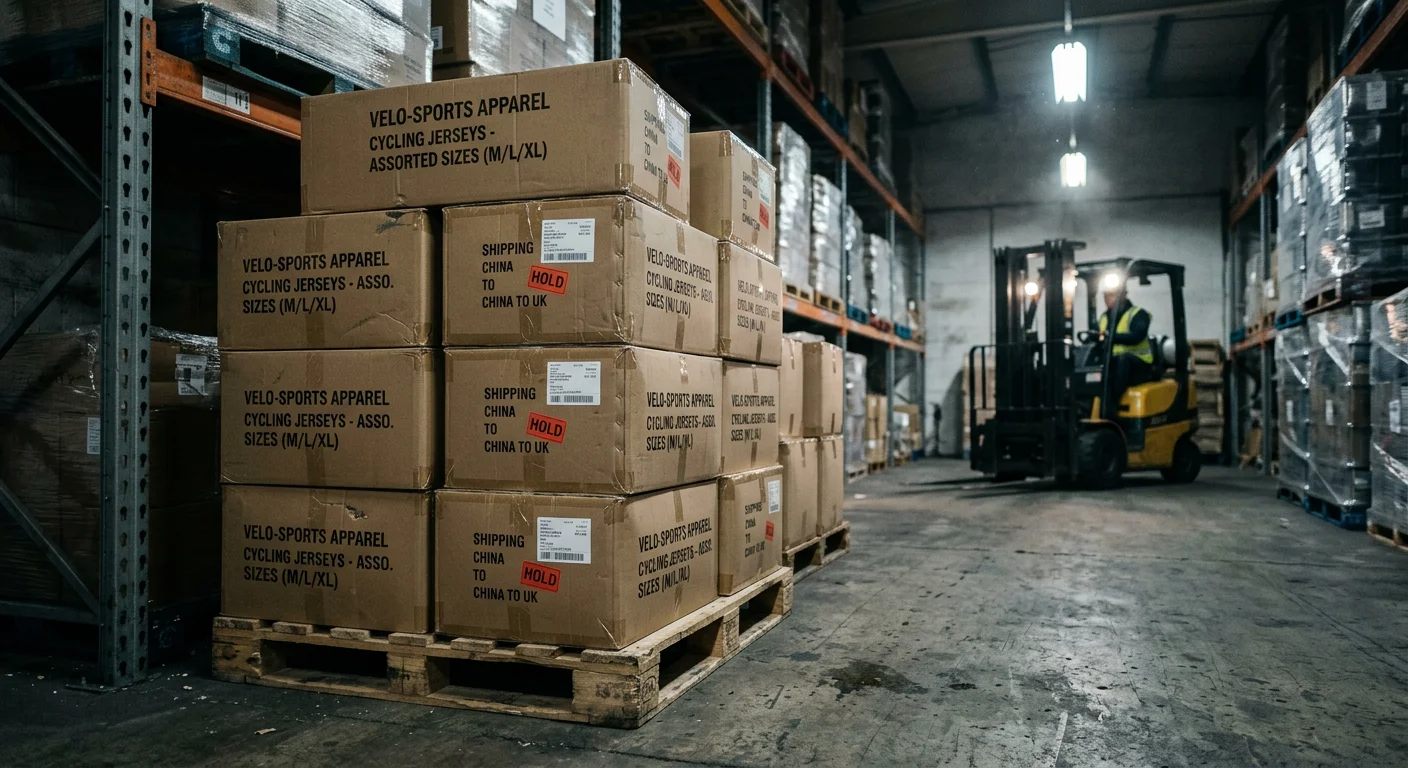
Production finished on time. Quality checked. Cartons sealed. Then the jerseys sit in a port warehouse for three weeks — because no one planned what happens after the factory.
Logistics is where well-run orders go to die. The fix isn't faster shipping. It's smarter sequencing.
Split the Shipment by Size Priority
Not every jersey needs to arrive at the same time. It just needs to feel that way.
Break your order into two waves. Use size distribution data from the past 2–3 seasons as your guide. S/M/L cover 70–80% of actual wearable demand on most cycling teams. That core 30–40% goes airfreight. The remaining 60–70% — secondary sizes and replenishment stock — follows by sea.
The math holds up under pressure:
Air (core sizes) : 3–5 business days door-to-door for Asia-to-Europe routes. Unit cost runs 2–4× sea freight — significant, but it only applies to a fraction of the order.
Sea (balance) : 25–40 days door-to-door. About 25–40% of air cost per unit .
Set a clear operational trigger. The moment core sizes hit 95–100% completion , they ship. No waiting for the full batch. Your first wave should arrive at least 10–15 days before the target race date . That buffer absorbs customs or last-mile surprises.
For high-stakes race calendars, push to a 50% air, 50% sea split. It puts the majority of a team's initial allocation in the fast lane. It costs more, but it works.
Pre-Clear Customs Before the Cargo Moves
Most clearance delays are paperwork failures, not inspection problems. The documents didn't match the product. That's it.
Three issues cause most cycling apparel customs holds:
Fabric composition mismatches — "100% Polyester" on the invoice, "88% Polyester / 12% Elastane" on the care label. That gap triggers re-examination. Fix it at the sampling stage. Align your technical specs, hang tags, wash labels, and commercial documents before anything reaches the port.
HS code misclassification — knit cycling jerseys fall under HS 6110/6112 ; woven outerwear under 6202 . Pre-classify with your freight forwarder before the shipment books. A wrong code means resubmission. That costs days you don't have.
Vague product descriptions — "sportswear" invites disputes. Write "Cycling team kit / professional cycling apparel" on the commercial invoice. Customs gets a clear category. Holds become less likely.
Origin certificates — EUR.1, Form A, or CPTPP equivalents depending on your production country and destination — take 2–5 days to issue. Build that window into your production-to-ship timeline now. Don't leave it until cargo sits at port.
Freight forwarder selection matters more than most buyers expect. The right partner has hands-on experience with knit performance fabrics and HS 6110-class declarations. Look for these benchmarks: average clearance time under 48 hours from port arrival to release, inspection rate below 10–15% , and a documented on-time delivery rate above 95% for team sportswear accounts.
Track Transit Lead Time as a Hard KPI
Transit lead time — factory gate to final delivery — belongs in your supplier scorecard right next to production timelines and defect rates. Most buyers leave it out.
The full chain breaks down like this:
Factory to export port: 1–3 days
International segment: air 3–5 days / sea 20–35 days
Import port to team warehouse: 2–5 days including customs
Add all those windows into your end-to-end lead time calculation before you lock in a race calendar date. Then set on-time delivery rate — actual delivery ≤ scheduled date — at >95% as your threshold. Track it every order.
So your rate drops below that threshold. Don't just flag it — categorize it. Production delay, transit delay, customs delay, last-mile failure. Each category is a separate problem with a separate fix. Lumping them together just hides the real issue. For cycling team kit programs tied to fixed race dates, logistics time deserves 30–40% weighting in your supplier evaluation. A two-week buffer doesn't exist on most race calendars. Plan accordingly.
The Speed vs. Quality Trade-Off Framework: Where to Compress and Where to Hold the Line
Speed and quality aren't opposites. They compete for the same calendar. Buyers who understand where each one belongs stop treating them as a trade-off.
The seven methods above can compress a standard 60-day cycling clothing production timeline down to 40–45 days . That's 15–20 days recovered — 25–33% of total lead time. But that compression doesn't come from pushing harder across the board. It comes from identifying which variables are safe to standardize — and which ones aren't.
Where to compress:
Fabric selection (locked GSM, fixed fiber blends, pre-qualified finishes)
Stitch types and seam construction (standardized into a documented sewing card library)
Chamois pad platforms (2–3 structural configurations, no per-order redesign)
Trims and hardware (zippers, binding, labels — one approved spec, no substitution)
These decisions repeat at high volume and vary very little order to order. Standardizing them cuts process variants. The product a rider feels? That stays untouched.
Where to hold the line — non-negotiable:
Fabric GSM minimums — below threshold, reject. No exceptions for rush orders
Seam strength tested to ISO 13934-1 — not skipped, not spot-checked and waved through
Chamois density and thickness — structural, not cosmetic
First-pass quality rate — drop in numbers means stop compressing
The rule is simple: compress what you can specify in advance. Protect what determines whether the kit survives a 200-kilometer race.
Conclusion
Getting cycling apparel delivered fast and right isn't luck. It's a system.
The teams and brands that hit tight deadlines — without dropping fabric quality or print precision — aren't cutting corners. They make decisions early. They lock in supplier relationships before demand spikes. They treat their cycling clothing production timeline as a live workflow, not a hopeful guess.
Seven levers. All operational. None of them force you to pick between speed and standards.
Your next move: audit where your current orders stall. Look at artwork delays. Late size confirmations. Approval bottlenecks. Start compressing those gaps first. That's where most lead time disappears — and that's where your fastest wins are.
Ready to work with a manufacturer built around this kind of efficiency? Runcyclingapparel .com is worth a conversation. Your race date isn't moving. Your production timeline should.