Your mood crashes without warning. Your sleep fractures at 3am. Your cycle turns unpredictable. Your anxiety runs at a pitch you can't silence — and every blood test returns the same frustrating verdict: borderline . Not broken enough to medicate, but not right either.
So what if the missing piece had nothing to do with a prescription bottle? What if it was something as simple as turning a pair of pedals?
Cycling does more than burn calories. It reaches into your HPA axis. It shifts your brain's serotonin pathways. It reshapes the hormonal environment that drives your energy, your libido, and how well you hold up under stress. This goes far beyond "exercise is good for you."For many wellness brands and cycling apparel manufacturers, that connection between movement and hormonal health is becoming a major focus in performance-based activewear design.
Here, you'll find the exact science behind how it works — which hormones shift, why they shift, and the specific protocols to make it work for your body.
The Riding-Hormone-Mood Pathway: Scientific Mapping of the Triangular Link
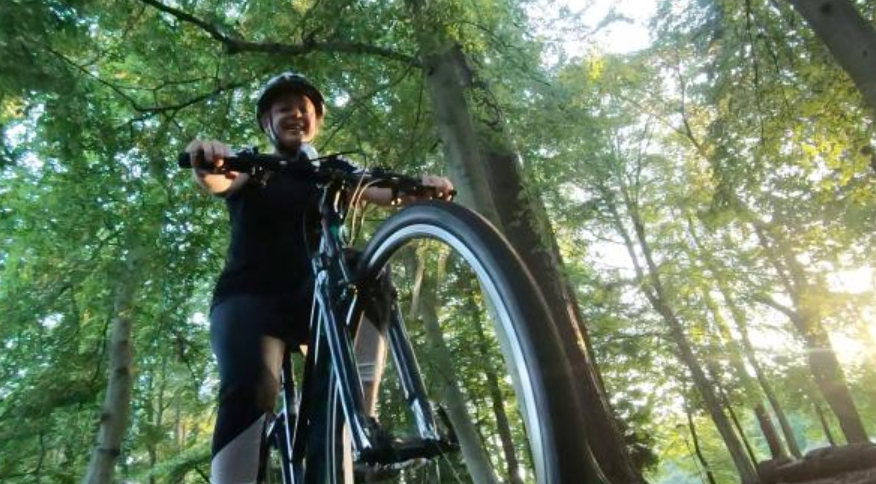
Three things happen every time you ride — and most people notice only one of them.
Yes, your legs work. But underneath that, your circulatory system surges. Your brain gets a rush of fresh blood and oxygen. A chain of molecular signals starts spreading across almost every tissue in your body. A landmark Stanford study tracked 10,000 biological changes across 20 different tissues after just eight weeks of endurance training. Twenty-two genes shifted in the same direction across all six core tissues studied. Many of those genes connect to blood pressure regulation , insulin sensitivity , and cellular stress-repair pathways.
This is not a single-hormone story. It never was.
The triangular link works like this:
The riding stimulus — 30 to 60 minutes of steady, moderate-effort cycling — triggers stronger circulation and muscle-derived signaling
The molecular response — your body starts adjusting insulin sensitivity, neurotrophic support (including BDNF, the brain's growth factor), and the tryptophan pathway that feeds straight into serotonin and melatonin production
The lived outcome — lower stress reactivity, more stable sleep, less anxiety, clearer thinking
That middle layer — the molecular response — is the part most wellness content skips over. Yet it's the most important one. Research into antidepressant treatment found that patients who actually improved shared a specific metabolic signature: a clear shift in the tryptophan → melatonin/methoxyindole pathway . Non-responders lacked it. Mood and sleep gains traced back to metabolic chemistry — not willpower, not placebo, not just "feeling better after moving."
Cycling suits this process well. It keeps you in the hormonal sweet spot — 60–80% of your maximum heart rate — long enough for real adaptation to take hold. Many riders training consistently through a custom cycling apparel factory setup also report better comfort compliance during longer Zone 2 sessions.Plus, it avoids the inflammatory cost that high-impact training can put on an already-stressed system. That combination is hard to match with other forms of exercise.
Cortisol & HPA Axis: Stress Normalization and Baseline Regulation
Cortisol doesn't just spike when you're stressed — it remembers how stressed you've been. That's the part nobody tells you about.
Your HPA axis (hypothalamus → pituitary → adrenal glands) runs on a feedback loop. Stress arrives. Cortisol rises. Glucocorticoid receptors in your prefrontal cortex and hypothalamus detect the surge. They signal the system to shut down. Cortisol falls back to baseline. Clean, elegant, self-correcting.
Except chronic stress breaks that cycle.
HPA research turns up something alarming. Under sustained psychological or metabolic stress, your adrenal glands grow to match the demand. Higher ACTH creates more adrenal capacity. More adrenal capacity pushes out more cortisol at the same ACTH signal. The baseline doesn't shift for a few days — it shifts at a structural level. The stress lifts. ACTH normalizes. But the adrenal mass stays enlarged. Your cortisol "set-point" can sit in a dysregulated state for weeks or months.
That's why people feel wired but exhausted long after a stressful period ends. Their numbers look borderline . But the axis hasn't recalibrated yet.
What a dysregulated HPA axis looks like in daily life:
- Flattened cortisol awakening response — you wake foggy, not alert
- Blunted afternoon recovery — the 3pm collapse that coffee doesn't fix
- Sleep that breaks apart under minor stress
- Heightened anxiety reactivity to small triggers
- Studies link a flattened diurnal cortisol slope to depression and anxiety symptom severity with effect sizes of r ≈ 0.3–0.5
Where Cycling Enters the Biology
Moderate-intensity cycling — 60–75% of your max heart rate, 30 to 60 minutes per session — does something specific here. It creates a controlled, predictable cortisol pulse. Cortisol rises briefly during the ride. Then it returns clean to baseline within one to two hours.
Repeat that pattern three to five times a week. The system starts recalibrating.
After six or more weeks of consistent moderate endurance training, research shows:
- Perceived stress scores drop 15–30% on standardized measures
- Cortisol reactivity to psychological stressors decreases — smaller area-under-the-curve and faster recovery to baseline compared to sedentary controls
- Resting cortisol either lowers or, where it had gone flat and blunted, starts tracking a more normal diurnal rhythm again
That last point matters most. Cycling isn't just reducing cortisol — it's restoring the shape of the daily rhythm.
The overtraining trap: Push too hard too often — back-to-back Zone 4 and 5 sessions without recovery days — and the opposite happens. Resting cortisol rises first. Then it can collapse into a hypocortisol pattern. Sleep fractures. Mood drops. The very thing meant to help becomes another chronic stressor on an already strained axis.
The practical rule from applied sports endocrinology is clear:
- Keep the majority of your weekly rides in Zone 2 — a comfortable, conversational pace
- Insert at least one low-intensity or rest day between hard sessions
- Sleep or mood already disrupted? Treat every ride as recovery-paced until both stabilize
Think of it less as training your fitness and more as training your nervous system's ability to complete a stress cycle — to rise, respond, and return . Many experienced riders working with professional cycling apparel suppliers prioritize breathable fabrics specifically to support recovery-focused endurance sessions.That return is the whole point.
Endorphins & Endocannabinoids: Acute Anxiety Reduction and Calm Induction

There's a specific kind of quiet that settles over you about twenty minutes into a ride — not the absence of noise, but the absence of edge . Science now has a name for what's happening inside that feeling.
For decades, the "runner's high" was credited to endorphins alone. The story was clean and satisfying. Turns out, it was also incomplete.
The Real Driver of Exercise-Induced Calm
Researchers gave exercising participants naltrexone — an opioid-blocking drug at 50 mg . Something unexpected happened. The post-exercise anxiety relief and euphoria stayed. Endorphins were blocked cold. The calm held anyway.
The answer lives in your endocannabinoid system — the same receptor network that cannabis compounds borrow. Your body makes its own versions: anandamide (AEA), 2-AG, OEA, and PEA . In animal studies, blocking CB1 cannabinoid receptors wipes out exercise-induced anxiety relief. Block the opioid receptors instead? The calm holds. The data is clear: endocannabinoids, not endorphins, are the primary drivers of acute exercise-induced anxiety reduction.
What the Research Shows
A 2021 study by Siebers et al. put 63 active adults through two conditions:
1.Running : 45 minutes at 70–85% age-adjusted max HR
2.Walking : 45 minutes at under 50% max HR
All four endocannabinoids rose in both groups. After running, though, the increases were about twice as large . Euphoria nearly doubled. State anxiety dropped (p = 0.024). Researchers confirmed this using questionnaire scales and a virtual reality elevated maze built to trigger real fear responses.
A separate study (Crombie et al., 2020) tested 30 minutes at 70–75% max HR across 40 women — including trauma-exposed individuals and those with PTSD. All endocannabinoids rose compared to sitting. Bigger eCB increases tied directly to bigger drops in anxiety and fear ratings. Fatigue fell. Positive affect climbed. The effect held across all three groups.
The bottom line: you don't need a long session to feel it . Thirty minutes is a real dose.Riders using lightweight OEM/ODM cycling jerseys often find it easier to maintain consistent moderate-intensity sessions without overheating.
Your Actionable Protocol
Goal | Duration | Intensity | Effect Window |
|---|---|---|---|
Acute anxiety relief | 30–45 min | 70–80% HRmax | 0–2 hours post-ride |
Stronger anxiolytic surge | 45 min | 70–85% HRmax | 0–2 hours post-ride |
Stress episode "emergency" | 20–30 min | 70–80% HRmax | Within same hour |
One finding stands out: structured, prescribed intensity beats riding by feel . Studies comparing both approaches found OEA and AEA levels were higher under structured moderate intensity. State anxiety was also higher in the self-selected group. Riding by feel sounds freeing. For reliable anxiety reduction, though, a target heart rate zone is your most useful tool .
Time your ride with purpose. Schedule a 20–45 minute session so the peak post-exercise window (0–2 hours) lands before a difficult meeting, a social event, or anything that tends to spike your anxiety. The calm is a real physical response — and it shows up within minutes of finishing.
Serotonin & BDNF: Neurochemical Pathways for Depression and Rumination Relief
Depression has a structural address. It lives in a shrunken hippocampus, in prefrontal cortex neurons that have pulled back their branches, in synaptic connections that once held your thoughts steady and now don't. This is not metaphor. Brain scans of people with major depressive disorder show reduced volume and connectivity in the regions responsible for cognitive control. That's the same circuitry that, once it falters, lets rumination run unchecked.
At the center of this picture is a protein called BDNF — brain-derived neurotrophic factor . Think of it as the brain's gardener. It tends neurons, encourages new growth, and keeps synaptic connections dense and functional. In depression, BDNF levels in the hippocampus and prefrontal cortex drop. Meta-analyses report that unmedicated depressed patients carry 20–30% lower serum BDNF than healthy controls. After successful antidepressant treatment, those levels return to normal.
Here's where cycling enters — not as a vague mood-lifter, but as a precise biological lever.
The Serotonin–BDNF Loop
Serotonin and BDNF don't work in isolation. They push and pull on each other. Understanding this loop explains why cycling works at a depth that surprises people.
Serotonin drives BDNF upward. Serotonergic pathways — especially through 5-HT2A receptors in the prefrontal cortex and hippocampus — stimulate BDNF production and release in the exact regions depression hollows out. That's why SSRIs take two to four weeks to work. The initial serotonin surge is only the first step. The real therapeutic shift comes from weeks of BDNF gene expression building up and TrkB signaling strengthening. Block BDNF or its receptor TrkB in animal models, and antidepressants stop working — on every behavioral measure, across the board.
BDNF, in turn, sustains the serotonin system. It supports serotonergic neuron survival, boosts serotonin production, and regulates SERT activity. The two systems hold each other up. One collapses under chronic stress, and the other follows.
Cycling restarts this loop — not through pharmacology, but through aerobic demand .
What a Single Ride Does to Your Brain Chemistry
Twenty to forty minutes of moderate-to-vigorous cycling — 60–75% of your VO₂max, or a pace that feels challenging but sustainable — produces a 20–30% increase in serum BDNF above baseline . That peak hits right after you stop pedaling. The elevation holds for around 30 to 60 minutes before returning to baseline.
During that window, real cognitive shifts happen alongside the chemistry. Attention sharpens, processing speed increases, and executive function improves for 30 to 120 minutes post-ride. Your brain's top-down control network runs better than usual. That's the exact network that, at low function, lets negative thought loops spin without interruption.
That post-ride window is worth using on purpose. Journaling, therapy sessions, a difficult conversation you've been putting off — schedule these in the hour after a ride. Brands producing private label cycling clothing increasingly focus on comfort-driven fabrics that support longer aerobic training consistency.That's not spiritual advice. It's using a real neurochemical opening while it's there.
What Consistent Riding Does Over Time
The acute BDNF spike is valuable. The cumulative shift is where the real story lives.
After 10 to 12 weeks of aerobic training at three or more sessions per week , the research shows:
Resting BDNF levels rise 10–20% above sedentary baselines
Hippocampal volume increases by 1–2% — a reversal of stress-induced atrophy — as measured on MRI in adults who kept up regular aerobic exercise over about one year
PFC–hippocampal connectivity improves , strengthening the circuitry that governs attention, memory, and the ability to break out of self-referential negative thought
Clinical RCTs using supervised aerobic programs — 30 to 45 minutes, three times weekly, at moderate intensity — show depressive symptom score reductions of 35–55% over 8 to 12 weeks. That puts structured cycling in the same performance range as mild-to-moderate antidepressant monotherapy for early-stage MDD. In several direct comparison trials, exercise matched SSRIs for symptom reduction — and adding both together produced even better outcomes.
Your Anti-Rumination Cycling Protocol
Goal | Duration | Intensity | Frequency | Timeframe for Structural Change |
|---|---|---|---|---|
Acute BDNF spike + cognitive clarity window | 20–40 min | 60–75% VO₂max / Zone 3 | As needed | Same session |
Depression symptom reduction | 30–45 min | Moderate–vigorous | 3x/week | 8–12 weeks |
Hippocampal volume + baseline BDNF increase | 30–45 min | Moderate | 3–5x/week | ≥10–12 weeks |
One practical note: the BDNF response to exercise is activity-dependent . It responds to the signal of effortful movement. Zone 1 recovery rides are great for cortisol regulation. But for serotonin–BDNF upregulation, you need Zone 3 — that sustainable, slightly breathless effort where you could speak a sentence but wouldn't want to recite a paragraph.
This is not about pushing hard. Show up at the right level of effort. Let the biology build over weeks. What you're rebuilding is structural — not just a mood that lifts and fades.
Insulin Sensitivity & Sex Hormones: Metabolic, PCOS, and Reproductive Axis Modulation
Missing periods, jawline breakouts, energy crashes before noon — insulin is not the first thing most people consider. But for 70–95% of people with obese PCOS — and 30–75% of those with the lean phenotype — insulin resistance sits at the center of almost every symptom they are trying to explain away.
This is not a minor metabolic detail. It is the engine driving the whole hormonal picture.
The Insulin–Androgen Loop You Need to Understand
Your cells stop responding to insulin. Your pancreas compensates by producing more of it. That excess insulin — hyperinsulinemia — then does something deeply damaging to your reproductive axis.
It shuts down your liver's production of sex hormone-binding globulin (SHBG) . SHBG is the protein that keeps free testosterone in check. Less SHBG means more active testosterone circulating in your blood — no matter what your total testosterone reading says. On top of that, insulin boosts LH signaling in your ovarian theca cells. Those cells then produce even more androgens. The result is a self-reinforcing loop:
Insulin resistance → hyperinsulinemia → elevated androgens → disrupted GnRH/LH pulsatility → anovulation → worsened hormonal chaos
Here's what makes this loop so hard to break. Even with full-body insulin resistance, your ovaries often stay insulin-sensitive. They keep responding to every insulin spike with another round of androgen production — while your muscles and liver have already stopped listening.
What Cycling Does Inside This System
Moderate-intensity aerobic exercise — 30 to 60 minutes at 60–75% of your VO₂max — improves skeletal muscle glucose uptake and insulin sensitivity for up to 24–48 hours after a single session. With consistent training, fasting insulin and HOMA-IR drop by 10–30% in insulin-resistant adults. That data is well-documented.
That drop in basal insulin triggers a downstream cascade:
SHBG rises , binding more free testosterone
LH pulse frequency normalizes , cutting the constant ovarian androgen signal
Ovulation probability improves , especially in anovulatory PCOS phenotypes
Visceral fat decreases , lowering peripheral aromatase activity and restoring a healthier estrogen-to-androgen ratio
Insulin-sensitizing drug trials give us a useful reference point here. Studies comparing metformin to lifestyle intervention found that lower insulin levels produced clear drops in testosterone and improved menstrual regularity — separate from weight loss alone. Any approach that improves insulin sensitivity, including structured cycling, can produce similar shifts in the reproductive axis.Leading cycling wear manufacturers now design performance apparel specifically for endurance-focused training and long-duration comfort.
PCOS-Specific Cycling Protocol
Goal | Duration | Intensity | Frequency |
|---|---|---|---|
Acute insulin sensitivity window | 30–45 min | 60–75% HRmax / Zone 2–3 | 4–5x/week |
Chronic HOMA-IR reduction | 45–60 min | 60–75% VO₂max | 3–5x/week |
Combined metabolic + androgen reduction | 150–180 min total/week | Moderate, periodized | Split across 4–5 sessions |
One critical boundary: more is not always better. High-volume, high-intensity training combined with a large caloric deficit can suppress GnRH pulse frequency and push the system toward functional hypothalamic amenorrhea — the exact opposite of your goal. Keep your energy intake at or above 30 kcal per kg of fat-free mass per day . Keep the bulk of your sessions in Zone 2–3. This protects menstrual function while still delivering the metabolic adaptation you are after.
The goal is not exhaustion. It is consistent, moderate demand — enough to make your muscles hungry for glucose, lower the insulin signal, and slowly loosen the grip that hyperandrogenism has been building for months.
Quantified Training Protocols: Intensity, Duration, and Frequency by Target Hormone

The science is clear. The harder question is the practical one: how much, how hard, and how often?
The answer depends on which hormonal system you want to shift. These protocols are not interchangeable. Cortisol responds to gentleness. Serotonin needs a push. PCOS demands patience and periodization. The difference matters. A cycling habit that changes your biochemistry looks very different from one that just ticks a fitness box.
Protocol 1: Cortisol Reduction (Low-Intensity Focus)
Target zone: 55–65% HRmax — Zone 2. A pace where you can hold a full conversation without gasping. RPE 4–6 on the Borg scale.
This is easier than most people expect. That is the point. Intensity above 70% HRmax for more than 20–30 minutes raises cortisol. Push too hard on an already-stressed nervous system, and you add load rather than remove it.
The effective dose:
- 30 minutes per session, 4–5 days per week (120–150 min/week total)
- After 8–12 weeks, salivary cortisol AUC drops 10–20%
- HPA negative feedback sensitivity improves. Your body produces a smaller cortisol spike to psychological stressors — down 10–20%
Timing matters here. Morning outdoor sessions between 06:30 and 09:00 stabilize the cortisol awakening response. They also improve sleep latency compared to evening training. Your sleep is already disrupted? Treat session timing as non-negotiable.
Protocol 2: Serotonin & BDNF Uplift (Moderate-Intensity Focus)
Target zone: 70–75% HRmax — Zone 3. Steady breathing, short phrases only. RPE 7–8. At this level, tryptophan-to-serotonin conversion speeds up and BDNF production rises noticeably.
The effective dose:
- 45–60 minutes per session, 3–4 days per week (135–240 min/week)
- Clinical antidepressant protocols using 3×/week, 45 minutes at 70% HRmax for 12 weeks cut depressive symptoms at a rate comparable to sertraline — standardized effect size ~0.6–0.8
- You need at least 90 min/week at ≥60% HRmax to see real effects. The stronger target is 150–180 min/week at 70–75% HRmax
Free tryptophan levels rise during moderate continuous exercise and stay elevated for several hours after. That is why the post-ride window (covered in the BDNF section above) is worth protecting. Use it with a clear purpose.
Protocol 3: Estrogen & PCOS Regulation (Periodized Aerobic Focus)
This protocol runs in two phases. Jumping straight to high volume backfires. Introduce the load step by step. A steep ramp-up means the sympathetic cost outweighs the metabolic benefit.
Phase 1 — Weeks 1–4 (Foundation)
- 3×/week, 30 min at ~60% HRmax (RPE 5–6)
- Weekly load: 90 minutes
- Fasting insulin and SHBG begin shifting by week 4 — even without significant weight loss
Phase 2 — Weeks 5–8 (Load & Interval Introduction)
- 4×/week, 45 min at 65–70% HRmax
- Two of those sessions include intervals: 6–8 cycles of 1 minute at ~80% HRmax / 3 minutes recovery at 60–65% HRmax , within a 45-minute total session
- Weekly load target: 150–180 minutes — aligned with PCOS and diabetes exercise guidelines
What shifts over 12–16 weeks:
Marker | Expected Change |
|---|---|
SHBG | ↑ ~10% |
Free androgen index | ↓ 10–30% |
HOMA-IR | ↓ 15–25% |
Menstrual regularity | Improved in anovulatory PCOS phenotypes |
Population-Specific Adjustments
Perimenopause & menopause: Combine 2–3×/week Zone 2 sessions (30–45 min) for HPA balance with 2×/week Zone 3 rides (40–50 min) for mood and cardiometabolic support. Add resistance training 1–2×/week — multi-joint lifts at 70–80% 1RM. This counters bone density loss. Expect gains of ~1–2% BMD over 12 months.
High anxiety & insomnia: Keep all moderate-to-vigorous sessions in the morning or early afternoon. Nothing should finish within 3 hours of bedtime. Cap intensity at Zone 3. Limit HIIT to 1–2 sessions per week with no more than 6–10 minutes of total high-intensity work. This structure cuts anxiety scale scores by 20–30% and shortens sleep onset by 10–20 minutes after 8–12 weeks.
Minimum Effective Weekly Doses at a Glance
Target | Minimum Dose | Optimal Range |
|---|---|---|
Cortisol / stress | 90–120 min/week @ 50–65% HRmax | 120–150 min/week |
Serotonin–BDNF / depression | 90–150 min/week @ 60–75% HRmax | 150–180 min/week |
PCOS metabolic balance | 150 min/week @ 60–75% HRmax | 150–180 min + 2×/week resistance |
One practical step before you start: calculate your personal heart rate zones. Use HRmax ≈ 208 − (0.7 × age). This gives a more accurate figure than the standard 220 − age formula. Run your percentage targets off that number. A chest strap or optical heart rate monitor takes the guesswork out. It also stops the most common mistake — riding too hard on a session that was meant to be easy.
Cycling Hormone & Symptom Tracking Framework: Metrics for Long-Term Adherence
Numbers tell a story your mood alone cannot. Knowing that you feel better after eight weeks of riding is satisfying. But knowing which metric shifted first — and by how much — is what keeps you going on a grey Tuesday morning when motivation has quietly faded.
Most cycling-for-hormones guides skip this part completely.
What to Track Daily (and Why It Has to Be Simple)
Real-world cycle tracking research makes one thing clear: the more data you ask people to collect, the faster they quit. The mcPHASES study followed 42 participants across two three-month intervals using hormone sensors, wearables, and daily diaries. Cutting the daily log burden in the second interval improved adherence by a meaningful margin. Fewer inputs, longer consistency. That trade-off beats perfect data every time.
Keep your daily pre-ride check-in to five things:
Resting heart rate & HRV — record your morning reading from a wearable. Store it as a deviation from your personal 28-day rolling average, not as a raw number. A raw number means nothing. A deviation gives you a signal. HR running ≥5% above baseline and HRV dropping ≤7% below it for two consecutive mornings? Your body is asking for Zone 2 or a rest day — not a hard session.
Perceived stress / rumination (1–10) — use a simple Likert scale. Scores of 1–3 are low, 4–6 moderate, 7–10 high. Run a three-day moving average to smooth out single-bad-day noise.
Mood stability & energy (1–10 each) — either score dropping two or more points below your follicular-phase personal baseline for three or more days in a row is a signal. Check your energy intake and training volume before adding more riding.
Sleep quality (previous night) — log sleep latency in four bands (under 15 minutes, 15–30, 30–60, over 60), count night awakenings, and add a quick global rating out of 10. Data from elite volleyball teams shows 73.3% of athletes reported disturbed sleep and fatigue at least once per cycle. Sleep disruption is not random — it clusters. Tracking it reveals the pattern.
Weekly Aggregation: Building Your Symptom Picture
Individual days are noisy. Weeks reveal structure.
Each week, pull together three layers of information:
Training load: Total cycling minutes, broken down by intensity zone. Calculate your adherence rate — completed sessions divided by planned sessions, expressed as a percentage . That number dropping below 80% for two consecutive weeks is not a willpower problem. It points to a barrier in the data: symptom load, sleep debt, or volume that outran recovery.
Symptom Load Score: Borrow the logic of the Menstrual Symptom Index used in clinical research. Each day, count how many symptoms appeared — cramps, bloating, low mood, irritability, sleep disturbance, brain fog, headaches, GI disruption. Sum those across seven days. Plot the weekly score alongside your cycle phase and training volume. You are looking for correlation: does the symptom load spike line up with a particular phase, or with the weeks your training volume jumped?
Cycle regularity: Track median cycle length and its standard deviation across your last six cycles. More than seven to nine days of variability from your personal mean across three consecutive cycles — or a short luteal phase under ten days — warrants a professional review. Research by Keay et al. found some athletes showed subclinical low sex hormones despite regular-looking bleeding . Cycle length alone does not confirm your hormonal environment is healthy.
When to Adjust Your Protocol
Three evidence-based triggers are worth building into your system:
Signal | Threshold | Action |
|---|---|---|
HR + HRV deviation | HR ≥+5% & HRV ≤−7% for 2+ consecutive mornings | Shift next 2–3 sessions to Zone 1–2, or take one rest day |
Mood/energy plateau after ≥4 weeks of ≥80% adherence | No upward trend in mood, energy, or symptom scores | Add 10 minutes to one key session, or move one Zone 2 ride to Zone 3 — only if HRV and sleep are stable |
Fatigue + irritability spike | Either score moves ≥2 points below your prior two-week average, combined with disturbed sleep | Cut weekly volume by ~20%, hold frequency steady; review sleep and carbohydrate intake around sessions |
The third trigger is the one people ignore most. A fatigue spike feels like a reason to push harder, to prove something. It is the opposite — your HPA axis is asking for a lighter load while it recovers.
The Design Principle Underneath All of This
Tracking stays useful — not burdensome — because of one core design choice: passive where possible, active only where it adds meaning . Morning HR and HRV from a wearable costs you nothing. A five-question symptom check-in before bed takes ninety seconds. Weekly roll-ups take five minutes and give you a trend line that three months of unrecorded riding never could.
The goal is not perfect data. It is enough signal to answer the question that matters most: Is what I am doing working for my body — and is my body ready for what I am asking of it today? Track that answer over twelve to sixteen weeks. It will tell you more than any single blood panel marked borderline .
Clinical Evidence & Comparative Data: Benchmark Outcomes and Before/After Metrics
The numbers are startling — once you look at them straight.
Just 15 minutes of easy e-biking per day made a measurable difference in one week. A 2024 randomized crossover trial tested adults with metabolic risk factors. That short daily ride lowered arterial stiffness and improved 24-hour blood glucose time-in-range. Not after months of discipline. One week. The same trial recorded −77 minutes of daily sedentary time and +6–9 minutes of moderate-to-vigorous activity . Participants didn't compensate by sitting more at other times either.
Add consistency over time, and the data gets stronger.
150 minutes per week of moderate cycling links to a 10% reduction in all-cause mortality — across seven cohort studies covering 187,000 people
The first one to two hours of cycling each week deliver twice the benefit per unit time compared to higher volumes — so the minimum effective dose is closer than most people think
Commuter cycling at 30–45 minutes per day, five days a week, over 12–16 weeks produced 3–5% body weight loss and visceral fat reduction on par with supervised gym programs
Your immune system responds too. A University of North Carolina workplace study tracked people cycling 150 minutes per week . They took 50% fewer sick days than sedentary colleagues over the following year.
The long-term picture is just as clear. Regular cyclists in a King's College London twin study showed a biological age nine years lower than their less-active co-twins. Researchers measured this through telomere length and functional markers. Sustained cycling over years also tied to a 41% lower risk of death from any cause .
The dose that produces these outcomes is not extreme. It's the same number, repeated across every study: 150 minutes per week at moderate intensity — the exact threshold the protocols in earlier sections are built around.
Conclusion
Your hormones aren't broken — they're just waiting for the right signal.
Study after study, the science points to the same truth: cycling isn't just "exercise for mood." It's a precise, repeatable input into your endocrine system. It lowers cortisol. It wakes up serotonin pathways. It rebuilds the metabolic foundation that keeps estrogen, insulin, and dopamine working with you — not against you.
The best part? No clinical setting needed. No complicated protocol. Just consistency, a little self-awareness, and a bike.
Start with your tracking framework. Ride three times this week — even 25 minutes counts. Pay attention to how you feel before and after. Not just in your body, but in your mood too. That data belongs to you .
The most powerful thing about cycling for hormonal health isn't the biochemistry. It's the proof you build with every pedal stroke. Each ride shows you, in real terms, that your body is capable of healing itself.For riders exploring better comfort and recovery support, many brands now offer performance cycling apparel at competitive wholesale price levels for teams, studios, and wellness-focused communities.