You've collected three supplier quotes. Maybe four. The prices look reasonable. Samples arrived on time. Everyone promises "high quality" and "fast delivery."
Then the bulk order lands — and things fall apart fast.
The jerseys come back with washed-out colors, nothing like the samples. The zippers snag. The fabric feels different against your skin. And your supplier's response time has dropped from hours to days to silence.
Here's the hard truth: most red flags were already there before you wired that deposit. You just didn't know what to spot.
This checklist covers 10 warning signs that separate trustworthy custom cycling jerseys suppliers from the ones that drain your money, waste your time, and damage your team's trust. These signals come from real sourcing experience with cycling apparel OEM factories — not theory.
Go through every single one before you sign anything.
The Phantom Sample Effect When Bulk Production Begins
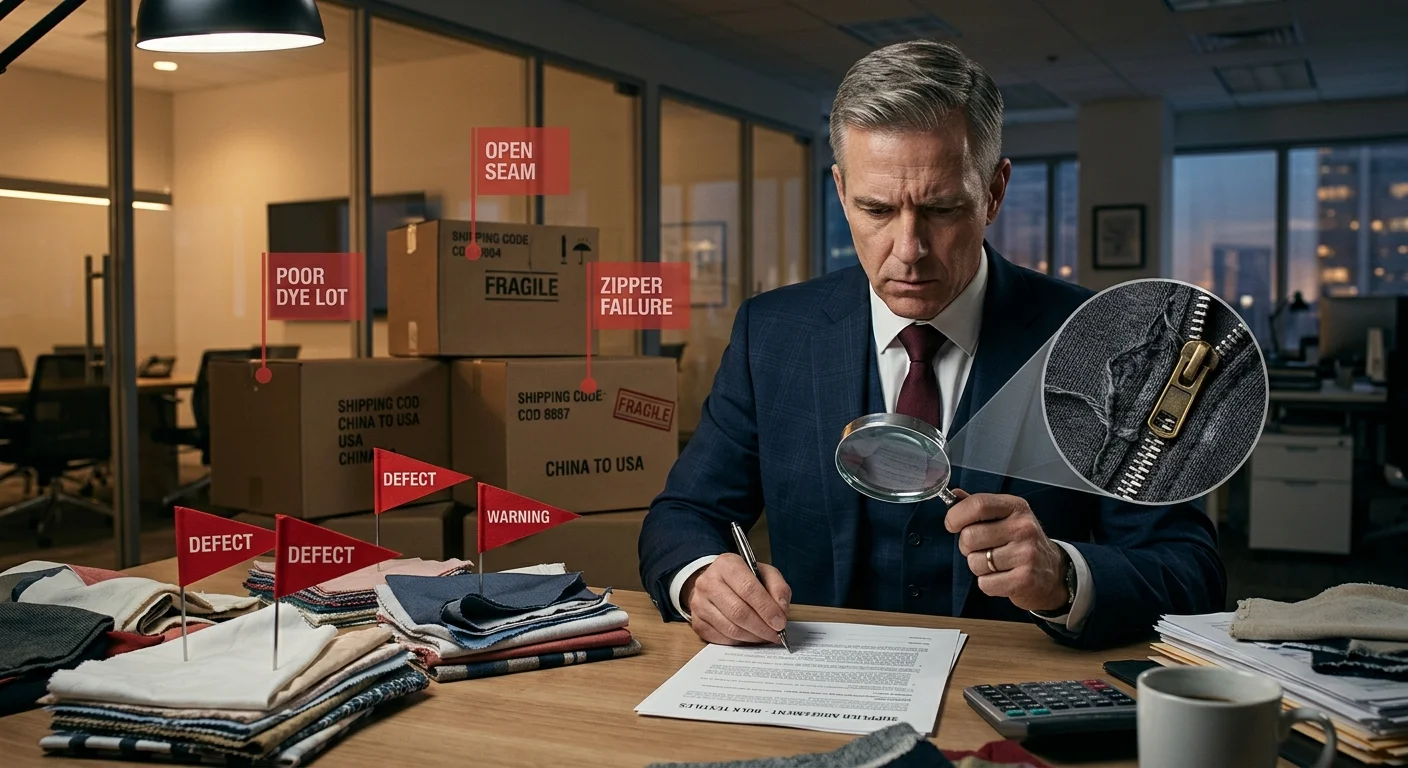
Forty percent of bulk orders from unverified factories fail quality checks. Not bad luck — a deliberate production disconnect that kicks in the moment your deposit clears.
Here's how it works. The supplier sends a hand-finished sample. Their best pattern-maker built it using premium materials — 100% nylon/elastane at 220gsm, 4-way stretch, 12–15 stitches per inch on every seam. It looks perfect. It feels perfect. You approve it and wire the payment.
Then the bulk run starts. A different team takes over. A cost-squeezed production line runs the job. Auto-sewing machines drop stitching to 8–10 spi. The fabric swaps out to 80% polyester at 180gsm. Colors that matched your CMYK specs at ΔE<2 now drift past ΔE>5 — because nobody locked in the dye calibration.
Buyer forums tracking cycling jersey sample orders call this the "phantom drop." Four out of every ten Alibaba-sourced custom cycling jerseys orders report it.
Protect yourself before fabric gets cut:
Demand a sealed "golden sample" — signed by the QC head in person, stored as the legal production benchmark
Lock contract tolerances in writing : fabric weight within ±5% of sample gsm, color deviation ΔE<3, minimum 12 spi stitching
Build in automatic penalties : any deviation in cycling jersey fabric quality triggers full quantity replacement or a 150% refund — no negotiation, no exceptions
Ask your supplier straight: "Can you provide a PPMS signed by your QC chief before the fabric cut begins?"
Hesitation is your answer.
Red Flag #2: The Supplier Who Claims to "Do Everything" — But Can't Prove Anything
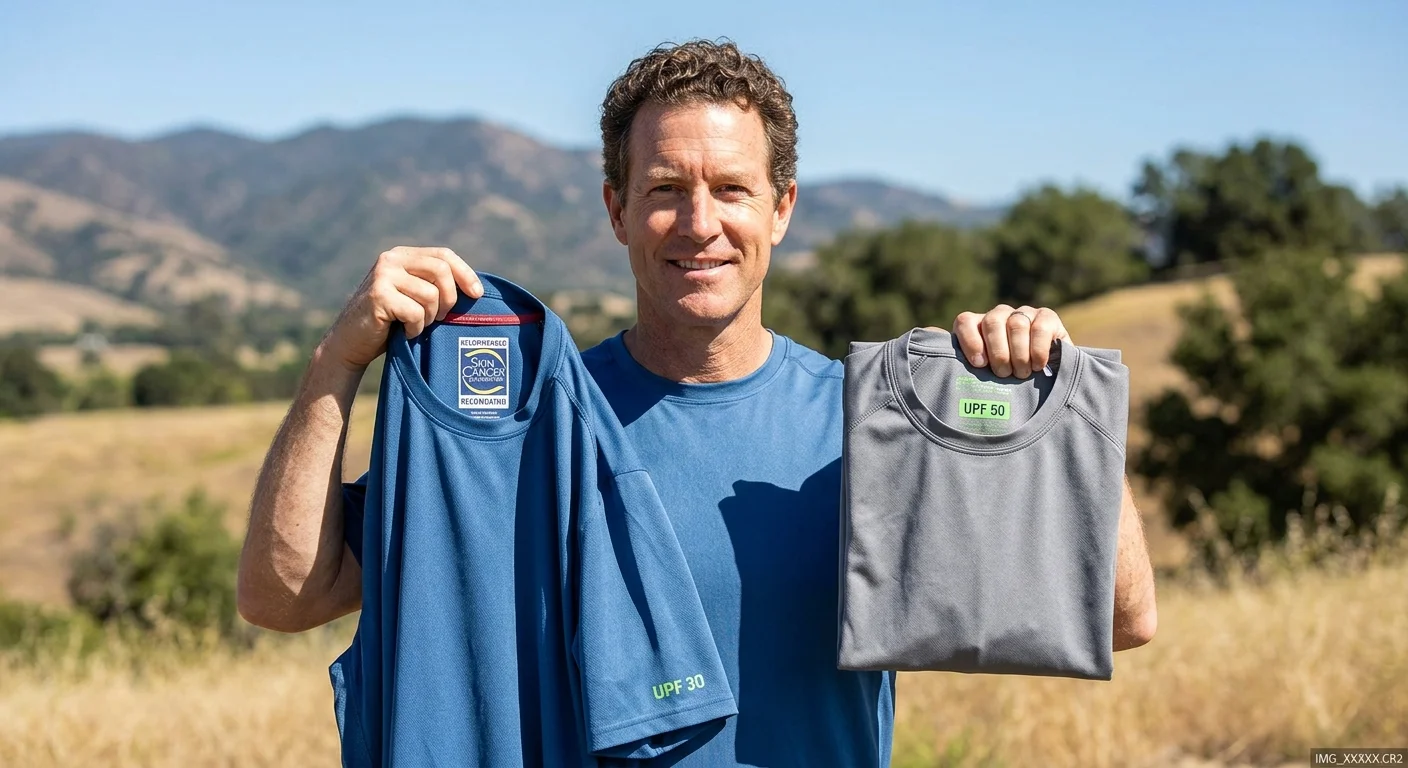
Some suppliers look great on paper. Thirty years of experience. Five hundred fabric colors. Full OEM capability. Custom everything.
Then you ask for a client reference in your product category. The conversation goes quiet.
This is one of the most dangerous supplier types in the cycling apparel OEM factory space — the generalist who overpromises and underdelivers. "We can do everything" is not a capability statement. It's a deflection. It means they say yes to every question, whether the answer is true or not.
What this red flag exposes:
Suppliers with no focused production history in cycling team kit customization often run as trading companies — not factories. They take your order, then hand it off to whoever has open capacity that week. The moment that subcontract is placed, you lose control of cycling jersey fabric quality , stitch tolerances, and color consistency. Your "30-year factory" never touched your jerseys.
Three verification moves you can run today:
Request category-specific references : Ask for two or three clients who ordered custom cycling jerseys in your volume range — not general sportswear, cycling kits only. A real OEM factory gives you names, order photos, and repeat purchase history without missing a beat.
Run a live workflow screen-share : Before any PO is signed, ask this straight: "Can you walk me through your QC logs from fabric intake to final packaging for a 500-unit club order — on a live call?" A factory with real vertical integration and digital scheduling can do this within 24 hours. Trading companies can't.
Confirm in-house sublimation capability : For sublimation cycling jersey printing , ask to see the printing equipment on video — serial numbers visible, operator present. Outsourced printing is the #1 source of color deviation between your approved cycling jersey sample order and bulk production.
A verified custom sportswear supplier with real OEM infrastructure will welcome this kind of scrutiny. The ones who stall, redirect, or go "very busy" all of a sudden — cut them from your list.
Red Flag #3: Reluctance to Share Third-Party Fabric Test Reports
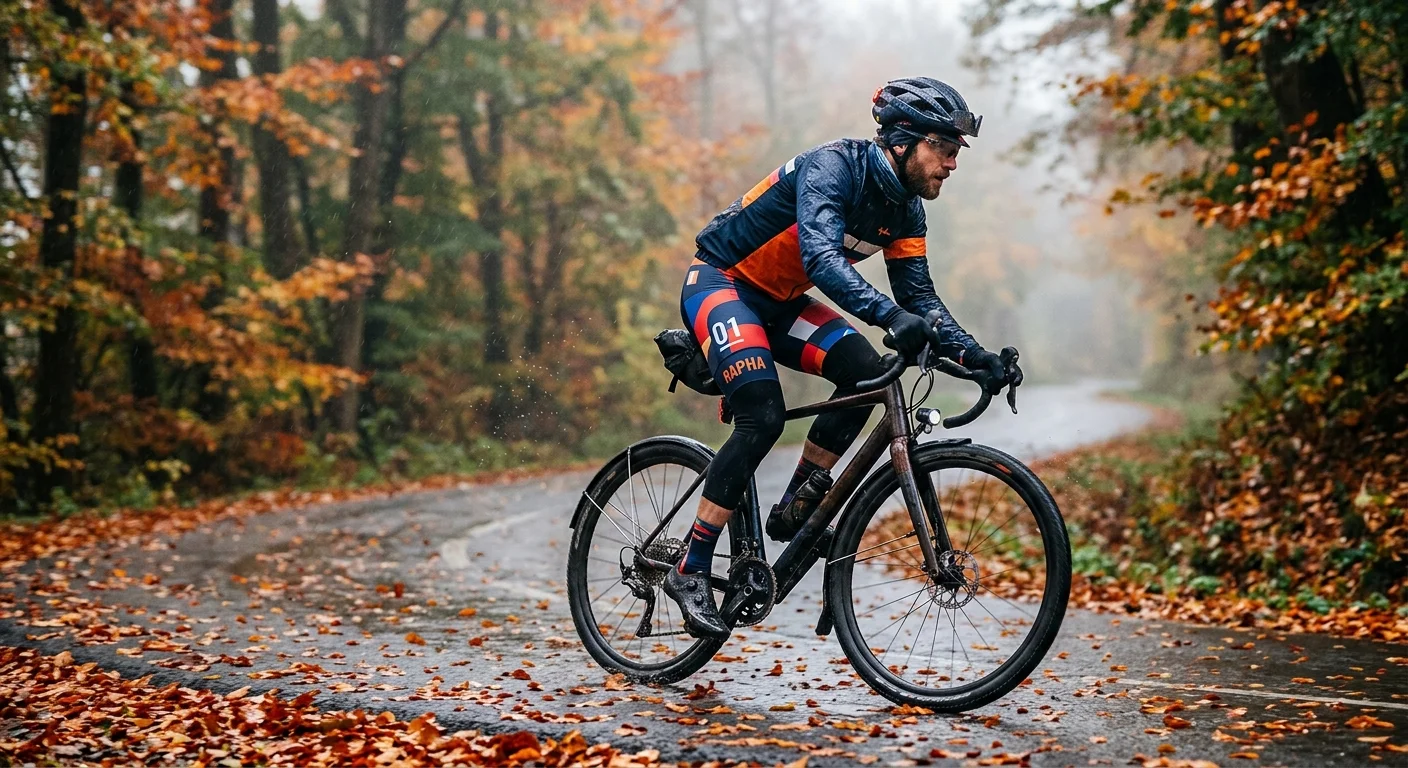
Every legitimate cycling jersey fabric quality claim has a paper trail. A supplier who can't produce one is telling you something important.
Ask for a third-party test report. Get "we have our own internal QC" or "the report is being updated"? That's not a minor delay. That's a structural red flag. Strong cycling apparel OEM factories use SGS and Intertek certifications as selling points. They send them without being asked. Factories with something to hide make you do all the chasing.
What incomplete reports reveal:
Some suppliers share a lab report that "passes" — ISO 105 color fastness tested at a single 40°C wash cycle. Looks clean on paper. But custom cycling jerseys go through repeated washes, friction, UV exposure, and harsh detergents over an entire season. A report that covers only the easiest test condition is built to pass inspection, not to protect your buyers.
Watch for these specific gaps:
- No sampling methodology documented (legitimate bulk textile testing uses the 4-point system with penalty points per defect section)
- Missing AQL tolerance thresholds for defect classification
- No moisture-wicking performance data, UPF 50+ rating, or wet/dry crocking results
- Report dated older than six months
Your verification script:
"Before we finalize pricing, please share your latest SGS or Intertek report covering moisture-wicking, UPF 50+, and dry/wet crocking — documents from the past six months, in English, with test photos included."
A confident custom sportswear supplier sends it within 24 hours. Delays, partial documents, self-issued certificates — any of those is your signal to move on.
The Artificially Low MOQ Bait-and-Switch
"50 pieces minimum." That number gets buyers through the door — and straight into trouble.
Here's what happens. You inquire at 50 units. The conversation starts warm. By message three, the supplier mentions that "better pricing starts at 300 pieces." The quote you thought was final now has footnotes. Pattern setup fees. Screen setup charges — $20–$60 per color . Embroidery digitizing at $30–$100 per logo . Custom trim surcharges that never came up during the initial pitch.
That advertised MOQ was never real. It was a hook.
The size-run trap makes this worse, fast. Ask any supplier quoting "50 pcs MOQ" for custom cycling jerseys one question right away: 50 pieces total , or 50 pieces per size ? A standard S/M/L/XL run at "50 per size" turns into a 200-unit commitment. That one clarification gap has blown more small-club budgets than any other line item in cycling apparel lead time negotiations.
The hidden costs that never appear in the headline quote:
Pattern programming and machine setup fees — charged after you commit
Custom dye-lot surcharges tied to yarn supplier minimums
Zipper and label MOQ gaps (woven labels alone require 5,000 pcs per design at many factories)
EXW pricing quoted without DDP logistics — this creates a ~22% landed cost surprise at delivery
Trading companies run this playbook hard. They post a low minimum order quantity for cycling jerseys to pull in your inquiry. Then they stack fees on top once you're too far in to walk away.
Use this script before any pricing discussion goes further:
"Please provide a clean, itemized cost breakdown — including pattern fees, screen setup, and packaging — for 50, 100, and 300 units. We need full clarity on your pricing matrix before we move to sample stage."
A real cycling apparel OEM factory fills that table within 24 hours. Watch for these hard disqualifiers:
Refuses to itemize; sends a single unit price with no breakdown
"Setup fees will be confirmed after sample approval"
No answer on whether MOQ applies per style, per colorway, or per size
Free sample offered — but only if you commit to bulk above the stated MOQ
That last one says a lot. A confident custom sportswear supplier charges a clear, upfront sample fee. Their quality does the talking. Conditional free samples are a factory's way of locking in leverage before you've seen a single stitch.
Red Flag #5: Guesswork in Sublimation and Color-Matching Workflows
Color is the one thing you cannot fix after the fact. Those jerseys roll off the heat press with banded gradients and a team logo that looks like it was printed on a paper bag. At that point, your options are a dispute or a loss.
The warning sign isn't a bad color result. It's a supplier with no documented process for preventing one.
Ask how they handle sublimation cycling jersey printing color matching. A factory running a professional workflow gives you specifics right away: Pantone codes as the design input standard, an Epson SureColor ICC profile loaded into the RIP software, transfer press settings locked at 195–205°C for 45–60 seconds, and a signed physical strike-off before any bulk fabric touches the machine. That's not overcomplicated. That's just what a controlled custom bike jersey design process looks like in practice.
What guesswork looks like instead:
"Send us your JPG file and we'll print a test to see" — no ICC profile, no Pantone reference, no process
Vague references to "digital direct spray" with no ink brand, no temperature curve, no substrate spec
No mention of color space conversion (RGB monitor files don't translate to CMYK sublimation output — uncalibrated workflows produce 20–30% mismatch rates against your screen proof)
Why this matters beyond aesthetics:
Sublimation dye behavior shifts with polyester density. Different fabric lots from the same supplier can push color output off by 5–10% without proper dye-batch calibration. On a gradient jersey — one carrying a club or brand logo — that gap separates sharp from embarrassing. Factories that skip ICC discipline also skip dye-batch documentation. The result: your third reorder looks nothing like your first.
Non-polyester blends make this worse. A supplier who can't confirm substrate composition puts you at risk of post-wash cracking after as few as five to ten cycles. That's a cycling jersey fabric quality failure your riders discover out on the road.
Your verification script before artwork approval:
"Can you share your standard color-matching SOP using Pantone codes? We require a signed physical color strike-off and ICC profile mapping — printer-specific, not generic — before we approve final artwork for bulk production."
A factory running a real custom cycling jerseys color workflow sends you that SOP within 24 hours. Professionals report 90% screen-to-substrate accuracy with correct ICC profile application. Factories skipping this step don't have a number for you — because they've never measured it.
Workflow Step | What It Should Look Like | Guesswork Red Flag |
|---|---|---|
Design input | PMS codes + sRGB file | Accepts JPG/RGB only |
Color profile | Printer-specific ICC (e.g., Epson SureColor) | No profile mentioned |
Strike-off | Signed physical swatch at 195°C / 50s | "We'll try first and adjust" |
Bulk production | Same-batch dyes with documented blend ratios | Vague batch sourcing |
A supplier who can't fill in the left column is pricing your cycling team kit customization on guesswork at every step.
Red Flag #6: Constant Lead Time Shifts and Production Excuses
"30 days, no problem." Six weeks later, you're still waiting — and your team's event is in three.
Lead time slippage is the red flag most buyers write off as bad luck. It isn't. Repeated delays with no recovery plan reveal one hard truth: the supplier never had the capacity to fill your order to begin with.
Here's what the data shows. In real production environments, 5–10% of total lead time is active manufacturing. The remaining 90% is pure waiting — queue backlogs, batch holdups, operators chasing parts across the floor. A supplier quoting 30 days based on machine time alone is lying to you by default.
The excuses will sound reasonable every time:
1."Raw material stockout from our fabric mill"
2."Peak season — other clients' orders ran over"
3."Power restriction in our province this week"
4."QC found some rework — just a few more days"
None of these are your problem. All of them point to a supplier running without an ERP system, blanket purchase orders, or any real production buffer. Cycling apparel lead time stacks up fast across size variants and colorways. A single-stage delay doesn't add up neat — it snowballs. A three-day fabric delay turns into a ten-day production reschedule. That turns into a missed shipping window for your cycling team kit customization event.
The verification move that separates real factories from chaos:
Ask this before you place any order:
"Can you share a milestone production schedule — raw material intake, cutting, sublimation printing, assembly, QC, and packaging — with photo verification checkpoints built in at each stage?"
A factory running structured scheduling sends that document within 48 hours. No document means no system. No system means your custom cycling jerseys delivery date is a guess dressed up as a commitment.
Build penalty terms into the contract before you wire anything:
1.Any delay beyond 5 business days triggers a documented liquidated damages clause — not a goodwill discount, a contractual obligation
2.Milestone photo logs required at each production stage
3.Supplier must provide written capacity proof (machine count, active operator headcount, current order load) before PO confirmation
The suppliers worth keeping never flinch at these terms. The ones who push back — or go vague fast about "factory schedules" — are showing you what your delivery experience will look like.
Red Flag #7: Black-Box Quality Control on Stitching and Zippers
A jersey can look flawless in photos. Fold it once along the shoulder seam under real cycling load — you'll know right away whether the factory's QC team ever touched it, or just signed off on a number.
This is the black-box problem. Suppliers who can't produce AQL inspection logs aren't hiding incompetence. They're hiding the absence of a system altogether .
Here's what professional QC on cycling apparel actually looks like:
Real cycling apparel OEM factories run a three-stage inspection framework against AQL 2.5 — the garment industry's standard for major defects. For a 500-unit custom cycling jerseys order, that means a 200-piece sample size with a hard ceiling of 10 major defects before rejection kicks in. Critical failures get zero tolerance: broken zippers, needle fragments in seams, structural seam blowouts.
Stitch specs are not left open to interpretation. Industry-standard cycling jersey fabric quality benchmarks require 12–15 stitches per inch on high-tension seams — shoulders, chamois interface, underarm panels. Drop below 10 spi and the seam fails under repeated pedaling stress.
Zippers go through their own pre-production pull-strength test. YKK-equivalent hardware must hold up under high-tension cycling load with no binding or seam distortion. No test documentation means no verified standard. Simple as that.
Your verification script:
"Please share your AQL 2.5 compliance logs for stitching and zipper inspection — high-stress seam records and zipper pull-test results. Will your QA team allow an unannounced third-party PSI before container sealing?"
Three hard disqualifiers:
1.No stitch gauge spec on file (8–12 spi minimum is non-negotiable)
2.Worker self-inspection only — third-party access refused
3.No first-article sign-off records before bulk production starts
A factory that rejects third-party inspection isn't protecting trade secrets. It's protecting something worse.
The 100% Upfront Payment Trap
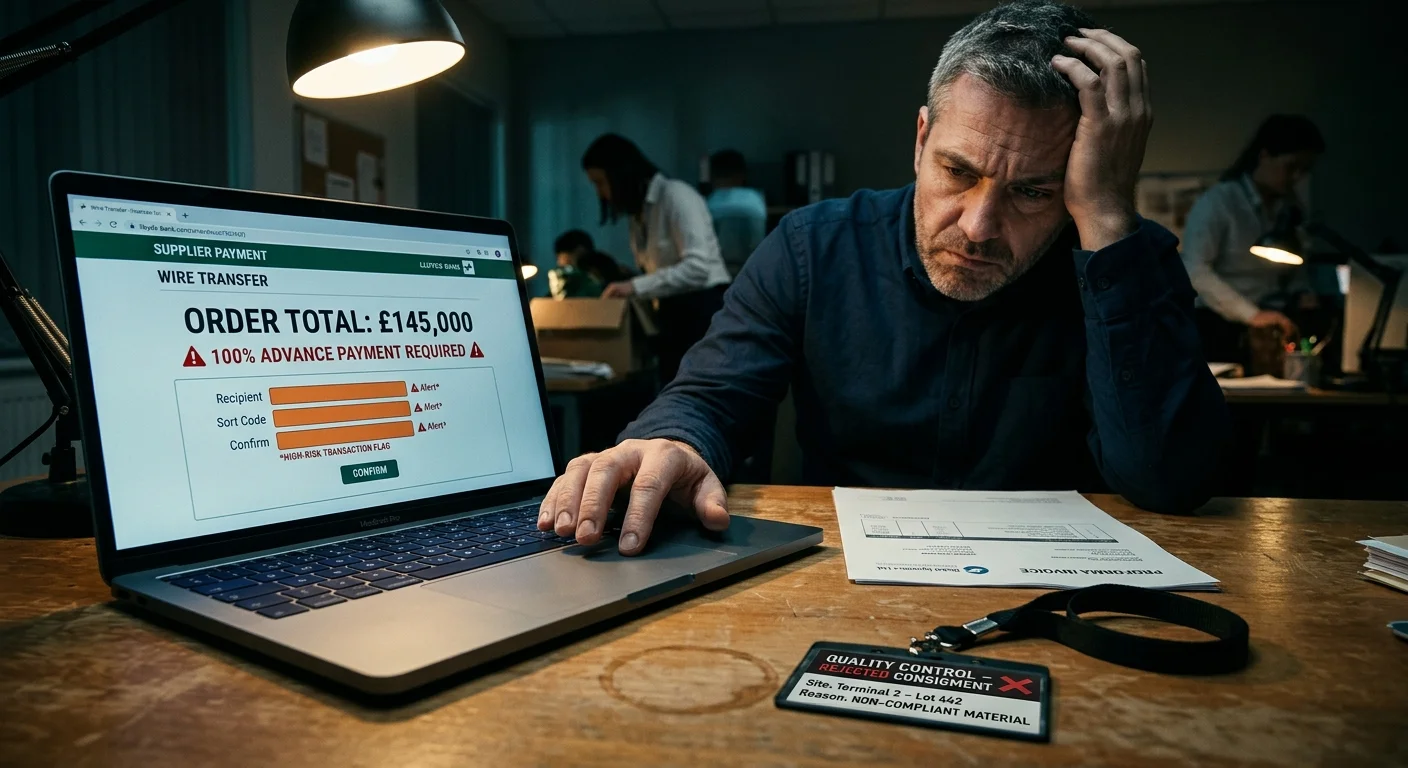
The proforma invoice arrives. Samples passed. Pricing aligned. Everything looks right — until you scroll to the payment terms and see it: 100% T/T in advance. Full wire. Before production starts.
That single line should stop you cold.
A supplier demanding full upfront payment on a $47,000 order isn't just asking for money. They're asking you to hand over every piece of leverage you have — before a single panel gets cut. Your capital sits idle for 11 weeks. They have zero financial skin in the outcome.
What this payment demand exposes:
Legitimate cycling apparel OEM factories don't need your entire budget upfront. A supplier that insists on 100% advance — and rejects LC, installment splits, or escrow flat out — is telling you one of two things. Either they're under enough cash flow strain that they need your deposit to fund other clients' orders . Or they lose all motivation to deliver once the wire clears. Either way, you carry all the risk.
That "limited-time 10% discount for full T/T today" pitch is a pressure tactic. It's not a favor.
The industry-standard payment structure for custom cycling jerseys:
Order Value | Standard Split | Release Triggers |
|---|---|---|
Under $5K | 100% upfront | Low-risk booking |
$5K–$10K | 50% deposit / 50% pre-ship | Balance before shipment |
Over $10K | 30% / 40% / 30% | Deposit → mid-production inspection → B/L |
Your non-negotiable script:
"Our procurement policy is 30% deposit to trigger production, with the 70% balance released against third-party SGS inspection or original B/L. We don't do 100% advance — suggest escrow or LC for first orders."
A healthy custom sportswear supplier accepts this without flinching. They push back hard or dangle a discount to rush your wire? That's your answer right there.
Red Flag #9: Off-the-Rack Sizing Applied to Performance Gear
Generic size blocks on cycling jerseys are a specific kind of wrong. Suppliers who don't see the difference will cost you more than money.
Standard OTR sizing uses two measurements: chest circumference and height. Every other dimension — shoulder width, sleeve length, chest-to-waist drop — comes from a statistical average. That system was built for standing still in a boardroom. Not for grinding up a 12% incline at threshold power.
Here's where it falls apart on the bike. A rider with broad shoulders orders the right chest size. The shoulder seams hang off the edge. They size down to fix the shoulders. Now the chest pulls tight across the sternum on the drops. No version of that OTR block fits right. The block was never built for cycling anatomy.
What professional custom cycling jersey sizing requires:
1.25+ body measurements — including shoulder slope, forward arm position, and torso-to-inseam ratio — versus OTR's two
2.Aerodynamic panel mapping : extended back length, chest compression zones, underarm diamond inserts — these cut aerodynamic drag by 5–10% in controlled wind tunnel conditions
3.4-way stretch recovery documentation per panel, not per garment
A supplier running OTR blocks on performance gear has no answer for any of that.
Your verification script:
"Can you share your dedicated cycling anatomy sizing chart with 4-way stretch recovery metrics per panel — and documented aerodynamic panel mapping before we scale?"
Silence tells you everything.
Red Flag #10: Open-Ended Revisions and Missing Compliance Documentation
Revision round six. You're still tweaking the gradient on the sleeve panel. The supplier says "no problem" — again. Six weeks gone. Production hasn't started.
That "unlimited revisions" policy isn't flexibility. It's a factory with zero project discipline — and it will eat your delivery window.
Good custom cycling jerseys suppliers cap the custom bike jersey design process at three rounds after strike-off. That's the standard. 70% of verified cycling apparel OEM factories hold that line. Factories with no revision limit run 5–10 proofing cycles per order. That pushes cycling apparel lead time past 60 days before a single panel gets cut.
The compliance gap is the second part of this red flag — and the more dangerous one.
30% of suppliers flagged in 2023 Alibaba audits failed basic documentation checks. 15% of custom cycling jerseys shipments headed to EU and US markets get rejected at customs each year — missing BSCI or ISO9001 paperwork is the usual cause. A Taiwanese brand got hit with a €200,000 fine in 2025 for environmental violations at a Vietnamese factory. These are not rare cases.
1.What a compliant supplier provides without hesitation:
2.ISO9001 certificate — garment production scope, valid within three years
3.BSCI audit report — dated within 24 months, covering labor hours and facility conditions
4.Environmental discharge permit — local EPA equivalent, confirming wastewater compliance
5.Factory audit video — real floor, real headcount, matching the brochure
Your verification script:
"Please confirm a maximum of three artwork revisions after strike-off approval, with a $50 fee per additional round. Upload your ISO9001, BSCI report, and environmental discharge permit — PDFs, expiry within 12 months. Our procurement process requires these for legal and ESG clearance before PO issuance."
Item | Required Proof | Red Flag If Missing |
|---|---|---|
Revision cap | Signed agreement: 3-round limit | Open-ended = 60+ day delay risk |
ISO9001 | Certificate + production scope | ~10% bulk rejection rate |
BSCI | Latest audit report (<2 yrs) | Labor violations, customs seizure |
Environmental permit | Local license on file | EU REACH fines, import holds |
A solid private label cycling clothing supplier — one working at Pearl Izumi or Gorewear OEM standards — sends this full package within 24 hours. One that stalls, sends expired certificates, or pushes back on the revision cap has already shown you how your order will go.
Sourcing directly? See our OEM/ODM Cycling Apparel Manufacturing program for MOQ, lead times and private label options.
Conclusion
Every supplier you're evaluating right now is making you a promise. The real question isn't whether they can deliver. It's whether the evidence they've shown you proves it.
The 10 red flags in this guide aren't theoretical. These are the exact patterns that separate a smooth custom cycling jerseys production run from a nightmare. Mismatched bulk orders. Blown deadlines. Fingerpointing emails that never get a response.
A legitimate cycling apparel OEM factory wants scrutiny. They welcome your video call request. They hand over third-party fabric test report numbers without hesitation. They put clear revision terms in writing — because they've done this before and have nothing to hide.
Before you wire a single dollar, run every candidate through this checklist. Score them. Compare them side by side.
The supplier who passes all ten? That's the one worth continuing the conversation with.
The one who flinches at question three? You already have your answer.
