Grab a pair of women's MTB shorts and a men's pair off the same rack, and something feels off before you even try them on—the rise sits differently, the leg opening curves in a way you don't expect, the whole silhouette reads distinct even hanging still. It's the result of deliberate pattern-making decisions that most riders never think to question until their shorts either move with them on the trail or fight them at every pedal stroke. The actual construction choices (body blocks, paneling, chamois geometry, inseam length) separate a women's-specific cut from its men's counterpart. Understanding these details will change how you evaluate fit the next time you're shopping.Brands can develop custom Women's and Men's MTB Shorts around different body blocks.
Women’s and Men’s MTB Shorts Use Different Body Blocks
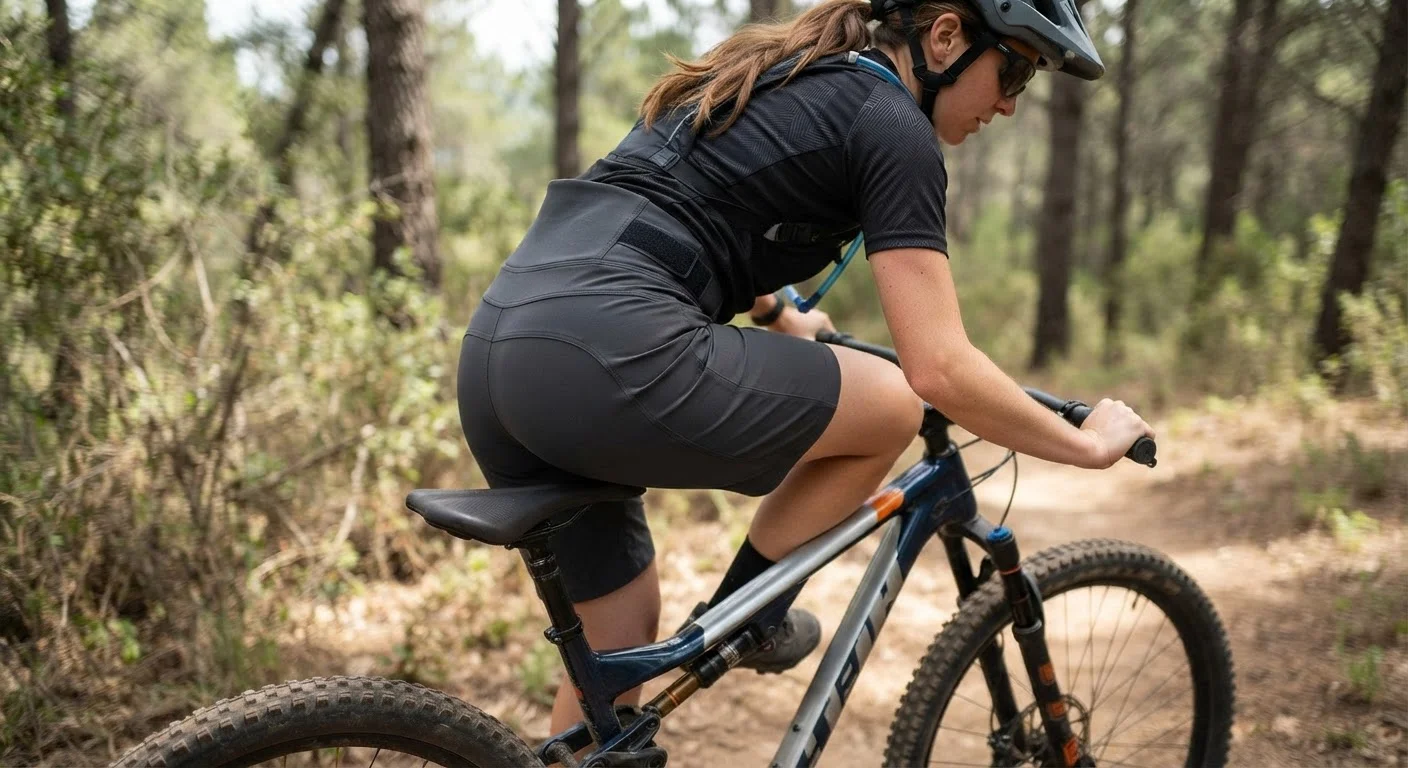
Every garment starts as a shape on paper before it becomes fabric on a body. Brands build women’s MTB shorts on a wider-hip, shorter-rise, contoured-waist block. Men’s shorts follow a straighter torso pattern with a longer rise and a higher back waist. These blocks are the literal skeleton the fabric gets stretched over.
Patagonia’s women’s Dirt Roamer Bike Shorts run sizes 0–18, sit at an 11¾-inch inseam, and use an adjustable waist cinch to dial in fit around the smaller waist-to-hip ratio the block assumes. The men’s Dirt Craft Shorts use a curved waistband across sizes 28–40, with an 11½-inch inseam—nearly identical length, completely different shape logic underneath.
Shredly offers women’s shorts from 00 to 24. Outdoor Research spans 0 to 4X. Men’s shorts, meanwhile, typically stick to S–XL or a 28–40 waist system, occasionally stretching to XXL or XXXL. This reflects how much more variation the women’s block has to accommodate across hip width and pelvis shape.
Fit issues rarely come from sizing up or down. They come from riding in the wrong block entirely.A specialized supplier can fine-tune MTB shorts fit for different rider profiles.
Women’s MTB Shorts Have More Contoured Waist and Rise Fit
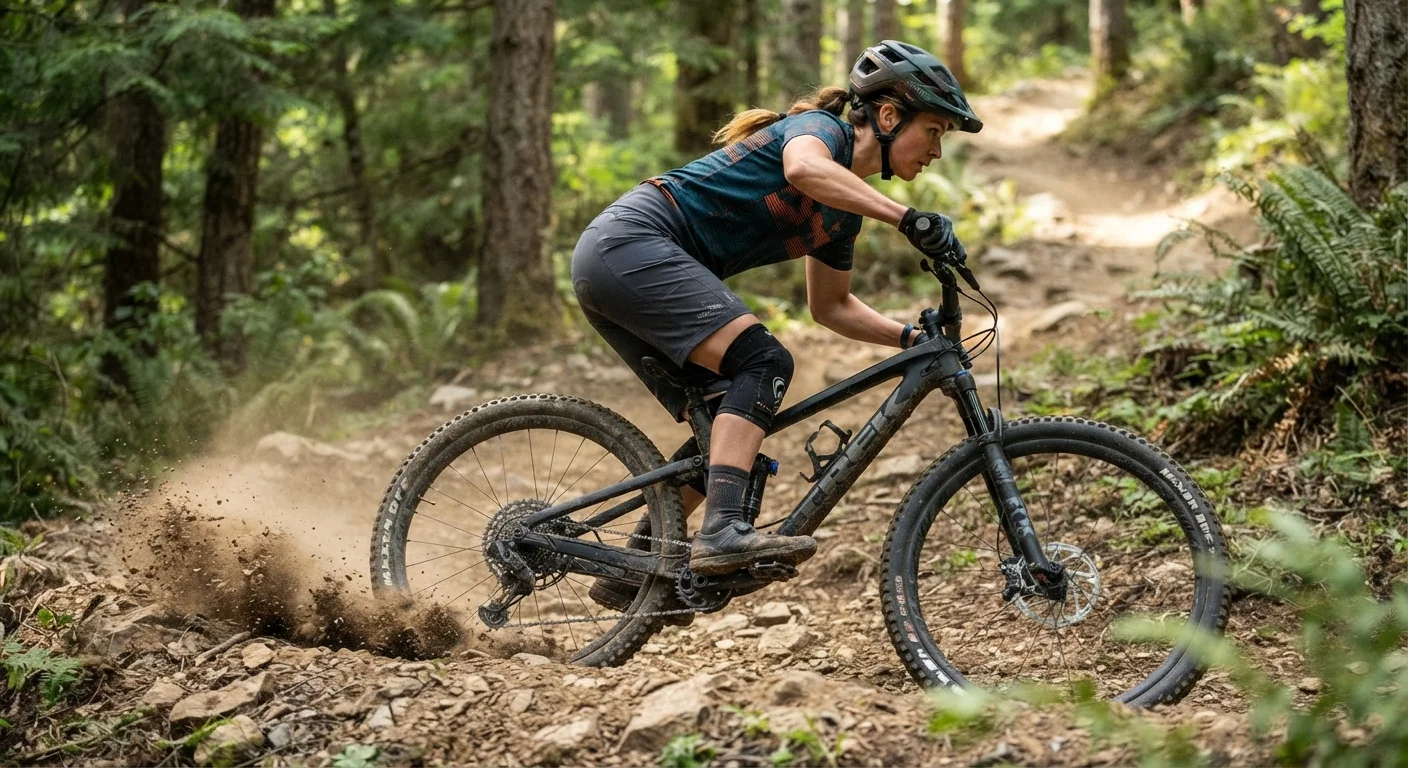
Notice how the waist sits lower up front but climbs higher in back on most women's MTB shorts. That's not an accident. A lower front rise keeps the fabric from digging into your stomach when you're hunched over the bars, while a higher back rise covers your lower back from trail spray and dirt kicked up by the rear wheel.
The Waistband Does More Work Than You'd Think
Many women's-specific shorts ditch the standard flat waistband for a wide, yoga-style one. The Shredly Limitless 11" Stretch Waistband High-Rise runs a 3.25-inch wide band that sits above the navel—closer to legging territory than traditional shorts. That width, paired with stretch panels, keeps the waist from sagging or pinching mid-ride.
Contoured Fit
Bicycling's review defines contoured as slimmer through the hip and thigh than a relaxed trail short, but nowhere near compression-tight. Inseams across tested models land anywhere from 7 inches (Shredly Limitless 7") to 12.5 inches (Flylow Eleanor), with most sitting mid-thigh to just above the knee. Sizing runs from XXS to XXL, 00 to 16, and XS to 3X depending on the brand.
When shopping for this fit, look for a high-rise back, lower front rise, wide waistband, and adjustable side tabs.
Hip, Seat, Thigh, and Leg Opening Shape the On-Bike Fit
Watch a woman climb onto her saddle and you'll see why waist measurements alone tell an incomplete story. The real fit conversation happens at the hips and thighs—the places where fabric either moves with the pedal stroke or bunches against it. Women'S Mtb Shorts Manufacturer size charts for women's MTB shorts now measure hip circumference around the fullest part of the seat and thigh circumference at its widest point, because that's where the fit lives. A typical chart runs XS at 33–35 inches through XL at 43–46 inches, all measured in hips rather than waist.
The Chamois Has One Job: Stay Under the Sit Bones
If the pad shifts during a ride, that's a hip-and-seat fit problem, not an inseam problem. The padded chamois needs to sit beneath the sit bones and cover the full saddle contact area once you're seated and pedaling.
Leg Openings Do More Than Look Good
A snug leg opening that doesn't cut into the thigh matters as much as hip room. Premium women's MTB shorts often use raw-edge leg openings paired with silicone grippers, keeping the hem from riding up mid-descent. Leg opening measurements scale with size. One men's short chart, for comparison, listed openings from 13.4 inches at XS to 17.3 inches at 2XL, showing how much room construction gives as sizing increases. For riders with fuller thighs, that scaling often decides comfort first.
Women’s MTB Shorts Use Different Paneling, Seams, and Articulation

Six panels. Seven. Sometimes eight. That panel count is the difference between fabric that traps you in one position and fabric that follows your knee through a pedal stroke. REI lists the Wild Rye Ramsey and Ruby at six panels, while Terry Touring Bike Shorts step up to 8-panel flat-seam construction. More panels give you more places to shape the fabric around hips, thighs, and knees instead of stretching one flat piece across a curved body.
Specialized builds its women's trail shorts with what they call "articulation built for the trail riding position"—cut to stay relaxed without turning baggy once you're standing on the pedals. Velocio takes a similar approach with pre-shaped paneling and laser-cut hems, engineered to cut bunching at the hip and knee during the pedal stroke.
Seams and Gussets Handle the Friction Points
Flat-lock seams show up across nearly every serious women's MTB short because they lie flat against skin instead of digging in. Zoic's Fusion inseam gusset and Assos 's goldenGate construction interrupt stitching at the crotch panel, freeing up three-dimensional movement instead of locking the leg into a fixed angle.
Smaller details add up fast. Tagless labels, reversed primary stitches, and V-shaped waist panels all target the same problem: friction that only shows up an hour into the ride, not in the fitting room.
Women’s and Men’s MTB Shorts Differ in Inseam and Discipline-Specific Length
Inseam length tells a story about who the short was built for—and what trail they're riding. Hincapie puts men's bike shorts at an 11-inch standard inseam , women's at 7 inches , with shorter options at 9.5 inches for men and 8.5 for women . Trek's Evoke Mountain Short goes the same way: 11 inches for men, 10 for women . Backcountry's Slickrock shorts split even wider, at 11" and 9" for men and 9" and 7" for women .
Discipline Changes the Math
Your riding style also determines the inseam length. Cross-country and gravel-style MTB shorts often sit at 7"–9" inseam , prioritizing airflow and pedal clearance. Trail and all-mountain riding pushes that to 10"–12" for women, 11"–13" for men . Enduro and gravity riders need 12"–15" to clear knee pads—Outdoor Gear Lab notes a 13-inch inseam typically hits right at the knee for most men.
Men's shorts commonly land in the 12"–15" range across reviewed models; one roundup lists 12", 13.4", and 14" inseams. That longer rise pairs with a straighter cut, while women's shorts trade length for a shorter rise and wider hip allowance built into the pattern itself.
Women’s MTB Chamois Uses Different Pelvic and Sit-Bone Geometry
Anatomy decides chamois design long before fabric choice enters the conversation. A wider pelvis and a greater pubic arch angle shape how women's chamois padding gets built, shifting pressure away from the central soft-tissue zone and spreading it toward broader support areas at the sides.
The Numbers Behind the Pad
Sit-bone width varies more than most riders assume. Fit guides report ranges from 100mm to 160mm overall, with women clustering around 110–140mm and men landing closer to 100–130mm . One published comparison put average female sit-bone width at roughly 130mm versus 118mm for males —a 12mm gap that changes where support needs to sit under the chamois.
Pubic bone angle matters just as much. Bike ergonomics sources note women often measure over 90 degrees here, meaning the front contact area needs extra room to avoid soft-tissue compression during long rides.
Measuring Your Own Sit Bones
The workflow fit guides use is simple enough to try at home:
Sit on corrugated cardboard placed on a hard surface
Mark the two deepest depressions left behind
Measure center-to-center distance in millimeters
Add 20–30mm for a starting chamois support width (or 10–15mm for more aggressive, forward-leaning positions)
Matching Chamois to Saddle Width
Sit-bone measurements translate directly into saddle sizing charts. A 100–130mm sit-bone width maps to roughly a 143mm saddle. 115–130mm stretches to 155–168mm in upright, comfort-oriented geometry. Brands like WTB and Ergon build entire categories around these numbers. WTB Medium covers 102–130mm , WTB Wide runs 131–155mm .
For womens MTB shorts, the takeaway isn't more padding. It's wider front pelvic clearance paired with broader sit-bone support. Geometry matched to riding position, not to height or weight.
Fabric Stretch and Reinforcement Are Mapped Differently in Women’s MTB Shorts
Run your thumb across a pair of women's MTB shorts and you'll feel the shift before you see it: soft stretch fabric in one spot, a stiffer textured overlay in the next. Brands don't blanket the whole short in heavy-duty fabric anymore. They map stretch and reinforcement to exactly where the body needs each one.
Where the Stretch Lives
The Outdoor Research Freewheel Ride Short builds its body from 4-way stretch fabric, then adds DuraPrint® overlays at the outer hems, the zone that scrapes rocks and brush on every trail ride. Patagonia's Dirt Roamer liner shorts split the difference even further: a 79% recycled nylon / 21% spandex body paired with power-mesh side panels at 77% recycled nylon / 23% spandex, so the sides breathe while the core holds shape.
Reinforcement Goes Where the Wear Happens
Treeline Review found DuraPrint coating mapped to the lower outer thigh on tested shorts, with a perforated panel sitting just below the waistband on the back – durability where rocks hit, ventilation where heat builds. Canari and SHREDLY both concentrate reinforced stitching and gusseted construction at the crotch, the seam-load point that takes the most stress with every pedal stroke. Endura 's MT500 Spray Women's short goes further, taping the seat panel against water spray while keeping the rest of the short in soft, unrestricted stretch nylon.
The Industry Pattern
Most women's MTB shorts now run 86/14 to 92/8 polyester-spandex or nylon-spandex shells; Cognative's Guide Trail short lists 92% polyester / 8% spandex, and Canari matches that ratio almost exactly. ASSOS pushes further with 8mm viscoelastic pads and goldenGate stitching that breaks up seams around the hip, freeing the rotational movement a pedal stroke demands. Across brands, you get stretch where you move, reinforcement where you crash into things, and mesh where you overheat.
Pocket Placement and Fly Construction Reflect Different Proportions
A pocket sitting an inch too high can turn a smooth pedal stroke into a constant tug at your hip. Pattern drafters place front pockets roughly 7 inches down from the waistline and 2–2.5 inches in from center front , with the pocket bag itself running about 6 by 10 inches —small enough to disappear against the leg, deep enough to hold a phone through a descent.
Fly construction quietly separates women's MTB shorts from men's too. Women's patterns run right-over-left ; men's flip to left-over-right . The fly shield—often called the stay—stretches from the side seam to the zipper, doubling as both pocket backing and underlap, so nothing gaps open mid-ride.
Conclusion
Every great ride, like every great outfit, comes down to details you feel before you notice them. The difference between men's and women's MTB shorts is engineered geometry. Women's shorts have a higher, more contoured rise, sit-bone-specific chamois shaping, and paneling that moves with the hips. These details make a ride feel effortless.
If you've been riding in shorts that were never built for your body, it's time to notice the fit the way you'd notice a well-cut jacket. Try on a pair of womens mtb shorts designed around real female anatomy, and pay attention to how the waist sits, how the seams disappear, how nothing bunches when you stand on the pedals.Retailers can also compare custom wholesale price options for Men's MTB Shorts before bulk ordering.